Tag: Changing of the Palace Guard

  • Seoul, Korea Wednesday 20 November 2019

    Seoul, Korea
    Wednesday 20 November 2019

    Barely 27 degrees this morning, and it was cold. I trotted back to Gyeongbokjung to find the lovely English-speaking tour guide there, whose American name is Jennie. She not only made some identifications and taught me more, but she inveighed her expert contacts into identifying items and has taken on the job of contacting others to help her ( and help me) in more identifications. How lovely to have someone else — someone who knows —doing this research.

    Gyeongbokgung, the royal palace, has a long and royal history. It was built by and for the Joseon Dynasty, which held power from 1392 until 1912, an impressive stretch, and I believe the longest reign ever held by any one royal family. The word “Gyeongbok” in translation means “The new dynasty will be greatly blessed and prosperous” and “gung” means palace—an efficient use of words, I daresay. But then, Geunjeongjeon  the name of the main throne room of Gyeongbokgung, means “All affairs will be properly managed if your Majesty demonstrates diligence.”

    Gyeonbokgung was founded n 1395, expanded in 1492, and burned to the ground by the Japanese in 1592. It was reconstructed in 1867 and removed by the Japanese in 1915.  Reconstruction began once again in 1990 on its native and present site, and the reconstruction seen today completed in 1910. 

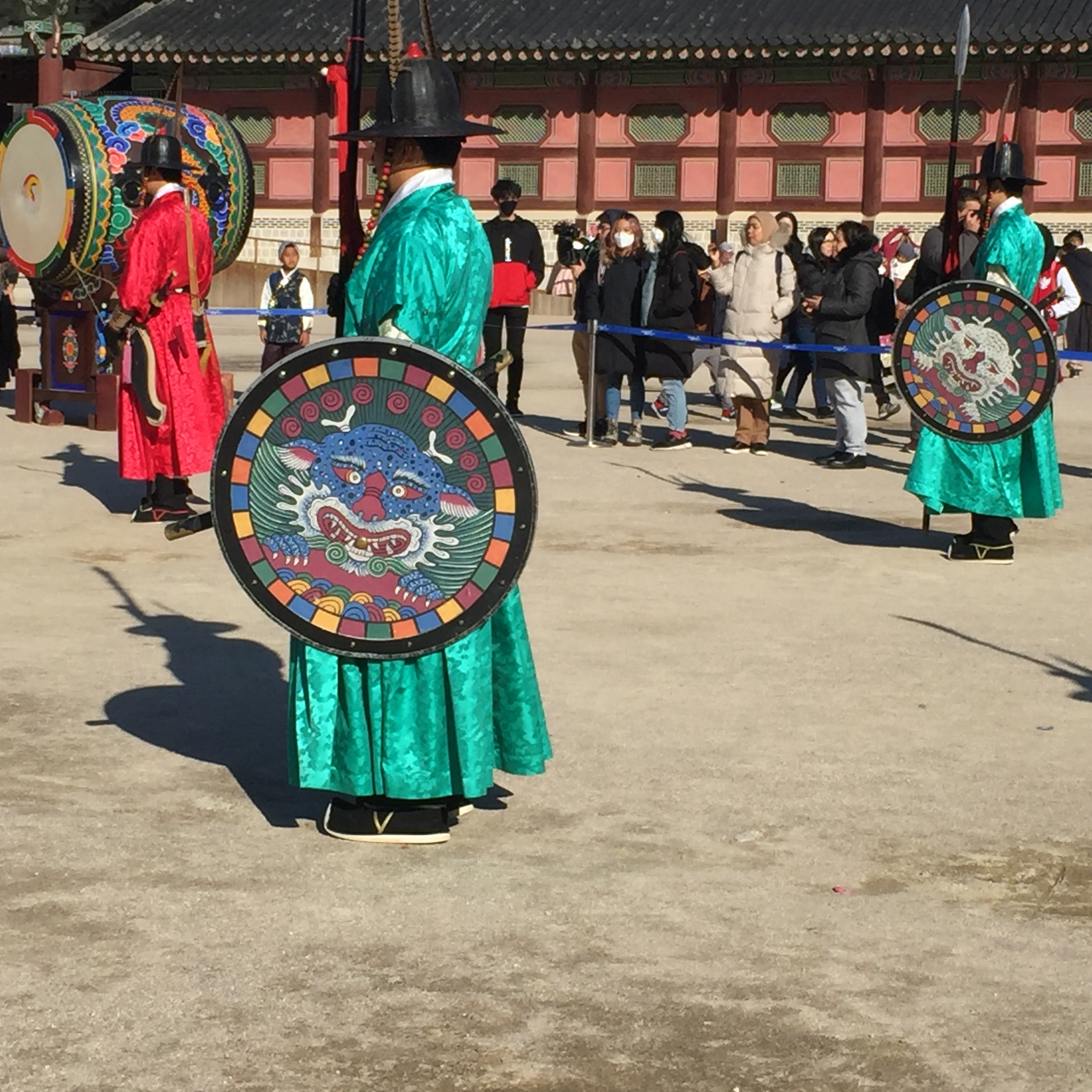
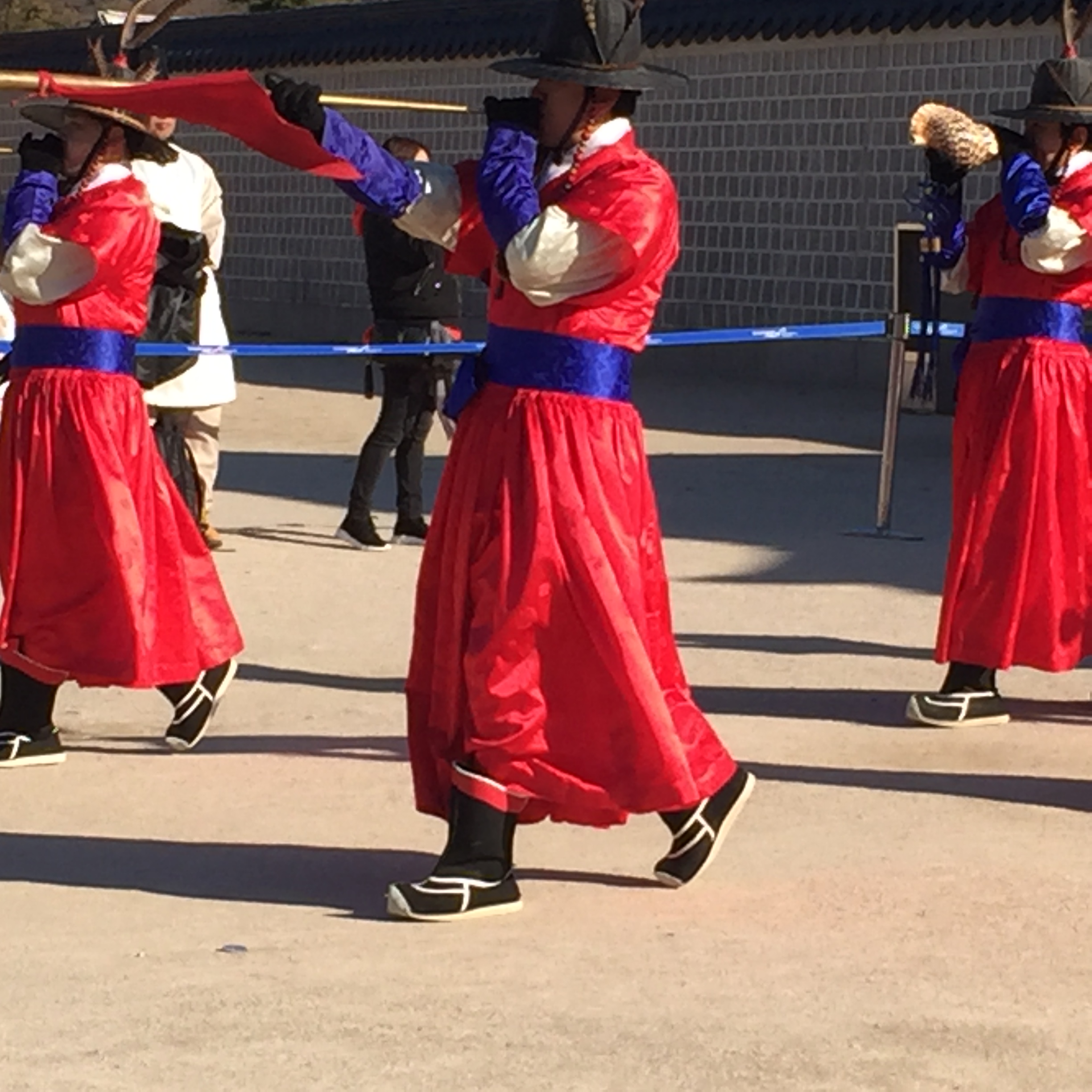
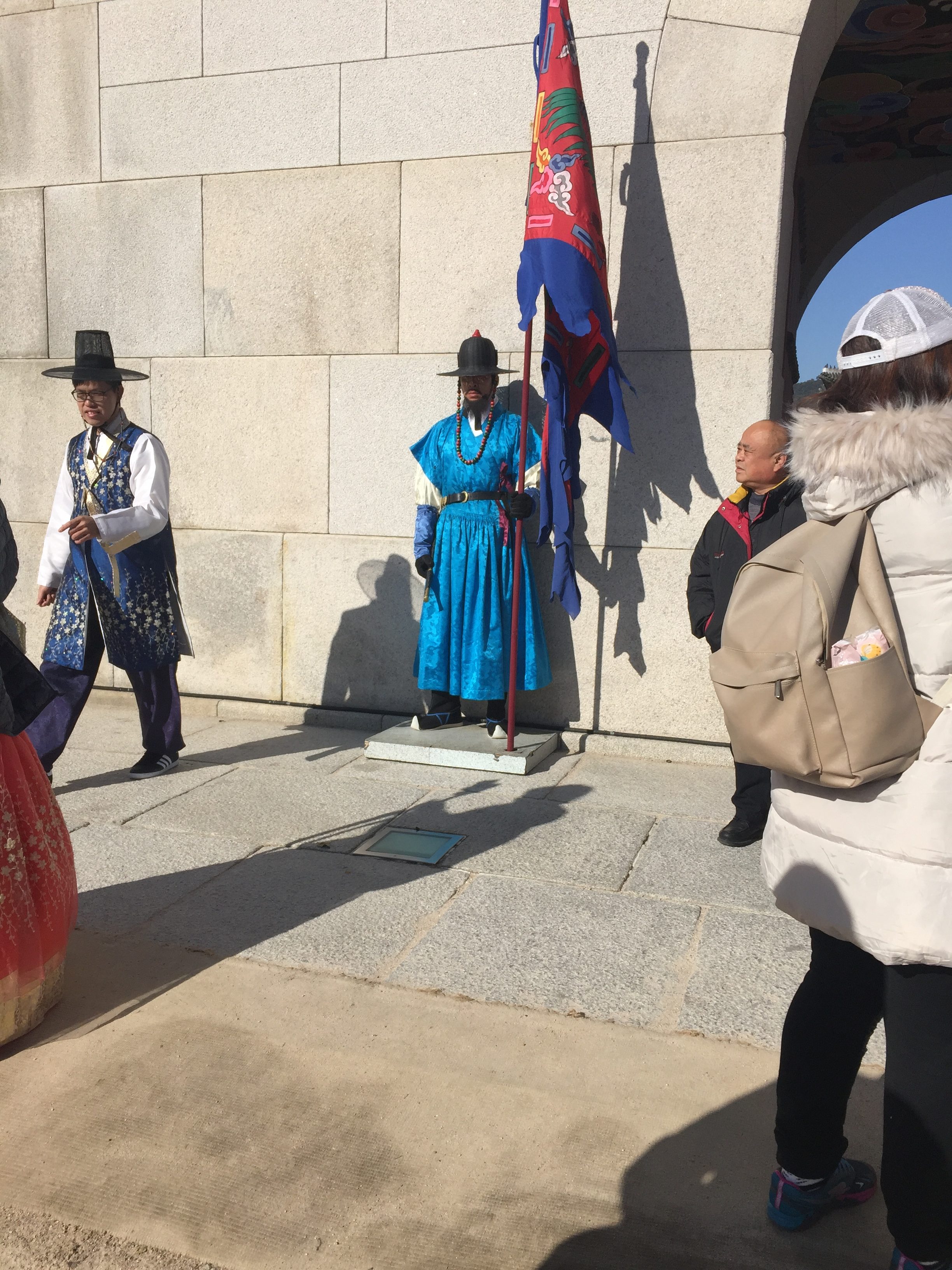
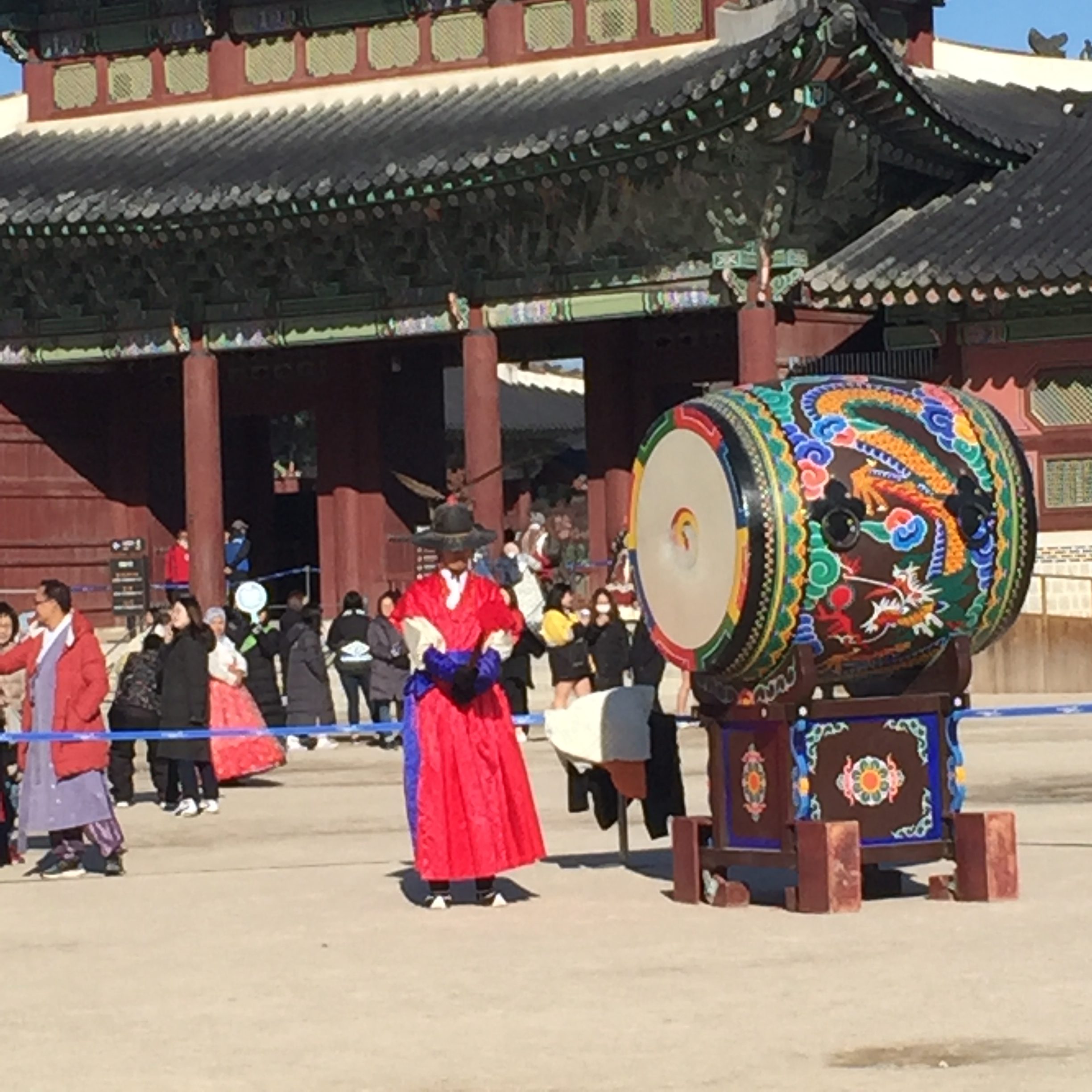
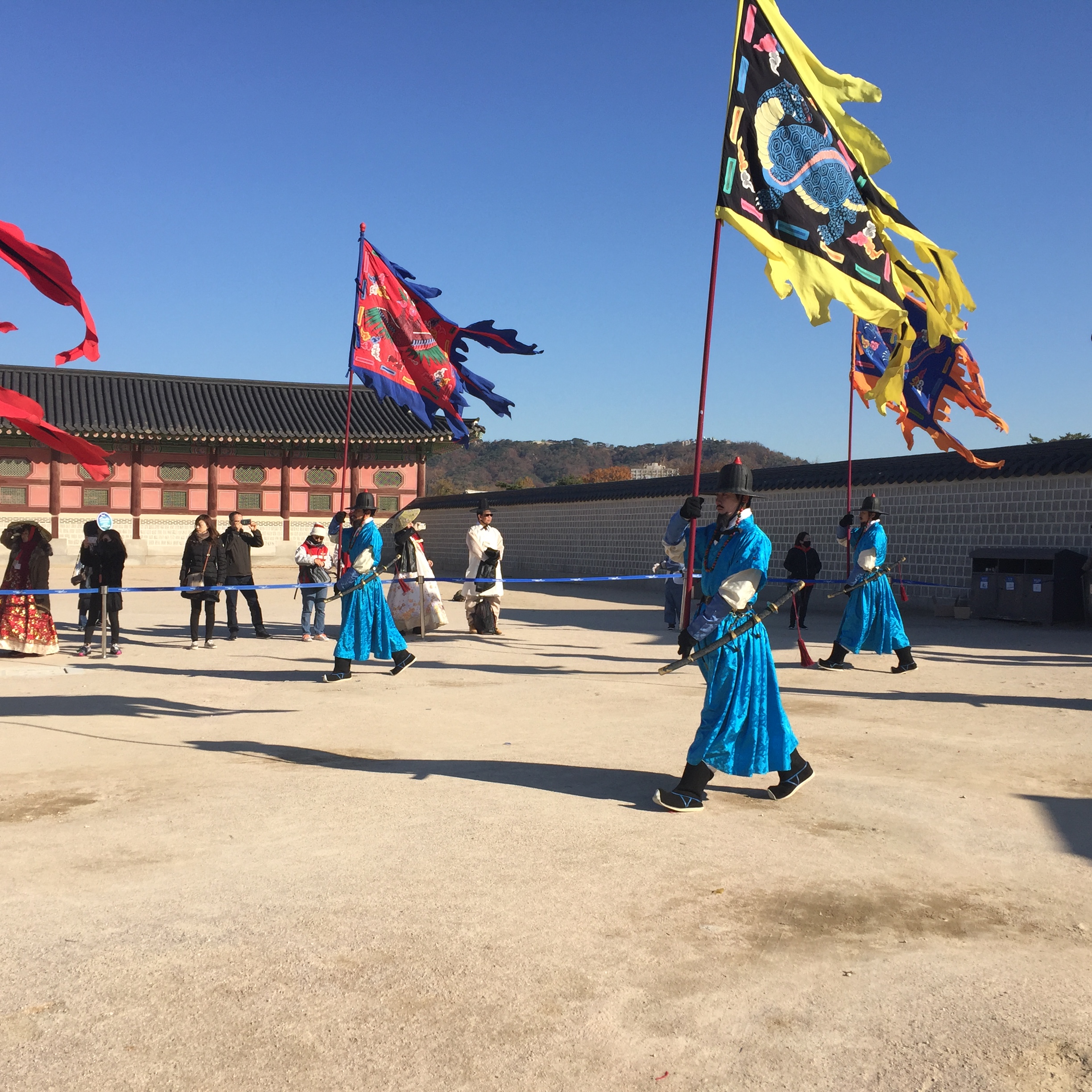
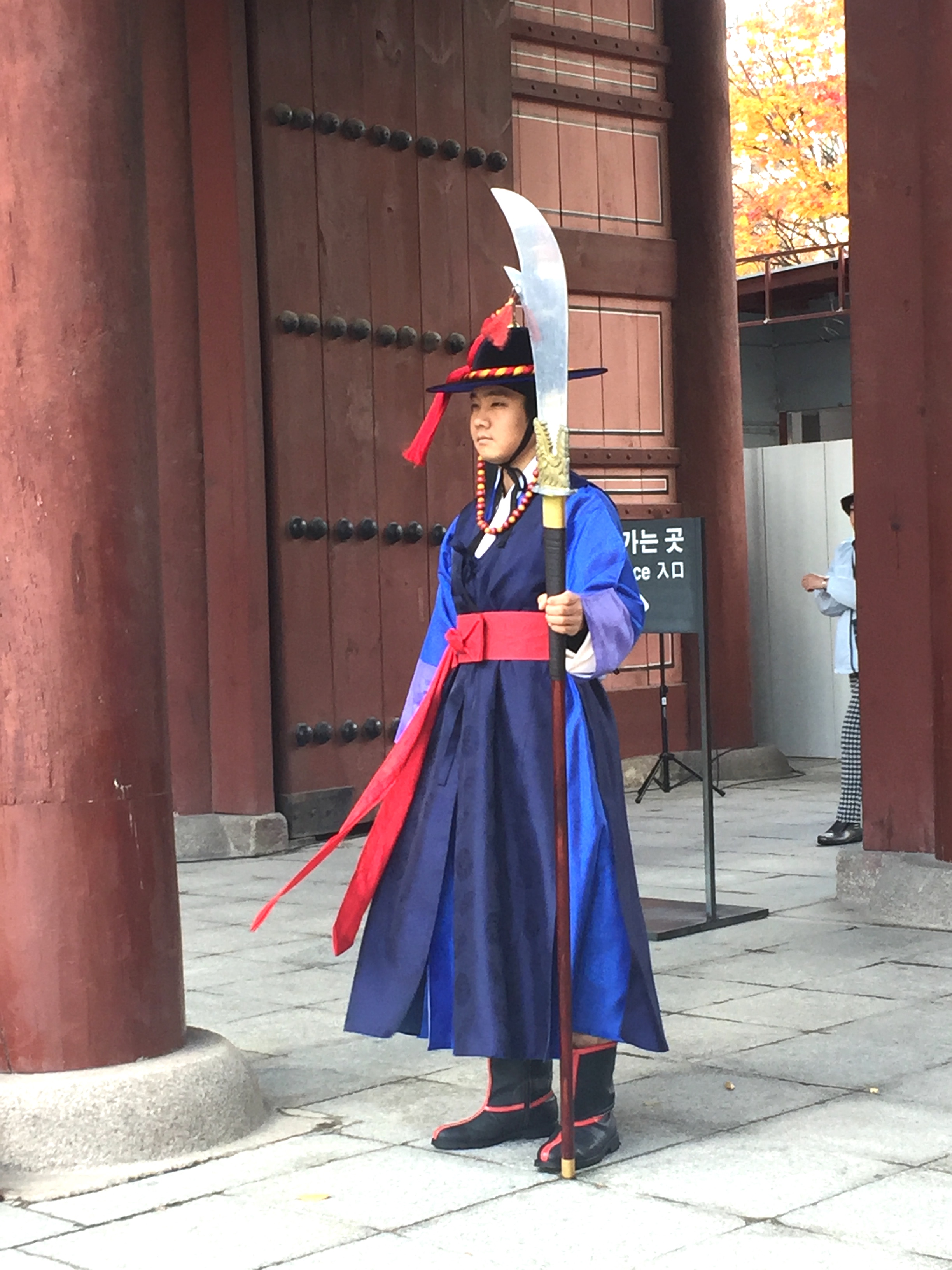
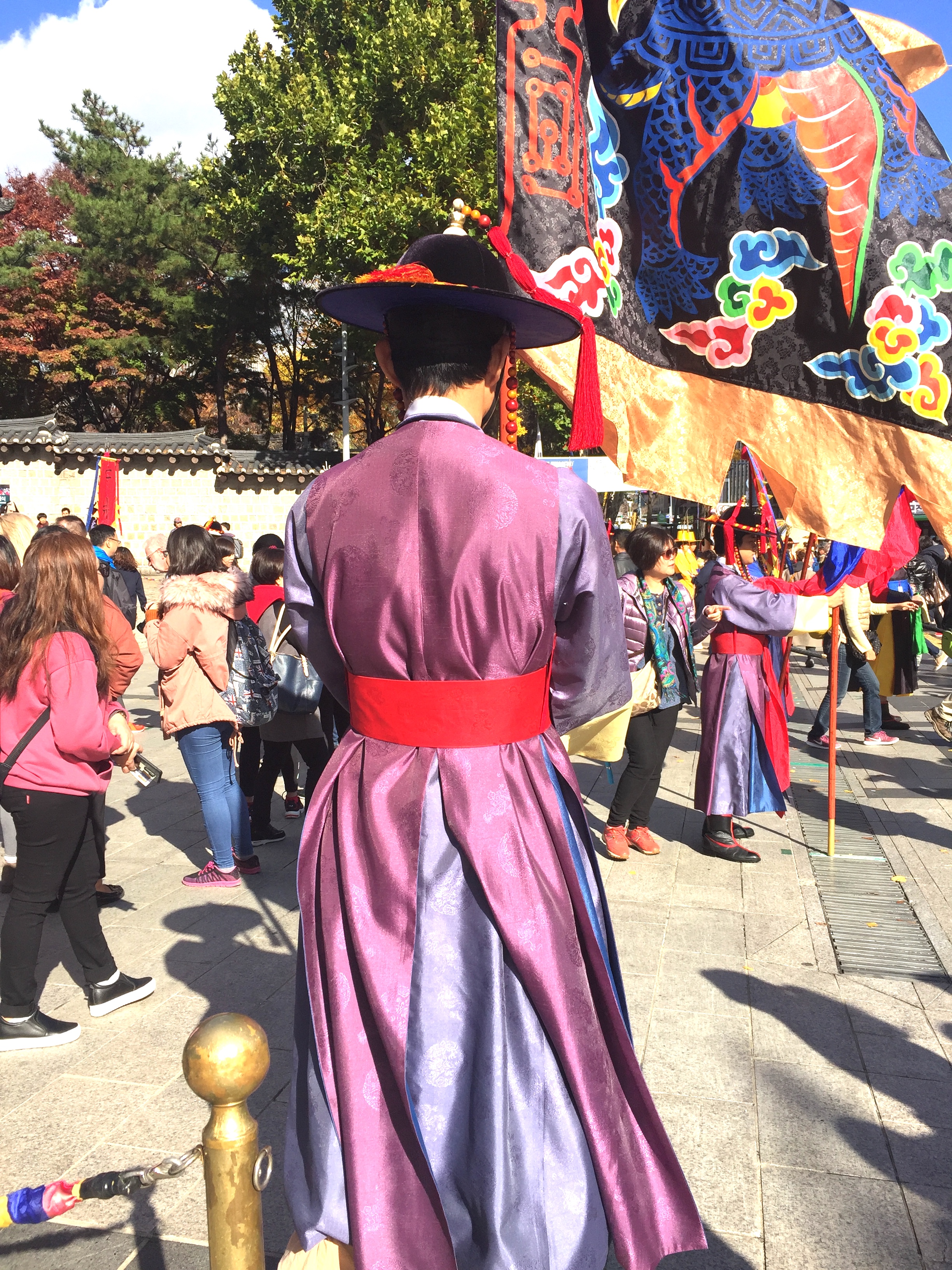
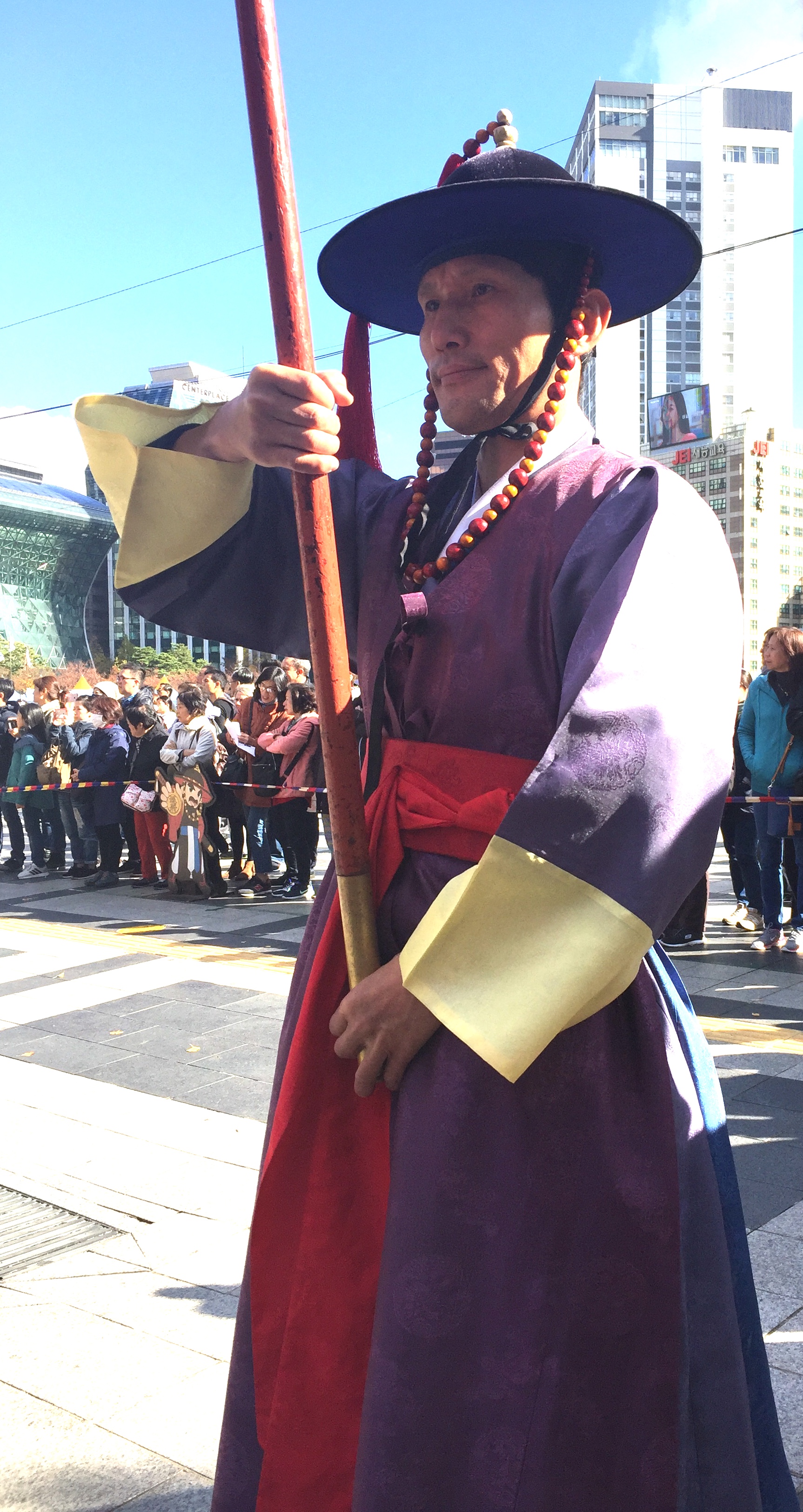
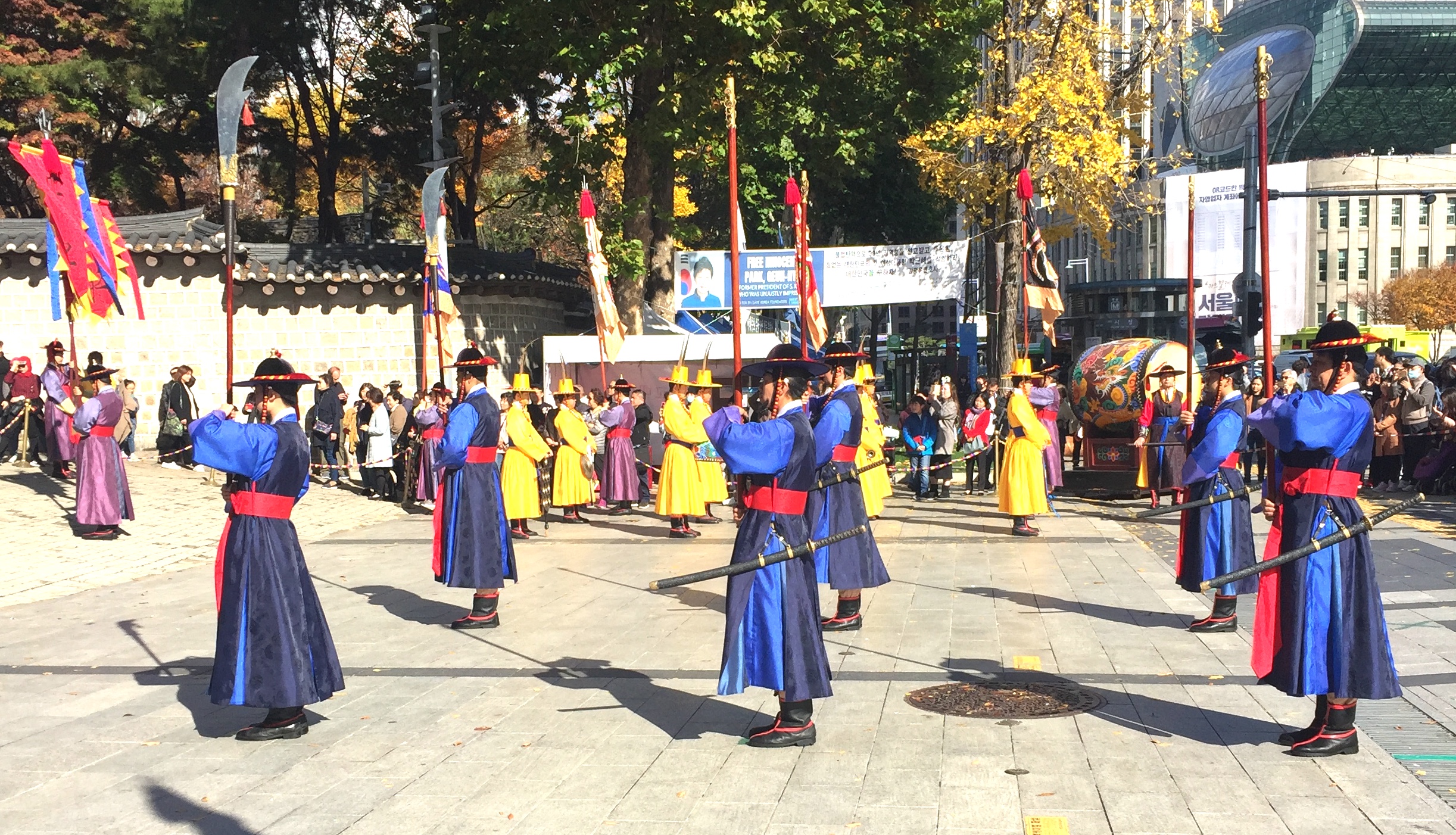
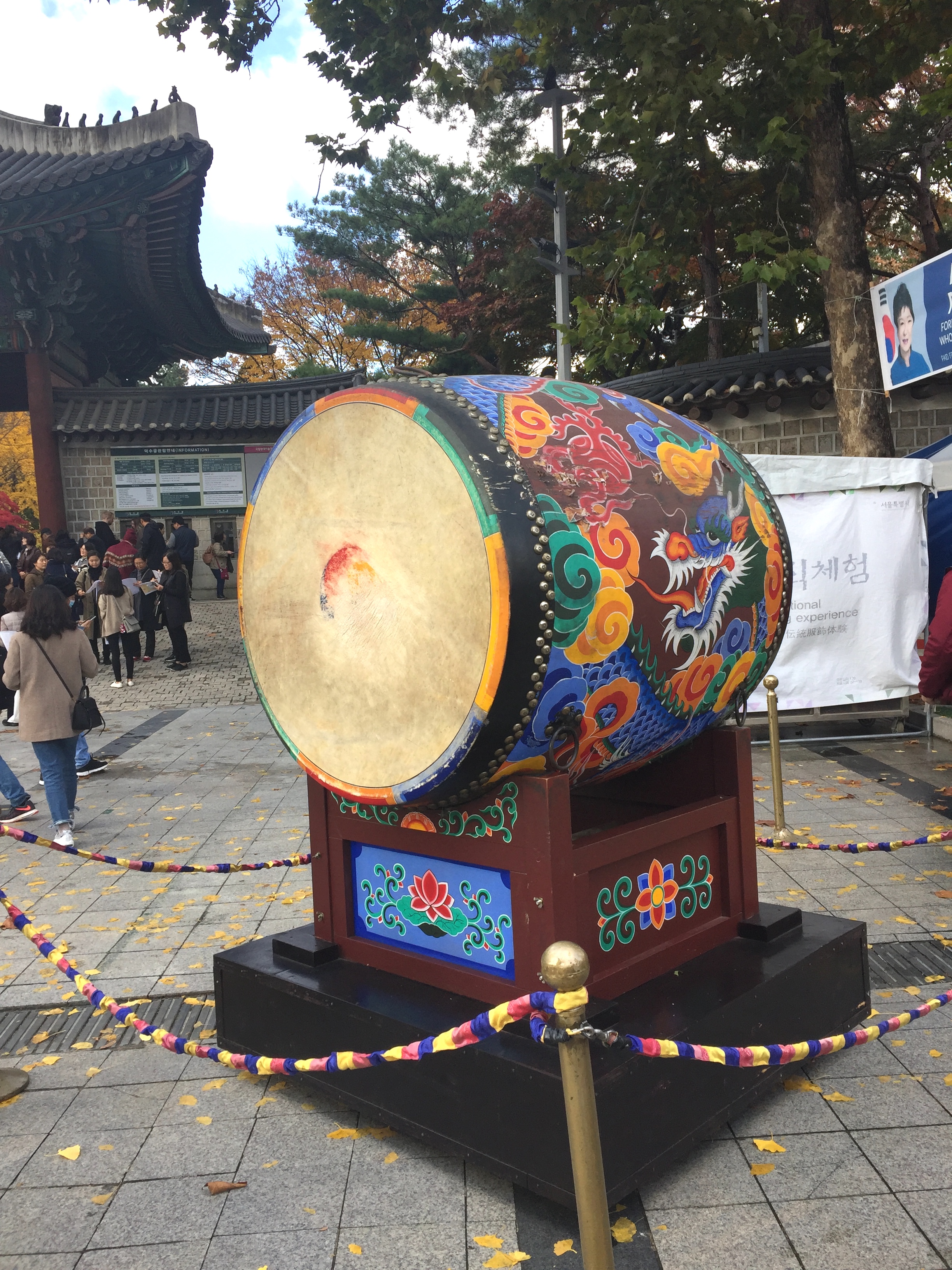
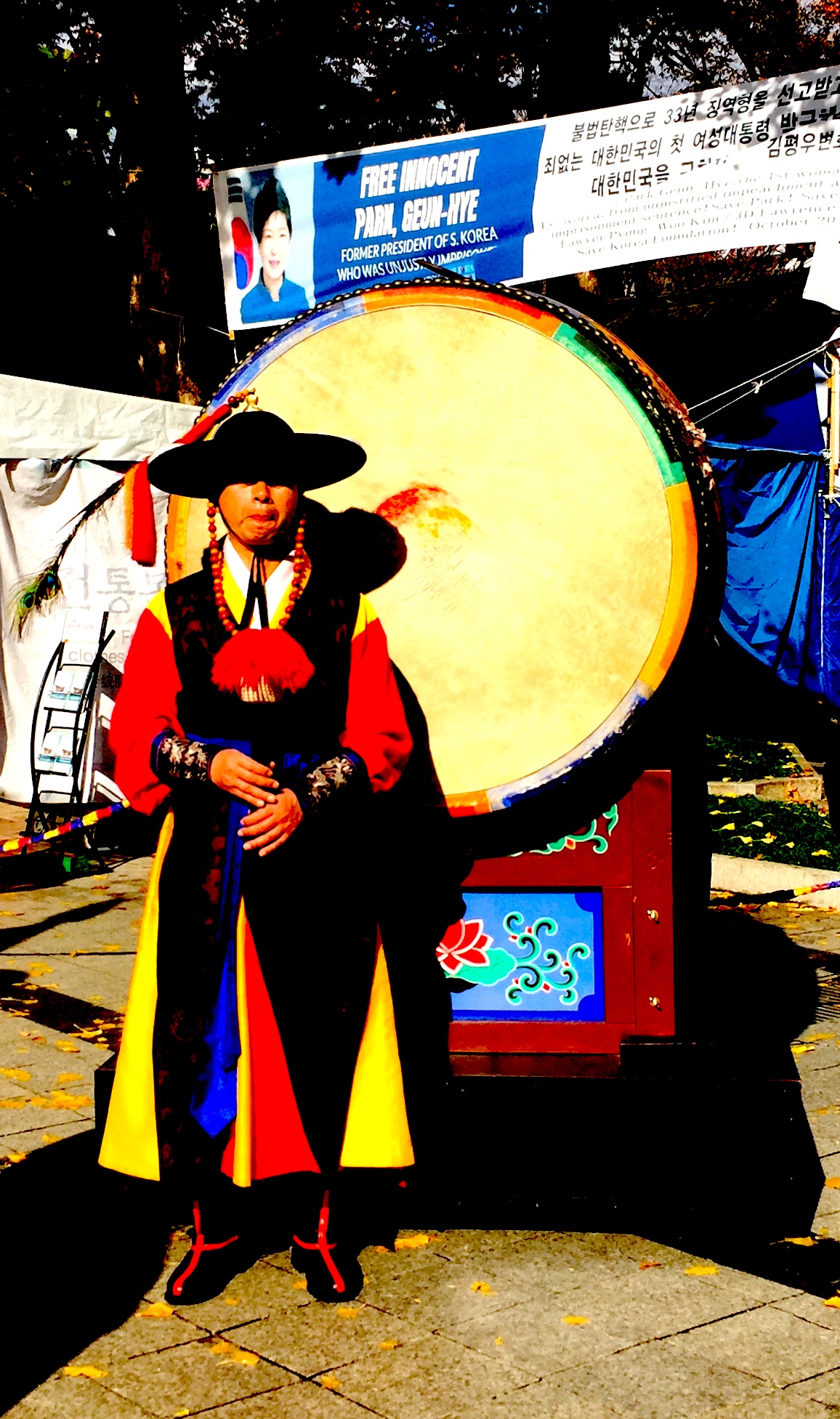
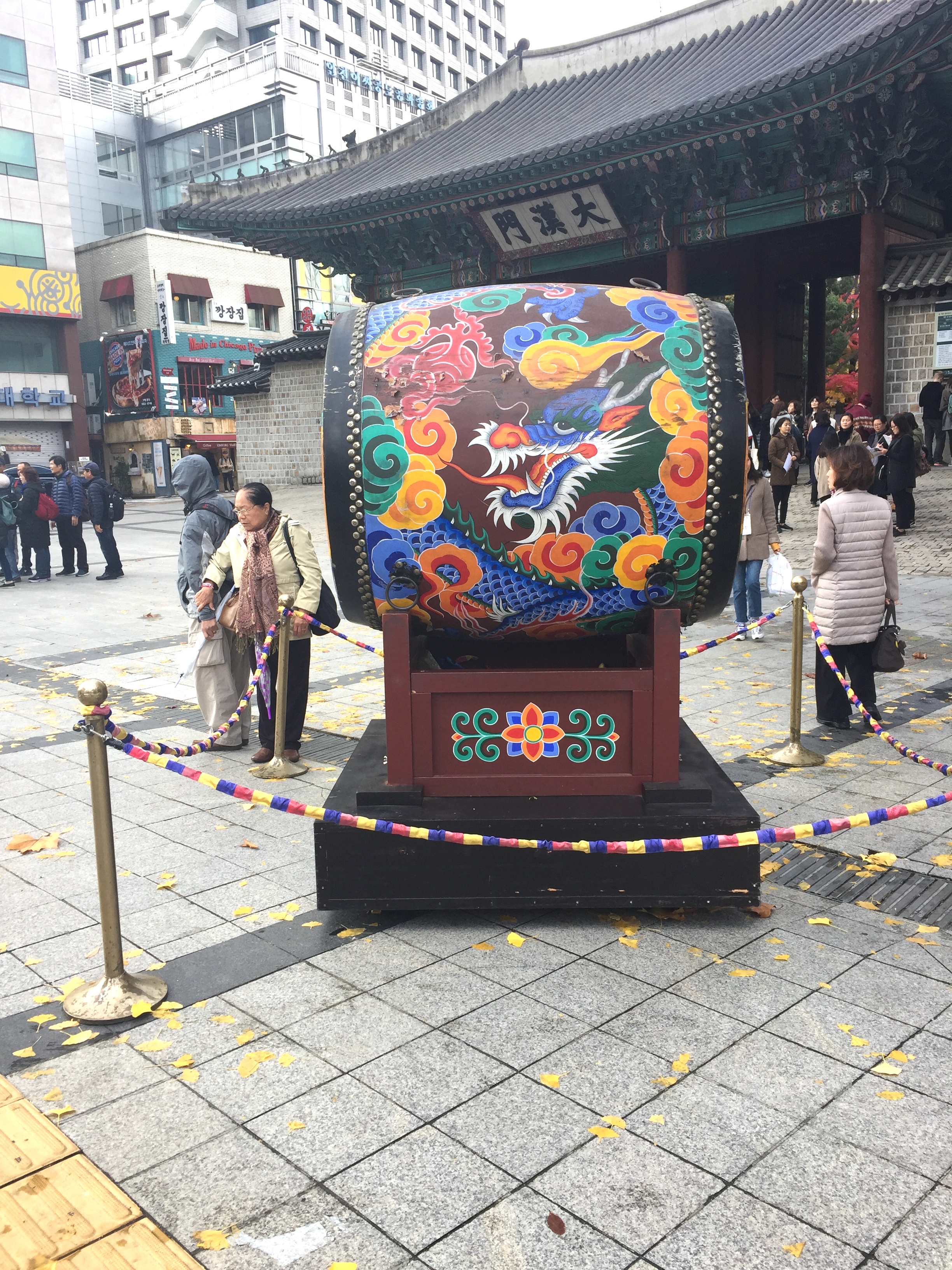
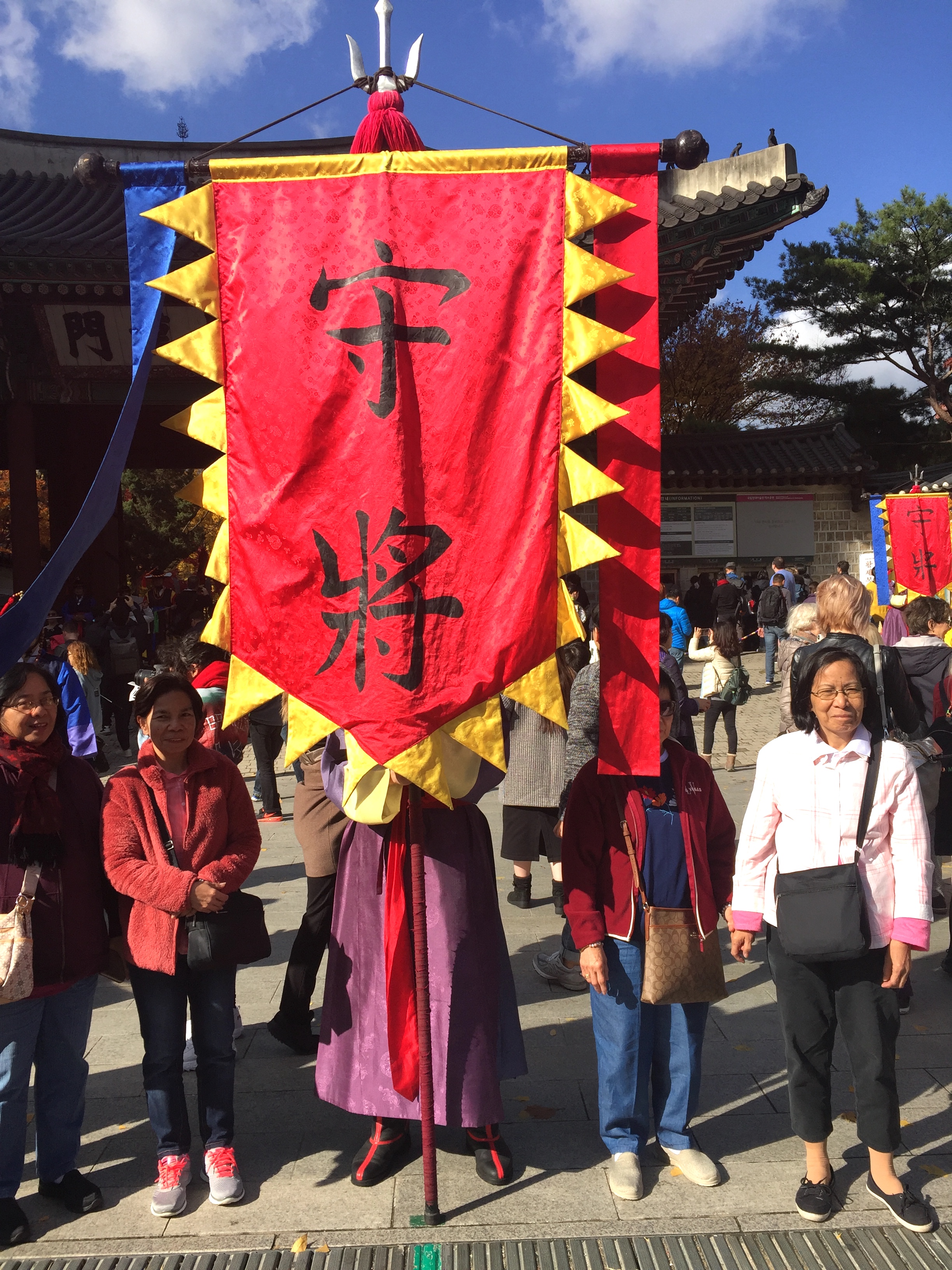
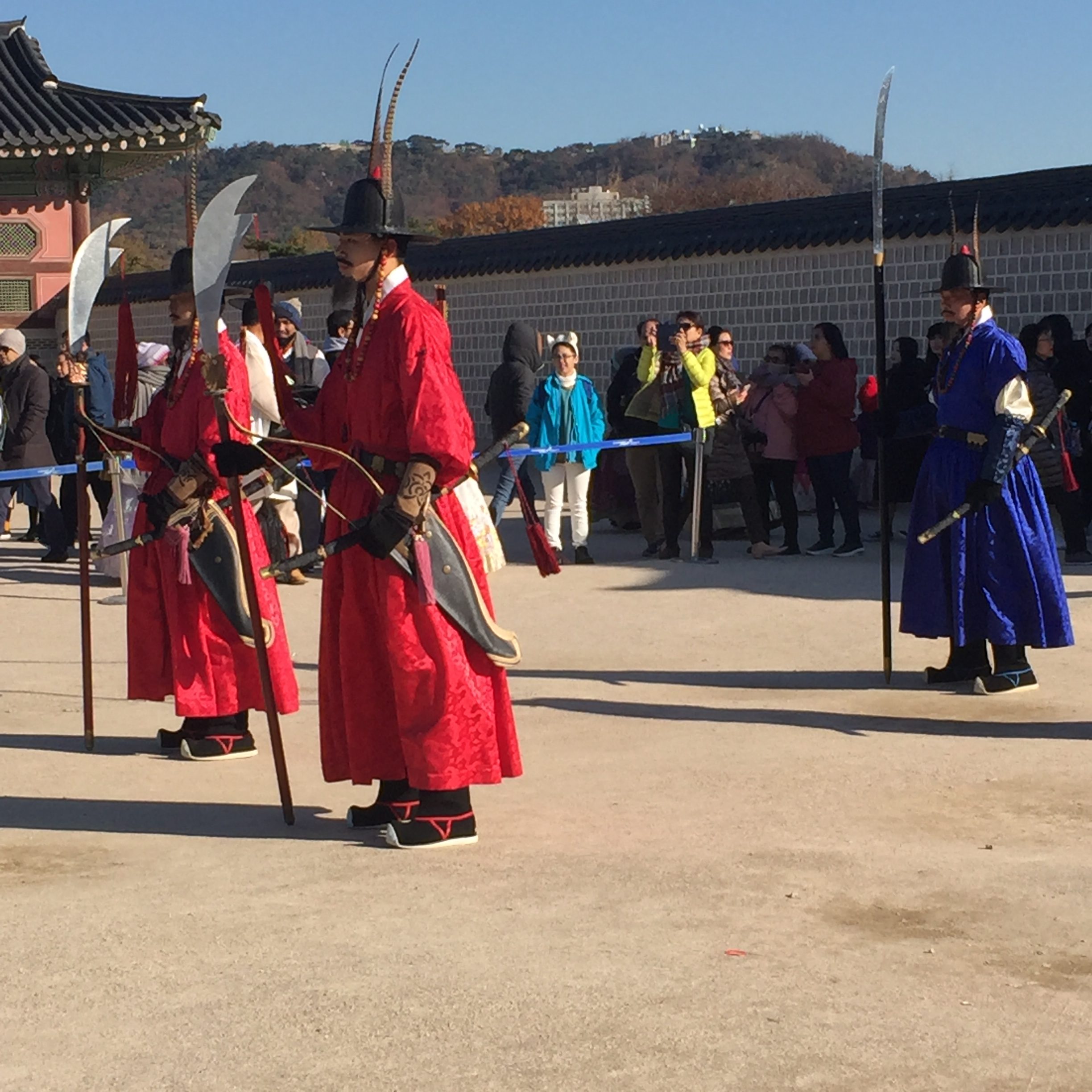
    The Korean populace apparently love the palace as much as the tourist, and everyone loves the recreation of the Changing of the Guards ceremony, usually held twice a day at Gyeongbokgung and the other palaces. As you can see from these photographs below, the uniforms are bright; the banners colorful and waving; and the music, which you cannot hear, is very loud and very brassy and  punctuated by regular loud thumps on the highly decorated drum, the thumps requiring a full-body workout by a full bodied Korean man.

    Sorry ladies, but no females involved in these exercises; this is strictly an all-boys show. “You go home now and attend to your work, the loom and the spindle, and tell the waiting-women to get on with theirs,” says Hector to his wife, Andromache, in the Iliad. “War is men’s business.”  FMR: It should not be anybody’s business.
  • Friday 9 November 2018

    Friday, 9 November 2018

    Koreans love parades and dressing up in the dress of the nineteenth-century Joseon Dynasty Court or maybe they  – that is the Korean Tourist Bureau – has discovered that visiting tourists love to see parades and Koreans dressed up in the dress of the nineteenth-century Josean Dynasty. And the costumed exercises are a delight to watch with the colorful banners and performers in the brightly colored costumes, moving in their orderly pageantry.   The Changing of the Palace Guard is held in front of Deoksugung, a beautiful Korean Palace in the City Hall district of Seoul. The Changing of the Guard was a fairly lengthy exercise, crowded with onlookers.


    The formations moved to the accompaniment of a strong regular drum beat – the drum a beautifully decorated affair – and the drum beat punctuating music that sounded to me rather like Scottish bagpipes. I need to research what instrument was being used.


    At the end of this elaborate ritual, the announcer who had explained each of the moves of the troops, the guards, and the battalion commander, invited the audience to come and have their photo taken with the performers. Which everyone did (except me) with enthusiasm. I am not among those photographed with of a Korean Palace Guard. 


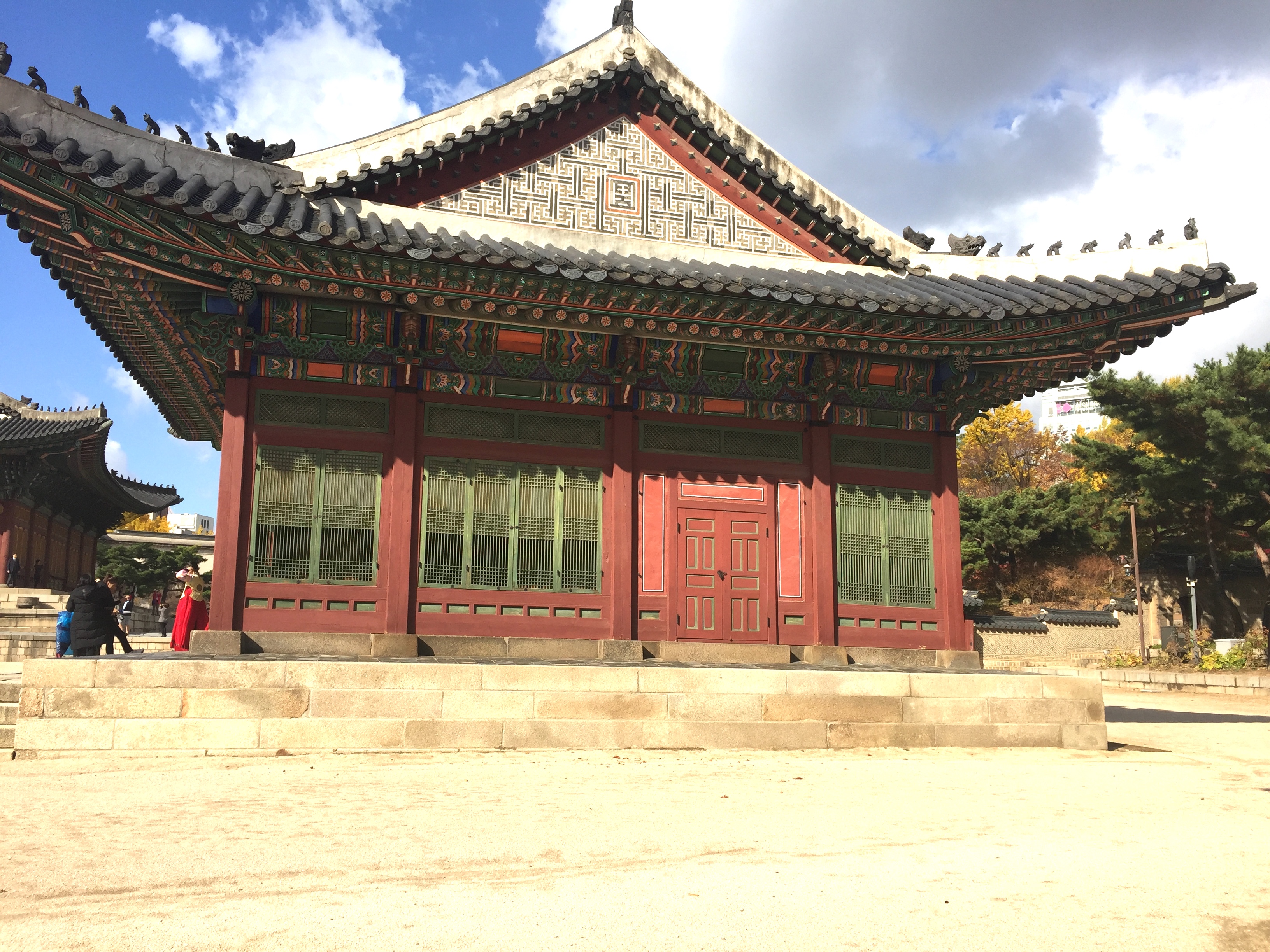
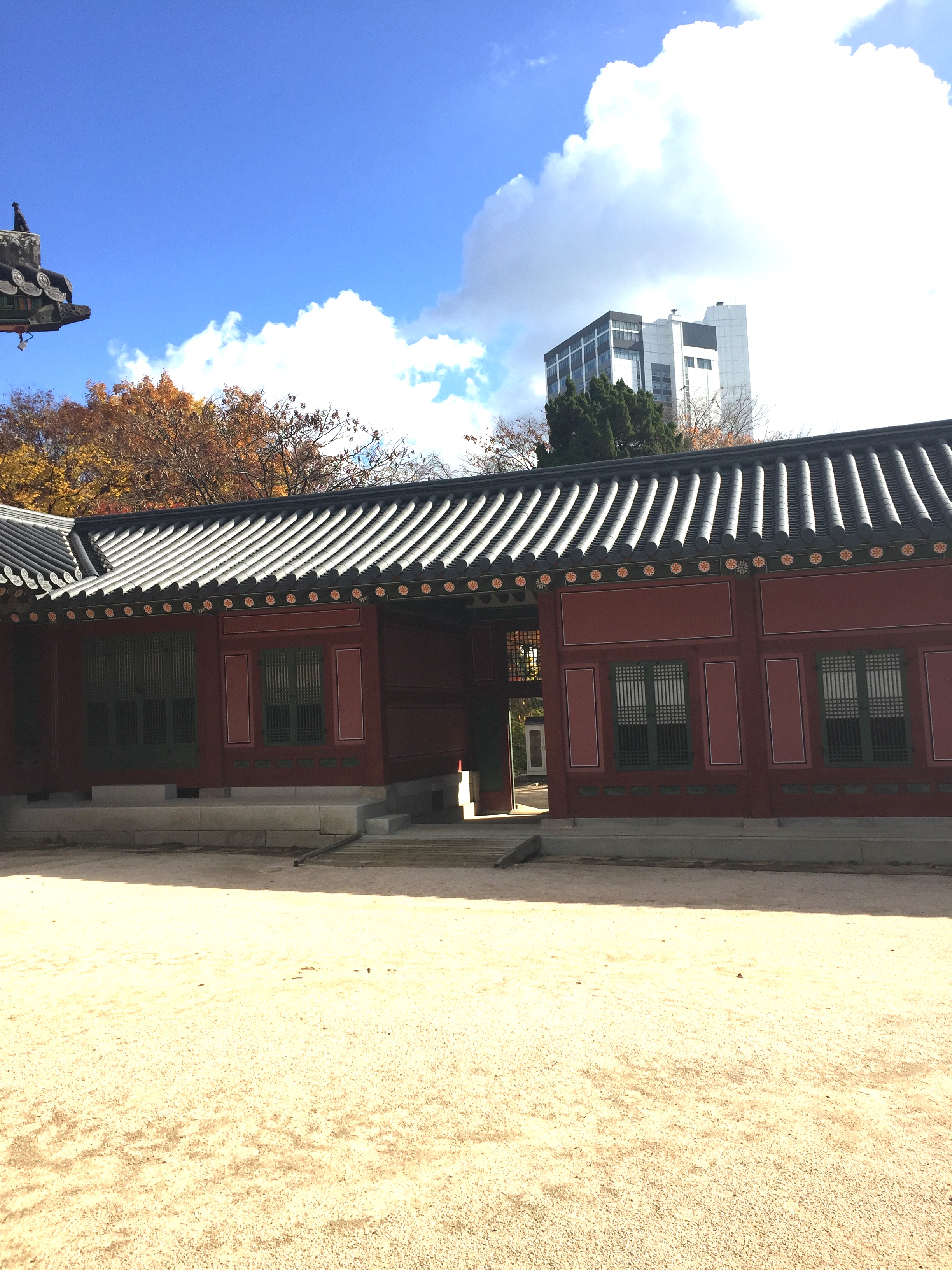
     Deoksugung, like all the Korean palaces, includes an impressive gate and a number of one- or two-story wooden buildings with ridged roofs with wide overhanging eves and many large bare-earth spaces, or courtyards between and surrounding the individual buildings..  


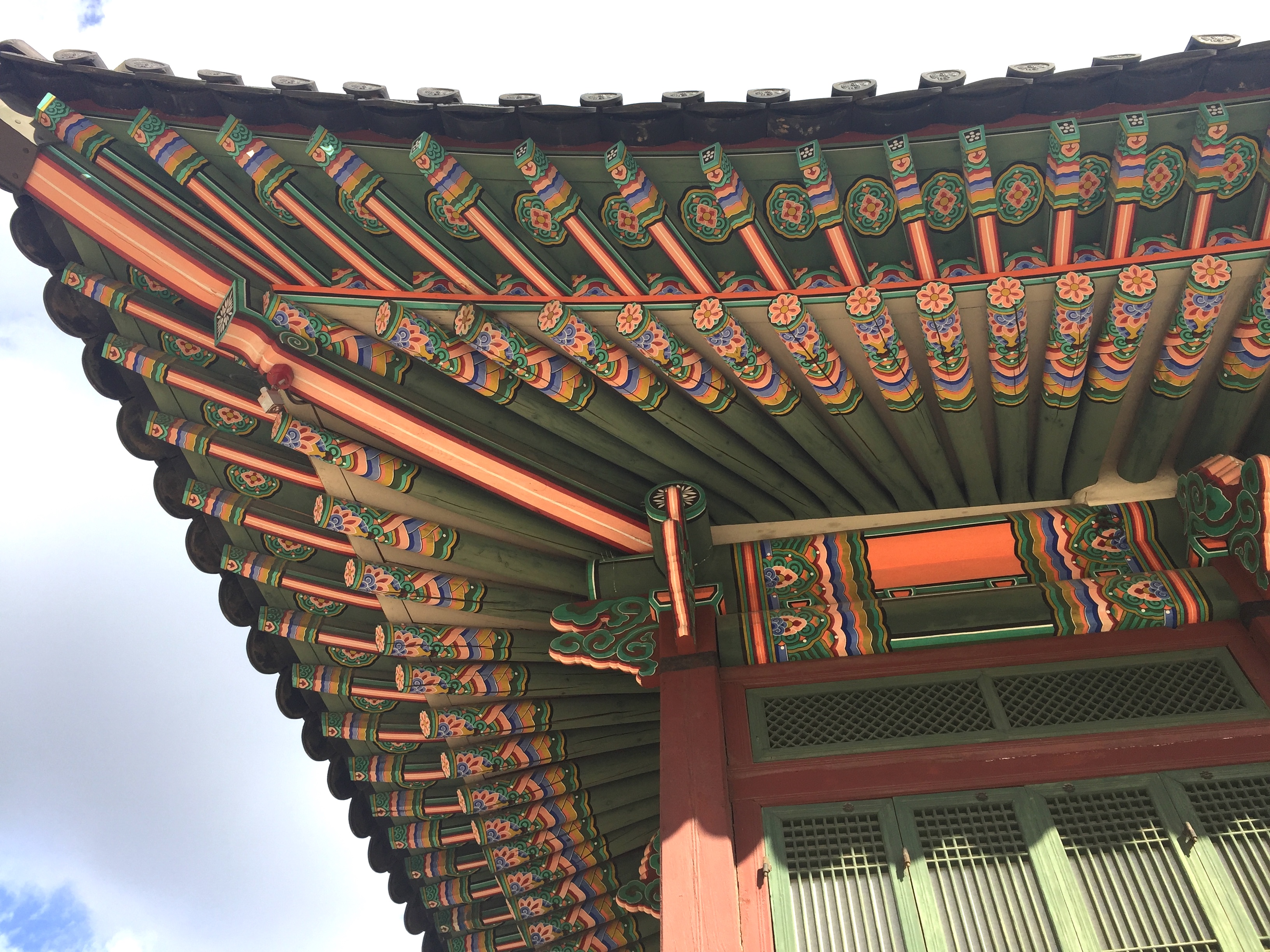
    Deoksugung was especially appealing because colorful and intricate designs were painted on the underside of eves, around windows, and on the corners of the buildings.


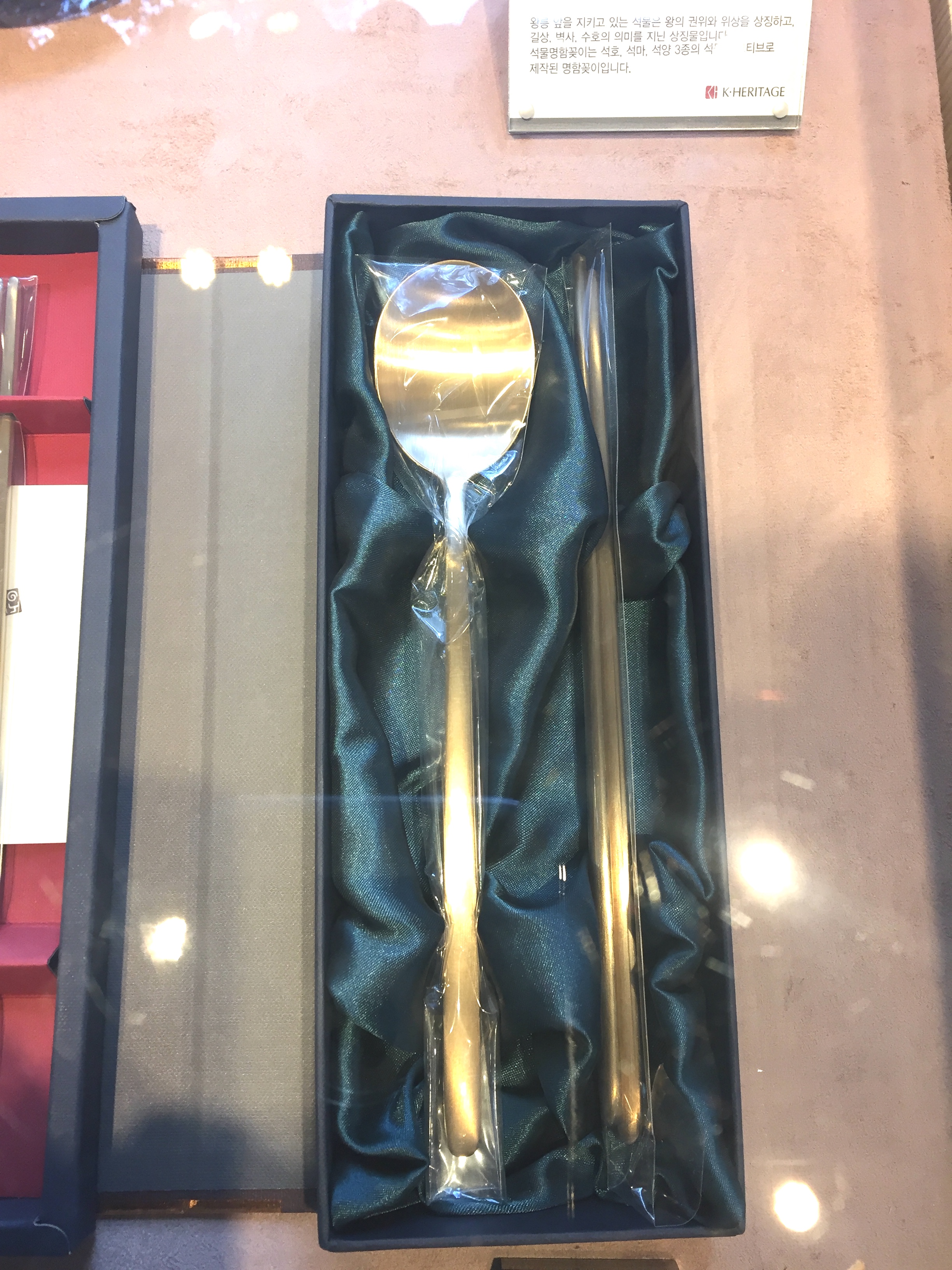
    The gift shop displayed silverware in the classic Korean deign and colorful children’s dresses.

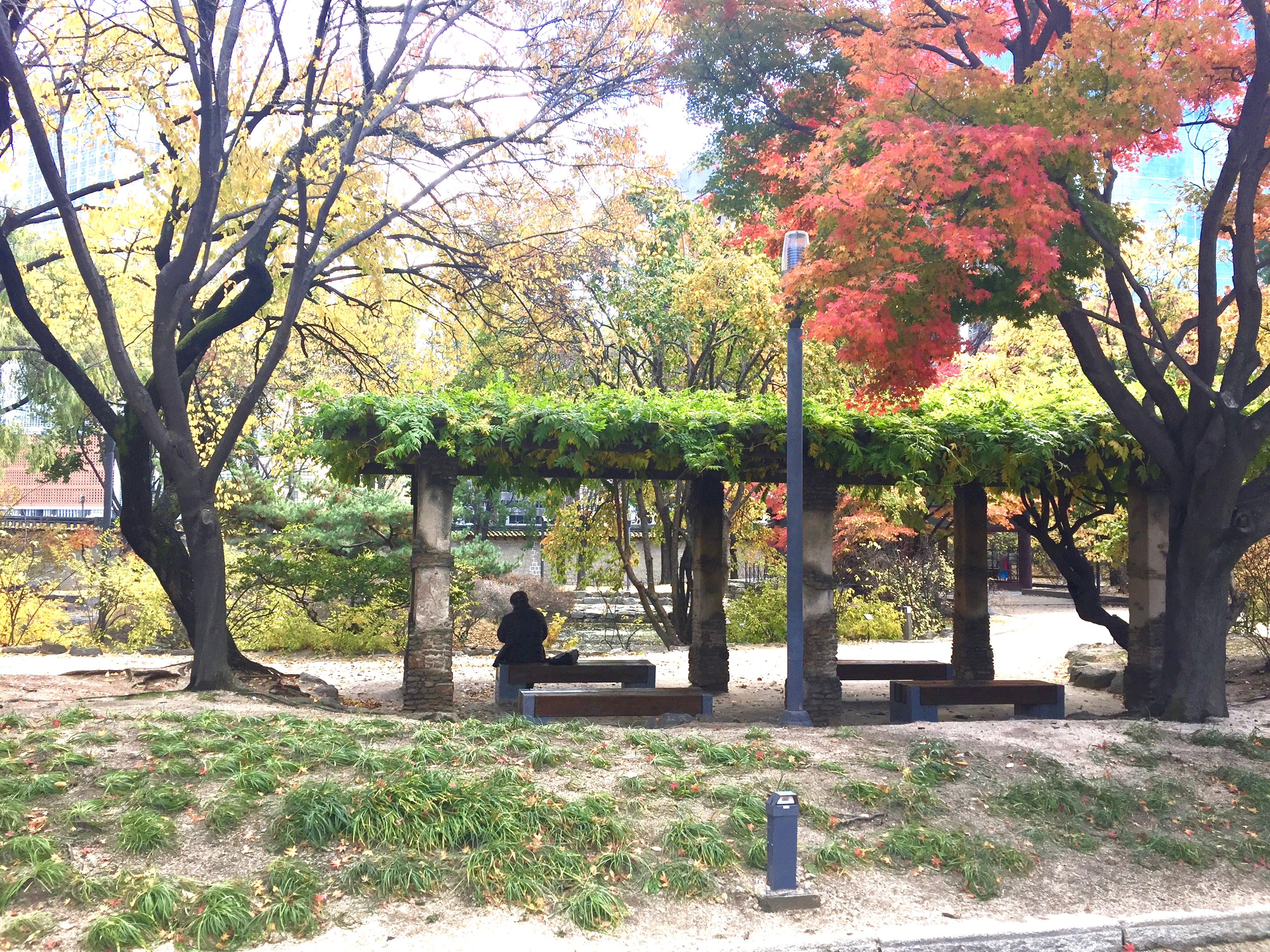
          Just outside the gift shop was a large pond surrounded by fall trees and plants. And next to the pond, a long vine-covered arbor extended over a pleasant sitting area.


    At the far edge of the grounds had been built in 1900 a Western-stye bungalow for casual entertaining, the Western architecture incongruous in its current setting. And near it, a beautiful wooded park with winding walkways.


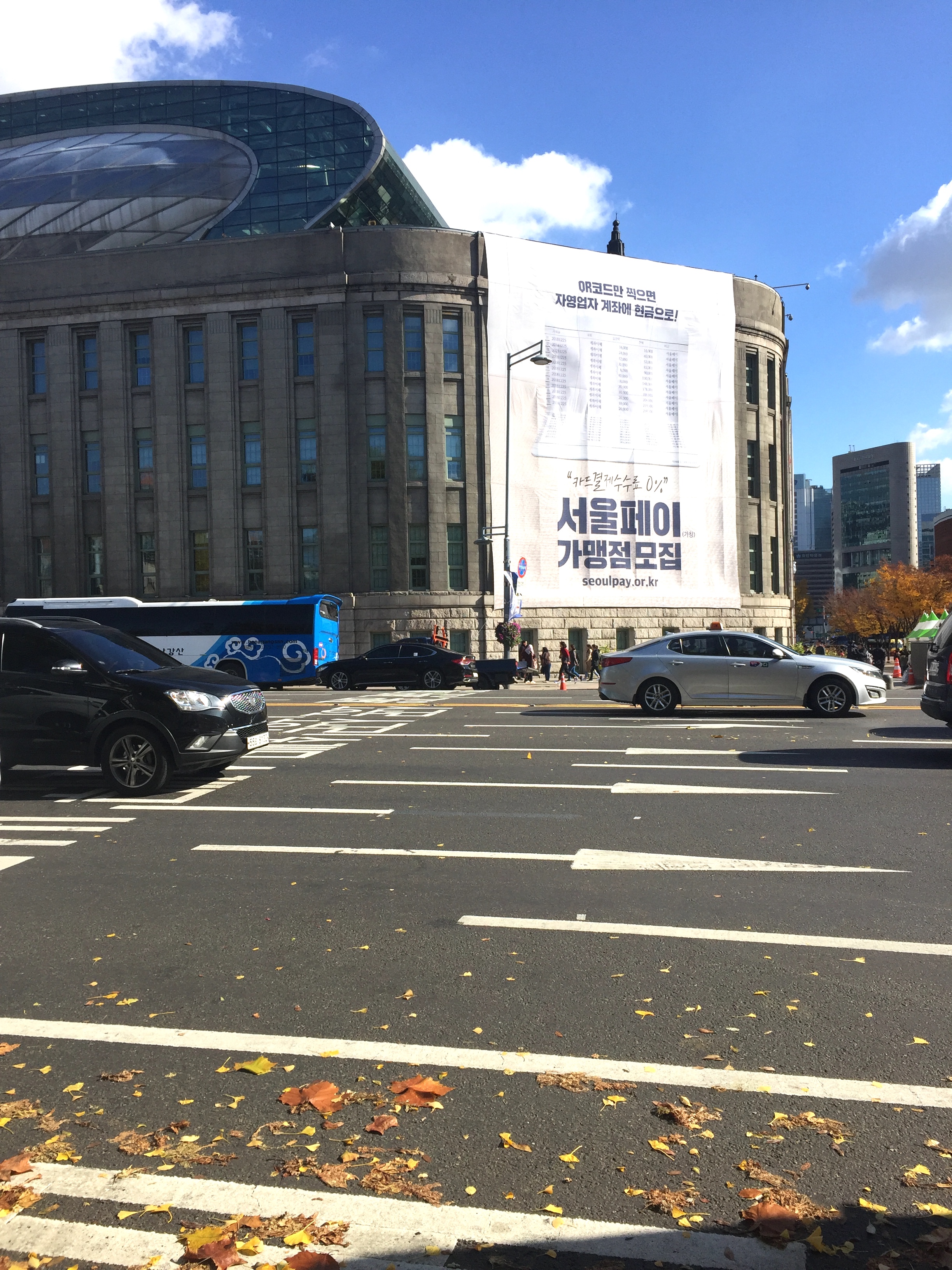
    Across the Street from Deoksugung is the Seoul City Hall and in front the City Hall Sky Plaza.

    .        

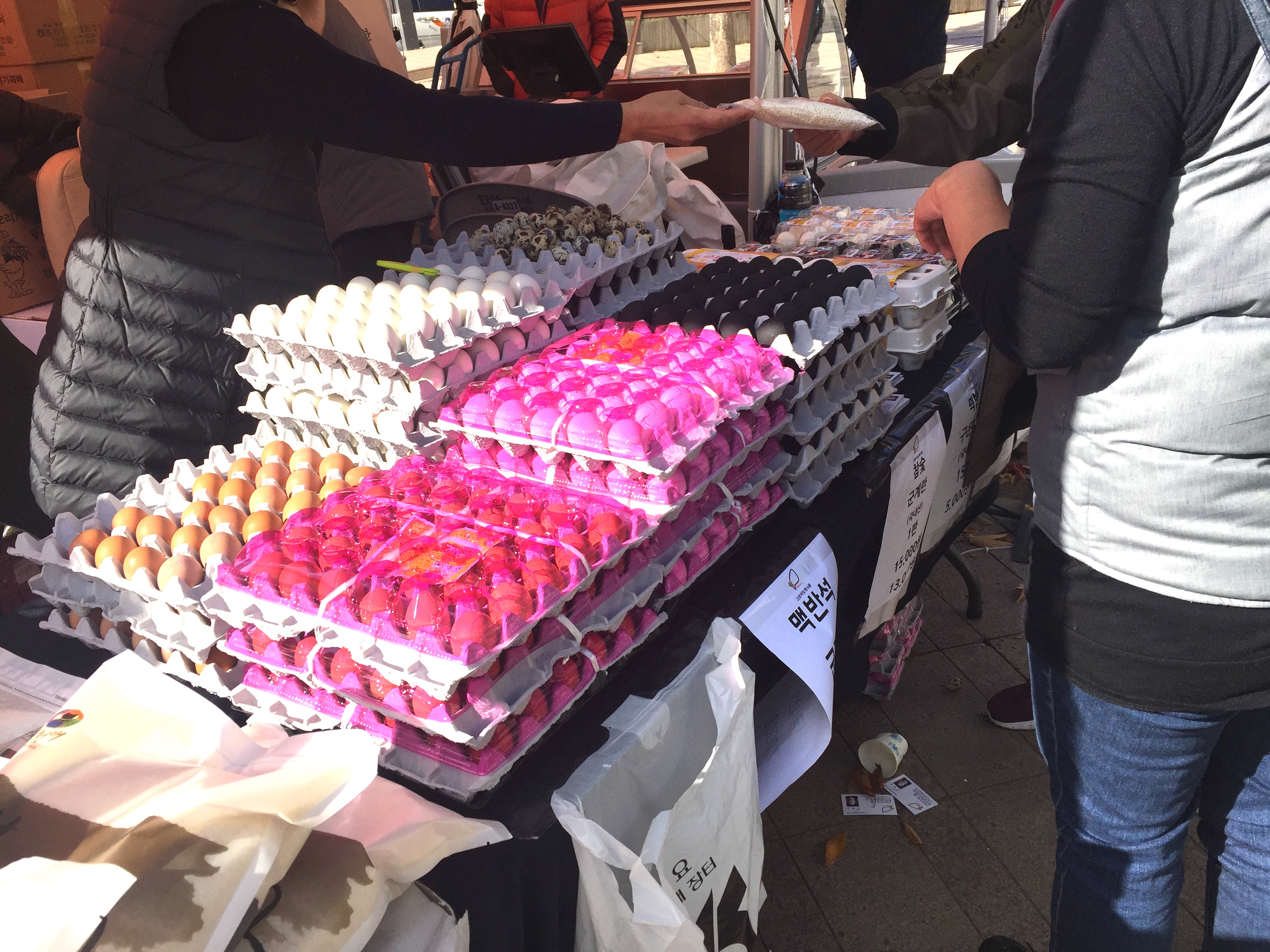
    In the Sky Plaza, a very large plaza, there was a children’s event being held. Lessons in craft that utilized rice straw and traditional games were being played, and the place was alive with children learning and eating the handouts of traditional Korean treats. I was most disappointed that I was not able to photograph some of these beautiful children;  but it was a fun event to witness.
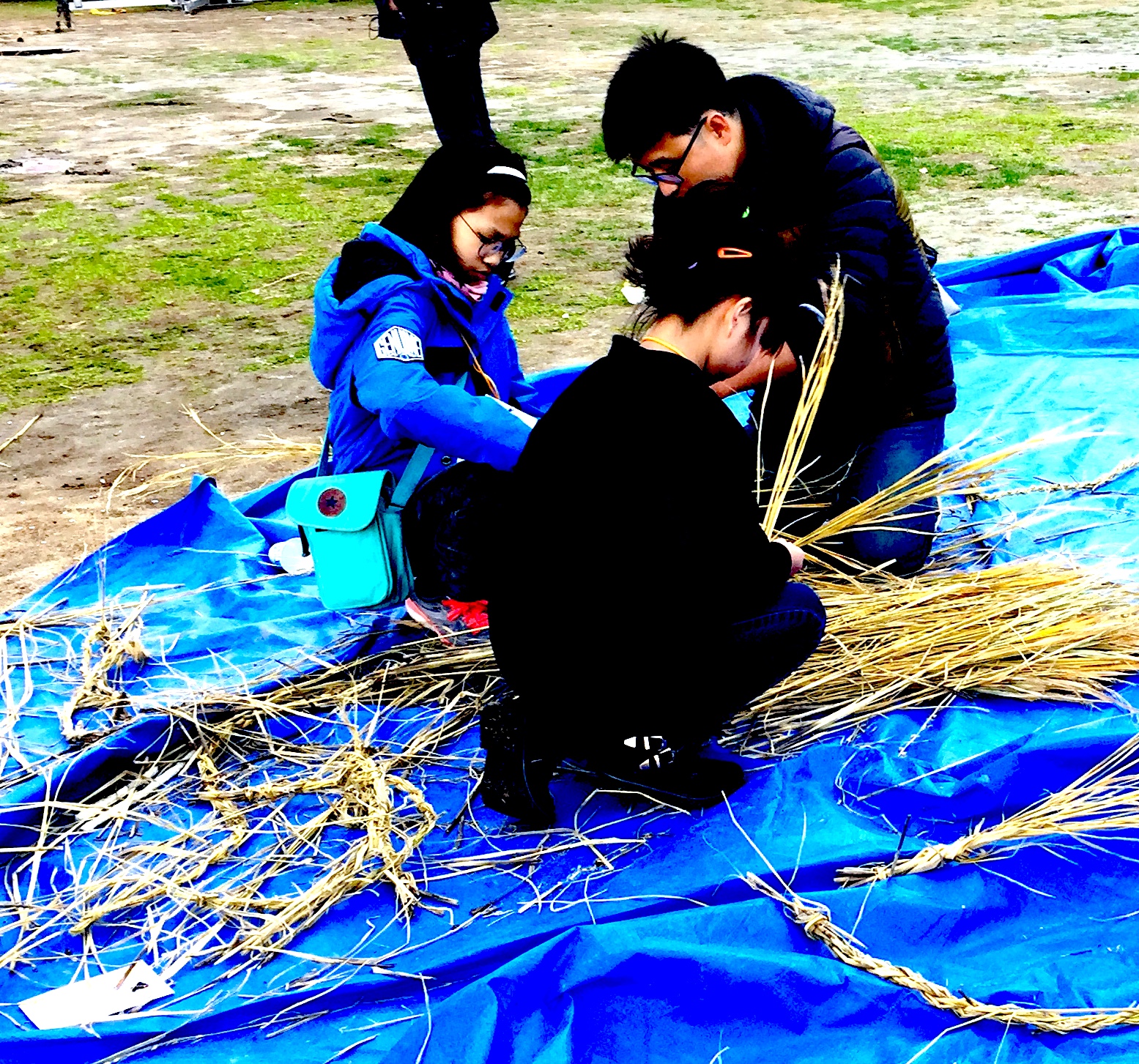
          

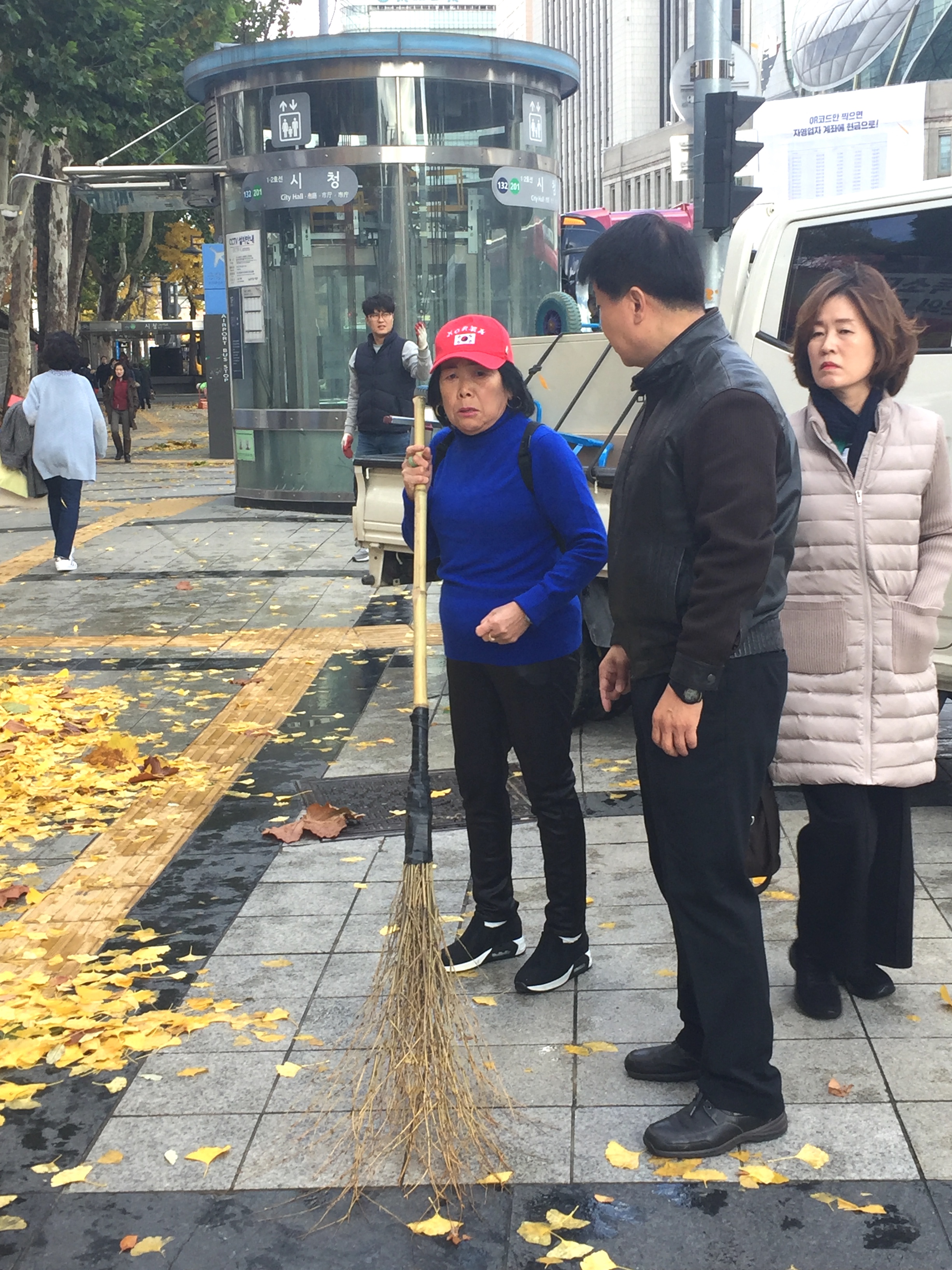
    Leaving the City Hall and walking back to leave Seoul, I saw the roving red-vested Seoul information people, who will help with advice on how to get there or find it or whatever. Very helpful, for they also roam the subways, where things are evermore confusing.  A clown pasted a smiley face on my raincoat, which later fell off .  


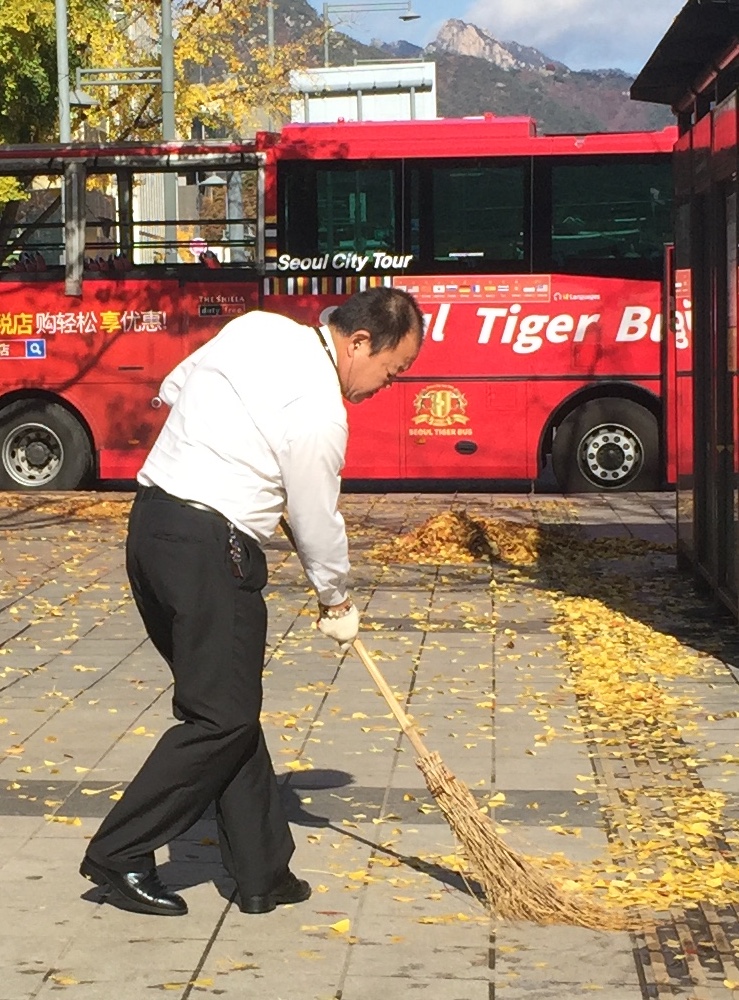
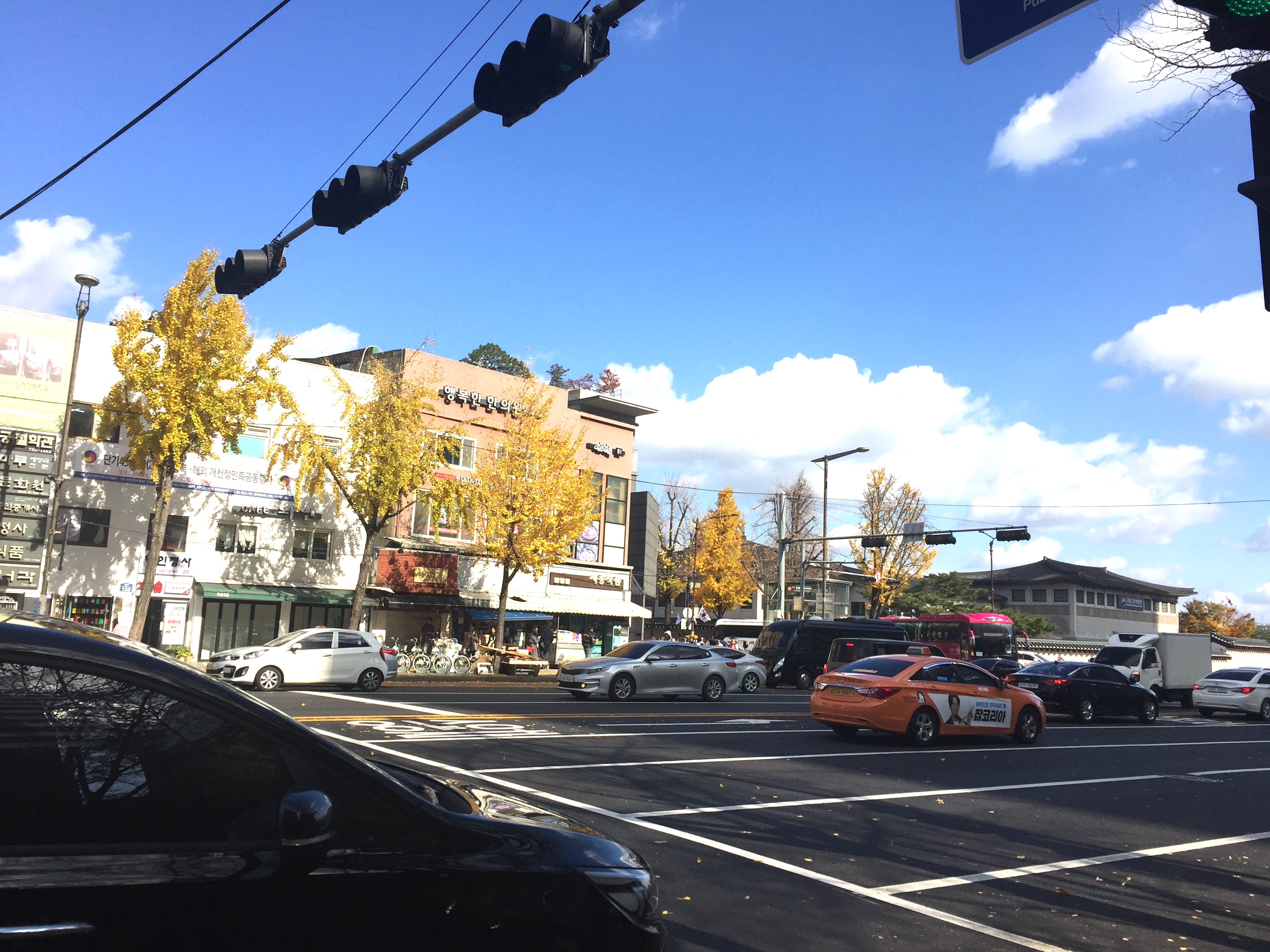
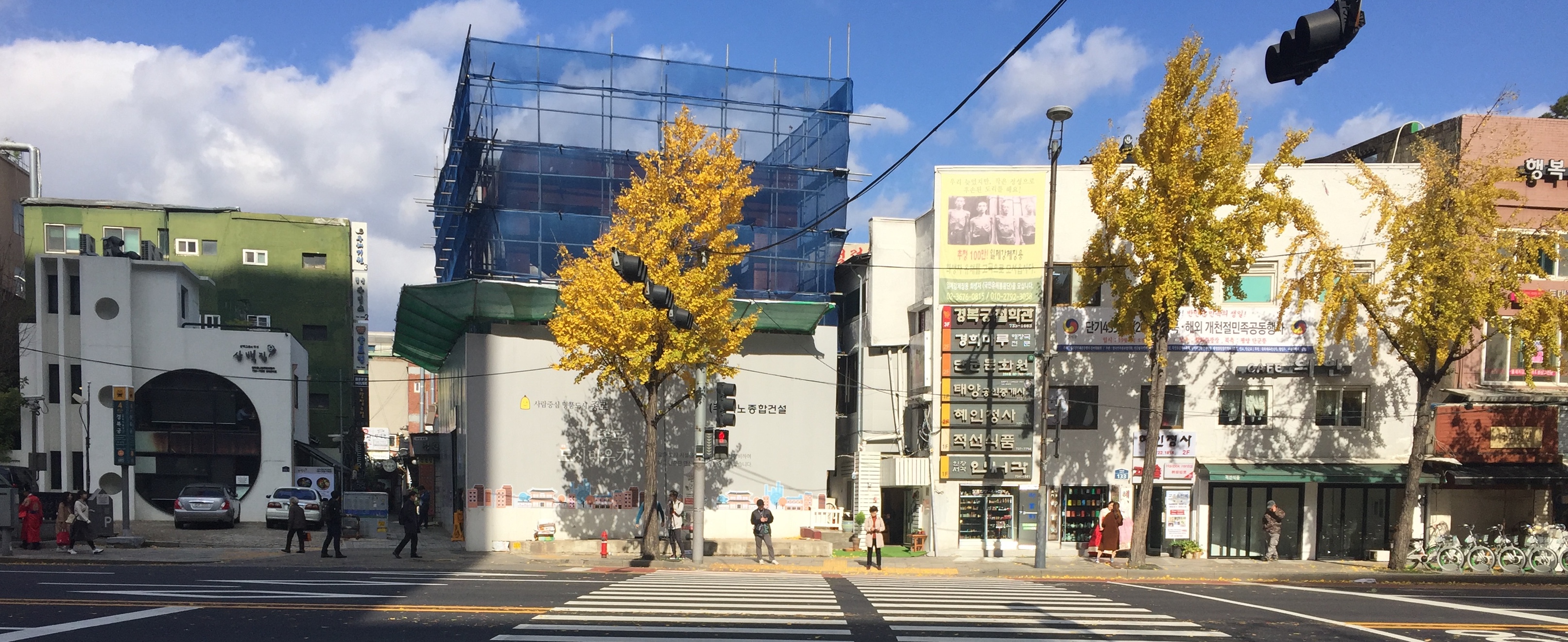
    And piles of yellow leaves here and there testified to the civilized manner in which Koreans rake their leaves. Never a blower to be heard.
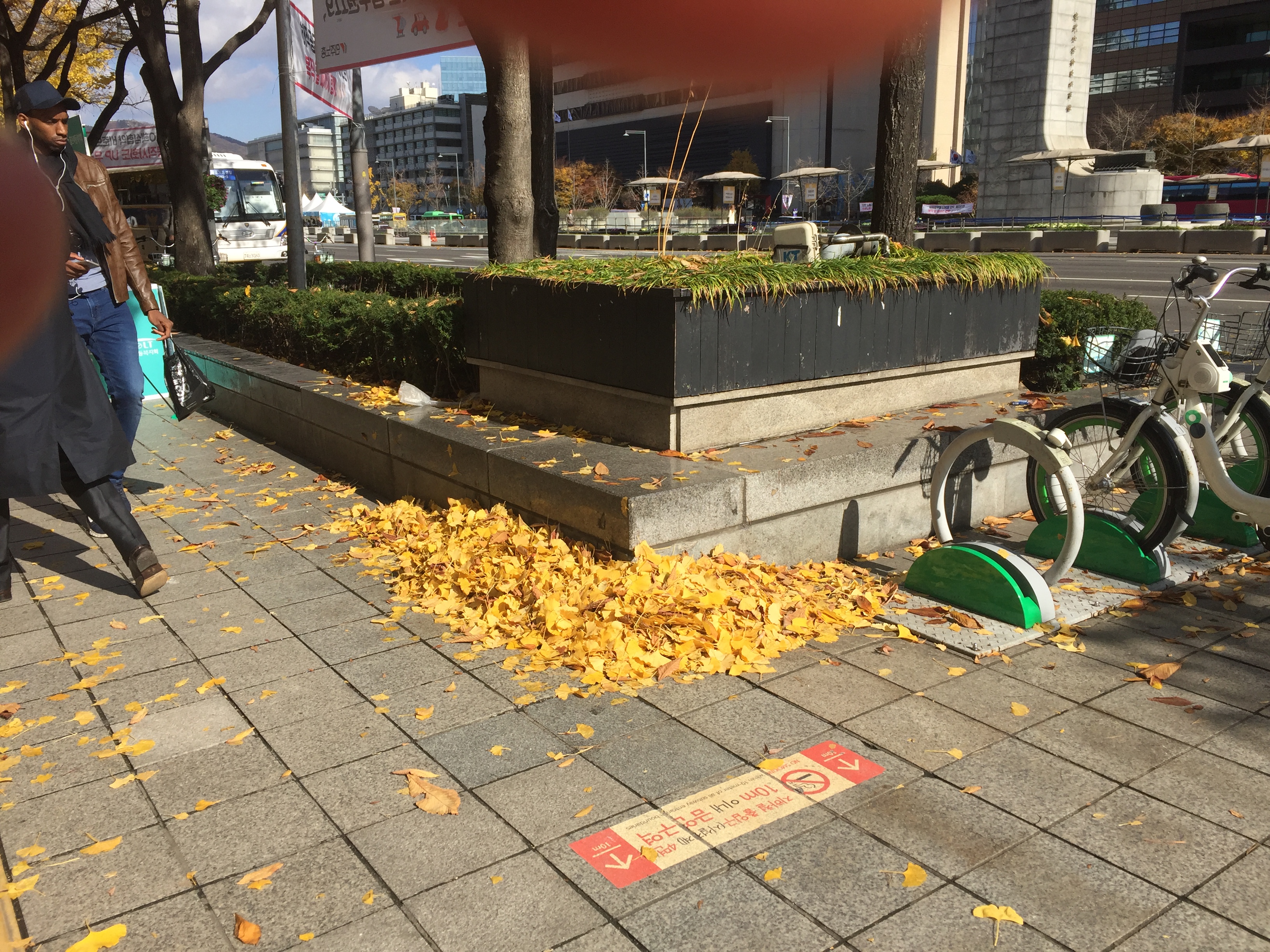
              

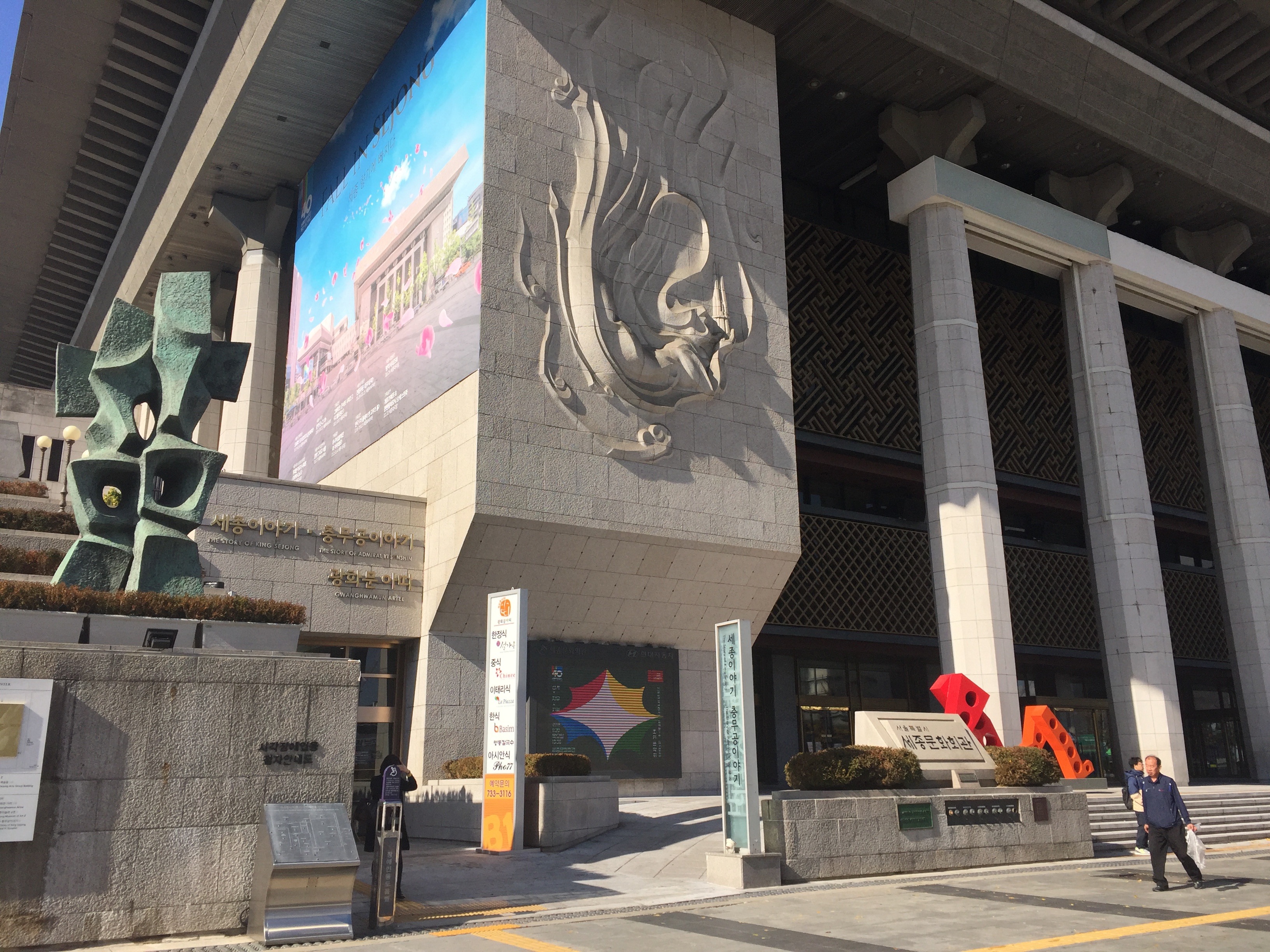
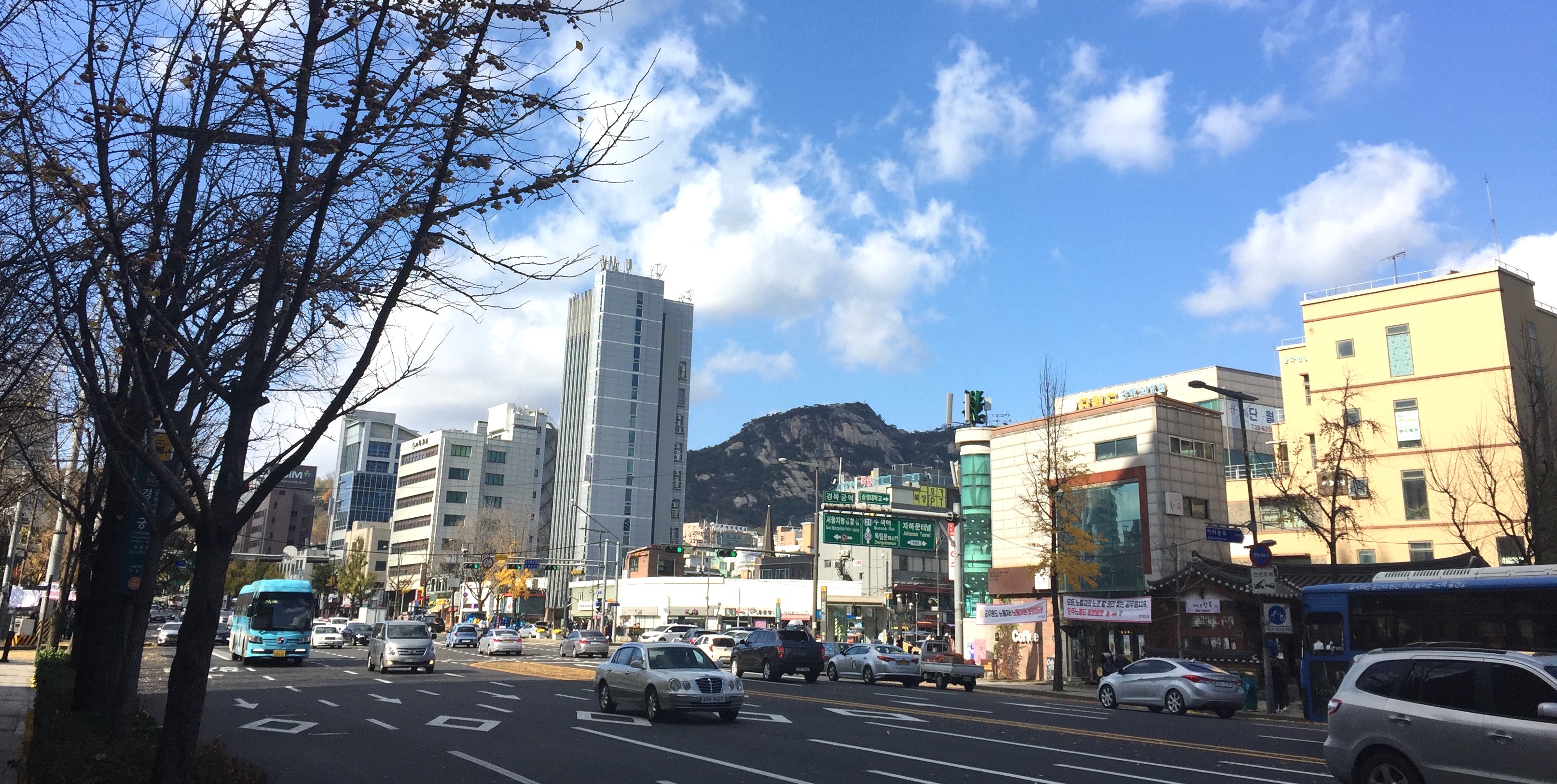
    The City and administrative buildings of Seoul are overwhelmingly impressive. Leaving Seoul on a beautiful day.  


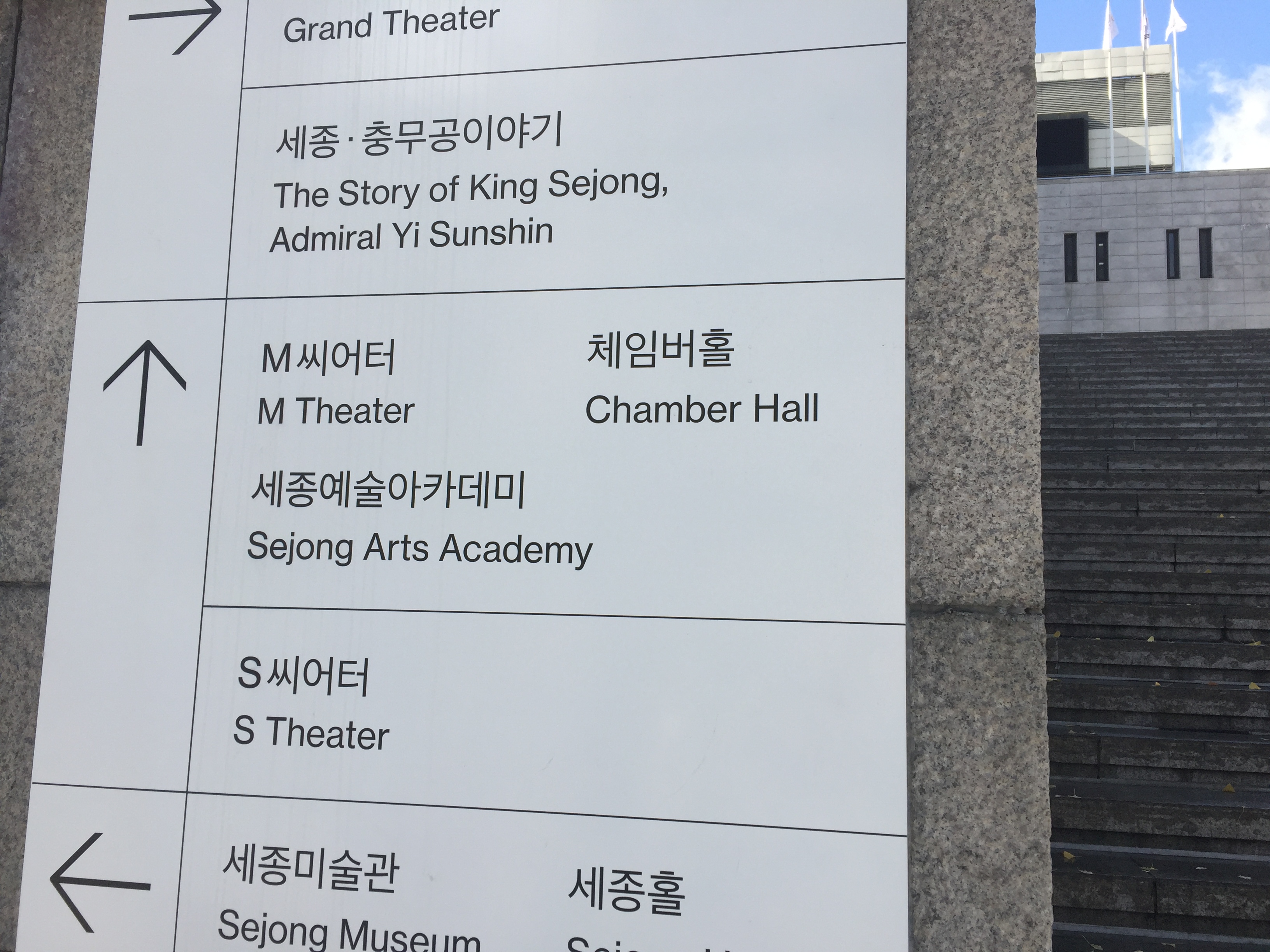
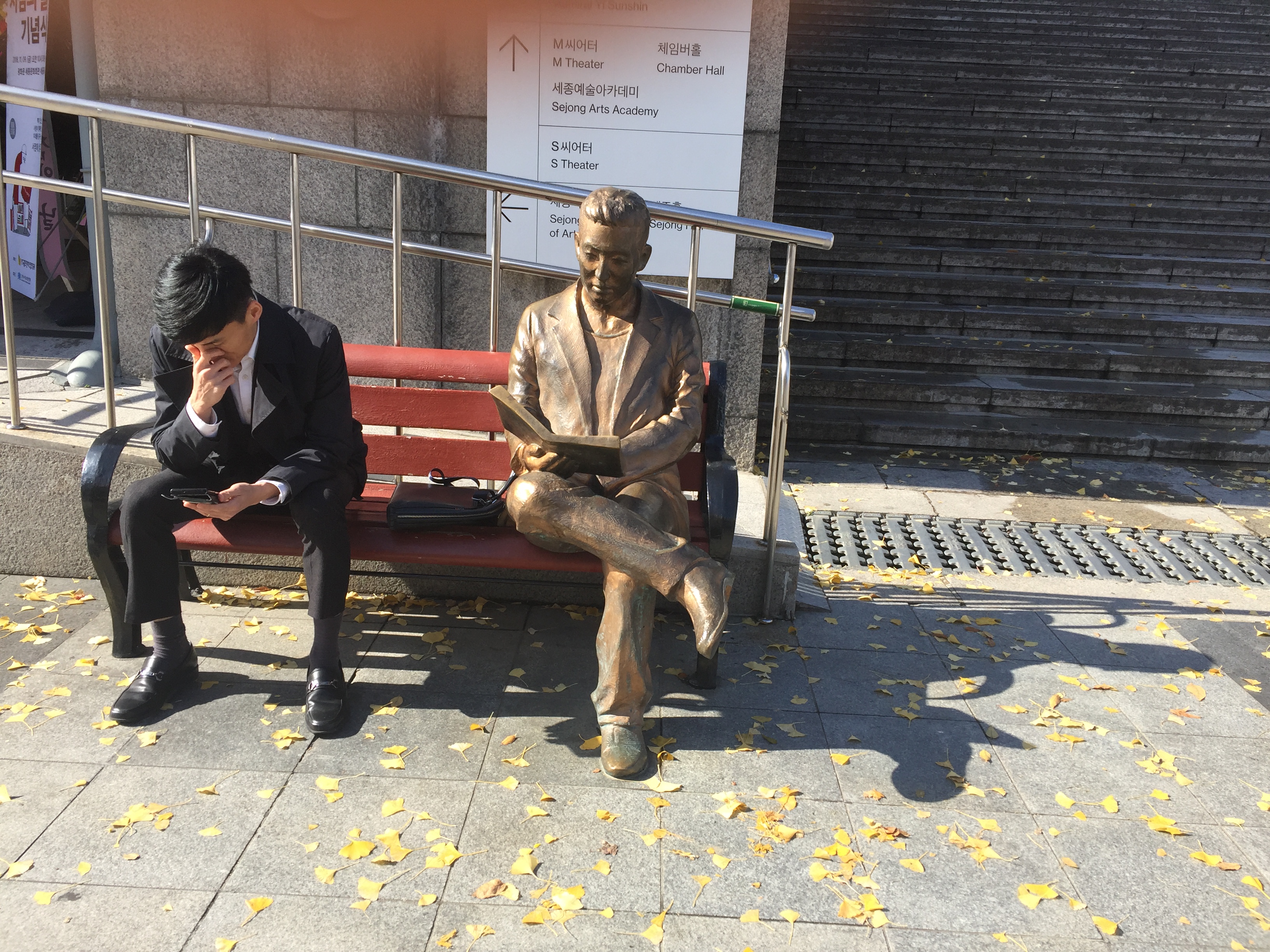
     English language on government buildings occasionally.  But Seoul does have live and not-so-live bench sitters.


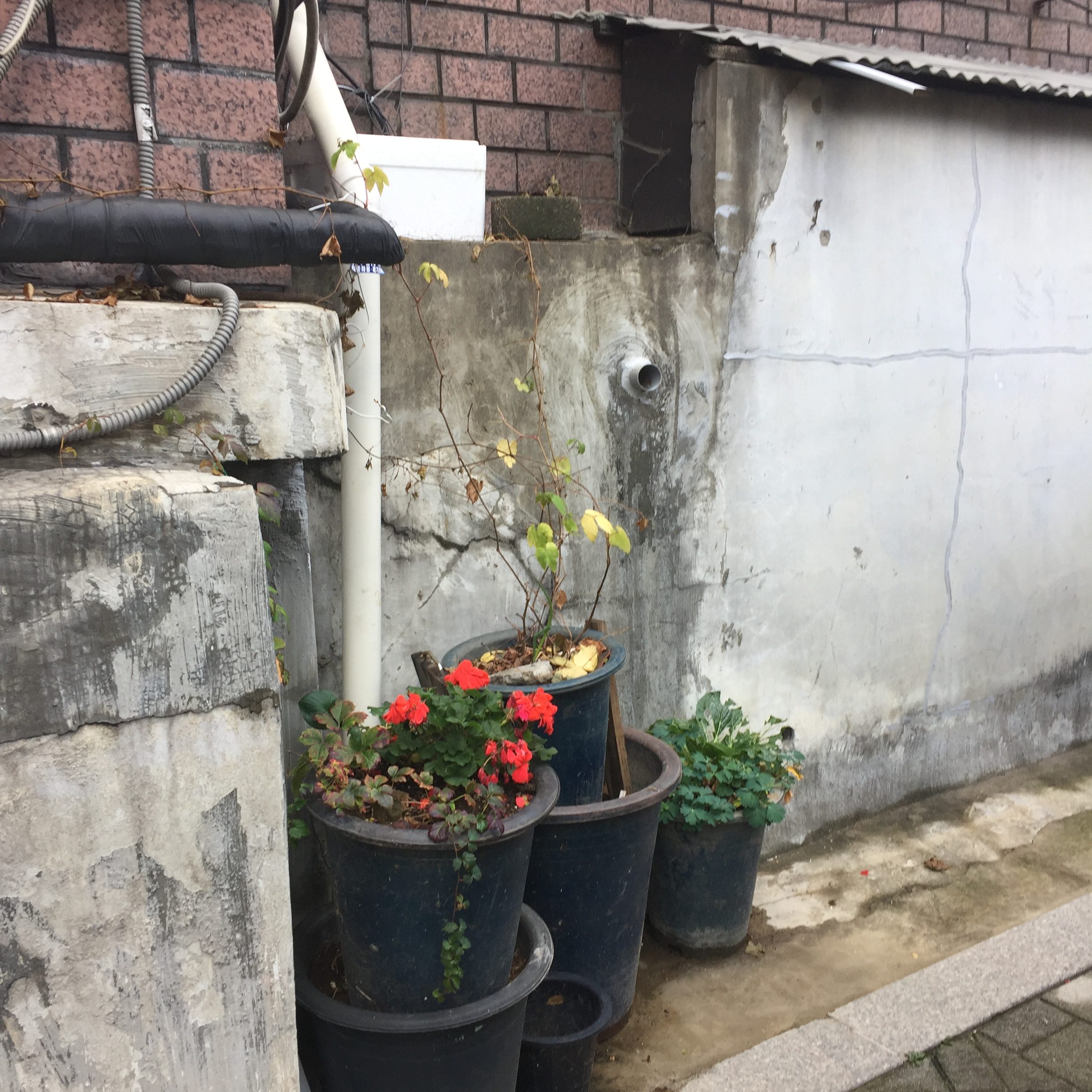
    A back alley in Seoul. Goodbye to wide streets and yellow leaves.


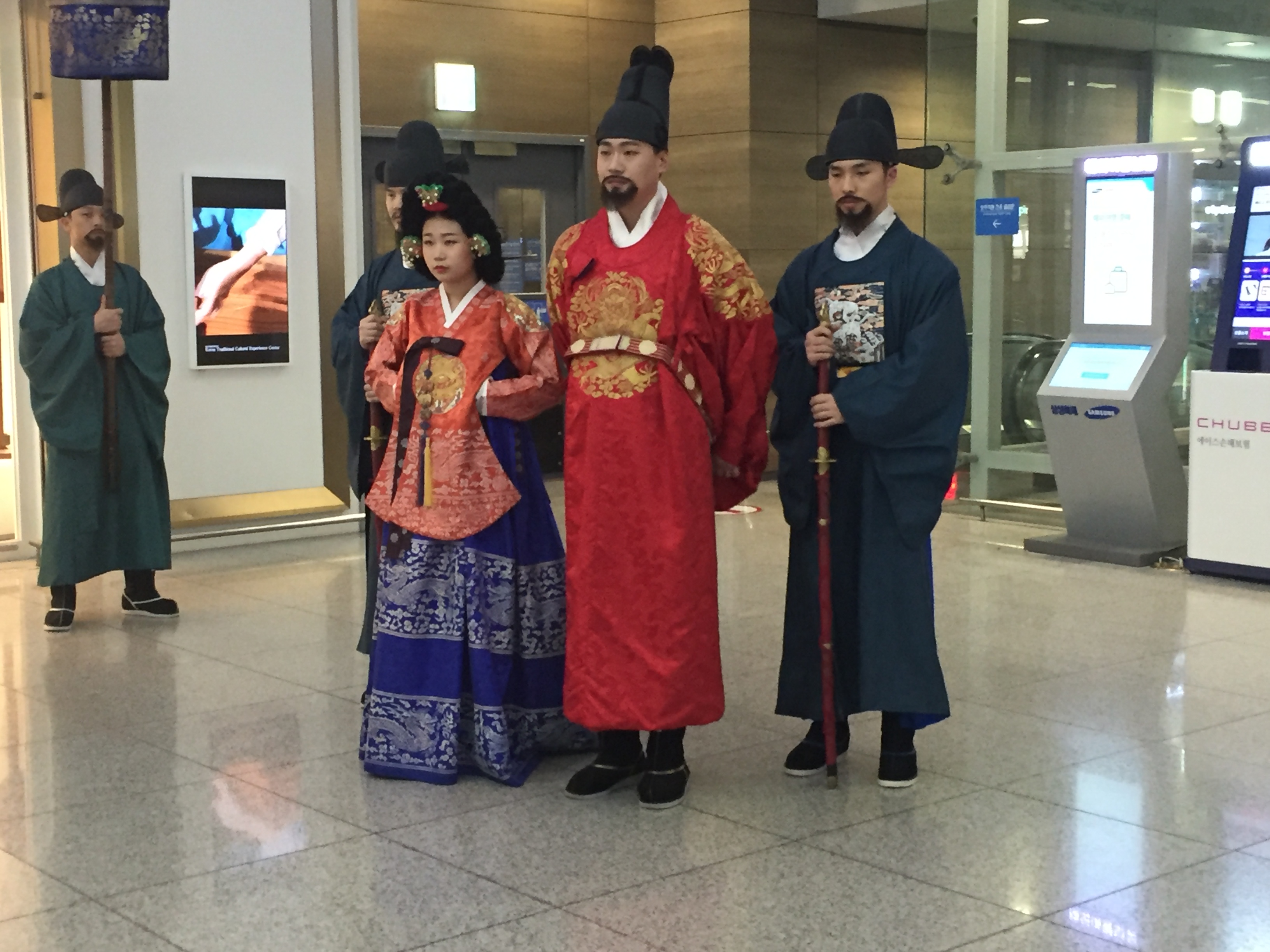
    When I reached Incheon Airport, another parade, this one featuring the King and his Queen and the retinue that usually followed the royal couple. Again, an announcer explained what was going on as the royal pair advanced, and the travelers loved it. Goodby Korea.