Tag: China

  • 9 November 2015 Monday Meeting Mr. Lin & Night Markets

    上海 SHANGHAI

    9 November 2015

    And so it all worked out very nicely. The Astor House Hotel did not have our Monday night reservation. Mr.Lin could only come on Monday. Dear Mr. Lin, who can speak Chinese and who lives in China and who can read kanji and who functions in a Chinese society as only a Chinese person is able to do. Dear Mr. Lin helped us with our luggage and told the taxi driver where to go and checked us into the new hotel and told us where the restaurant and the bank and the Apple store were located and led us through the blare of noise and the maze of cars and motor scooters and bicycles that come at you from all directions and I want to go home.

    It is lovely when the natives pick you up in cars and take you places and translate what you want into Chinese. It is less lovely to navigate this boisterous, crowded traffic-marathon, people-compounded streets all by one’s English- speaking self. I never did believe it when someone would say, “Oh, don’t worry about it. Everyone speaks English.”  Not Not Not. I have ,in tact, learned a lot of Mandarin with Pimsleur, but Pimsleur is building a foundation, and my sentences are limited to “My wife wants to eat dinner with me tonight,” which is  not the instant vocabulary I need when I want to order rice at the restaurant.

    Nevertheless, thanks to Mr Lin, we are in a clean hotel and have access to food and a bank. I have the addresses I need for my research carefully written in kanji to show to the taxi driver. Will I know if he is actually taking me to Southgate and not Northgate? 

    We had the most delicious lunch. The food is wonderful, whether on the street or in the restaurant. But later we were hungry again. Tsutae went next door to get some soup at 9:30 this evening and came back with a pair of lively colored cotton socks. Only 10 RMB. She was so pleased. 

          2015-11-10 22.49.25     2015-11-09 22.36.49

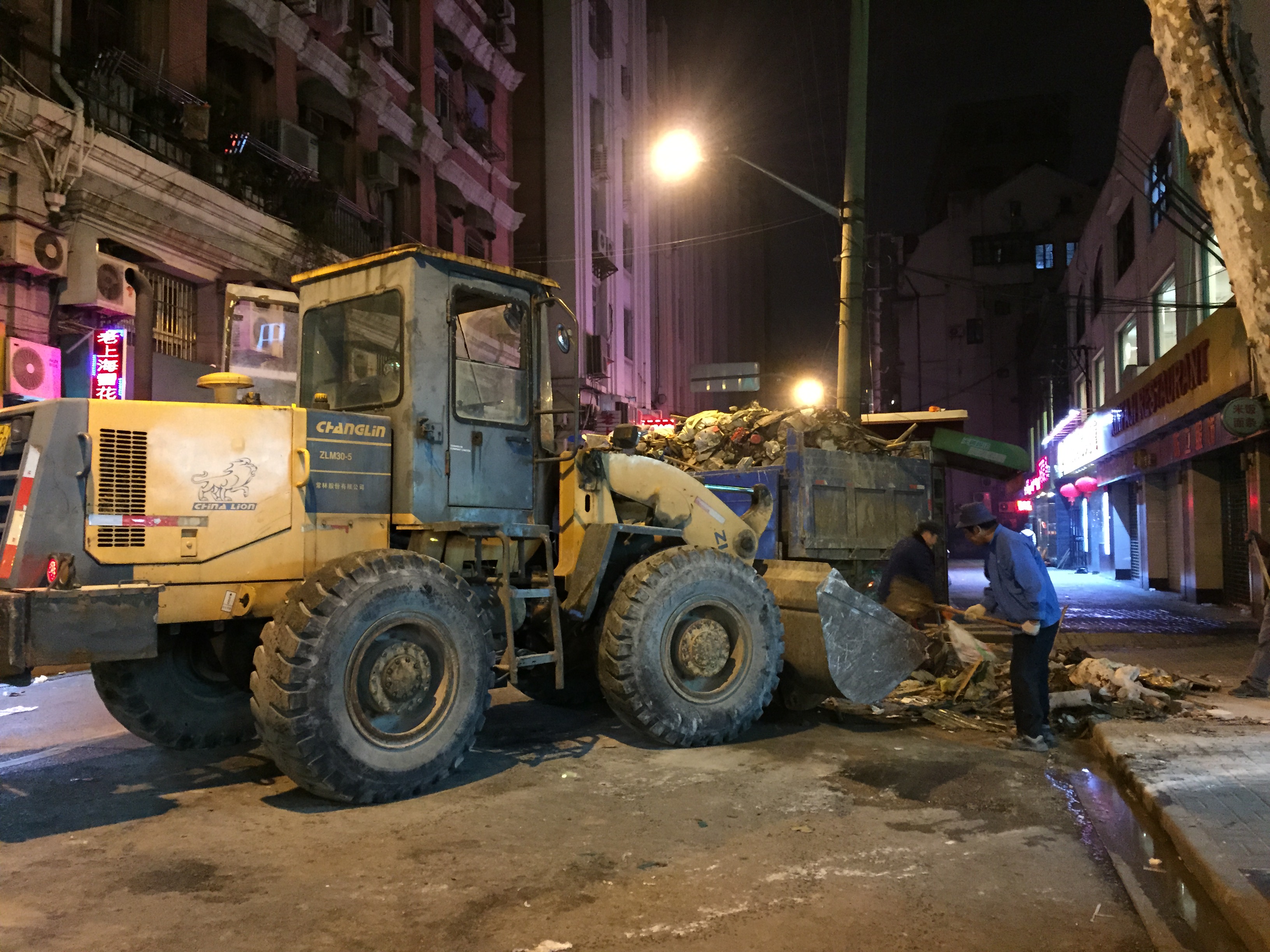
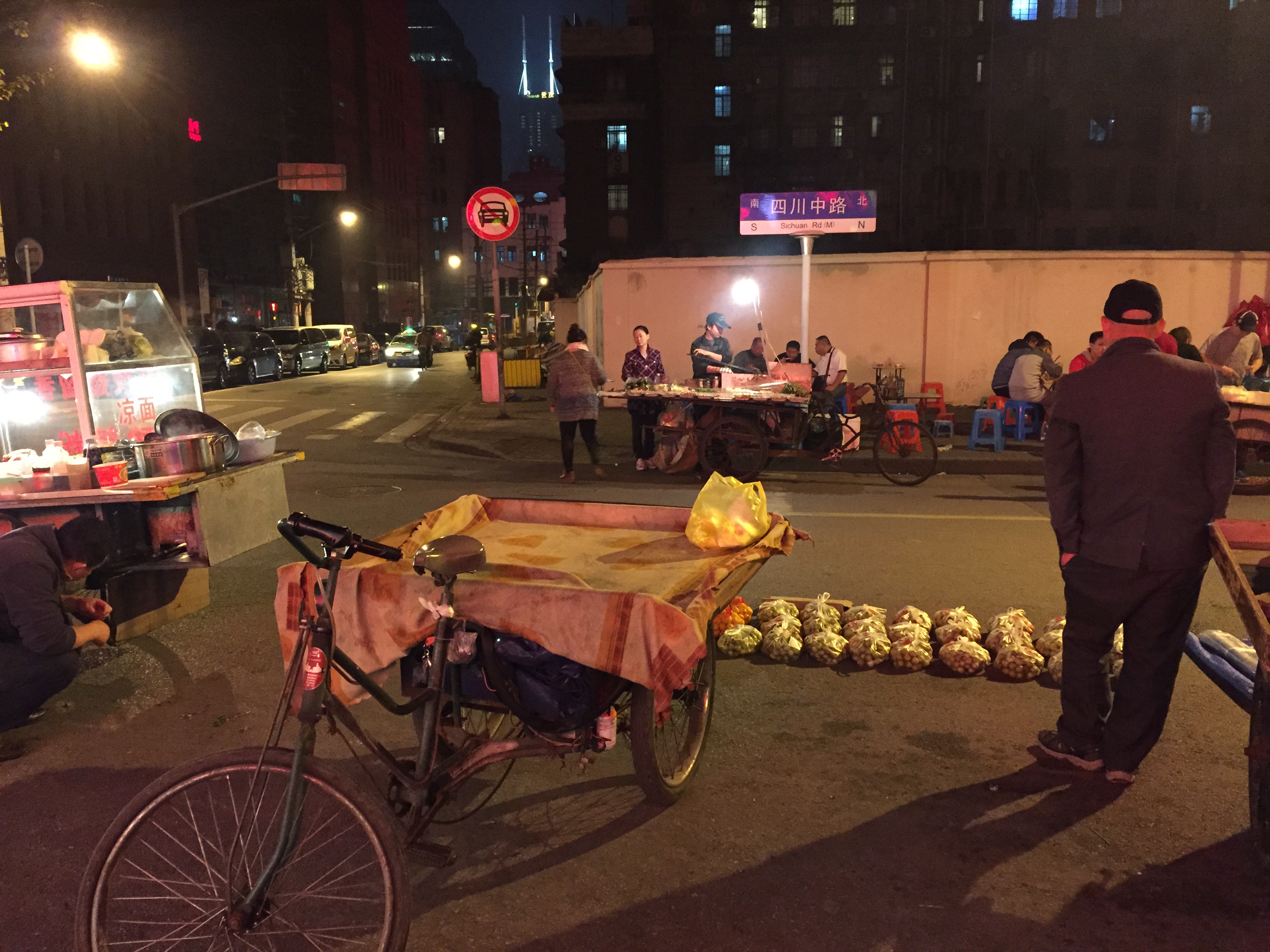
    In the evening, after the local stores close down, street repair begin and the night market open.s Suddenly, where there were streets devoted only to the aggressive bicycle-motor scooter-cars-delivery truck traffic, suddenly, after dark, mini-restaurants spring up on sidewalks. Folding chairs and folding tables are unfolded, canopies are set over long unfolded folding tables, every inch laden: skewers of chicken, beef, pork; piles of vegetables;  condiments; invitations to make your own soup (these vendors do not tell you to get out of their shops); oranges and watermelon; along with socks and great piles of shoes; T shirts, pants –  the necessities for Chinese life. The food is so good. It must be local.  It is not Montsanto-grown Thankfully, the Chinese never bought into the cholesterol myth. Their food is cooked in oil and fat and has taste. The night  market is for sustenance of Chinese life, not for tourists.

    How do they live, these hard-working vendors? Unpacking piles and piles of vegetables, clothes. fruit. shoes, selling for so little. How much can they earn in one night? But no one looks poor or unkempt. Casual Los Angeles style, perhaps, but not poor. No one is going hungry that I could see.

    Later, Tsutae spent another ten RMB, and this time, that same sum of  ten RMB bought three pairs of lively colored cotton socks. She was even more pleased.

  • 8 November 2015 Sunday TRYING to Leave Hangzhou

     杭 HANGZHOU

    Sunday  8 November 2015

        2015-11-08 08.58.22-1     2015-11-08 08.59.10

    Earlier in the morning, we walked through an old part of Hangzhou and saw the tourist shops  and tourist park surrounding the Drum Tower, whose site has one of those 2000-year-old histories attached to it. That history includes the magnificent days enjoyed by Hangzhou under the name of Lin’an as the capital of the Southern Song dynasty (1127-1279) with a population of over two million; it was at that time the largest city in the world. The Drum Tower is, naturally enough, a reconstruction, but the Drum Tower Church, just across from the Tower, is its original self and was built in 1897 by the Presbyterians. As we walked around on this Sunday, we were listening to traditional Presbyterian hymns sung in a high very Chinese soprano voice. This particular Chinese church is permitted only for foreigners, but apparently the Chinese nationals are permitted to hear the Christian hymns.

    When we returned to the hotel, we asked the hotel manager to write down the kanji for the Long Distance Bus Station, and then began one of those travel days about which Travel can too often be all about, Apparently, the good man – and he was so helpful during our stay at his hotel – wrote down the kanji for the local bus station – and so there we were, at the Local Bus Station, without the kanji for the Long Distance Bus Station to show to any taxi driver and in the wrong side of town and, of course, nobody speaks English. Finally, Tsutae did find someone who knew some English, and so the next taxi driver took us for a ride – literally and metaphorically – for far (that is a pun) too many hours (or maybe he did not), but only much later did we arrive at the Long Distance Bus Station Ticket Counter, and, thank goodness, just in time to catch a bus and be on our way to Shanghai. 

    Once in Shanghai, we took another shuttle to the hotel where Tsutae had stored her luggage, and, once there, attempted to communicate without knowing Mandarin. It was a bit complicated, because the clerk at the desk had a translation program on her smart phone that said very peculiar things. All this kept us way into the night, and now we needed a private car to take us into Shanghai and to the Astor House Hotel,which i had been so excited to see, because we knew that the Gambles had stayed in the Astor House Hotel during their first days in China, and this would be history in real life and upscale and elegant  (and expensive) as well, 

    We had the kanji with us this time. We were prepared, but still the driver took us to number “106” on another street even though we had written and spoken (in good Mandarin) number 15 and had, with us, written in kanji the number and the name of the street as well as the name of the hotel, again, in kanji, just as we had been instructed. Throughout this endless day, I am pleased to say, I kept my cool. I have finally learned that such is just a part of the travel experience. But on arriving – finally – at the famed Astor House Hotel, we were met with such a lack of hospitality – one expects a tad of class at a first-class hotel – at least in a 5-Star hotel – but then maybe not in Shanghai. After all, Shanghai is all about money, and Shanghai is about new money, and new money seldom has class. Certainly, the Astor House Hotel does not have class. And then we were told, no, we were booked for only one night. 

    Somewhere, I have the confirmation that says two nights, but just to make matters more interesting, my phone – my brand new I phone 6 that I am – no, was – so proud of has been without service for three days. Who knows why, but I cannot make phone calls on my Six- Hundred -Dollar phone, and I have been unable to get any internet connections on the computer. Why do I carry these expensive gadgets around?

    2015-11-09 09.10.17   2015-11-09 09.08.07    2015-11-09 09.11.23

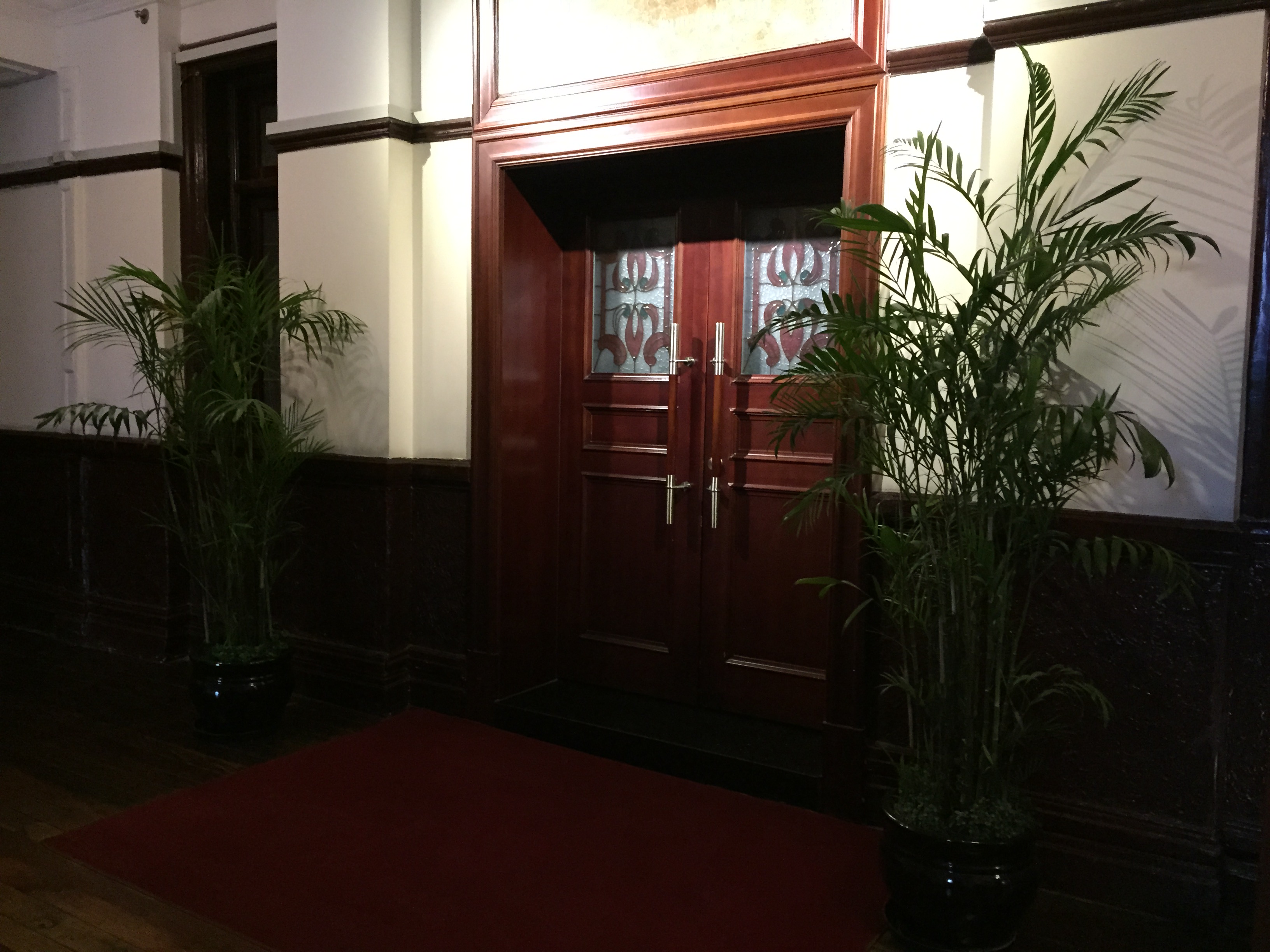
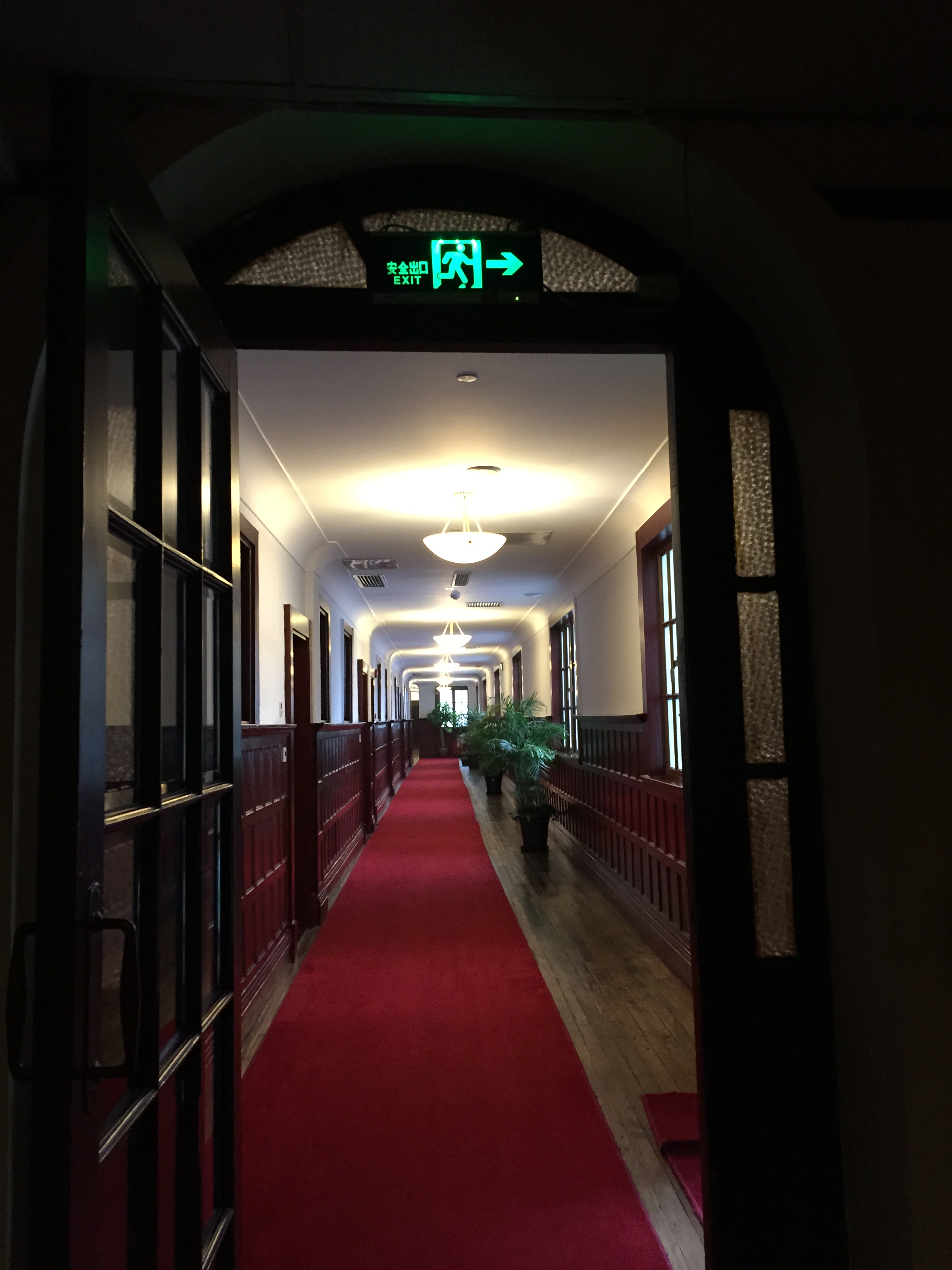
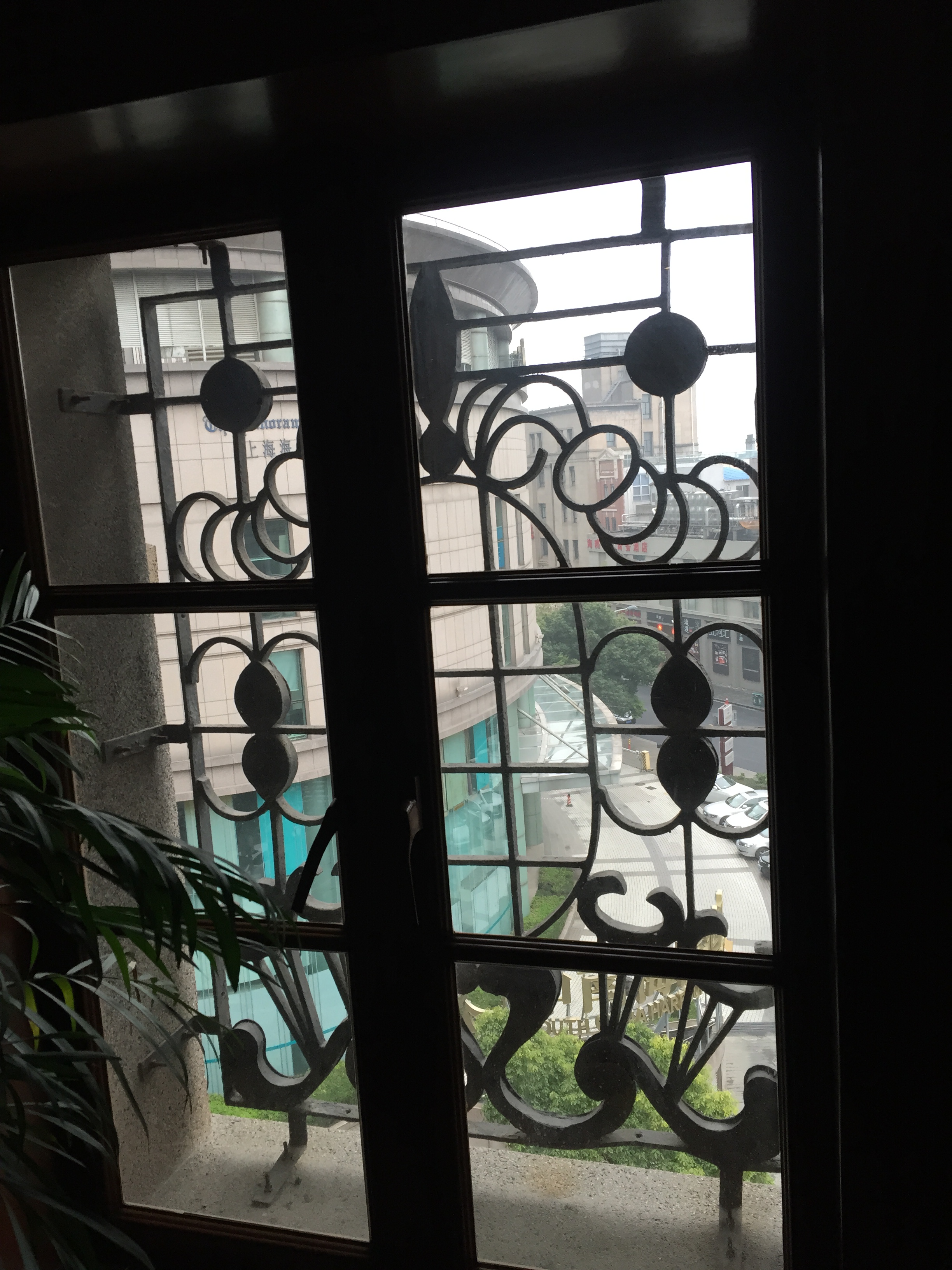
    The Astor House Hotel has not changed since at least 1908. Indeed, it is living history but with a drab life. The Gambles would surely recognize it if they walked in this minute. The Astor House Hotel is a museum. This museum has state-of-the-art showers and toilets and new elevators, but it is a museum, with early twentieth-century dark halls and dark doors, potted palms, exquisite glass windows and doors, and creaky dark wooden floors. The halls are lined with photos dating back to its founding in 1846 by the Scotsman Peter Felix Richards, but the staff, I don’t think, much care, and no one of their staff, according to the front desk, handles questions dealing with its history. it is intresting to see, this museum piece, but not exactly engaging for an overnight stay. 

    Oh, yes, the Astor has vintage; this includes its internet connection. We were more than happy to get out of the hotel the next morning. Things always do work out for the best. I just have to keep coming up with work-arounds. Fortunately, my matter is not time-sensitive; it can be emailed at a later date. And there are plenty of hotels in Shanghai

    And oh! what a city. What a spectacle at night. The lights, the space, the lights, the lights, the lights! The entire side of a skyscraper one forty-story computer monitor flickering  relentlessly with new eye-boggling images. So much glitter and hubbub and the endless, tall, fancy, imposing, overwhelming frontage that smacks of money and money and money. It is something indeed to be seen, Shanghai.  Shanghai at night.

  • 7 November 2015 Saturday Arts and Crafts Museum & Jingci Temple

    杭 HANGZHOU

    Saturday  7 November 2015

    Intention is all, is it not? It took an hour to print out a pdf. I still do not understand why. My good software engineer friend Hua Pin Shen, who knows everything there is to know about computers and software and electronic mysteries was there, but it still took an hour for the shop to print out thirty pages. 

    Hua Pin had kindly arranged for a meeting at the Hangzhou Arts and Crafts Museum, where he had a connection. A wonderful museum it is, with all the Chinese crafts displayed and offering lessons for the Chinese to try their hand today. Again, the 1908 China photos found an interested audience, and requests were made for more information. We were shown around the museum, and it was raining, and we were given, to take home, umbrellas of the most beautiful blue color. Is it not interesting how such a small piece of beauty can lock into the mind and be the thing so strongly remembered amidst a day chock full of those other, surely, more important business matters.

    Then there was the most wonderful lunch. Hua Pin took us to a restaurant with an aquarium for a back wall and whose seafood were, therefore, absolutely fresh. The taste of that fresh fish. I had no idea that fish could taste so delicious. How very satisfying, that white fish with its delicate flavor.  That and the blue umbrella and the conversation of conjectures over lunch, the cleanliness and elegance that attended the space and the good manners surrounding us. 

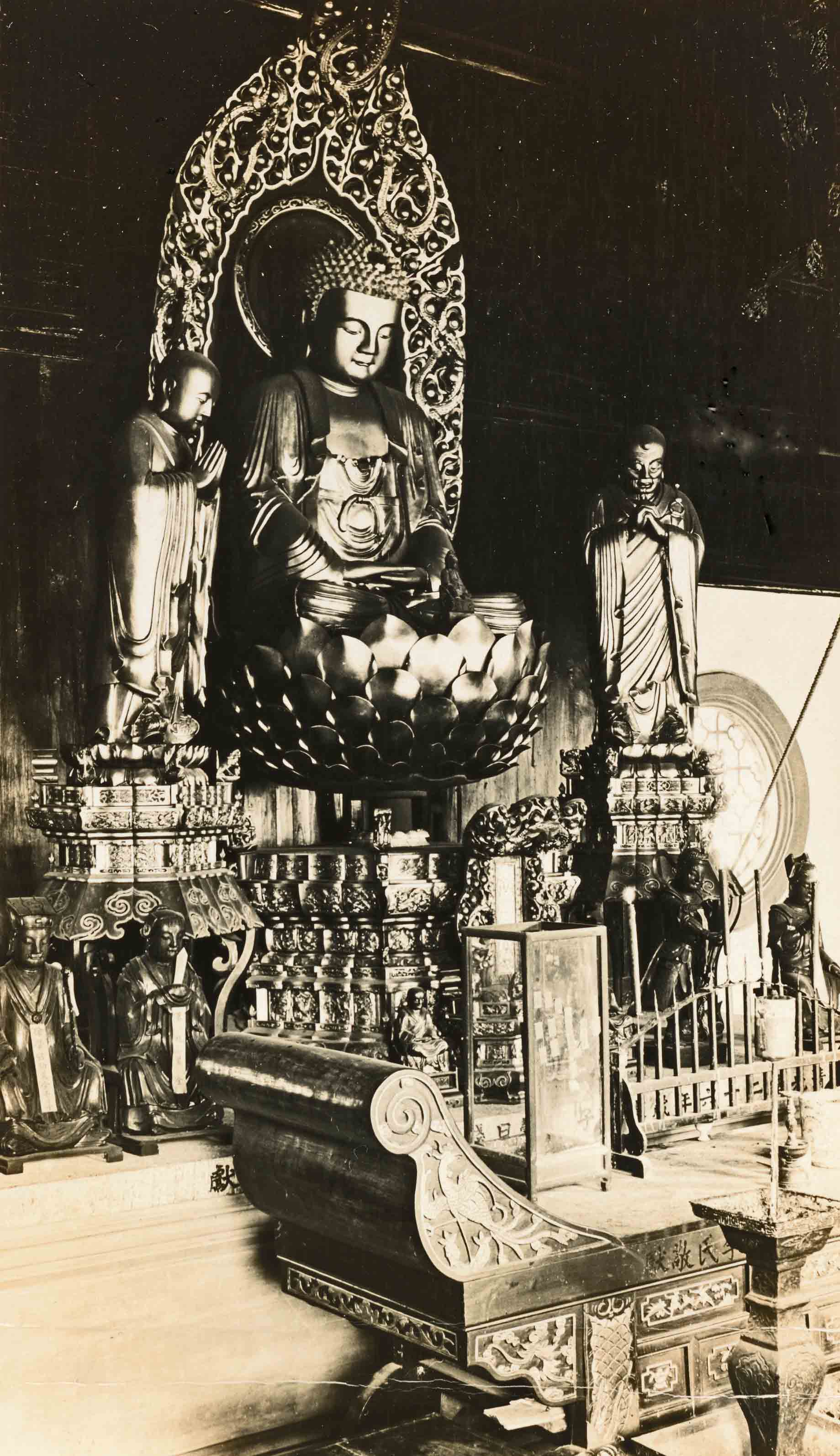
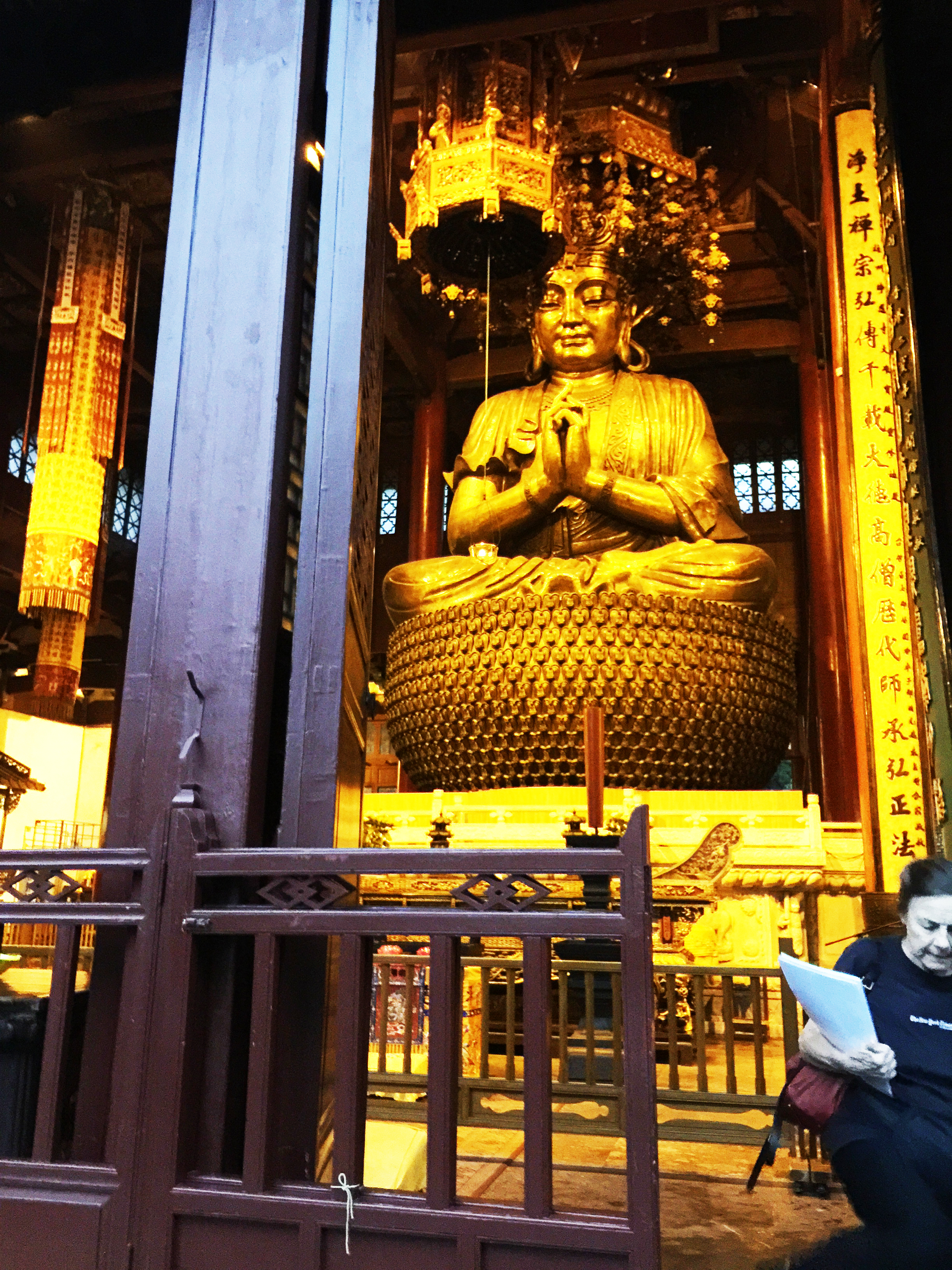
    I needed to visit the Jinjci Temple. The Gamble photos include what we believe was the Buddha then in the Main Hall, and we wondered what is the Buddha there today.  By this time it was late, but as we drove by the temple, we saw the doors were open. We parked and walked up to the doors, but the doors were now closed. Quick, this way, and my friend pulled me from whence we had come to a driveway into the temple, just as the gates were sliding to close up the entry. Three feet away from the closure, and in-between we slipped. “I am here to see my friend,” Hua Pin called out to the guard, who ignored us. A few other stray lingerers were in the temple grounds, and the rich scent of incense reached us. 

     The temple is considered a small temple, but the stone-paved courtyard around which the smaller buildings stand is spacious enough. In front of and within the Main Hall bright yellow cushions decorated in shocking pink invite the devout to kneel and bow in comfort.  

          Jingci_GoddessWeb612               JingciBUdEnhance

    The Buddha in the Gamble photo of  1908 is pure nineteenth century, embroidered, elegant, an expression of Chinese art of that time. The Buddha in the Main Hall of the Jingci Temple today is pure post-revolution Chinese, towering, the smoothness of its broad curved surfaces enhancing the massive gleam of its gold. Clearly, even the monks embrace the aesthetic of massive. 

    And so we were able to see the Main Hall. I managed to take the needed photo. We even found a stray monk, who had little to say, but the visit did get done. Just by a hair. It worked out perfectly..  

  • 6 November 2015 Friday China Photos & YMCA

     HANGZHOU

    Friday  6 November 2015

    A catch-up day on the computer, studying and comparing the 1908 photos and correlating them with the events discussed in the Clarence James Gamble handwritten journal. (And I took a long nap.)

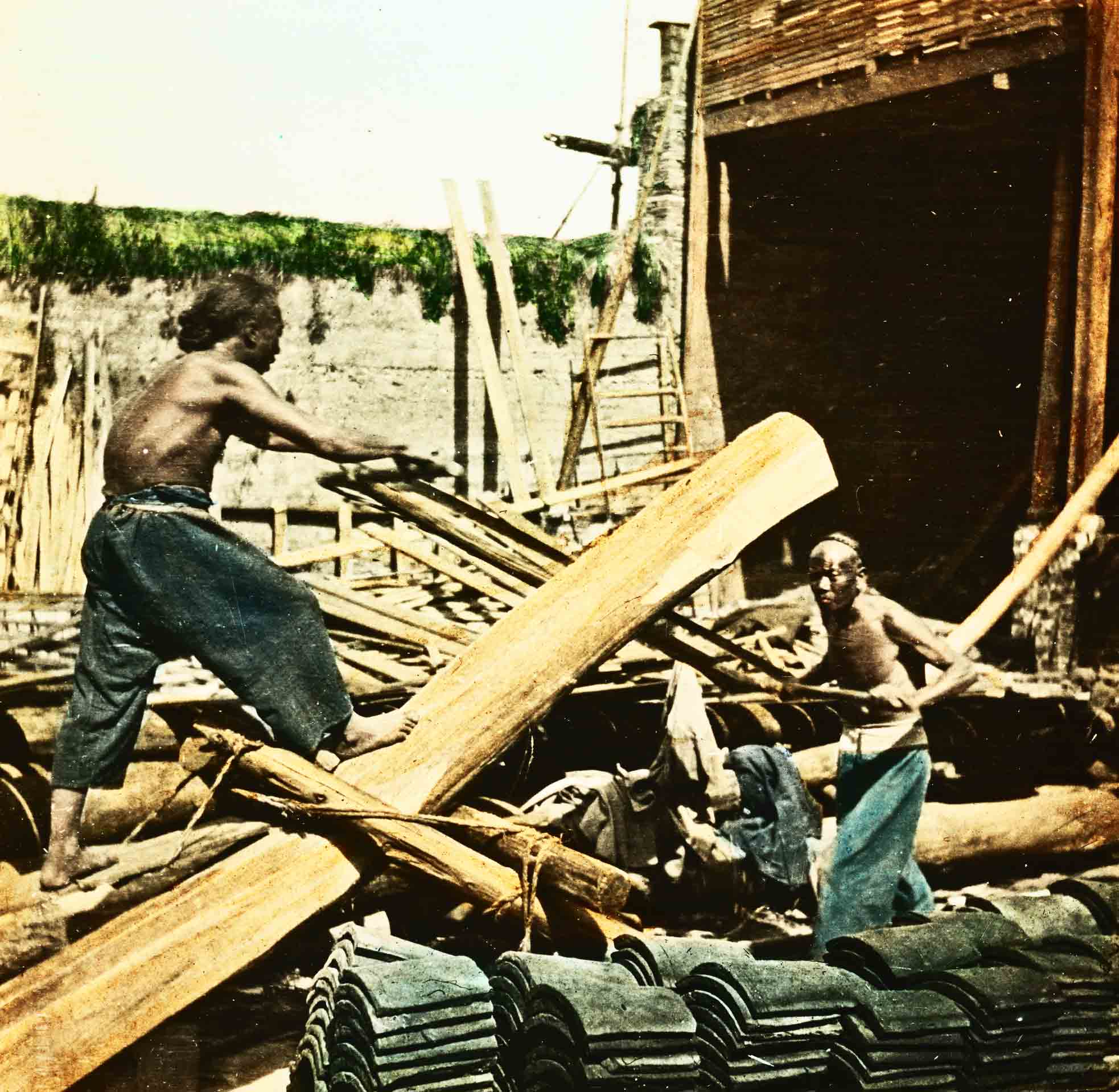
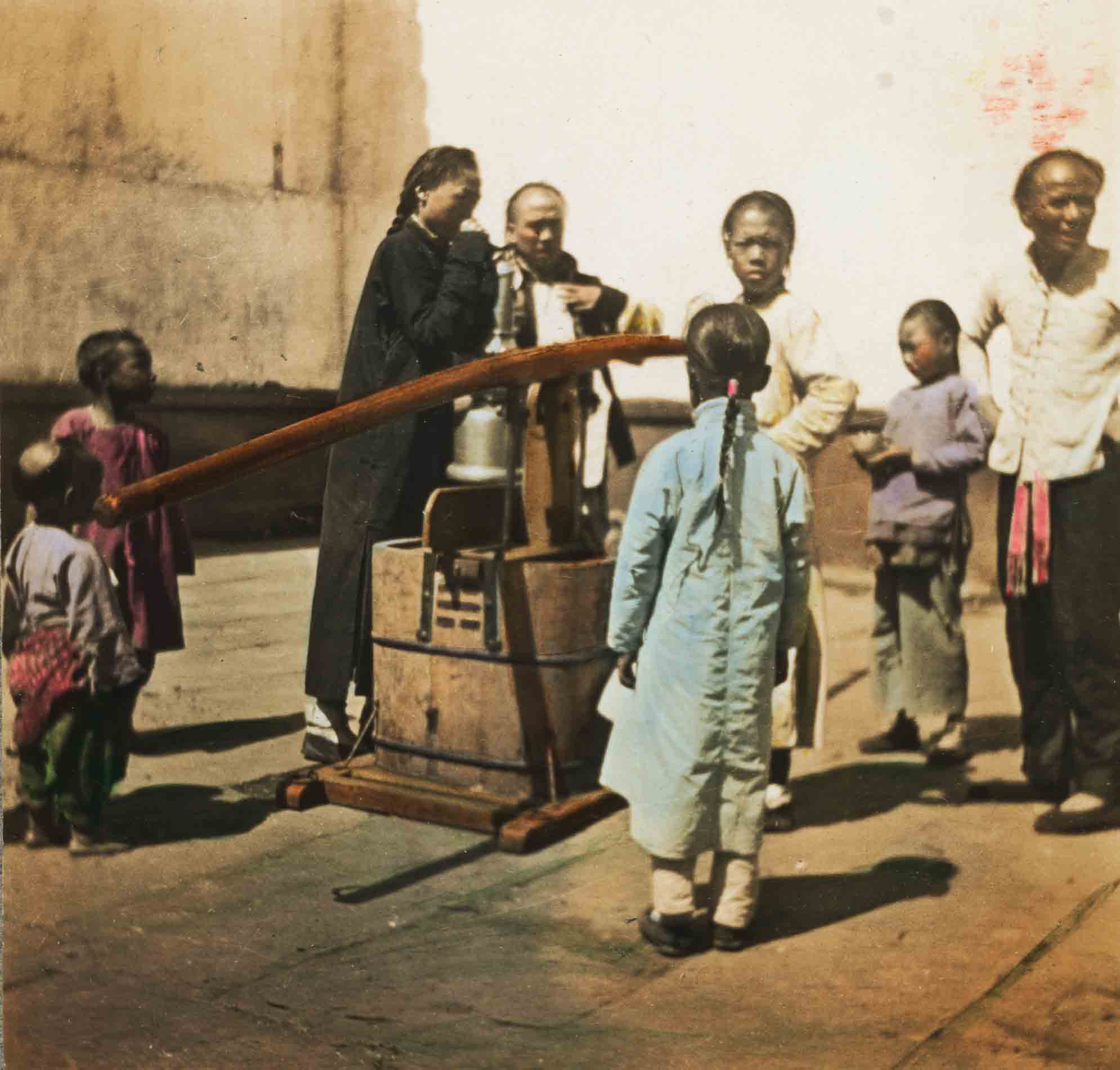
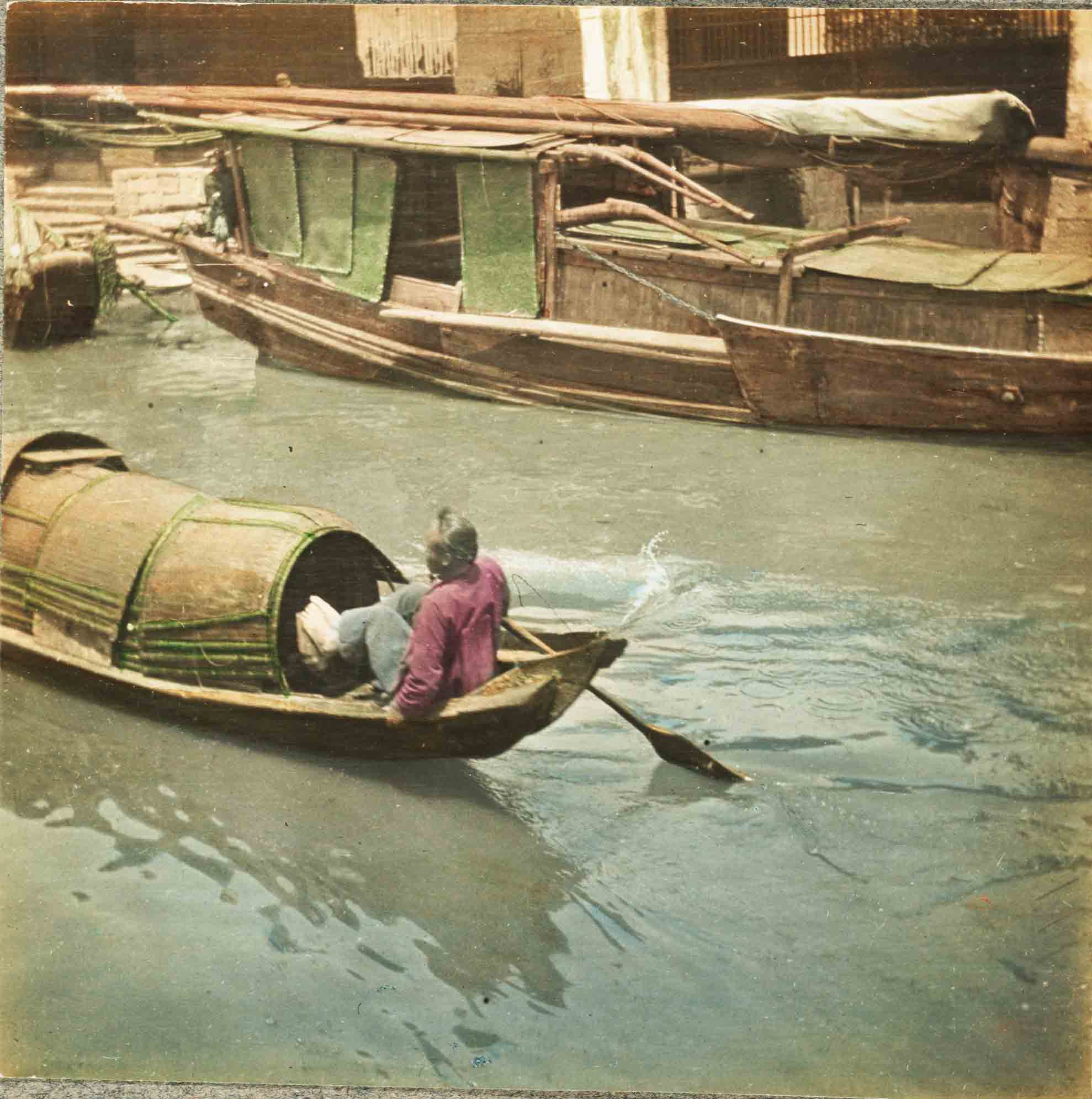
    I had noticed initially that the Gamble photos vary greatly in their color tones, and on closer examination, I found that photos with similar tones can be grouped together. 

    People_SawingWeb People_PumpWaterWeb

    After I had put together my first groups, I found that the various groups corresponded with the chronology of the itinerary of the Gamble visit.

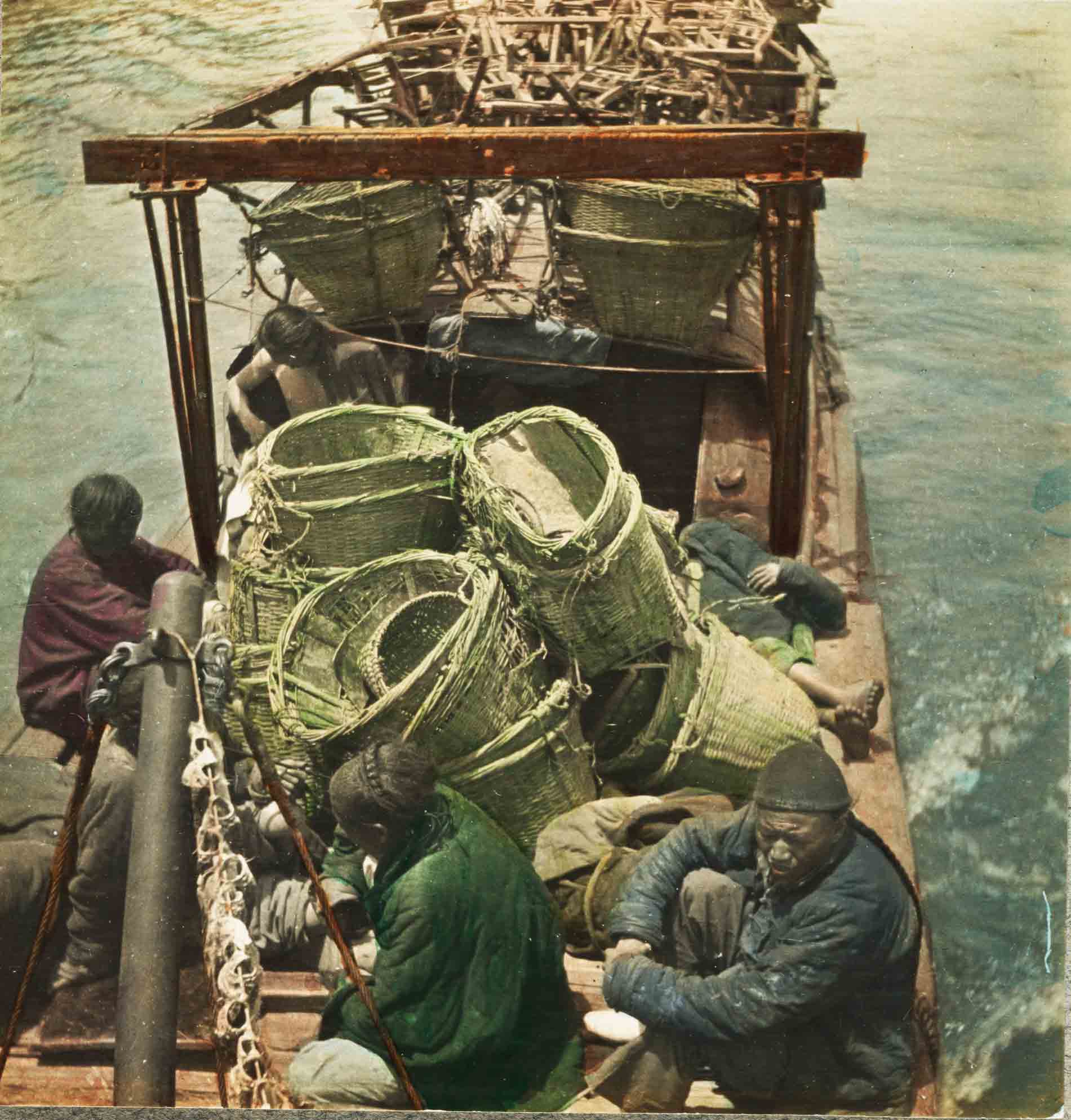
    Canal_BoatOnemanWeb        Canal_BasketsWeb

    Then I noticed that within the groups, photos could be further grouped according to the extent of detail to be seen and the style of lighting exhibited within the photo. This further confirmed the rightness of the correlation of the photos with the dates of events described in the journal, and then raised more questions. But that is what research brings: more questions.

        2015-11-13 10.12.58    2015-11-13 10.14.36   2015-11-13 10.13.34

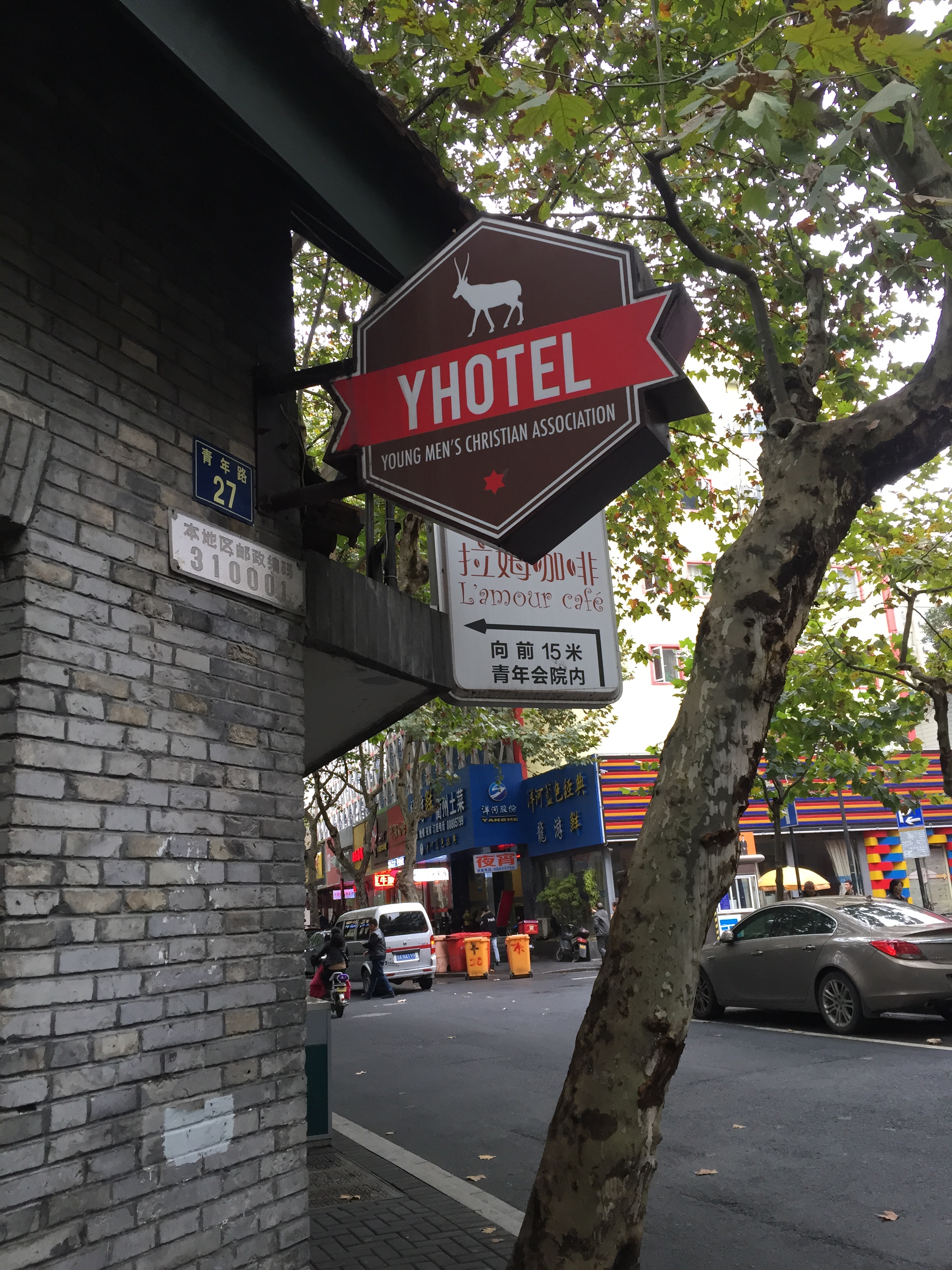
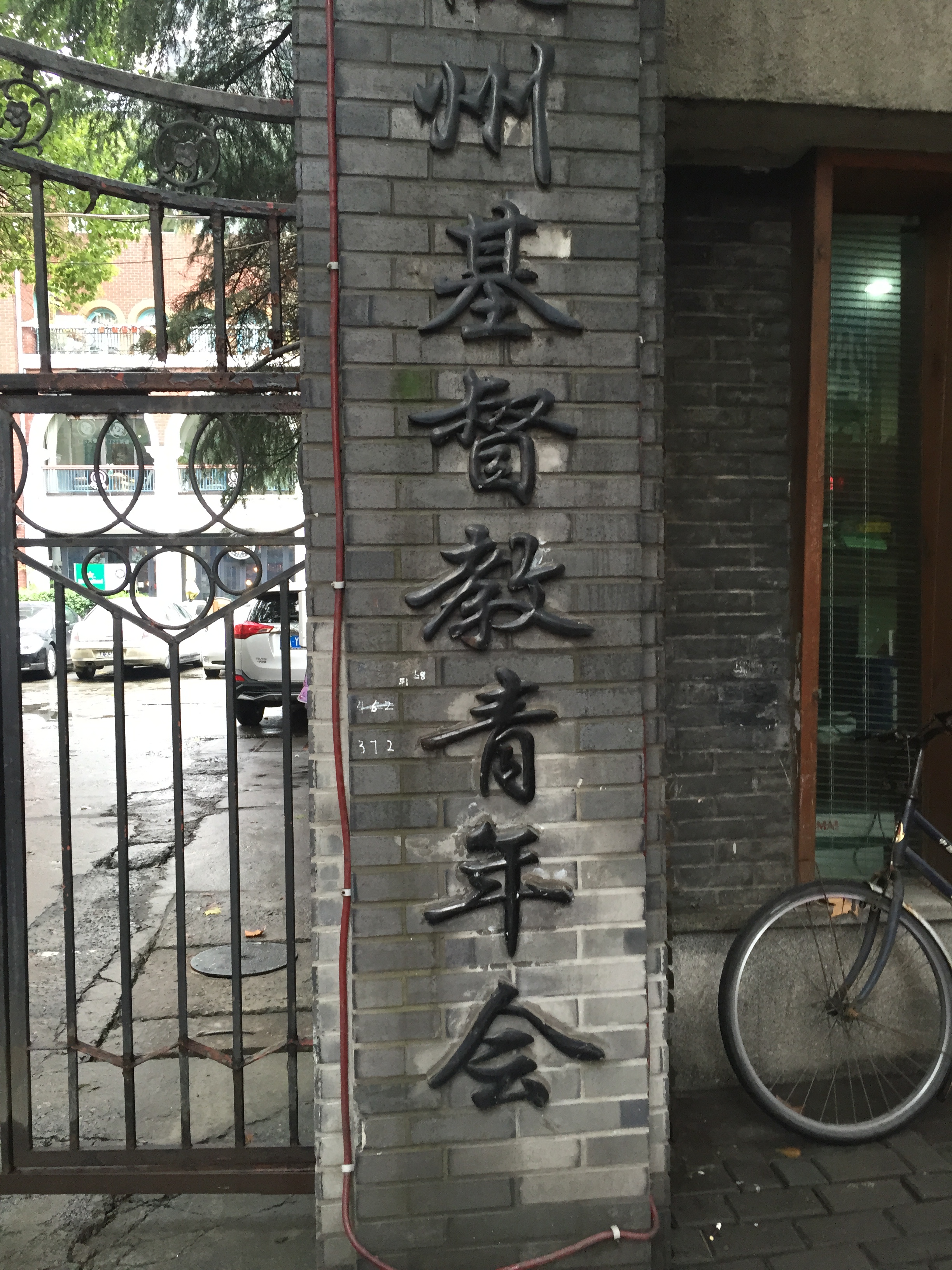
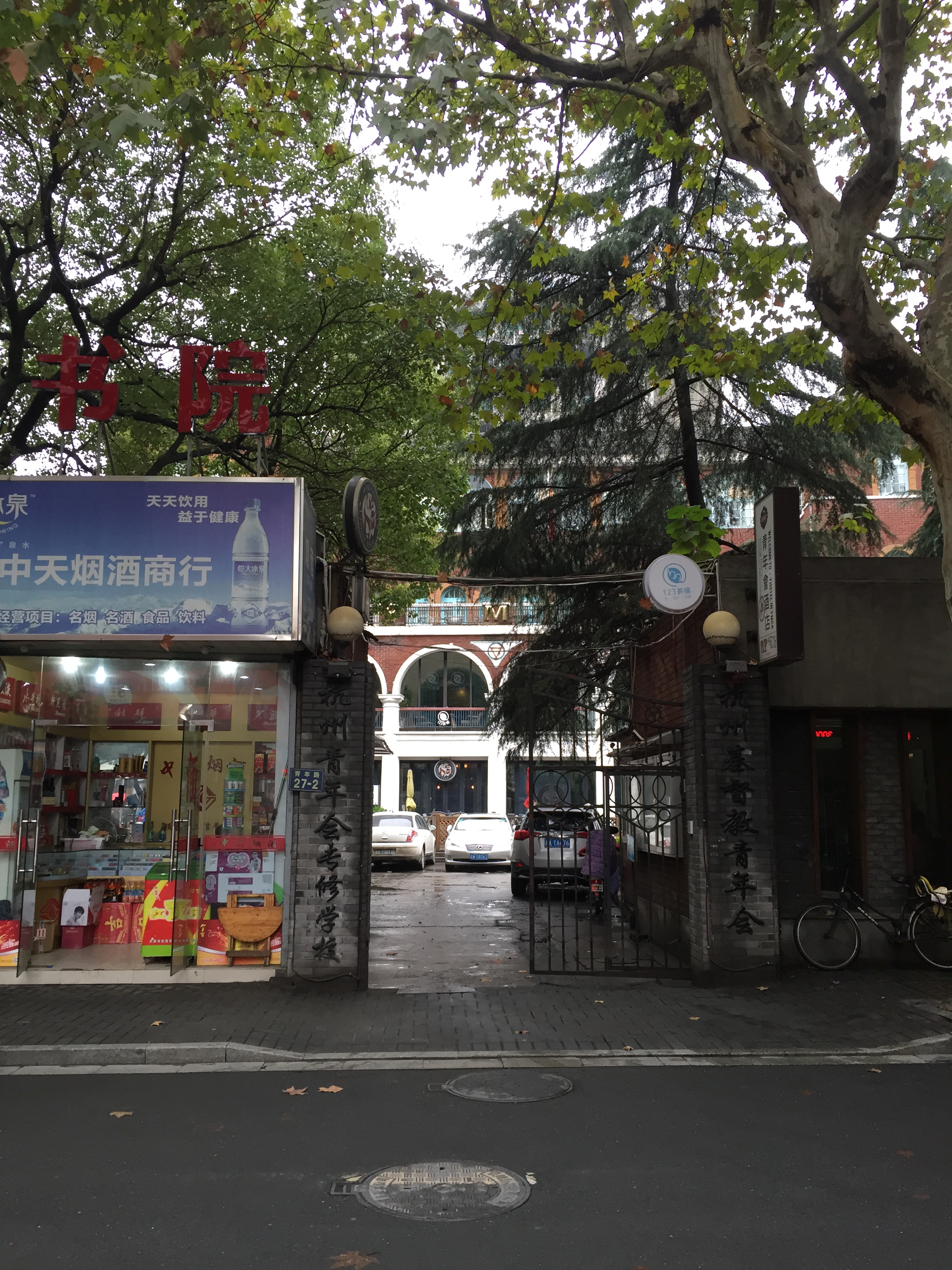
    I walked along Qingnian Road, on which our Bokai Hotel was located, and just down a bit and across the way is the WMCA, founded and built so many years ago in the nineteenth century with the help of the Presbyterians,  clearly still functioning, as a hotel but perhaps without he strong Christian emphasis. Why did I not go in and see if they spoke English? Probably ont. The signs say WMCA, and peering through the gates into the courtyard, all appears well kept up and attractive..


  • 5 November 2015 Thursday Grand Canal Museum & West Lake

    杭 HANGZHOU

    Thursday  5 November 2015

    Good Professor Shen arrived with taxi at 9:30. Off we tore into the traffic. I must look up the accident rate. How can these people not have an accident every block? But, no. Cars skim by each other, always within inches of each other. as do bicycles; scooters; small motor bikes; electric tricycles loaded with piles of lumber, long poles and 2x4s that poke perilously fore and aft the driver’s already overloaded load that sits next to behind his head. I saw very few buses, and no wonder. There is scarcely room for larger vehicles on many of the smaller streets. Small streets and boulevards and freeways are always jammed, not a finger’s width of space between bumpers. ‘and I am told Beijing is far worse.

    Two taxi drivers share a cab, twelve hours for each man. The car never sleeps. With Hangzhou and other incursions from upstarts, the certified taxi drivers are suffering, working harder than ever for less money. The certification involves a long study period and a stiff exam, but now, once acquired, the certification apparently does not ensure a good income.To drive twelve hours a day in this traffic would, I should think, leave the driver with an ongoing nervous breakdown, but, no – they keep on driving. 

    And the throngs of people to drive through and between and behind. We drove for what seemed hours through people and more people and more people, in that part of town people appear well-dressed and happy or even ill-dressed but happy. Outside our Bokai Hotel is an ongoing card game around a small table set on the edge of the sidewalk, overhung with a cloud of cigarette smoke, the onlookers and the players joking, involved, joshing; the participants vary, but the game goes on.

    The streets are so busy, people and scooters and cars always coming and going. And noisy, for the normal level of conversation is a shout, and the horn is a principle driving tool. Headlights on scooters and bicycles are seldom used. Crossing the street at night can be scary, for out of the darkness looms a scooter or a bicycle bearing down on you, no noise and no light to warn of its approach, 

    Construction and especially government reconstruction is everywhere, with bold brash monuments and huge bland public buildings that talk about power and massive stance and facelessness. All look somewhat alike, some tall and and some shorter and squat. Just as in much of Shanghai, Hangzhou is filled with endless clusters of identical pale condo towers, with addresses of units, buildings, areas, and streets given only in numbers. These buildings carry the same energy as the “Peace” Parade of last May, a heavy energy and inexorable power.
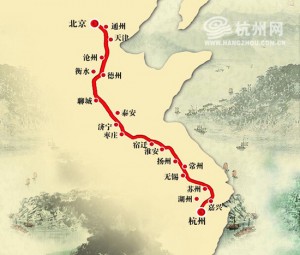
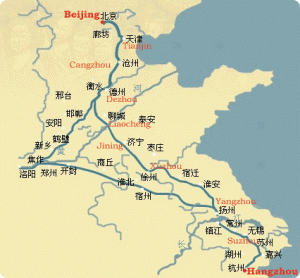
    Modern_Course_of_Grand_Canal_of_China_in_Chinese        china_grand_canal_map

    We go to the ferry terminal that takes us on the Grand Canal from the center of Hangzhou to the Grand Canal Museum, another massive building, with great innovative spaces inside that include designs and models of the Grand Canal, as it existed once and as it is planned again, one long connection between Hangzhou and Beijing. Displays recreate the history of its construction and development, and if one could read Chinese, perhaps the  lives of the millions who sweated and died digging it out is discussed. Statues stand of the kings and engineers who envisioned the Canal, and I did see a display that showed sanitized laborers working, but did it mention the millions of individual human lives that were lost?

    Nothing is in English, so not reading Chinese the details escaped me, but because I was already familiar with the rich history of the Canal, I was able to appreciate much of the matter.

    The curator of the museum is young and bright and smart and elegant, altogether an impressive powerhouse of a young woman. If this is China today, watch out. Professor Shen had known the former curator, a man, but if China is seeking bright young progressive talent, they surely have found it in this young woman. Professor Shen introduced himself to this new curator and showed her our China 1908 photos. The curator and her assistant both studied the printouts and took some snapshots of pages and told Professor Shen that they wanted to discuss with their staff the possibility of an exhibit in the museum.  We were shown the room in which the exhibit might be held. We will learn what they decide after their next staff meeting; the exhibit would be a year away. 

    The ride on the Canal had little to do with what is in the photos of Clarence and Sidney Gamble, naturally enough, other than some stonework on the retaining walls. Most of what we saw on the banks of the Canal was new and orderly and smacked of Chinese gentrification, until nearer to the Museum terminal a few houses from the 40s or 50s line the banks. Real estate today worth millions, no doubt. Lucky families who held on to those properties for half a century.

    But as everywhere in the two China cities we have seen, most everything is new. We saw one old stone bridge on a smaller city canal leading into the Grand Canal, only one. The two bridges outside the Grand Canal Museum are concrete reproductions.

    After this, we walked across the concrete bridge and saw more museums, briefly strolled through the Hangzhou Arts and Crafts Museum, where English translations were in front of the displays but chose to forgo the many other  museums. My head was too concerned with our immediate work. It is all interesting we will have to come back.

    And so we went to lunch. Great idea, and Professor Shen ordered a delicious lunch: deep fried pumpkin; shrimp, so sweet; crisp cucumber spears;  yuba  (Japanese name), a soybean protein roll; wonderful white soup, with dumplings  onion, cabbage , black fungus. The Chinese know how to eat.

    After lunch, it was almost easy to tackle the rest of the day, but it was very hot. We went to a restaurant on the edge of West Lake and sat outside with green tea and a dish of fruit: persimmons, jujube, grapes, and discussed and argued about, what else? Clarence and Sidney Gamble’s 1908 China photos. Professor Shen answered my many questions, and we considered additional notes to the photos.

    Into another taxi and a drive around West Lake: so beautiful, so crowded with so many people at its edges (not in the lake, thank goodness), but, oh, the throngs, the traffic, and the relaxed energy of people at play (or working at play), the ceaseless flow of people people people, milling smoking, laughing, strolling, filled with life.

    We drove past the finest restaurant in all of Hangzhou, an enormous Crystal Palace twinkling with thousands of tiny golden lights; and everywhere else more and more tiny bright golden lights decorating buildings and signs.  

    It had been very hot in the middle of the day. We had stripped off as many clothes as one could do politely, but in the evening it cooled down. The taxi brought us back to the Bokai Hotel. We went into the hotel, and Professor Shen disappeared into the night in search of a free bicycle and his one-hour ride in the dark to his home in Unit 10.