Tag: David Gamble

  • Ashland, Oregon, USA Thursday 21 November 2019

    Ashland, Oregon, USA
    Friday   22 November 2019

    Thank you, Blog Recipients, for allowing me to share my Korea experience with you. And thank you, Sue Graves for making it possible for me to do so.  Sue is remarkably adept at all things compter-wise (and mechanical).

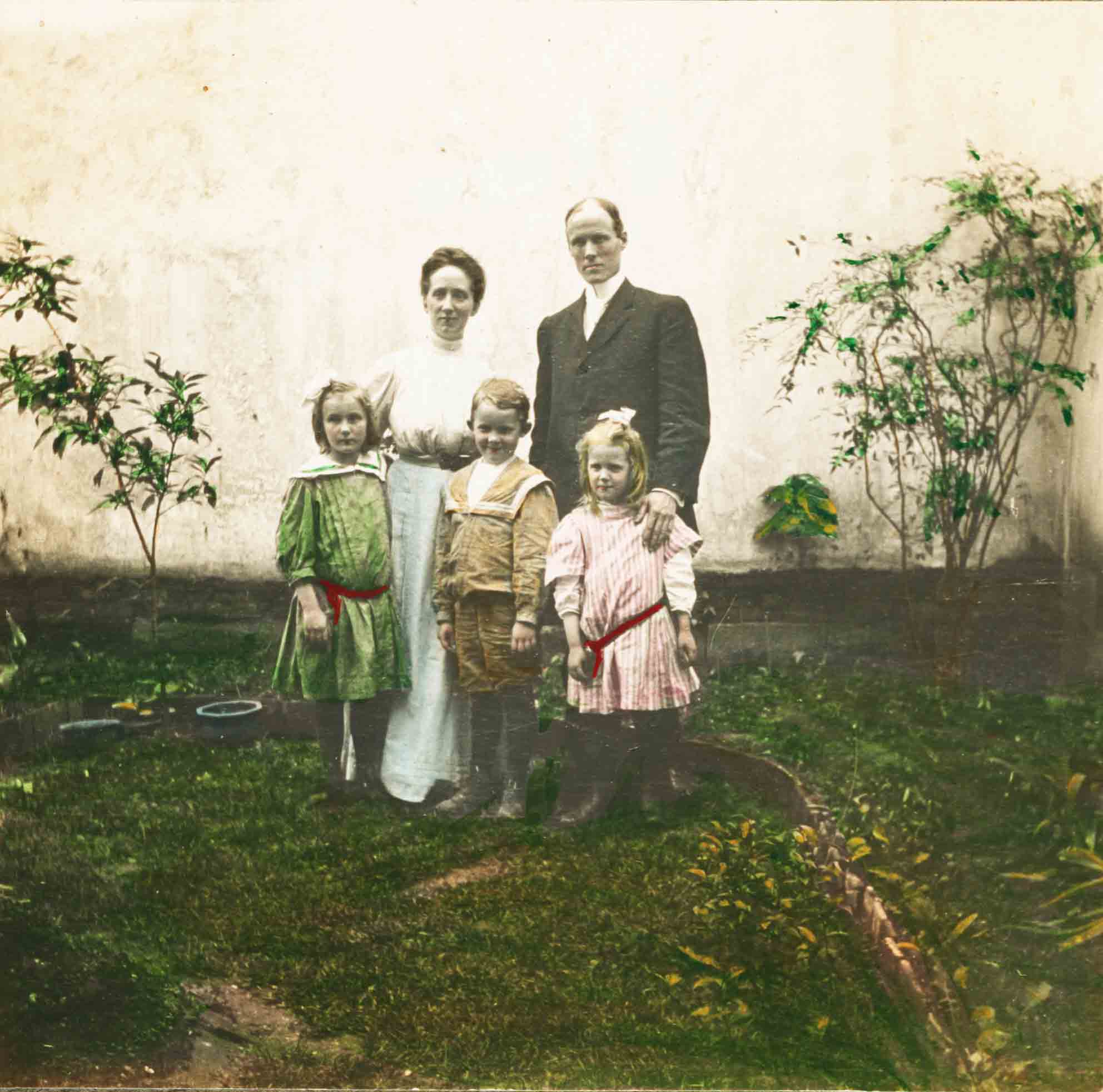
    The forthcoming “Korea 1908” book is important, not just to me, personally. It is bigger than me, bigger than the personal story of the David B. Gamble family, for it is the story of the power of the compassionate individual to make a difference.

    When Horace J.Allen, the first Protestant missionary in Korea, arrived, the Hermit Kingdom had only recently opened itself to foreign trade and intercourse with the outside world. Korea in 1884 was an ignorant, superstitious, wretchedly poor, and suspicious society. Common medical cures sought to release demons from the body of the patient with large soon-to-be infected punctures. Education was limited to contemplation by a wealthy few of specific Chinese characters. Farming and plowing depended on a small metal shovel. Women were not given names, and wives were called “what you may call her” or “she.” Years of a life were lost to mourning the deaths of family members and the royalty and worshipping the deeds of long-deceased ancestors. At one time, Korea had been a world leader of progress, inventing the first magnetic compass, creating the first printing system (a century before Gutenberg), developing an alphabet so accessible that it can be learned and is learned in just a few hours. All these achievements were lost as Korea settled into a quagmire of Buddhist worship and Confucius observance.

    As is the way of the world, the government of Korea as well as the governments and political leaders of China, Japan, Russia, and the United States lived prosperously and used Korea and its people as a pawn in their war games. The brutal takeover of Korea by the Japanese militaristic regime in 1905 was made possible by the United States. But if the America government conducted a farce of democracy’s values, the missionaries of America, particularly those of the Methodist Episcopal and the Presbyterian Churches, redeemed the America that opened its doors to the “the poor, the tired, the huddled masses.” Afire with evangelistic zeal, the missionaries went to Korea, quickly to understand that the Love preached in the Gospels was best expressed by ministering to the basic needs of the people, by making available education, modern Western medical care, and practical sanitation. 

    They were a special group, these missionaries. Dr. Oliver R. Alison, M.D., left a thriving medical practice and well-paid posts at Toronto University to bring his pregnant wife and three children to Seoul, South Korea, where he built what is now Severance Hospital, today one of the largest and most modern  hospitals in all of Asia. Jesse Watson HIrst, M.D., who assisted Dr. Avison, decided while attending Princeton to become a medical missionary; to this end, he put himself through medical school, developed a private practice that paid off his school debts, and arrived in Korea at the age of forty. Similarly, Doctor Rosetta Sherwood Hall and Dr. Mary M. Cutler both decided as young girls to become missionaries, went to medical school and developed private practices so that they could enter Korea as medical missionaries with experience. These lives are typical of the compassionate individuals who became missionaries in  Korea because they wanted to make a difference. 

    And they did make a difference. Missionaries, predominantly American, but also from other nations, went to Korea, ate Korean food, learned the Korean language, and worked quietly and unknown to none other than the missionary societies that were supporting them in their home countries. Many were forced to quit the field and returned home sick and enfeebled. Many returned and worked on. South Korea itself survived the political maneuvers of the Korean War and dictatorships and is today a nation of forceful. bright, educated individuals. For not only did Korea receive help from American missionaries, but the Koreans accepted the help and learned to use the help for their own purposes. 

    This story of the Korean missionaries may seem irrelevant to comfortable Americans with jobs and two cars. We do not live in poverty and superstition. We do not appear to live in a police state nor in ignorance. We have television, The New York Times, and federal agencies full of scientists with multiple degrees. Yet as the American government asserts itself to its people and the world under the governance of Big Pharma and Monsanto look-alikes joined with the self-serving ultra-rich, to repeat the story of the power of the individual in the face of tyranny or ineptitude is increasingly necessary. Americans and much of the world live in a dazzle of glitter and gloss even as the natural resources to sustain the glitter and our very lives are fast disappearing.  As greed, not exclusively corporate, manipulates our minds, poisons our bodies, pollutes the air we breathe, trashes the environment and the food that sustains our lives; as unsafe technologies, which include cell phones, 5G, and wireless environments, protected by lies and propaganda, destroy our health and strength; as we annihilate the animals, deplete the soil, sicken the oceans, the waters, and all living beings that are giving us life and as this life-threatening devastation continues unabated, the power of the compassionate individual will become life-saving. 

    The Berlin Wall fell seven years after Pastor Christian Führer opened St. Nicholas Church in Leipzig to Monday prayer meetings for peace. The few who attended in 1982 grew to many, and in October 1989 over 70,000 gathered at St. Nicholas Church to walk with candles in the streets, peacefully protesting the Russian occupation. A bloodbath was expected; hospitals called in extra staff, but Erick Honecker inexplicably did not allow police action. One month later, the Berlin Wall fell without a single shot*. Thus came a world-changing event through the vision of one pastor, even as the nation of Korea was changed by the concern of individual American missionaries.  

    The story of the work of the American missionaries in Korea in the late nineteenth and early twentieth century—a story of  steadfast compassion—is why the forthcoming “Korean 1908” is important. It tells a story that has been told before and far better than I can tell it; nevertheless, it is a  story of  that deserves to be remembered, to be told and retold.

    *www.godgossip.org/article/did-a-prayer-meeting-really-bring-down-the-berlin-wall
  • 8 November 2015 Sunday TRYING to Leave Hangzhou

     杭 HANGZHOU

    Sunday  8 November 2015

        2015-11-08 08.58.22-1     2015-11-08 08.59.10

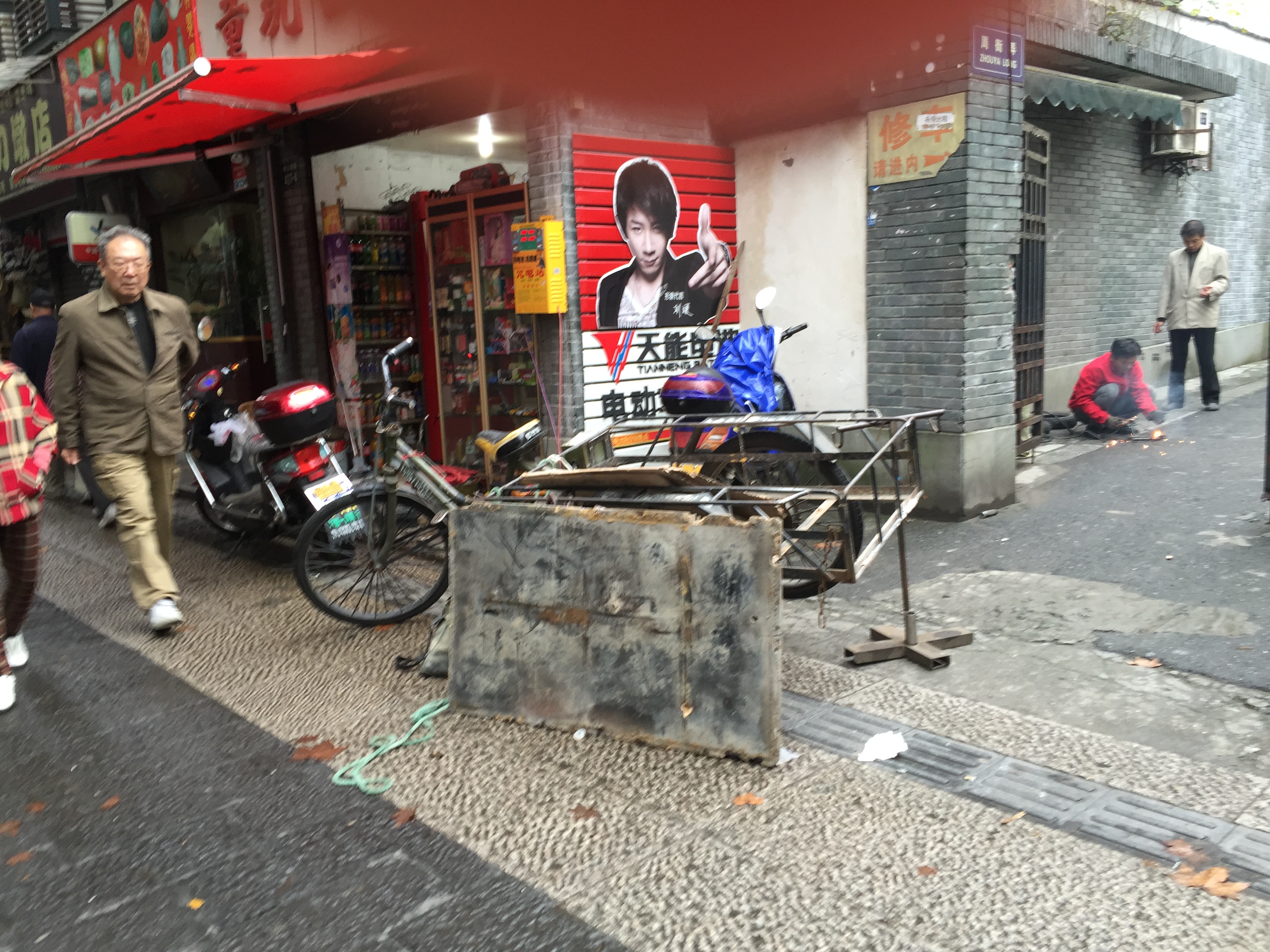
    Earlier in the morning, we walked through an old part of Hangzhou and saw the tourist shops  and tourist park surrounding the Drum Tower, whose site has one of those 2000-year-old histories attached to it. That history includes the magnificent days enjoyed by Hangzhou under the name of Lin’an as the capital of the Southern Song dynasty (1127-1279) with a population of over two million; it was at that time the largest city in the world. The Drum Tower is, naturally enough, a reconstruction, but the Drum Tower Church, just across from the Tower, is its original self and was built in 1897 by the Presbyterians. As we walked around on this Sunday, we were listening to traditional Presbyterian hymns sung in a high very Chinese soprano voice. This particular Chinese church is permitted only for foreigners, but apparently the Chinese nationals are permitted to hear the Christian hymns.

    When we returned to the hotel, we asked the hotel manager to write down the kanji for the Long Distance Bus Station, and then began one of those travel days about which Travel can too often be all about, Apparently, the good man – and he was so helpful during our stay at his hotel – wrote down the kanji for the local bus station – and so there we were, at the Local Bus Station, without the kanji for the Long Distance Bus Station to show to any taxi driver and in the wrong side of town and, of course, nobody speaks English. Finally, Tsutae did find someone who knew some English, and so the next taxi driver took us for a ride – literally and metaphorically – for far (that is a pun) too many hours (or maybe he did not), but only much later did we arrive at the Long Distance Bus Station Ticket Counter, and, thank goodness, just in time to catch a bus and be on our way to Shanghai. 

    Once in Shanghai, we took another shuttle to the hotel where Tsutae had stored her luggage, and, once there, attempted to communicate without knowing Mandarin. It was a bit complicated, because the clerk at the desk had a translation program on her smart phone that said very peculiar things. All this kept us way into the night, and now we needed a private car to take us into Shanghai and to the Astor House Hotel,which i had been so excited to see, because we knew that the Gambles had stayed in the Astor House Hotel during their first days in China, and this would be history in real life and upscale and elegant  (and expensive) as well, 

    We had the kanji with us this time. We were prepared, but still the driver took us to number “106” on another street even though we had written and spoken (in good Mandarin) number 15 and had, with us, written in kanji the number and the name of the street as well as the name of the hotel, again, in kanji, just as we had been instructed. Throughout this endless day, I am pleased to say, I kept my cool. I have finally learned that such is just a part of the travel experience. But on arriving – finally – at the famed Astor House Hotel, we were met with such a lack of hospitality – one expects a tad of class at a first-class hotel – at least in a 5-Star hotel – but then maybe not in Shanghai. After all, Shanghai is all about money, and Shanghai is about new money, and new money seldom has class. Certainly, the Astor House Hotel does not have class. And then we were told, no, we were booked for only one night. 

    Somewhere, I have the confirmation that says two nights, but just to make matters more interesting, my phone – my brand new I phone 6 that I am – no, was – so proud of has been without service for three days. Who knows why, but I cannot make phone calls on my Six- Hundred -Dollar phone, and I have been unable to get any internet connections on the computer. Why do I carry these expensive gadgets around?

    2015-11-09 09.10.17   2015-11-09 09.08.07    2015-11-09 09.11.23

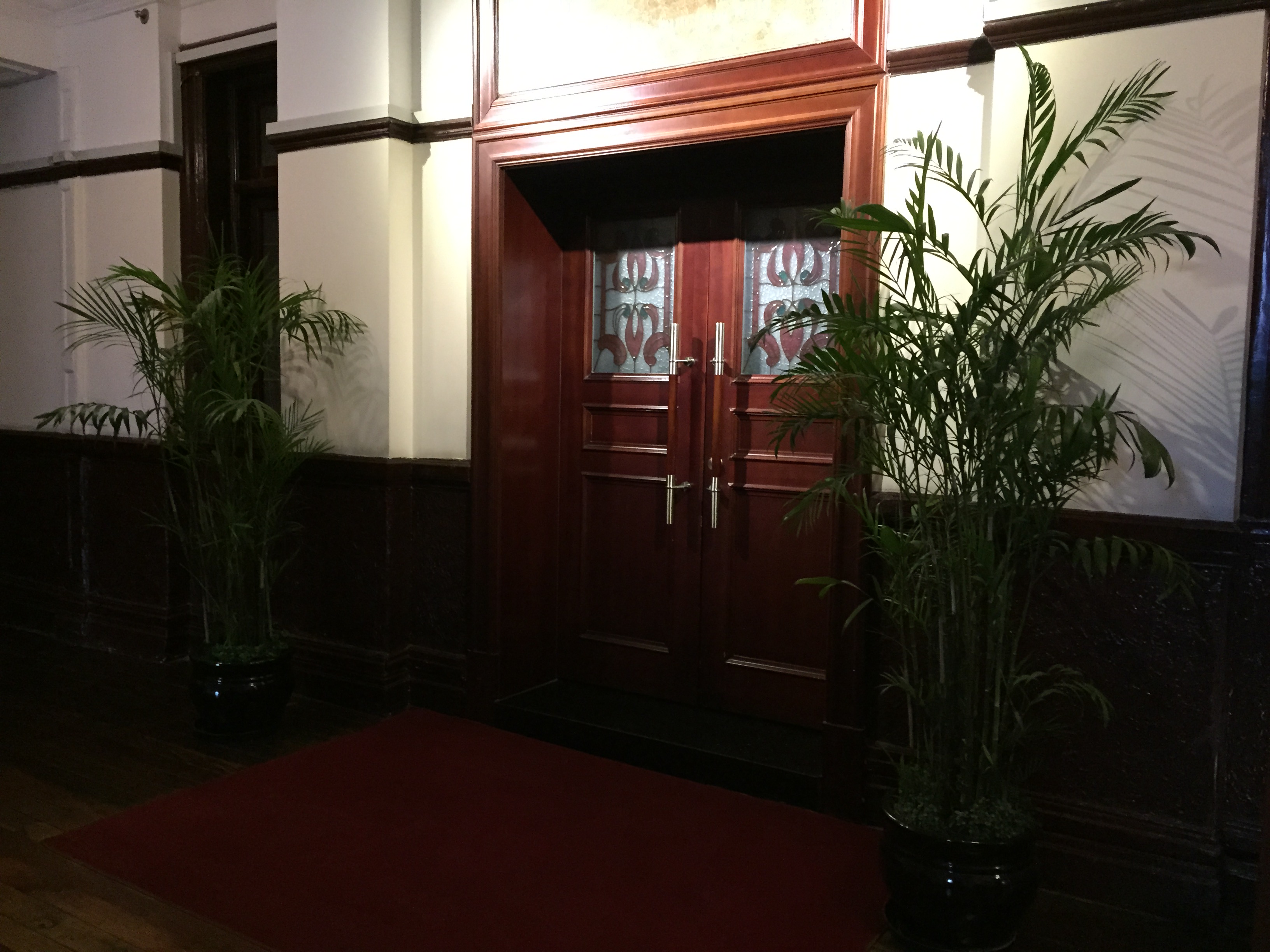
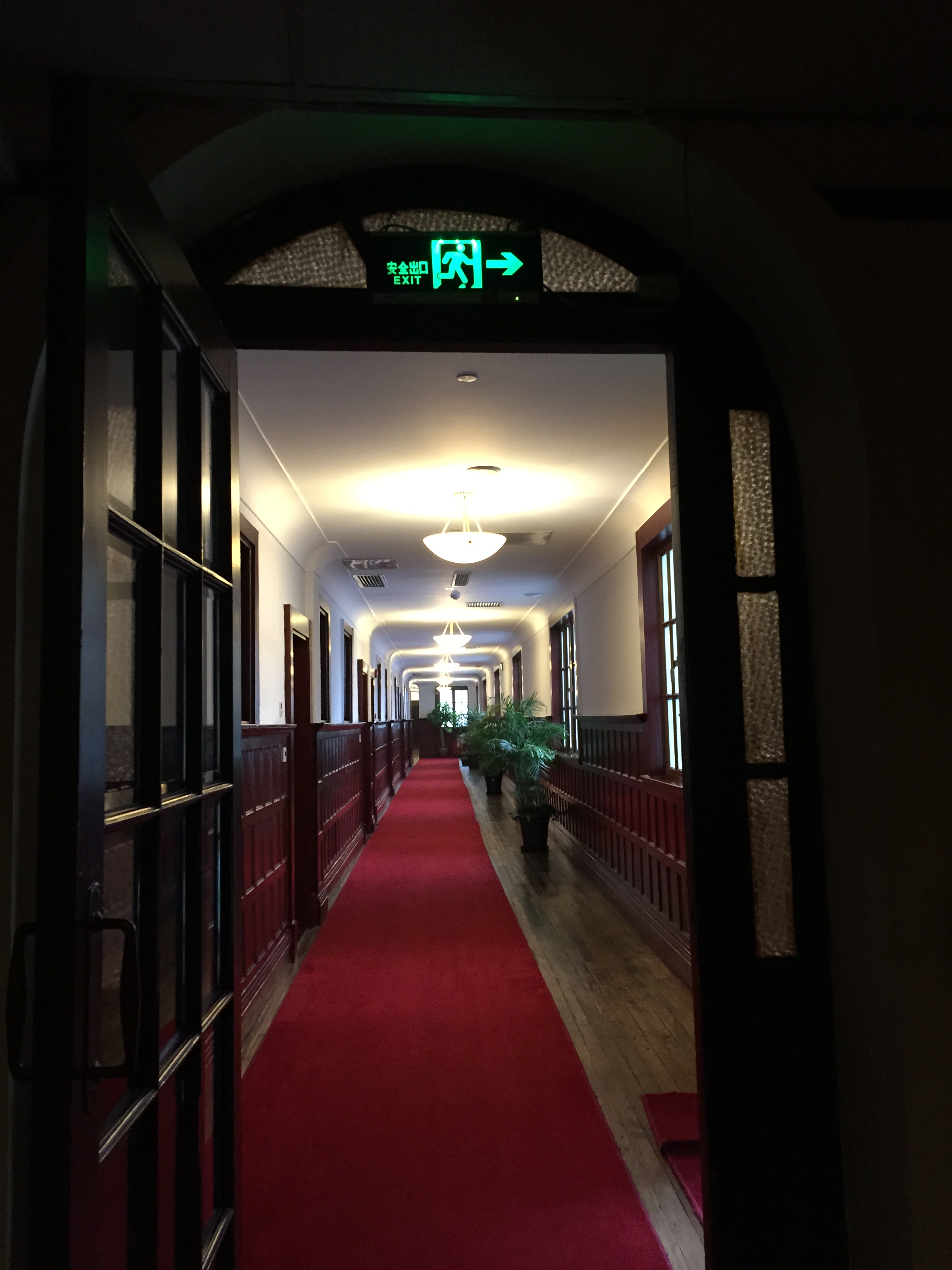
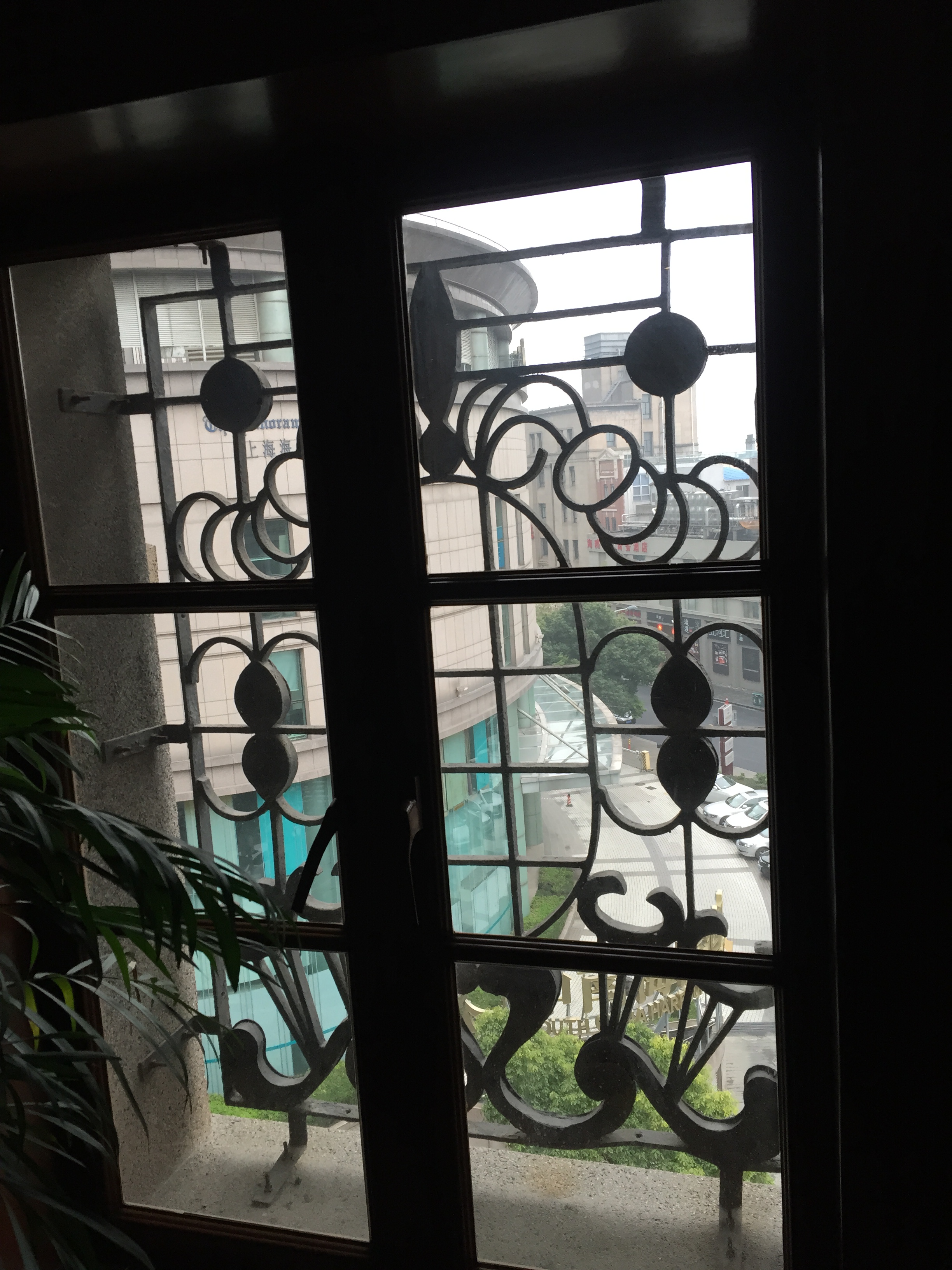
    The Astor House Hotel has not changed since at least 1908. Indeed, it is living history but with a drab life. The Gambles would surely recognize it if they walked in this minute. The Astor House Hotel is a museum. This museum has state-of-the-art showers and toilets and new elevators, but it is a museum, with early twentieth-century dark halls and dark doors, potted palms, exquisite glass windows and doors, and creaky dark wooden floors. The halls are lined with photos dating back to its founding in 1846 by the Scotsman Peter Felix Richards, but the staff, I don’t think, much care, and no one of their staff, according to the front desk, handles questions dealing with its history. it is intresting to see, this museum piece, but not exactly engaging for an overnight stay. 

    Oh, yes, the Astor has vintage; this includes its internet connection. We were more than happy to get out of the hotel the next morning. Things always do work out for the best. I just have to keep coming up with work-arounds. Fortunately, my matter is not time-sensitive; it can be emailed at a later date. And there are plenty of hotels in Shanghai

    And oh! what a city. What a spectacle at night. The lights, the space, the lights, the lights, the lights! The entire side of a skyscraper one forty-story computer monitor flickering  relentlessly with new eye-boggling images. So much glitter and hubbub and the endless, tall, fancy, imposing, overwhelming frontage that smacks of money and money and money. It is something indeed to be seen, Shanghai.  Shanghai at night.

  • Ling Yin Temple & Gamble Hall, Zhejiang University

    Ling Yin Temple & Gamble Hall, Zhejiang University

    杭 HANGZHOU

    Wednesday  4 November 2015  

    The amazing Professor Hong Shen, English Professor at Zhejiang University (he has published thirty books, including one on Medieval English poetry and one on the photos of Sidney David Gamble) picked us up around ten, and off we went to Ling Yin Temple to have tea with the abbott and lunch in the guest-special cafeteria. I had the fun of showing off some ninety photos that Clarence and Sidney Gamble took in China in 1908, blowing them up on the computer so all the details popped out, and explaining them, and everyone else had the fun of admiring them and raising questions and adding comments. A big audience for Hangzhou history and Sidney Gamble photos exists here in this beautiful city. 

    After lunch, vegetarian, of course, with delicious tofu (what is it that Americans do with tofu that leaves it so tasteless, and what do the Buddhists here do with theirs that makes it absolutely delicious?), we were shown around the temple and visited the sites that Clarence and Sidney Gamble photographed, or rather saw where they had seen and/or saw where what they had seen still was.

    It was pouring full-out rain, despite the prediction of a slightly overcast day. That was to our advantage, for we were given, to keep, lovely brown umbrellas with the Ling Yin logo in green on the brown fabric.

        2015-11-04 12.19.52       2015-11-04 12.18.37

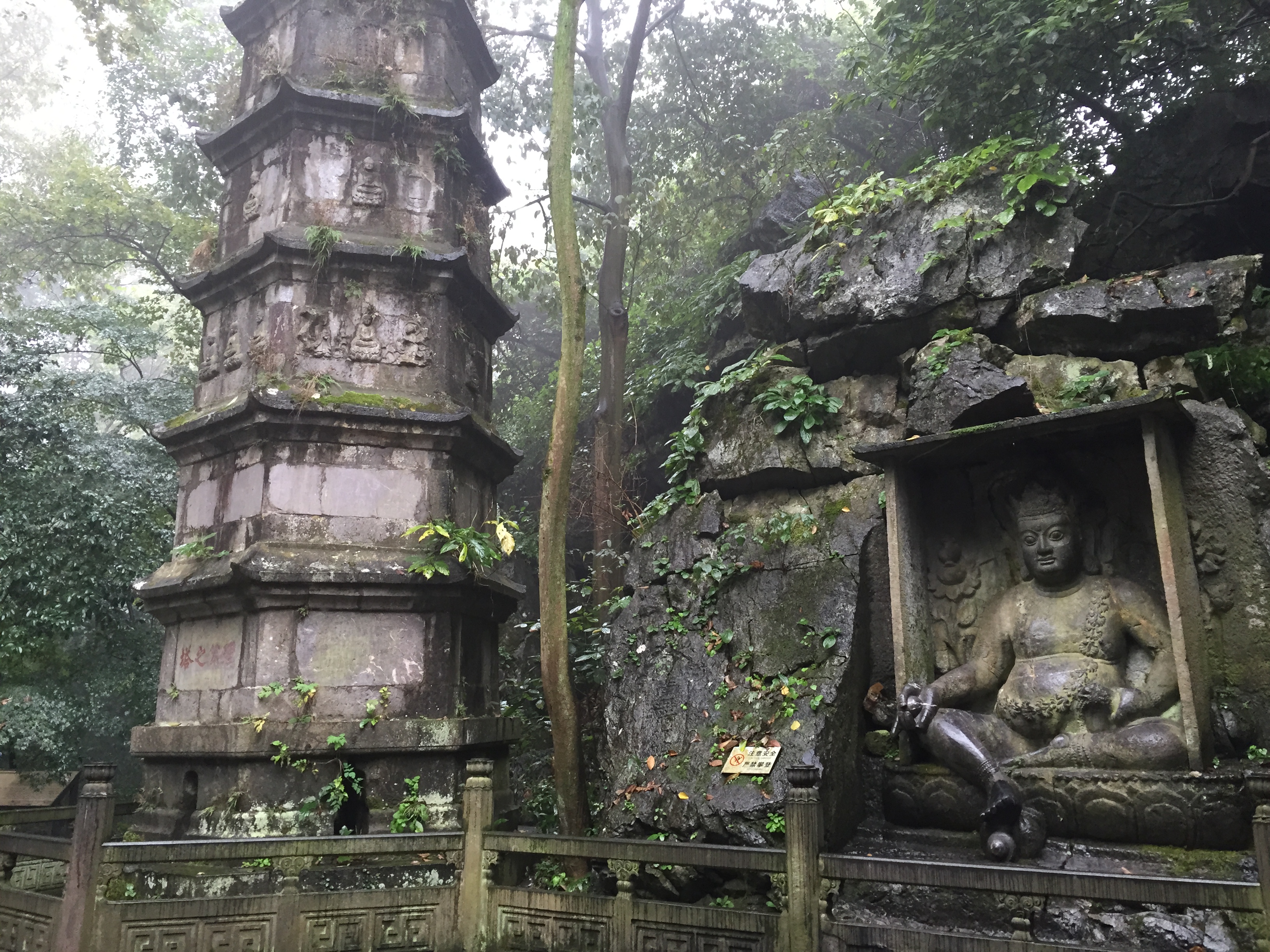
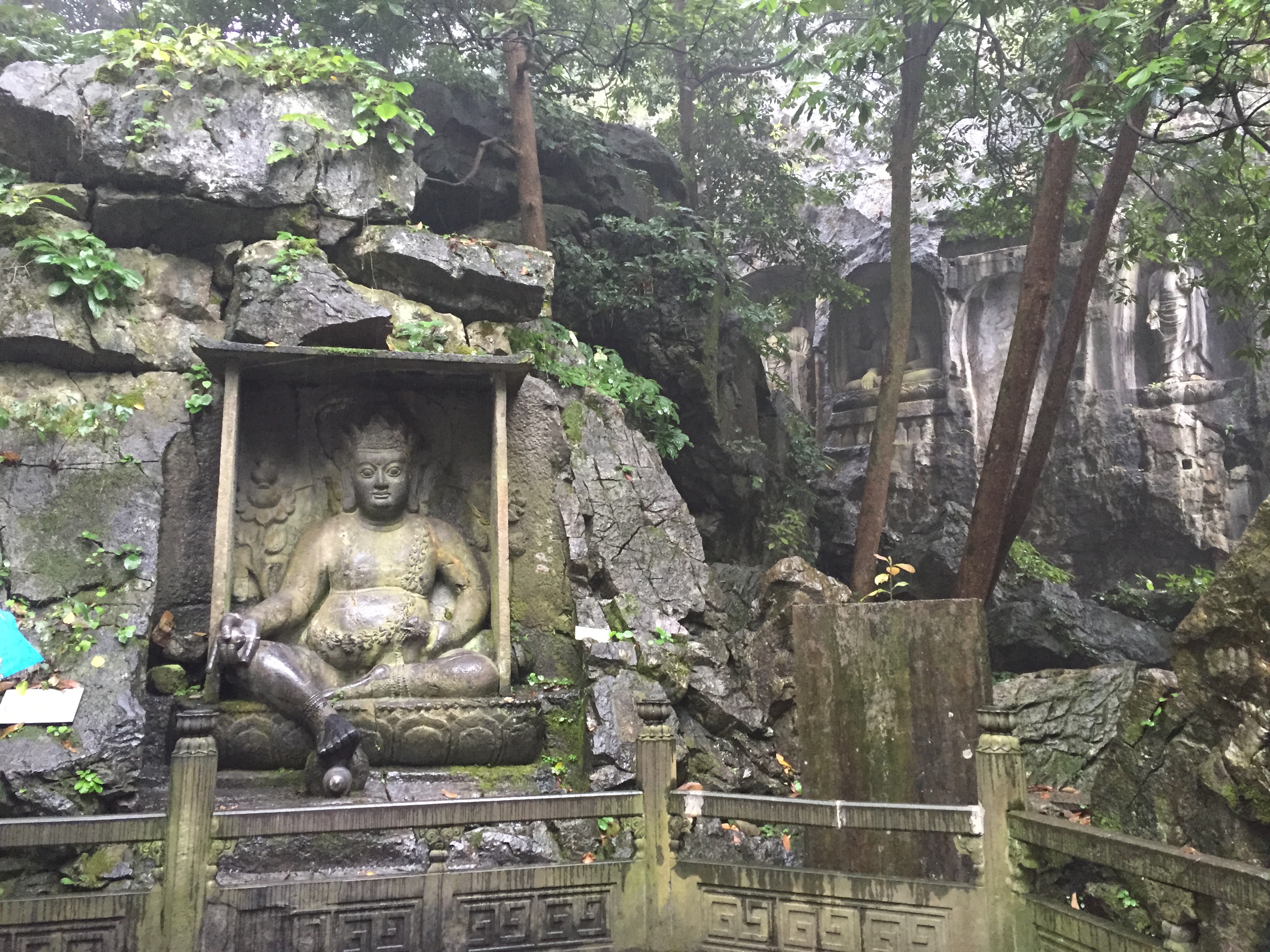
    ain things have not changed at Ying Lin Temple: the rocky hills surrounding it, the stone steps up the hillside, the bas relief carvings of Buddhas and iconic figures (though some of the latter have been renovated). Seeing statues and carvings that we know have existed for over a thousand years is humbling, when that fact is given consideration. The photos attached here show some of what we saw, and more on that later.

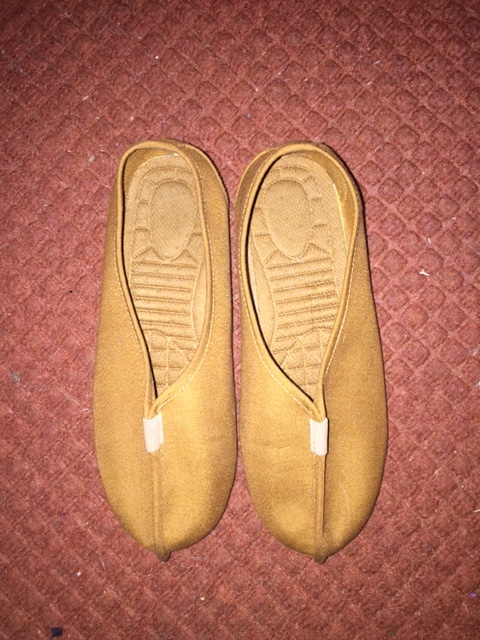
    AT one point, I noticed the distinctive orange shoes worn by a monk, who was escorting us around the temple, and I commented on them and asked where to buy them. The next thing I knew, we were off to nearby Paris Sengfu, the temple where the shoes are made, and Professor Shen bought me a pair. They are only made in men’s sizes, but the smallest size fits perfectly, and I have a very practical souvenir of the temple visit.       

     IMG_0359

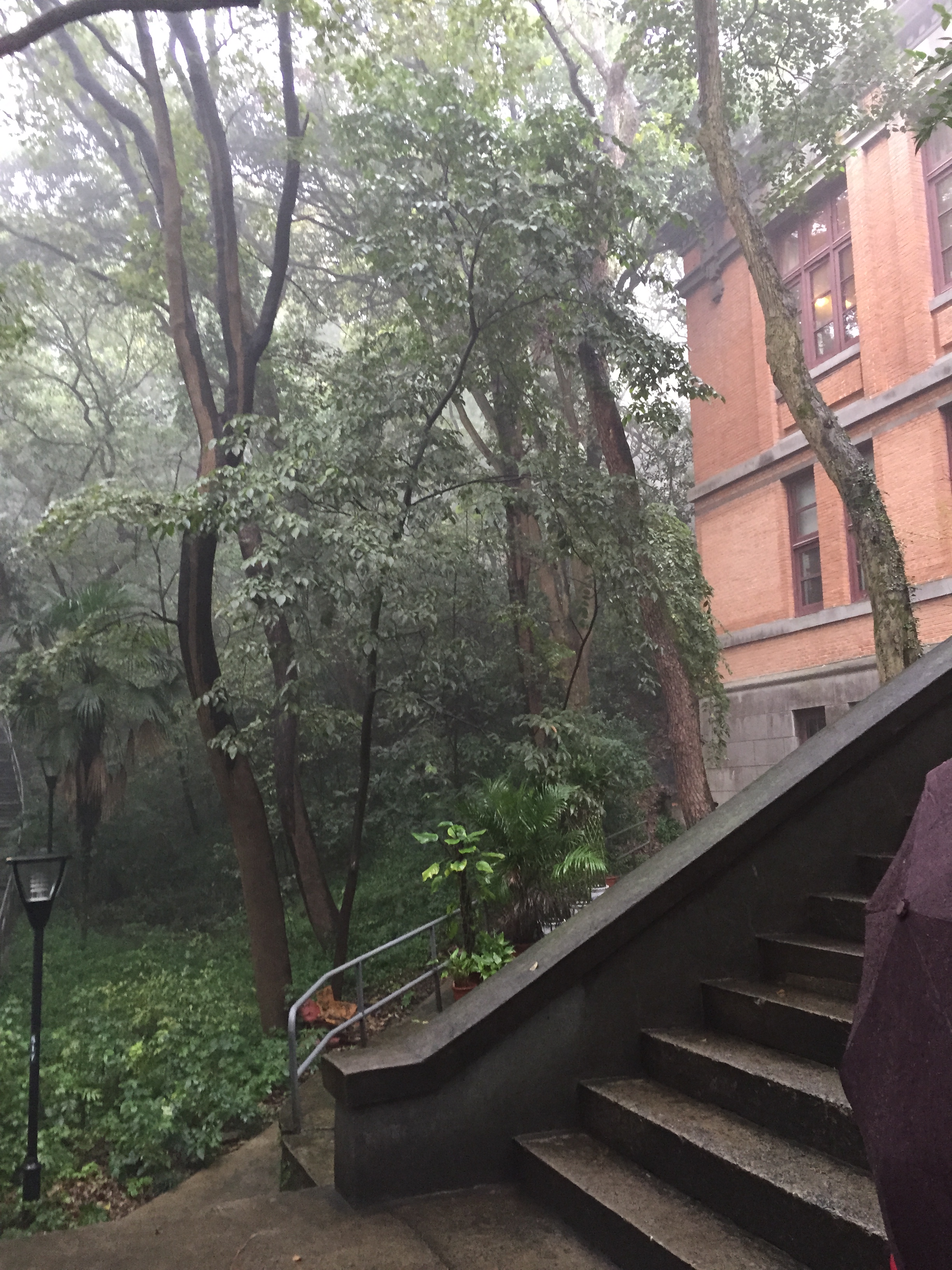
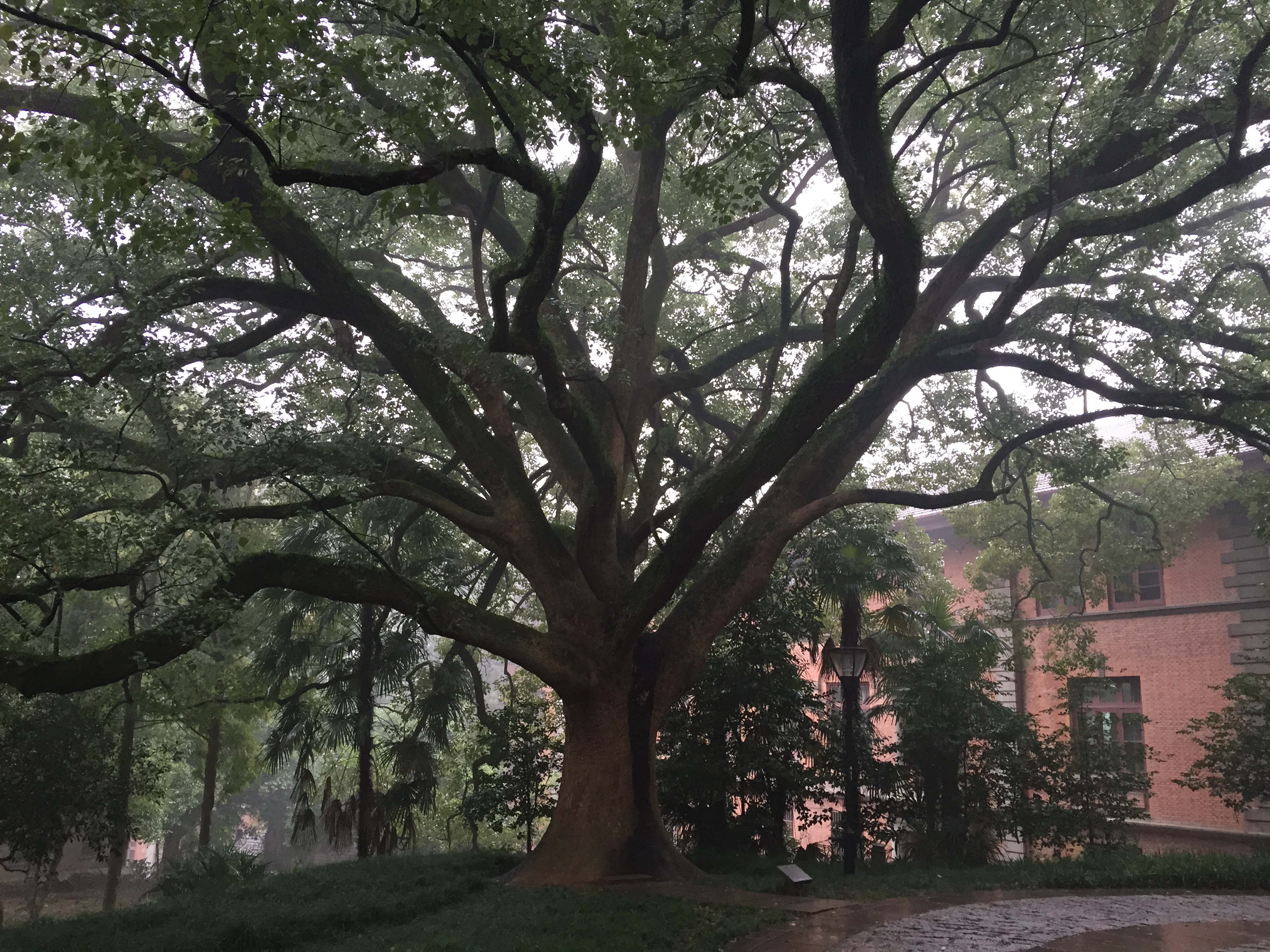
    My friend Sally will be most delighted to hear that we were next taken to Hangzhou Historic Site, now merged with well-known Zhejiang University. The Historic Site is the former campus of the Hangzhou Christian College, founded by Presbyterian missionaries in 1897. The hills of the campus had been denuded by aggressive cutting for the lumber market that existed in the late nineteenth and early twentieth centuries in Hangzhou. Students and faculty planted trees and shrubs, which have flourished over the years, and today the Historic Site has a magnificent stand of tall trees and luxuriant plants.

    2015-11-04 14.13.52       2015-11-04 14.04.23

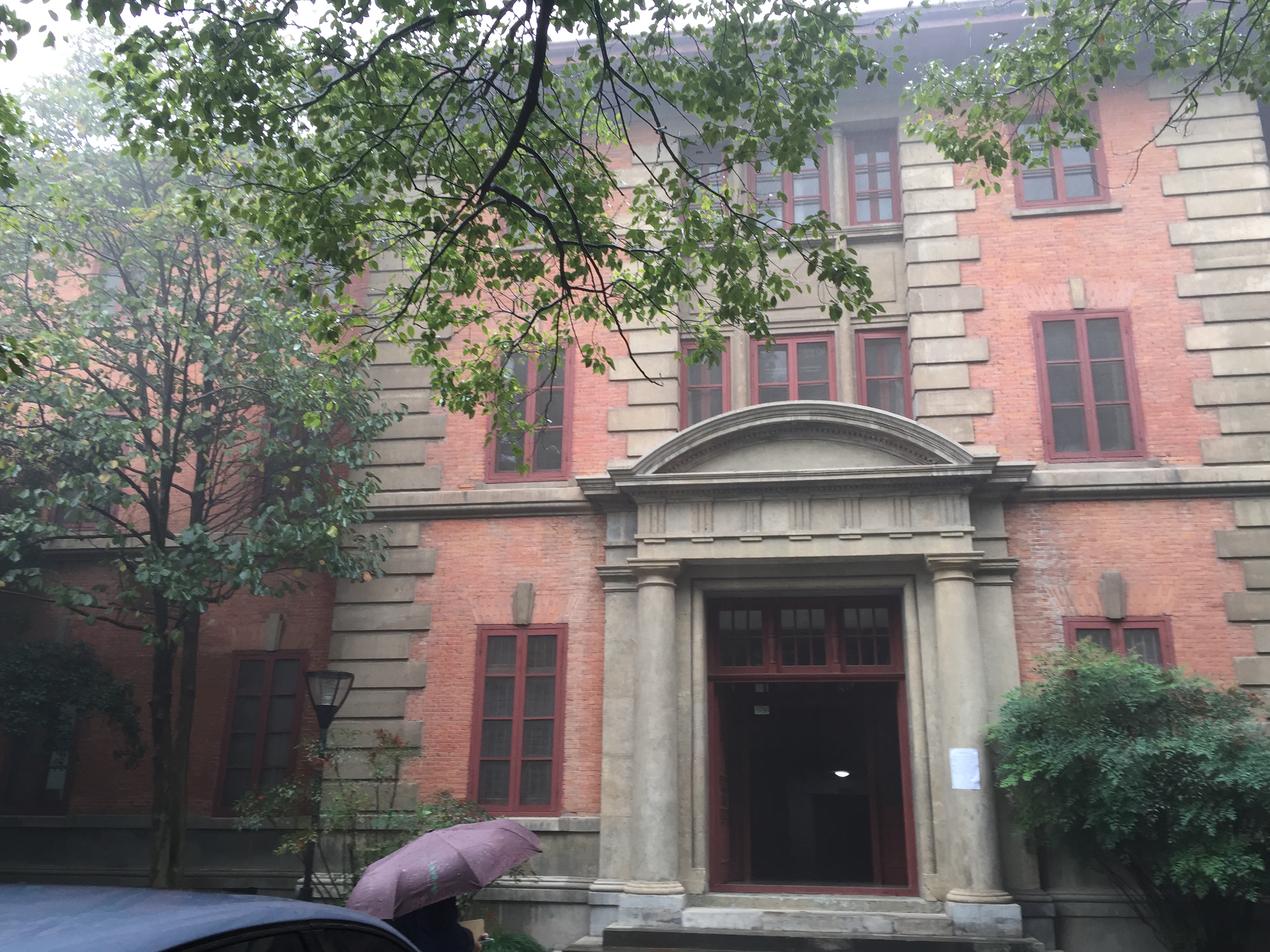
    The buildings on the Historic Site include Gamble Hall, which was funded in 1908 by David Gamble. David Gamble was a son of James Gamble, co-founder of Procter & Gamble, or P&G. David Gamble used his inheritance for the public weal, funded school buildings, and built The Gamble House, now a Historic Site, in Pasadena, California. On the Hangzhou Historic Site, he also funded the library building, today used by university administrators. David donated as well the land for field and track to the College, on which now stand tennis courts. 

    Gamble Hall was planned as a dormitory.  It has been renovated, but the 1908 style of the structure remains. The name “Gamble Hall” was originally inscribed above the main entrance to the building, but the Government got rid of that obscenity, left the spacee blank, and the Gamble name has never been restored. 

      2015-11-04 13.55.40    2015-11-04 13.46.34    

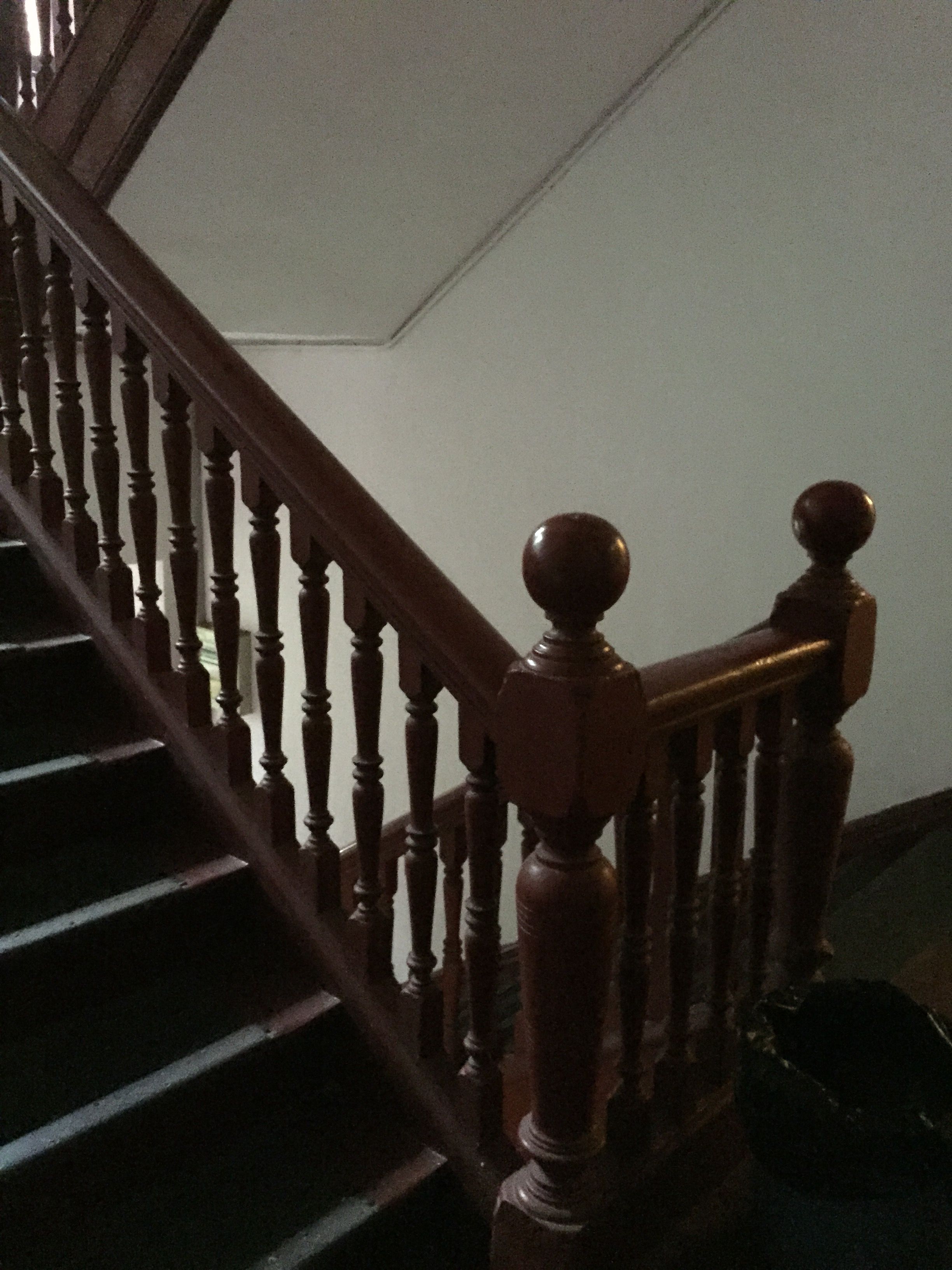
    We went through the building, up to the third floor and walked the halls. The stairs may have to be redone soon. A hundred years of use have left the treads, especially in the area close to the lovely dark wood banister, well worn. What appears to be the original light fixtures are in the center of the long halls. The building is a simple, serviceable structure, now being used for offices for faculty, though only partially occupied at the moment. 

                                         Fitch-_Web597

    aughter of Robert Fitch, the Presbyterian missionary who loved China and devoted his life to educating and helping its people,  wrote a memoir, in which she relates that her father requested from David Gamble the funds to build the library. Later, Robert Fitch went to a Mr. Dollar and requested the funds to buy the books to be put into the library. Both men responded cordially, but Robert Fitch had second thoughts. How could he name the building the “Gamble Dollar Building”? So, the story goes (and this is going third-hand, since I myself have not read the memoir), Fitch returned to David and asked him if he would also donate funds to buy the books for the library. David did so without blinking, and Fitch was spared the dilemma of how to name the library. Today, the library building remains in use (though now without the Gamble name). Nevertheless, David Gamble would be pleased.