上海 SHANGHAI
Friday 13 November 2015
When you get off the long distance bus and step into a puddle with your white shoes and are standing in the rain without your umbrella because you cannot get it because it is still in the luggage compartment of the long distance bus behind an enormous black bag that is laden with rocks; when you are standing there, gradually becoming sodden, and a nice man with a engaging smile and an umbrella rushes up to you and seizes your luggage from behind the enormous black bag and says, “Taxi! Taxi!” and motions for you to follow him and holds the umbrella solicitously over your now dripping hair, do NOT follow him. He could be, at worst, a kidnapper and hold you for ramsom or, at best, merely a smiling man who will charge you four times the going rate of taxi transportation. If you do not mind paying four times the going rate and prefer to be out of the rain, then get into his private car and pay the money. But if he could possibly be a kidnapper, perhaps you had better not take the risk.
When you are standing in the rain outside a temple (it always rains when I go to a temple) thronged with tourists spilling into the street, and the taxis, one after another, go whizzing past, until a policeman somehow makes you understand that taxis are not allowed to stop at this location, then you walk to the taxi-stopping location and wait and wait and wait, while the taxis continue to whiz by you, and when a clean car drives up to you and the driver leans out the window (but does not get out of the car with an umbrella) and says, “Hello! Hello!” in a strange sort of English, you ask him how much? He says, “Twenty.” When you get in the car with your friend and give him twenty, he says, “Twenty. Twenty.” Twenty for you and twenty for your friend. Now this is only twice the going rate, so If you are tired of waiting for taxis that continue to whiz past and want to pay two times the going rate, pay the money and enjoy being out of the rain But perhaps he, too, is a kidnapper. So you get out of the car and continue to stand in the rain.
When a van pulls up with the same offer and you get in the van, the driver spends the next half hour driving you around and calling out the window to other ignorant tourists, trying to entice more passengers. After going nowhere for a half hour, you and your friend get out of the van and return to the same spot in the rain that you started from.
Eventually, a taxi with a green light will stop. When you show him the kanji for your address, which has been carefully written down on your little slip of now wet, limp paper, he may shake his head and drive off. But eventually a driver will nod, “yes.” You will then wrestle your overloaded luggage with the too many books that – again – you should not have bought, into the trunk of the cab, and he will then take you to somewhere in the general vicinity of your destination. When you have arrived at wherever it is that he has decided is close enough, he will stop the cab with a jerk, yell *&^#$$@!!” at you at the top of his lungs, and point angrily in several directions. You will wrestle your luggage out of the trunk – in the rain – and splash down this unknown street until, eventually you see something vaguely familiar, and you find your hotel. It may be a long walk, but you have not been kidnapped, and you have not paid four times or two times the going rate.
It is not entirely unreasonable that the driver does not bring you to the door of your destination because the traffic is always more than any living person should have to endure, and left turns, if they are possible, can be impossible. The driver is driving twelve hours a day and needs to get as many jobs each day as possible to live. And shouting is the normal level of speech, whether happily joking with friends or giving directions, and can be distinguished from full-out anger by its speed and fierce intensity.You just do not take these things personally.
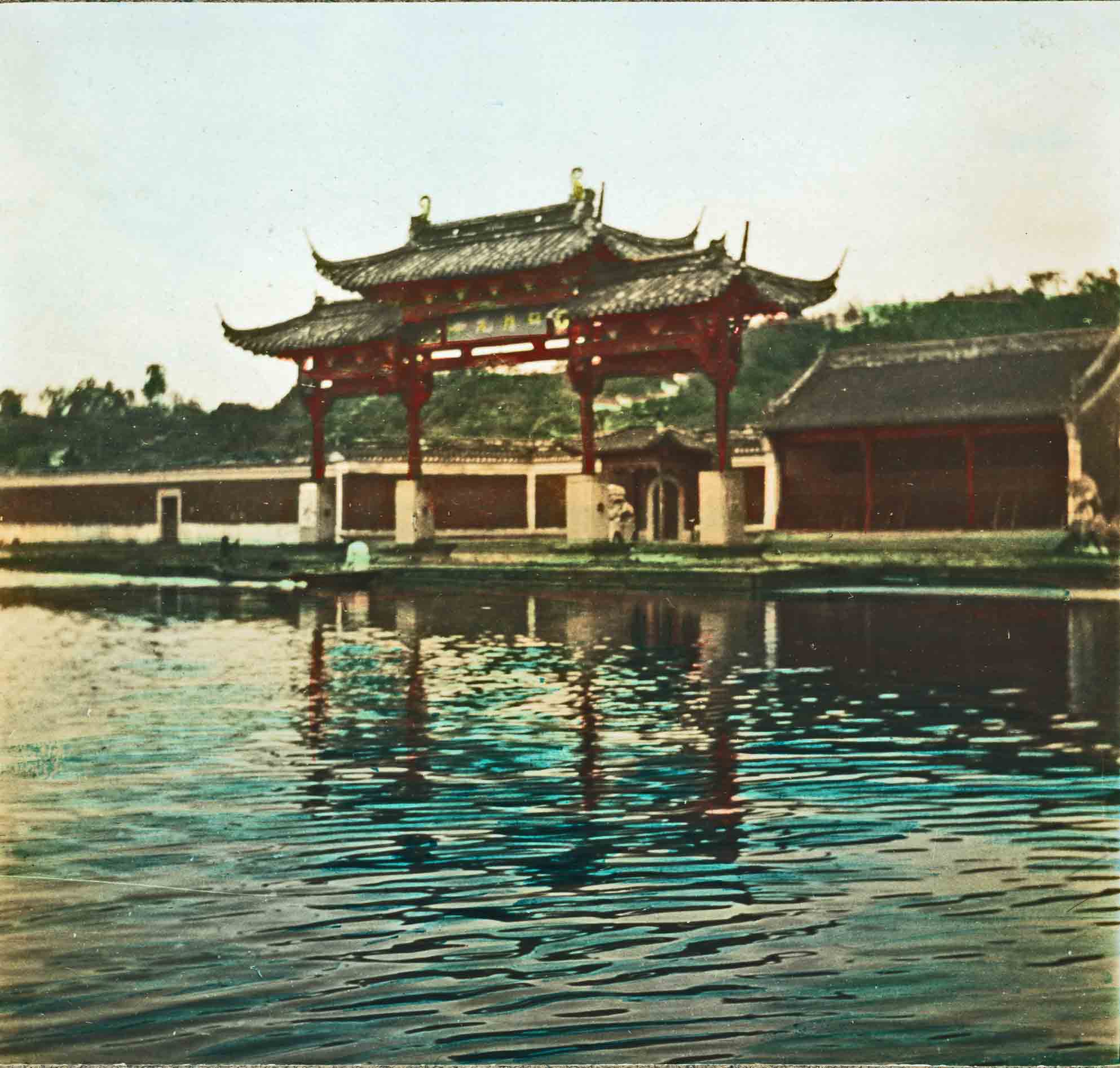
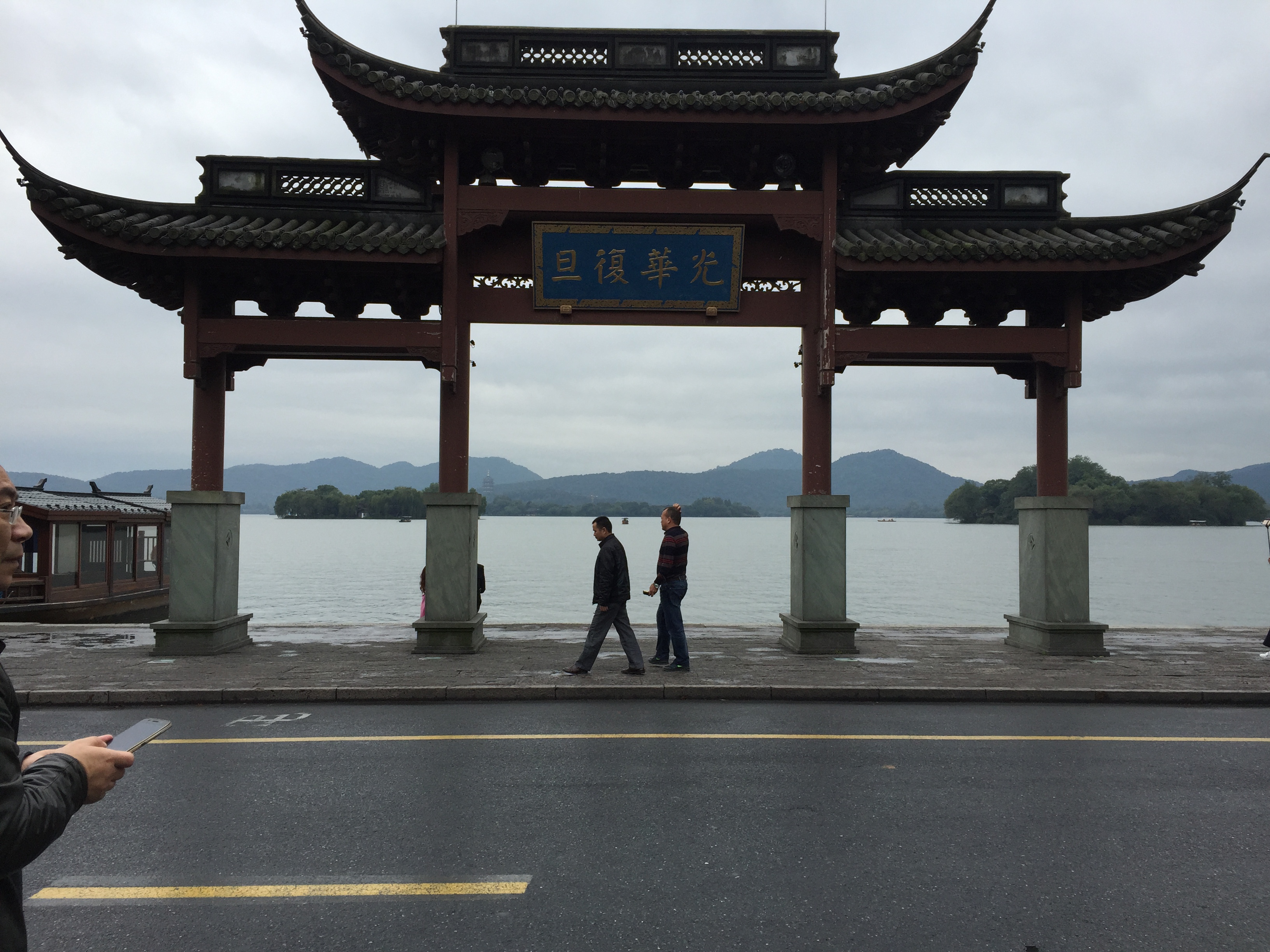
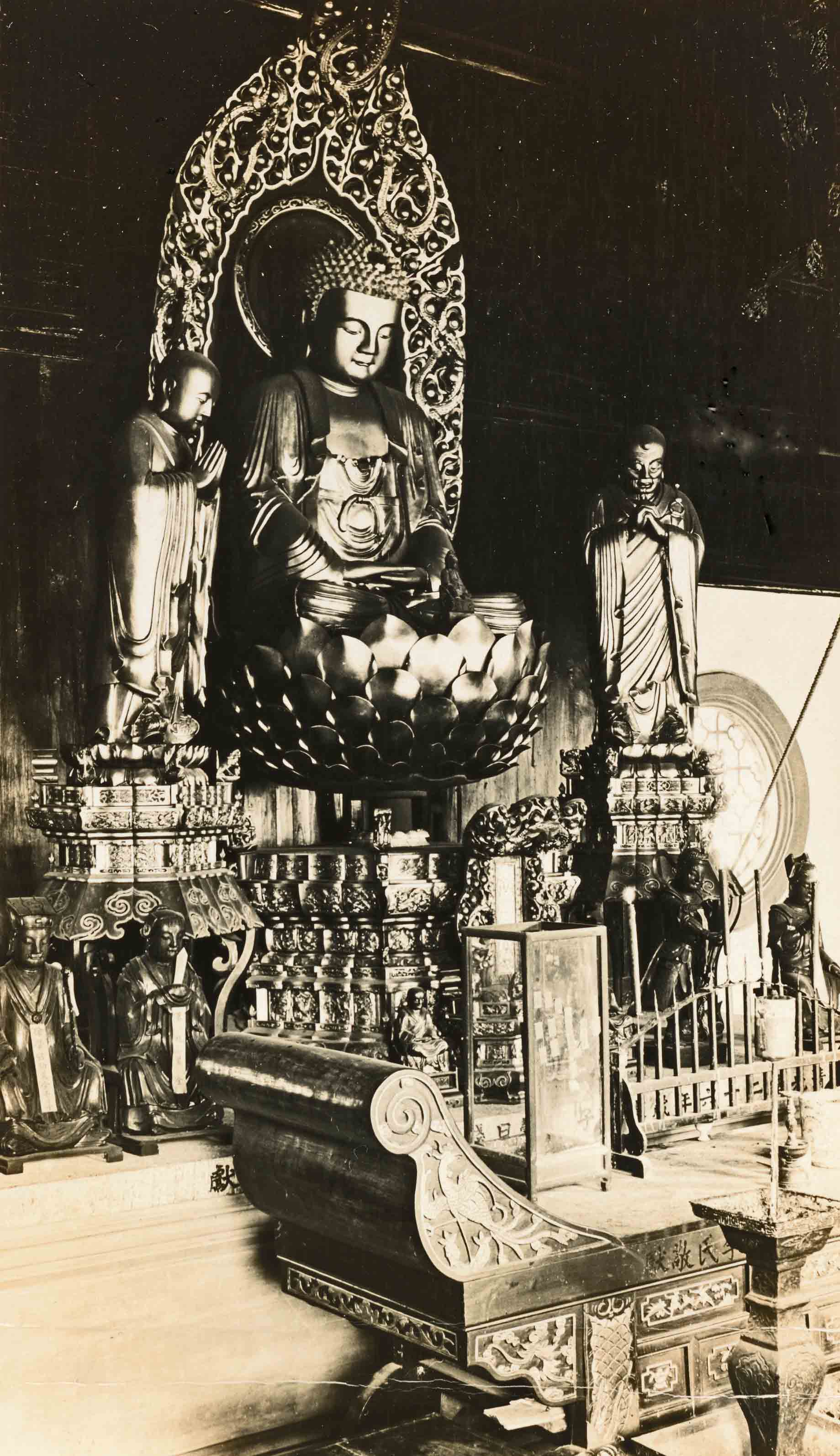
We had a photo taken by Clarence and Sidney Gamble of the gate of the Imperial Library as it stood in 1908. Now we wanted to see what it looked like today. That is why we were dealing with all these taxis, or trying to do so, running all over Hangzhou to find these temples and monuments that the Gambles had once seen. We had been told where it was, and we had the photo. Easy enough to find, yes? After much wandering around and questioning, directions given and received, we found what we were told was the gate wasa reconstruction in part of the uppermost roof of the original gate, a far cry from the entire magnificent monument in our photo
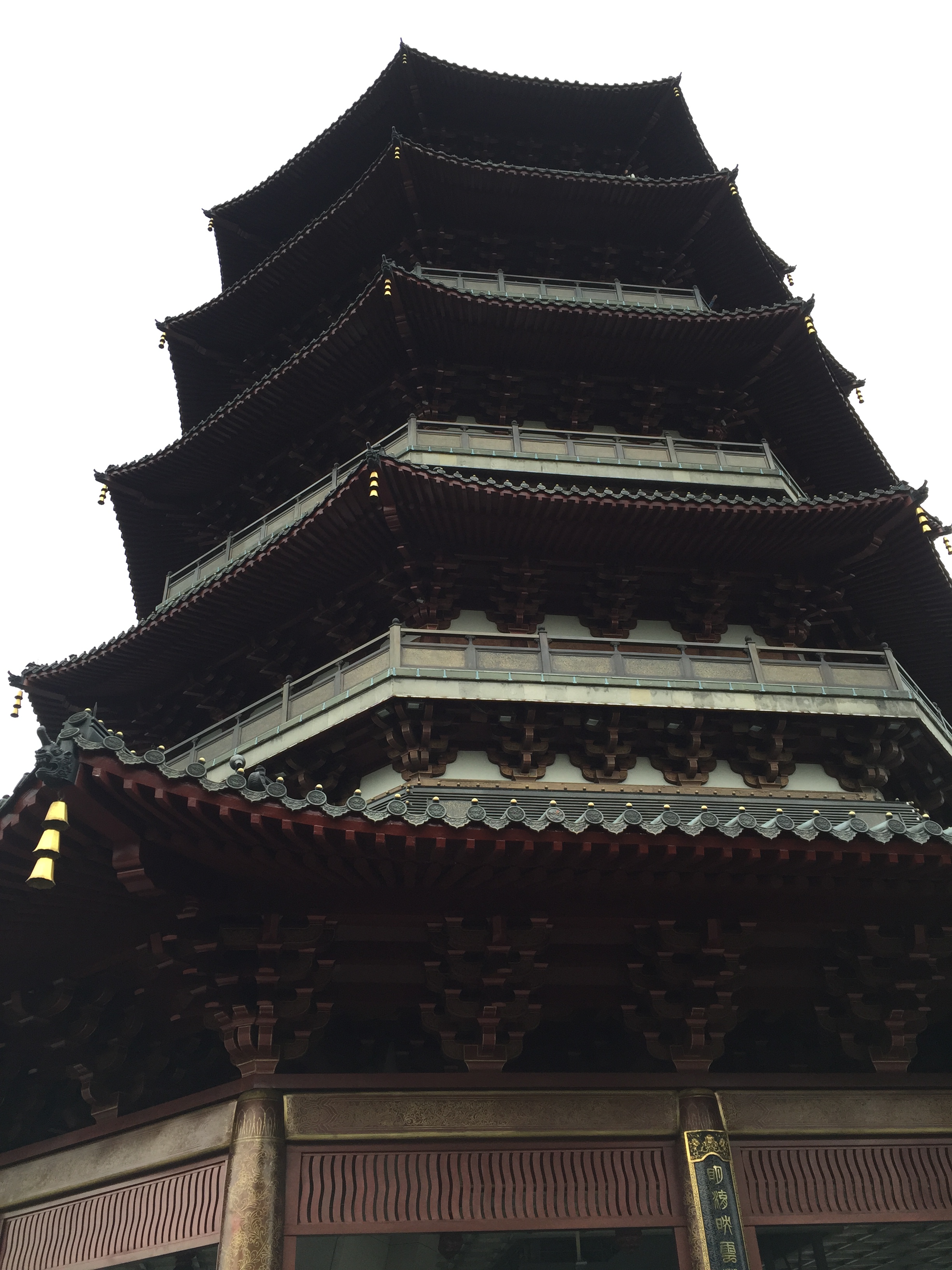
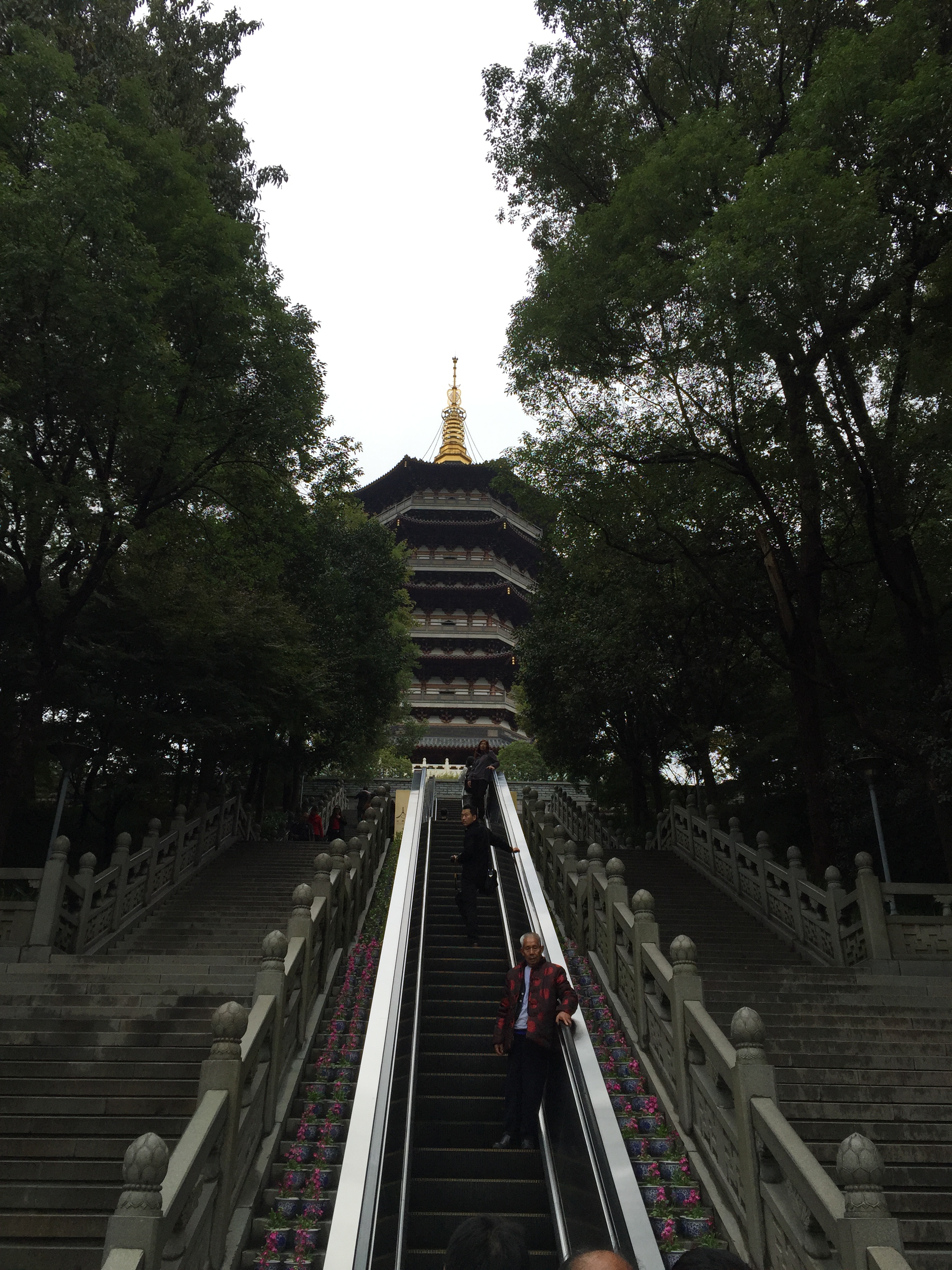
But when it came to the reconstruction of the Lei Feng Pagoda. nothing was partial. The original fell in 1924, The current Lei Feng pagoda is monumental and massive,as are all of China’s monuments with – what else – an escalator to take you to the top of the hill where the pagoda stands. Elevatos within the pagoda take you to the top of the pagoda itself, and the views from every part of the top-most balcony are beautiful, .
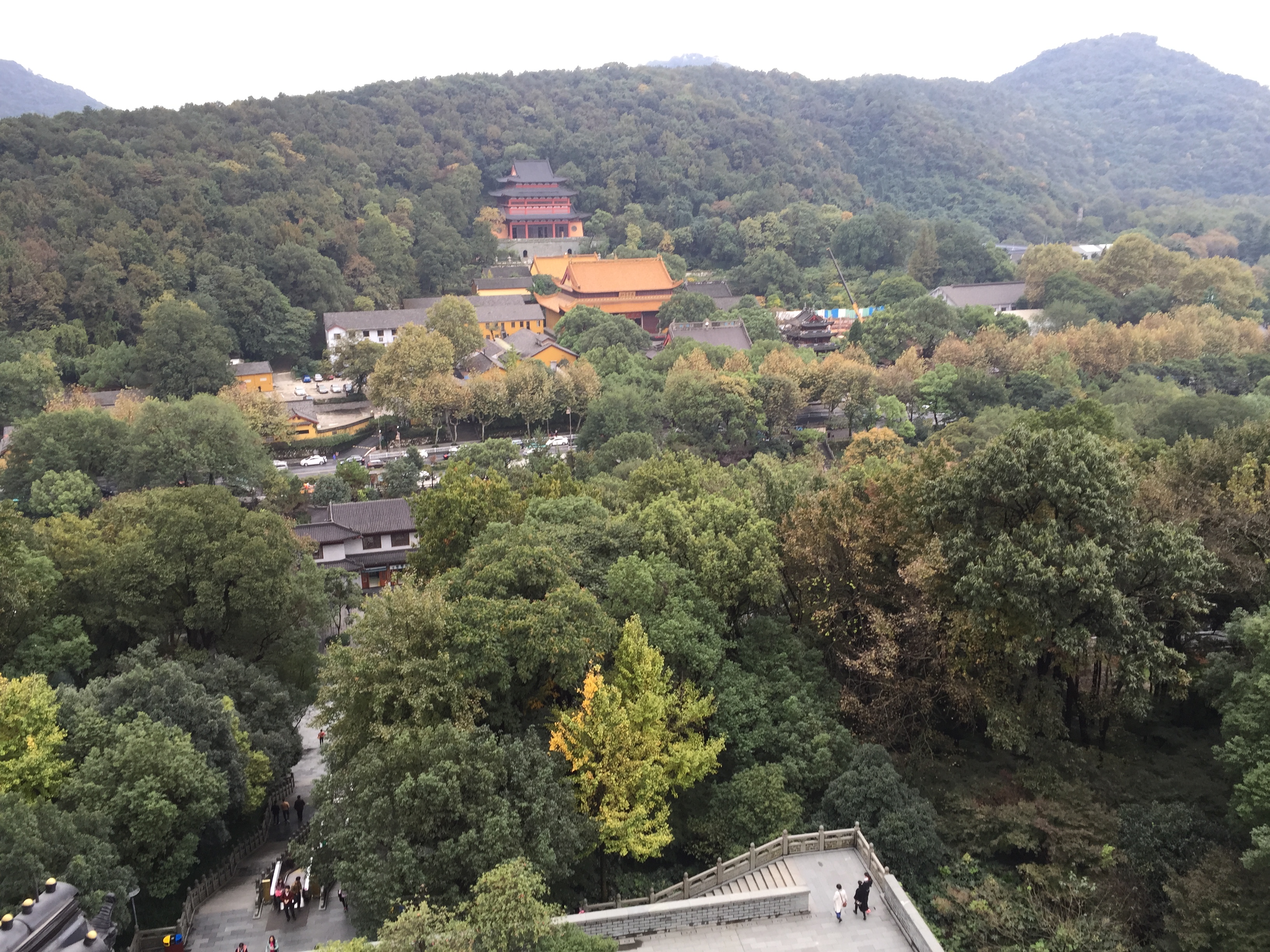
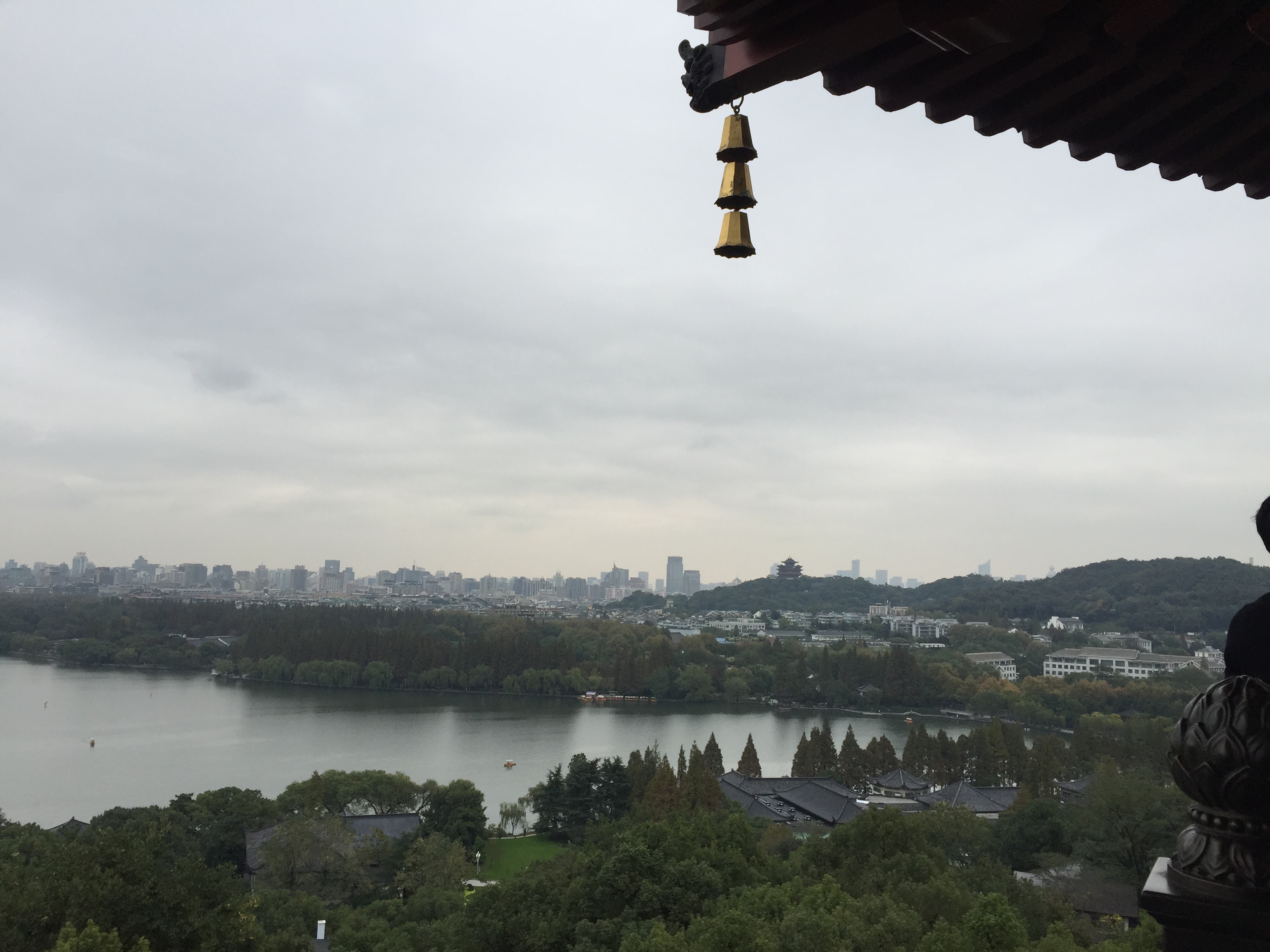
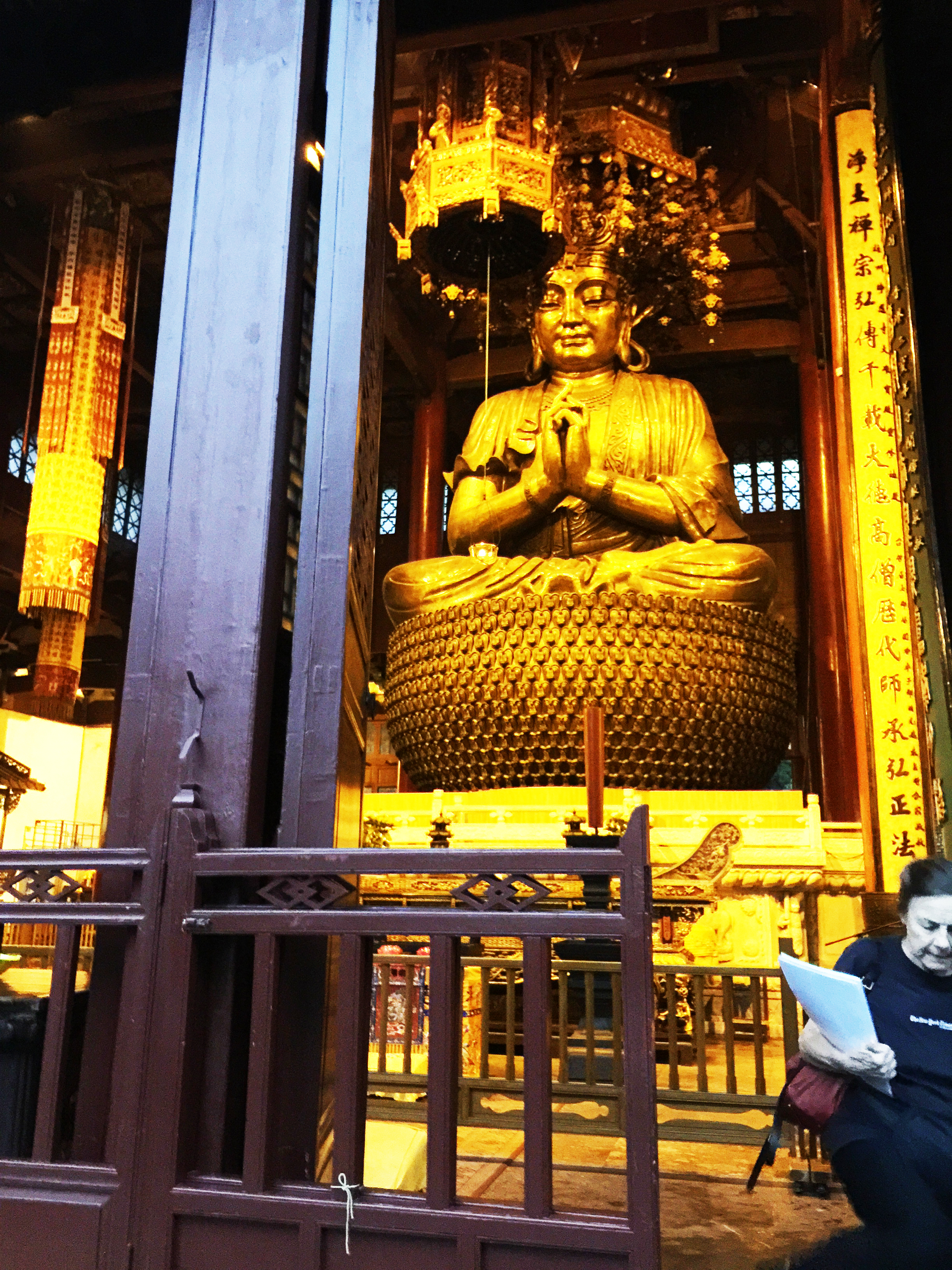
Our bird’s eye view from the Lei Feng Pagoda of the layout of the Jingci Temple prepared us for our final stop. a second visit to the Main Hall of the Jingci Temple, where an older woman with a most beatific smile was sweeping with one of those strange Chinese brooms, making the area tidy. Her smile lit up the gray day. And we were ready to call it a day. We took one more photo and back to our hotel we went, to pack and to ready for plane travel.