Tag: Myung Sung

  • Seoul, Korea Monday 11 November 2019

    Seoul, Korea
    Monday 11 November 2019

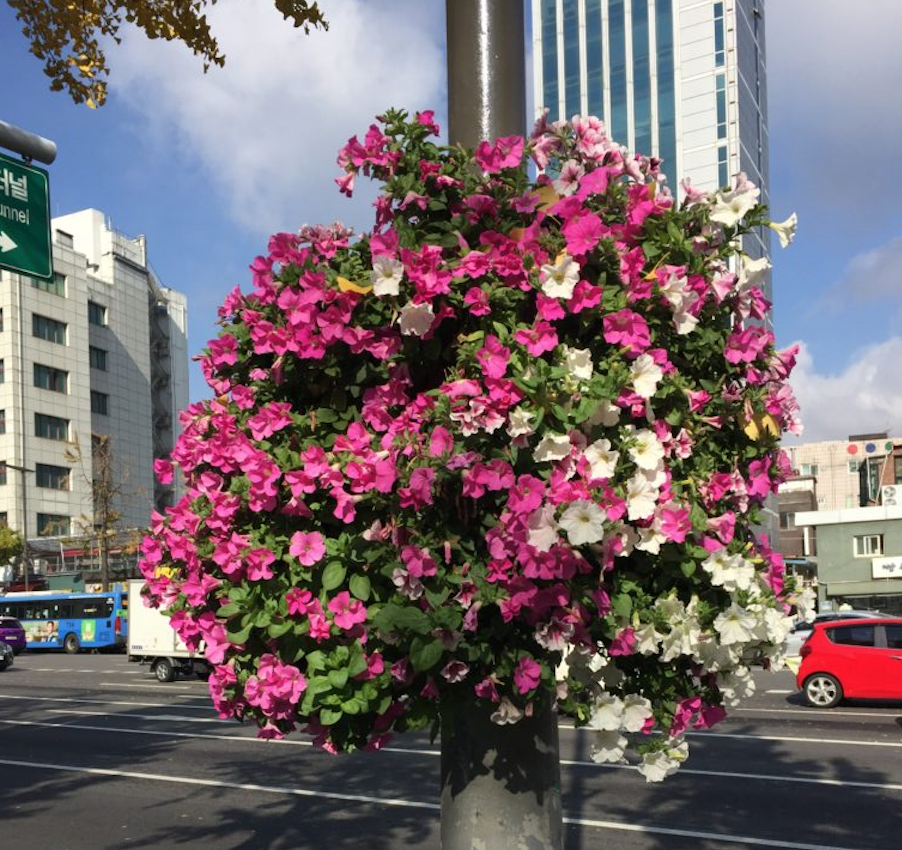
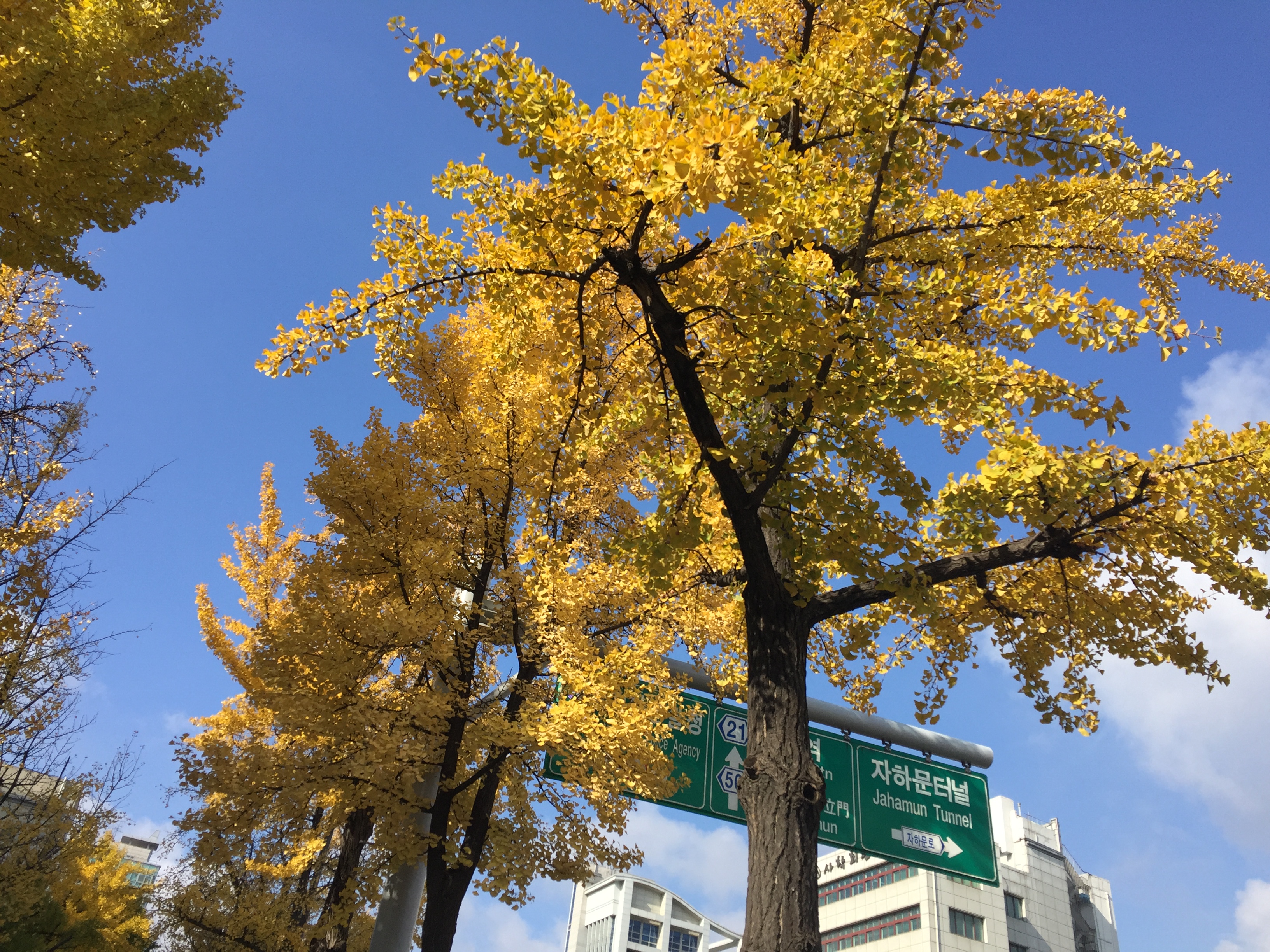
    Autumn yet clings to the trees of Seoul and, surprisingly, petunias are blooming in the street baskets. Immersed as I am researching nineteenth-century Korea, my head is filled with images of the Seoul and Korea of that period. Thus, the prosperity and well-being of today’s Seoul continually amazes me. And people In general dress more formally here, so everyone immediately looks more prosperous. I asked Jasmine if this affluence is seen throughout Korea, and she assures me it is.  In Seoul and at the Incheon airport, everyone looks healthy and young and prosperous.


    In Korea, a formality marks the professionals and particularly, as I have found, the academic community. In America, instructors and even titled professors will have office hours. A student or an unknown can roam the halls, and if it is an office hour, wander in, introduce one’s self, and chat away with the great man or woman. Not so in Korea. To meet a prestigious academic, you need an introduction from several levels down. It is much like getting a book published in America. First, you find an agent who is an agent-finder. The agent-finder finds you an agent. The agent may find you a publisher. In Korea, you find a friend of a friend who can introduce you one level up, and after that you keep working your way up until you have a personal introduction to your target.

    You then meet your target at the restaurant and pay for a meal that costs a hundred or more for your party of three. My forty-dollar box of chocolates seems mighty insignificant. These tight hierarchical channels of today seem basic to Korea culture and surely have their source in the force of Confucian dogma that demands total subservience of the son to the father, the father to the ancestors, etc., etc. The early missionaries often write of how little personal ambition Koreans evidenced. But it was a matter of self-protection.The King demanded tribute from the yonban. The yonban demanded  from the magistrate, and the magistrate would simply squeeze more out of the lowly peasant. This was “The Squeeze.” If a peasant suddenly became prosperous, the magistrate would drum up some charge and arrest him. After a few beatings, the peasant was happy to let go of his newly acquired wealth. Understandably, the nineteenth-century Korean peasant saw little advantage in the extra work required to improve his income.

    Please note that I use “his” here in referring to nineteenth-century Koreans. There was no opportunity for Korean women to have an income.


  • Korea – Saturday 9 November 2019

    Seattle Airport – Saturday 9 November 2019

    Matt Olivia, a practicing ophthalmologist in Medford, Oregon, is currently in Ethiopia, where he is part of the Himalayan Cataract Project offering cataract surgeries to the many peoples there so afflicted. His generous humanitarian work is in line with the charitable work of the American missionaries of the nineteenth century, who were particularly interested in bringing Christianity to the heathen in Asia. Afire with evangelistic zeal, the well-meaning missionaries immediately came face to face with ignorance and illnesses the likes of which they never could have imagined.

    Missionaries have often been faulted for imposing their world view on another culture, without respecting native values. In nineteenth-century Korea, disease and all ills were believed to be caused by demons. To cure an illness, a sizable puncture must be made into the body so the demon of the illness would be able to escape. The body was punctured wherever the Korean “doctor” decided was appropriate—even the eyes. The wound was left to heal as it might. Infections that followed often led to amputations or worse. The medical care of the missionaries in contrast to that of the Korean doctors was understandably welcomed. Native traditions be damned!

  • Korea – Thursday 7 November 2019

    Thursday 7 November 2019

    To All Who Would Like to Know About Korea in 1908:

    It is possible (though I cannot imagine such a thing) that you might not care about the state of Korea in 1908.  Please do not hesitate to unsubscribe. But, in  fact, the story of early Korea is surprisingly interesting. And I am off on Saturday to learn more about that story in Korea itself, in Seoul.

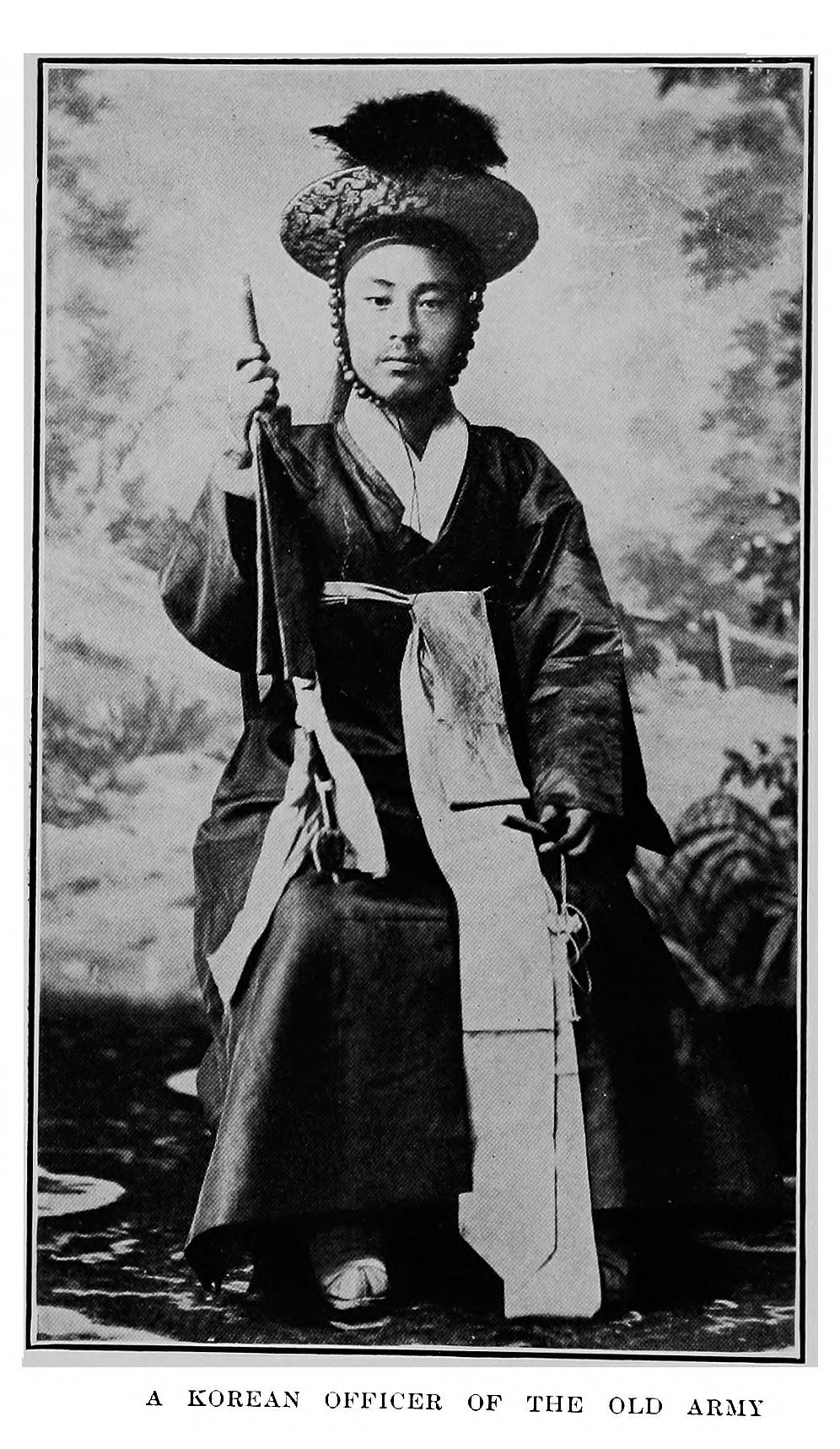
    Below is a properly uniformed Korean officer  as of 1899. This is the frontispiece photo from the book THINGS KOREAN by Horace N. Allen, MD, medical missionary who, after an assassination attack, saved the life of the nephew of the Queen of Korea, thus opening the way for an appreciation and acceptance of many things Western by the Royal Family and later the general public of Korea.

    How The Hermit Kingdom moved from rags to the wild riches of the twenty-first century has its basis in the events of the late nineteenth century.  As you will see.


  • Thursday 8 November 2018

    Thursday, 8 November 2018

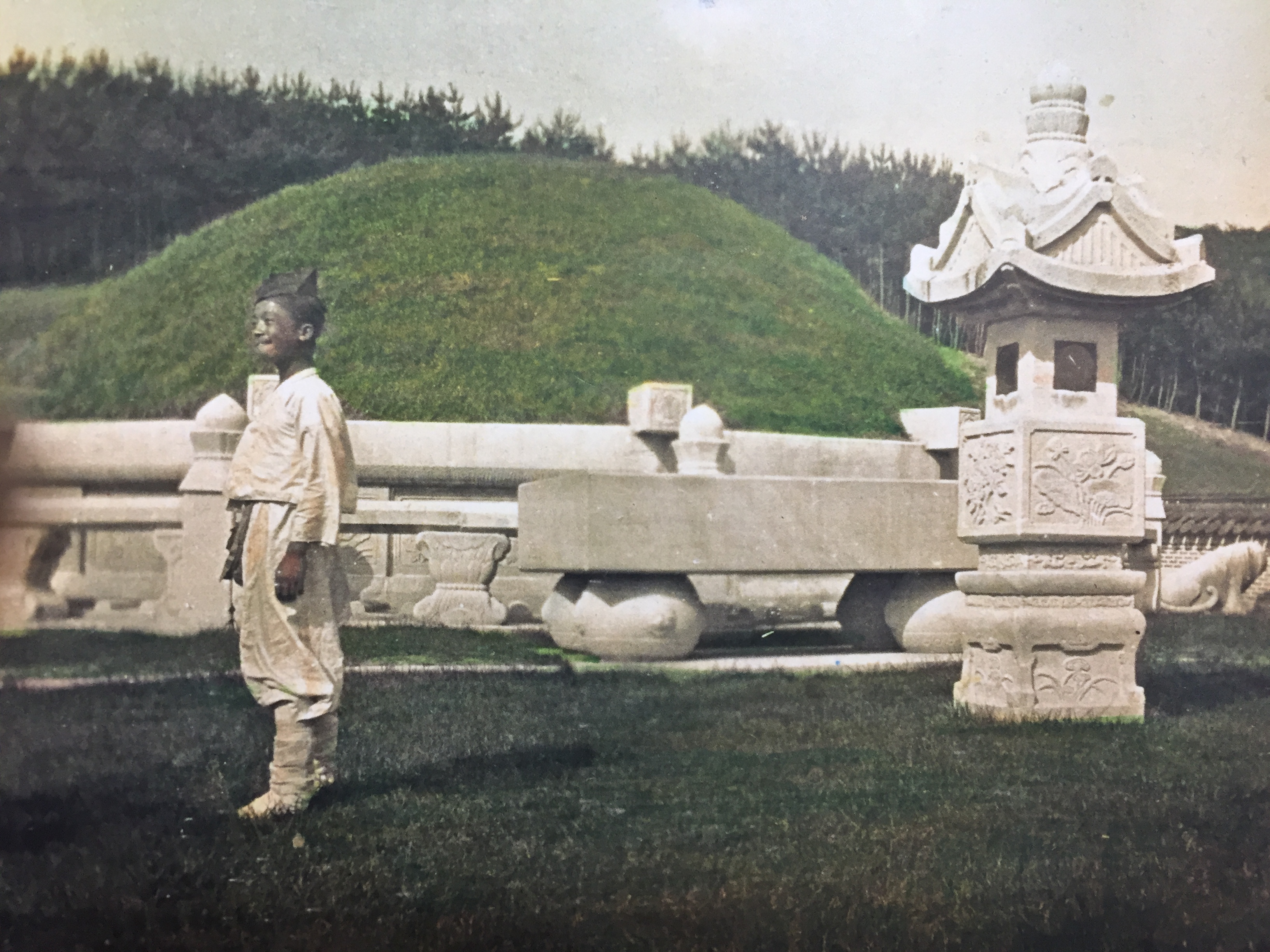
    The plan was to visit the Tomb of Queen Min.  The Gambles had been there and the photograph taken by Clarence and Sidney is a good one.

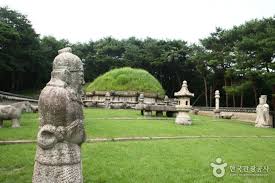
    Donggureung, East Nine Royal Tombs, is a cluster of tombs of the rulers of the Joseon Dynasty on a site just outside of Seoul. Clarence writes that at Donggureung. along with the tomb of Queen Min (pictured above), they saw the apartments of the king and an audience hall for the queen’s spirit. I wanted to see all this for myself and verify what Clarence had written. 

    I was given specific directions Take Bus 272 and after twenty stops, transfer to Bus 202 and after sixteen stops on Bus 202, I will have arrived at Donggureung, the burial grounds of the Joseon Dynasty.  Alas!  Alighting from Bus 272 at the twentieth stop, I found no stop for Bus 202. It was a long and disappointing bus ride. Later, another authority said I should have gotten off at the nineteenth shop. Well, the day was spent on twenty bus stops and now too late in the day to start over.  It was also raining hard, bitterly cold, windy, and my long pants were soaking wet. So perhaps try again tomorrow.

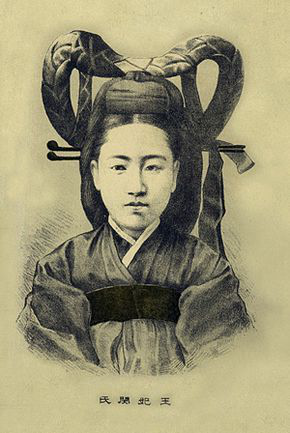
    In the meantime, the Empress Myeong-dong, or Myung Sung, known informally as Queen Min, deserves to be honored for herself, not just because I want to verify the photo taken by Clarence and Sidney.  She was a powerful woman. At barely sixteen years of age, she was married to the fifteen-year-old King Gojong, the twenty-sixth king of the Joseon Dynasty. She was slight and beautiful, of aristocratic lineage, and considered the perfect bride for the king.  It was assumed she would be a subservient, pliable wife and play the role of dutiful hostess at royal functions.

    But once married and settled into the palace, she did not follow the customary ways of earlier queens. She refused to go to royal parties, but preferred to read books in her room. She did not order expensive clothes of the latest fashion. She would not hold tea parties for the other ladies of the court.  At the age of twenty, she began to investigate the activities of the ministers, the workings of the court and those of the government itself. And then she began to make suggestions. She was soon accused of meddling. Eventually, she formed a powerful political faction that supported her, while intrigues multiplied and surrounded her every move. During this same period, Japan was steadily moving forward with its planned takeover of Korea, a plan also supported by some Koreans for their own purposes,

    Queen Min was aware of the intentions of Japan as well as of the forces and collaborators who supported Japan, and she sought through political and diplomatic steps to secure ties with the West and with Russia, giving her means to counter the pro-Japanese forces. Her growing popularity and increasing political strength occasioned great concern by the Japanese, who arranged to have her assassinated by Japanese ronin hired specifically for the job. On 8 October 1895, with the aid of two Korean battalion guard collaborators, the palace  guards at Gyeongbokgung were attacked and dispatched, leaving the queen completely unprotected. She was stabbed, probably repeatedly, brutally murdered, and her body burned on the spot. Without her leadership, resistance to the Japanese was weakened, and, as we know, Japan ultimately was able to annex Korea as a protectorate, that status continuing until the end of World War II.

    Here is a picture of Queen Min  And here is a photo taken at Donggureung, one way to sew the burial sights without traveling through thirty-six bus stops Or would it be thirty-five?