Tag: Seoul

  • Seoul, Korea Wednesday 13 November 2019

    Seoul, Korea
    Wednesday.  13 November 2019

    Our generous professor gave me about three hundred dollars worth of scholarly (his) books at our meeting, so my reading time is predetermined. In the meantime, I had to locate a dry cleaners. The Korean Tourist  Bureau is extremely helpful, and indeed, they located a dry cleaners nearby. It was barely raining when I set out, and I did not bother with an umbrella, so determined was I to have a dry-cleaned sweater.

    I was given written directions and the exact address of the dry cleaners, but the welter of business-announcement signs—capitalism runs rampant here—rendered my written directions of little assistance. By this time, rain was coming down more intensely. Somehow, I stumbled into the correct commercial building, and a smiling Korean at the front desk read my note and listened to my request: Dry cleaning?  In Korean, “dry cleaning” is “dry cleaning.” “Shopping” in English is “shopping” in Korean. Very convenient. Koreans use many unadulterated English words. But that doesn’t make it easier to locate that which the word signifies.

    Either the smiling Korean door person hated foreigners or felt I needed exercise. He waived me out the front door to the entrance just outside of a flight of stairs and pointed. The dry cleaners—he had understood “dry cleaners”—- were in the basement. And so down I went, and down, and down narrow basement stairs that descended six stories below ground level. The dry cleaners was on the first basement level, at the bottom of six levels. I unknowingly stepped out of the stairs at the second basement level. Decades passed while I searched throughout the wrong level before I understood my error. Hours wandering past restaurant after restaurant, a Burger King, some very nice restaurants, a Thai massage parlor, a graphic design shop, more and more restaurants, all obviously thriving, all side by side, warrens and warrens of small restaurants and apparently the same many restaurants on all of the other six levels. Certainly the same on the first level, where the dry cleaners was finally located. How can they all thrive? Doesn’t anyone cook at home?

    Hours devoted to mundane maintenance leave little time for scholarly research.

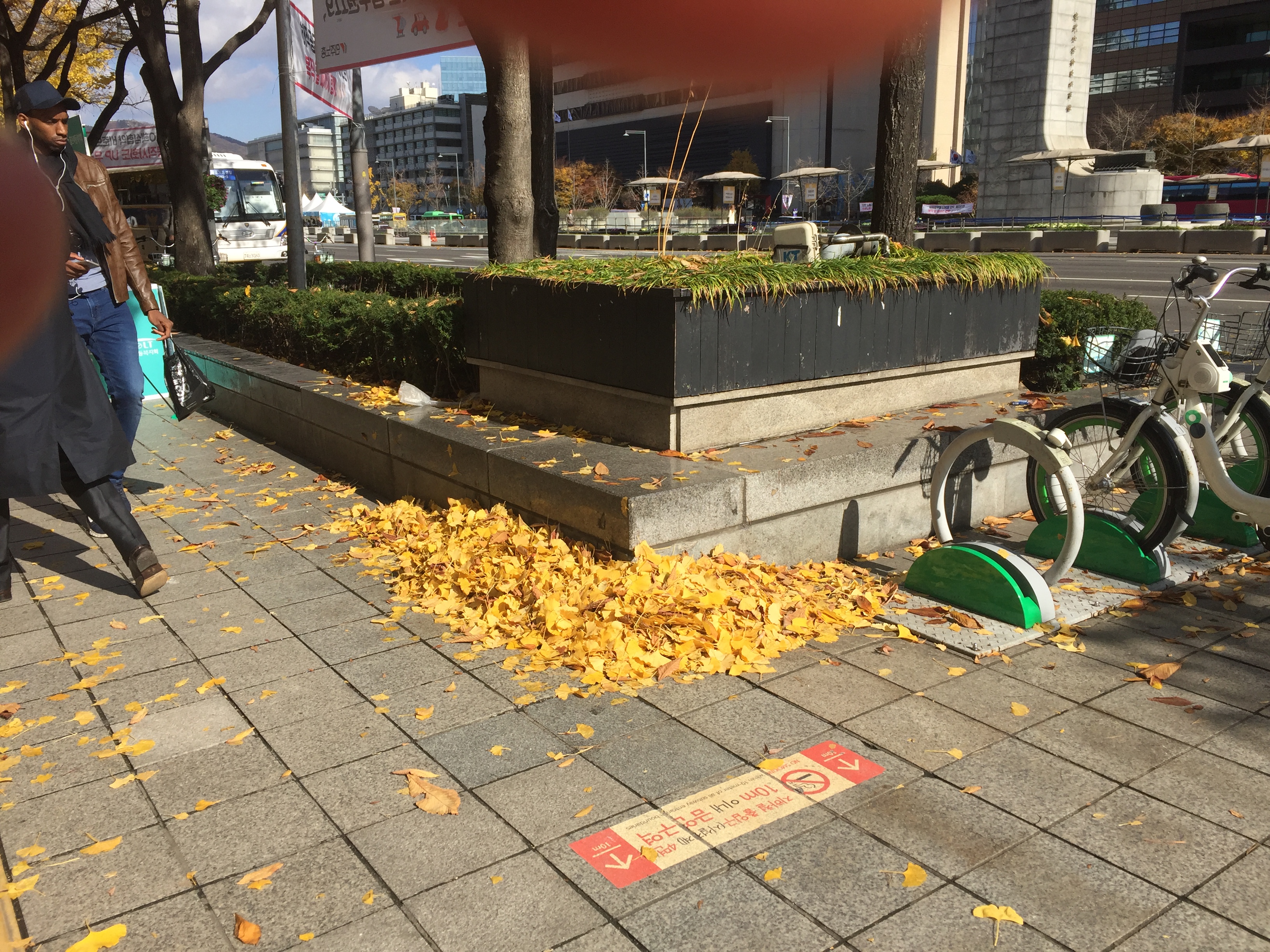
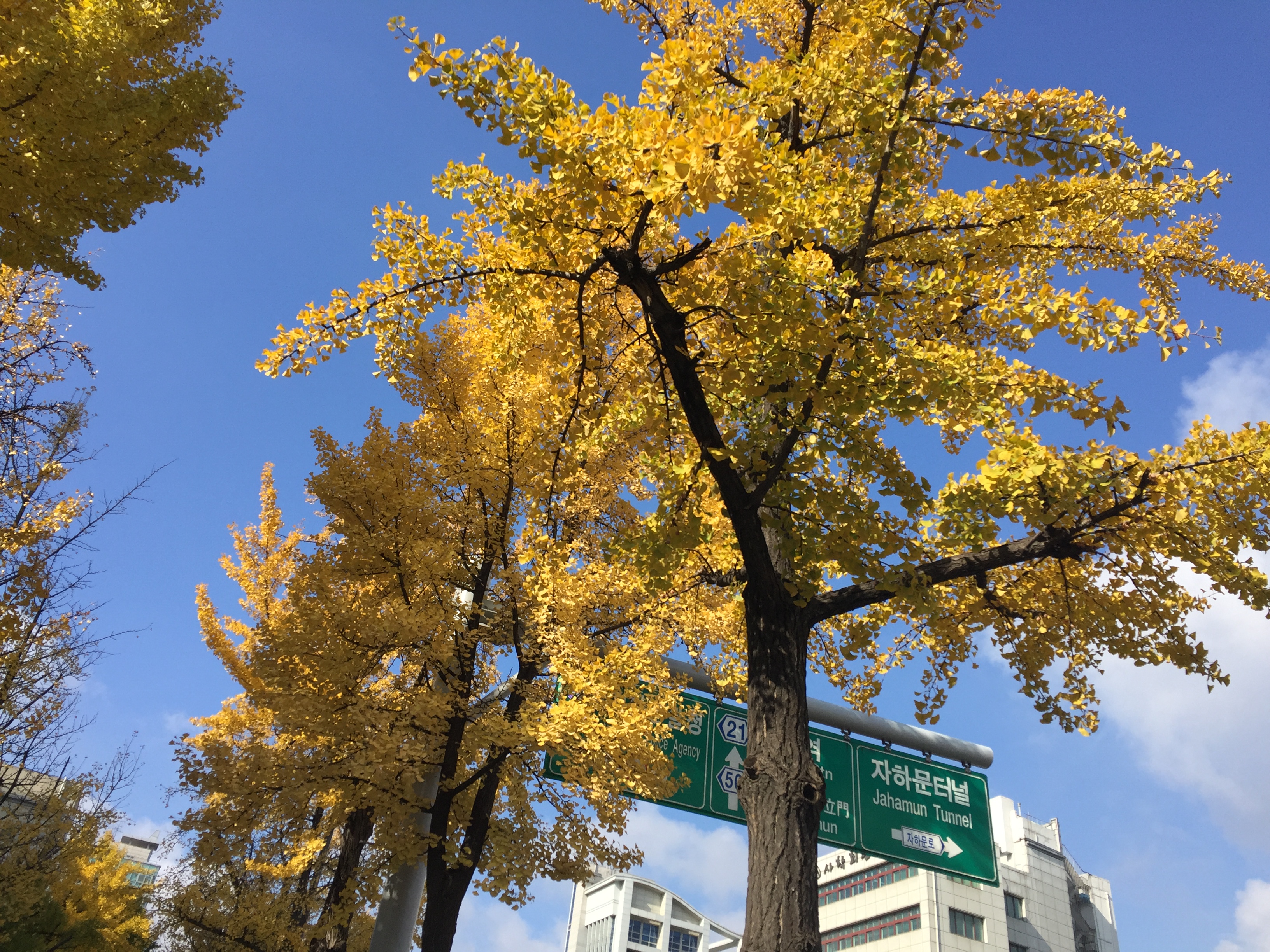
    I took an elevator up from the lowest basement to street level. I walked home in serious rain. The waterproofing in my boots gave out midway. Swirling in the wind and rain, yellow leaves were falling like snowflakes artistically patterning the gray sidewalk.

    PS  Lots of photos in my album but no way to upload them.App incompatibility? Updated program hates me? Who knows. Very disappointing.


  • Seoul, Korea Tuesday 12 November 2019

    Seoul, Korea
    Tuesday  12 November 2019

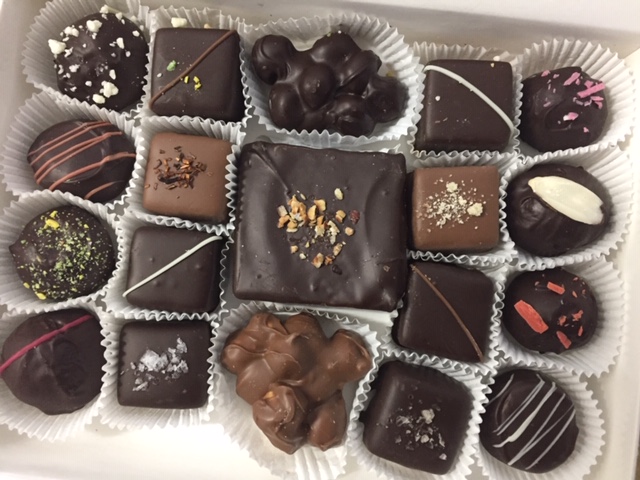
    Today, we visited the $40-chocolate expert, a professor at Yonsei University, and he was well worth the $40 and then some. Learned all sorts of things and was informed of all of my typing errors (very painful—it is a draft!) but many improvements and new material offered for “Korea 1908”—and answers to questions I had no way of locating.  He vetted only the first half,  and next Monday we return for additional information. For “Korea”1908,” this trip has proved invaluable.

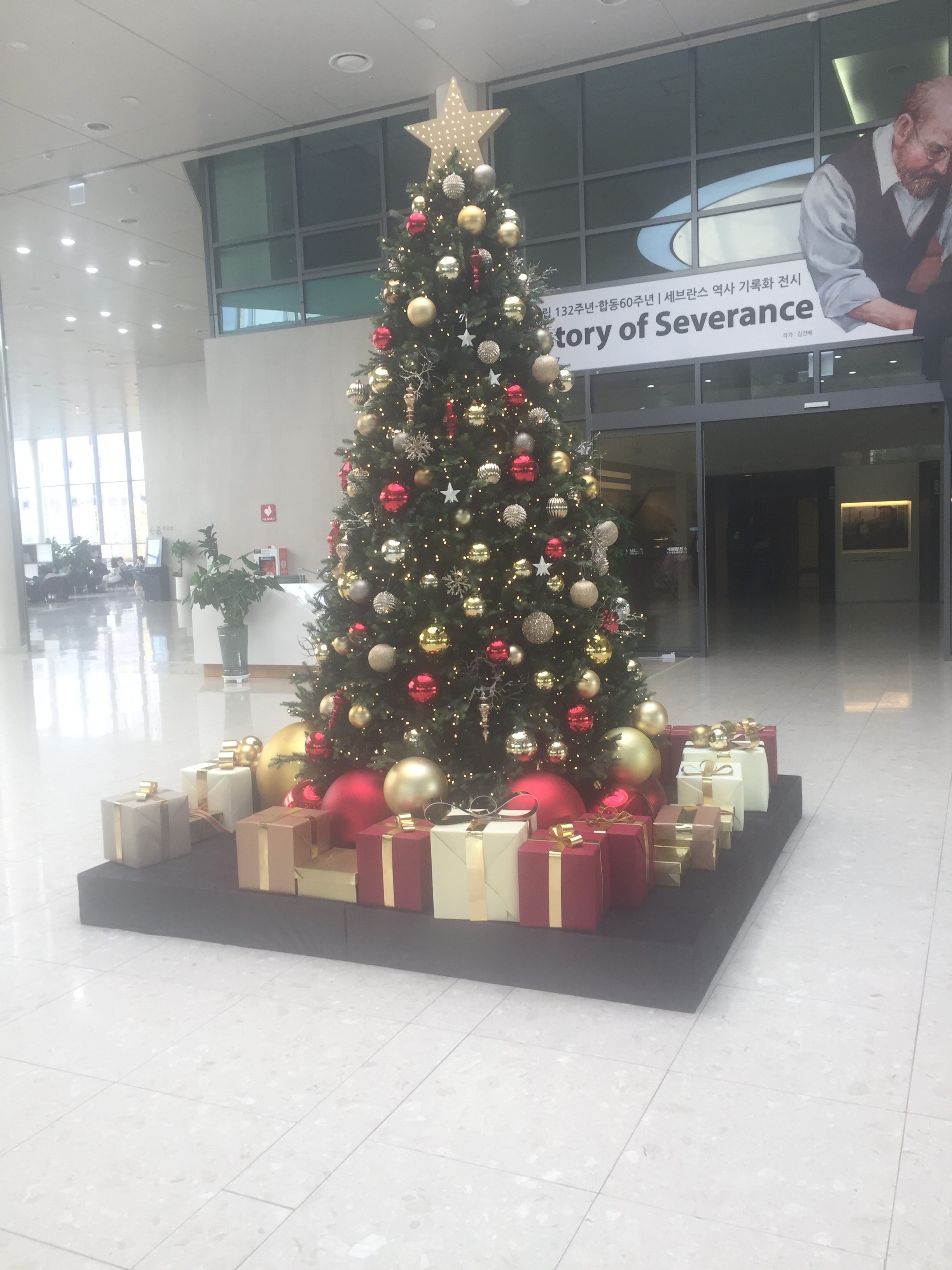
    We went first to Severance Hospital, a glass-and-steel white  behemoth that extends skyward farther than the eye can see; within an equally white Christmas tree and Christmas decorations were arranged. Outside were more naturally colored flowers, so many, photos that I forgot to take. The temperature here is surprisingly mild and today sunny. Just below the Hospital building is another towering white behemoth, headquarters for the War on Cancer, obviously sustained by unimaginable sums of money.

    It is interesting the extent to which something can grow from a small act and one person’s vision. The Methodist Episcopal Church had become involved in missionary work early in the game, and their Woman’s Foreign Missionary Society had been supporting missionary work in China and Japan with scant evangelical success. Yet the WFMS of Revenna, Ohio, met regularly to champion the cause, despite any visible evidence of heathen regeneration. One “dear old lady,” whose name and background story are not included in the records I have available, felt strongly, for whatever reason, that Korea should be a field of endeavor for the Methodist missionaries and, specfically, that the girls and women of Korea should be given care. She presented to the Society “a “small sum of money dedicated to God” that she wished to be a nucleus drawing sums sufficient to send Methodist missionaries to Korea. Only one year later, Mary F. Scranton was appointed to the Korean field, and in June 1885, she reached Seoul. In Seoul, she opened a small school for girls that ultimately became Ewha Unversity, now the largest university in the world for women. From such small beginnings—and yet we do not even know the name of the “dear old lady.”


  • Seoul, Korea Monday 11 November 2019

    Seoul, Korea
    Monday 11 November 2019

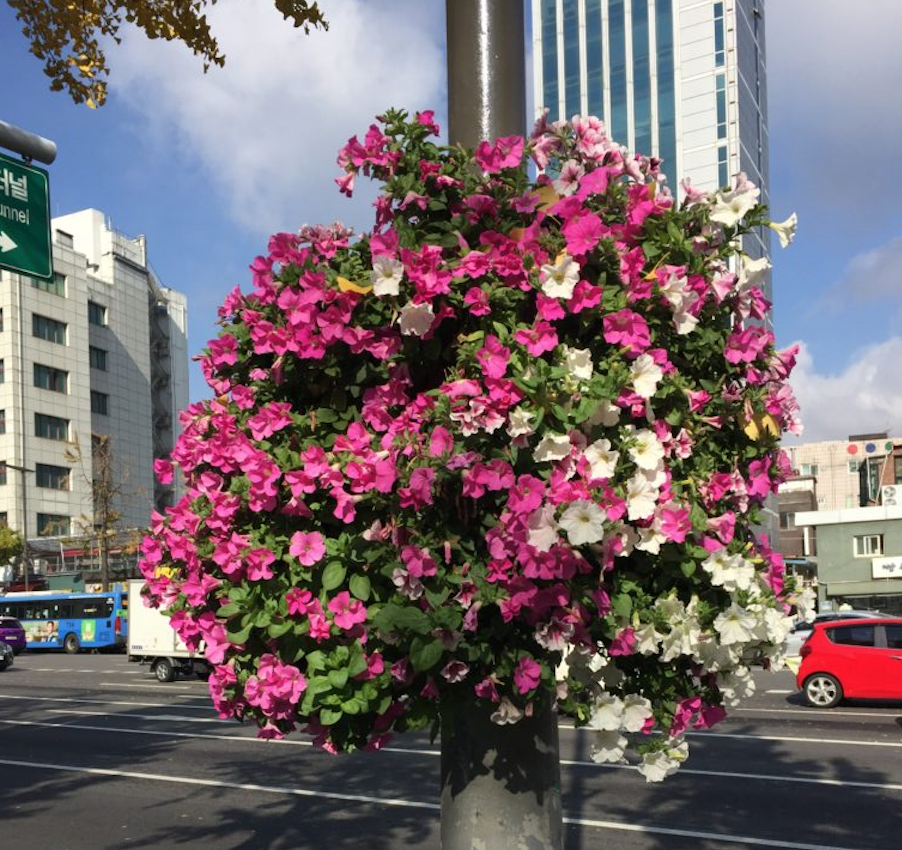
    Autumn yet clings to the trees of Seoul and, surprisingly, petunias are blooming in the street baskets. Immersed as I am researching nineteenth-century Korea, my head is filled with images of the Seoul and Korea of that period. Thus, the prosperity and well-being of today’s Seoul continually amazes me. And people In general dress more formally here, so everyone immediately looks more prosperous. I asked Jasmine if this affluence is seen throughout Korea, and she assures me it is.  In Seoul and at the Incheon airport, everyone looks healthy and young and prosperous.


    In Korea, a formality marks the professionals and particularly, as I have found, the academic community. In America, instructors and even titled professors will have office hours. A student or an unknown can roam the halls, and if it is an office hour, wander in, introduce one’s self, and chat away with the great man or woman. Not so in Korea. To meet a prestigious academic, you need an introduction from several levels down. It is much like getting a book published in America. First, you find an agent who is an agent-finder. The agent-finder finds you an agent. The agent may find you a publisher. In Korea, you find a friend of a friend who can introduce you one level up, and after that you keep working your way up until you have a personal introduction to your target.

    You then meet your target at the restaurant and pay for a meal that costs a hundred or more for your party of three. My forty-dollar box of chocolates seems mighty insignificant. These tight hierarchical channels of today seem basic to Korea culture and surely have their source in the force of Confucian dogma that demands total subservience of the son to the father, the father to the ancestors, etc., etc. The early missionaries often write of how little personal ambition Koreans evidenced. But it was a matter of self-protection.The King demanded tribute from the yonban. The yonban demanded  from the magistrate, and the magistrate would simply squeeze more out of the lowly peasant. This was “The Squeeze.” If a peasant suddenly became prosperous, the magistrate would drum up some charge and arrest him. After a few beatings, the peasant was happy to let go of his newly acquired wealth. Understandably, the nineteenth-century Korean peasant saw little advantage in the extra work required to improve his income.

    Please note that I use “his” here in referring to nineteenth-century Koreans. There was no opportunity for Korean women to have an income.


  • Friday 9 November 2018

    Friday, 9 November 2018

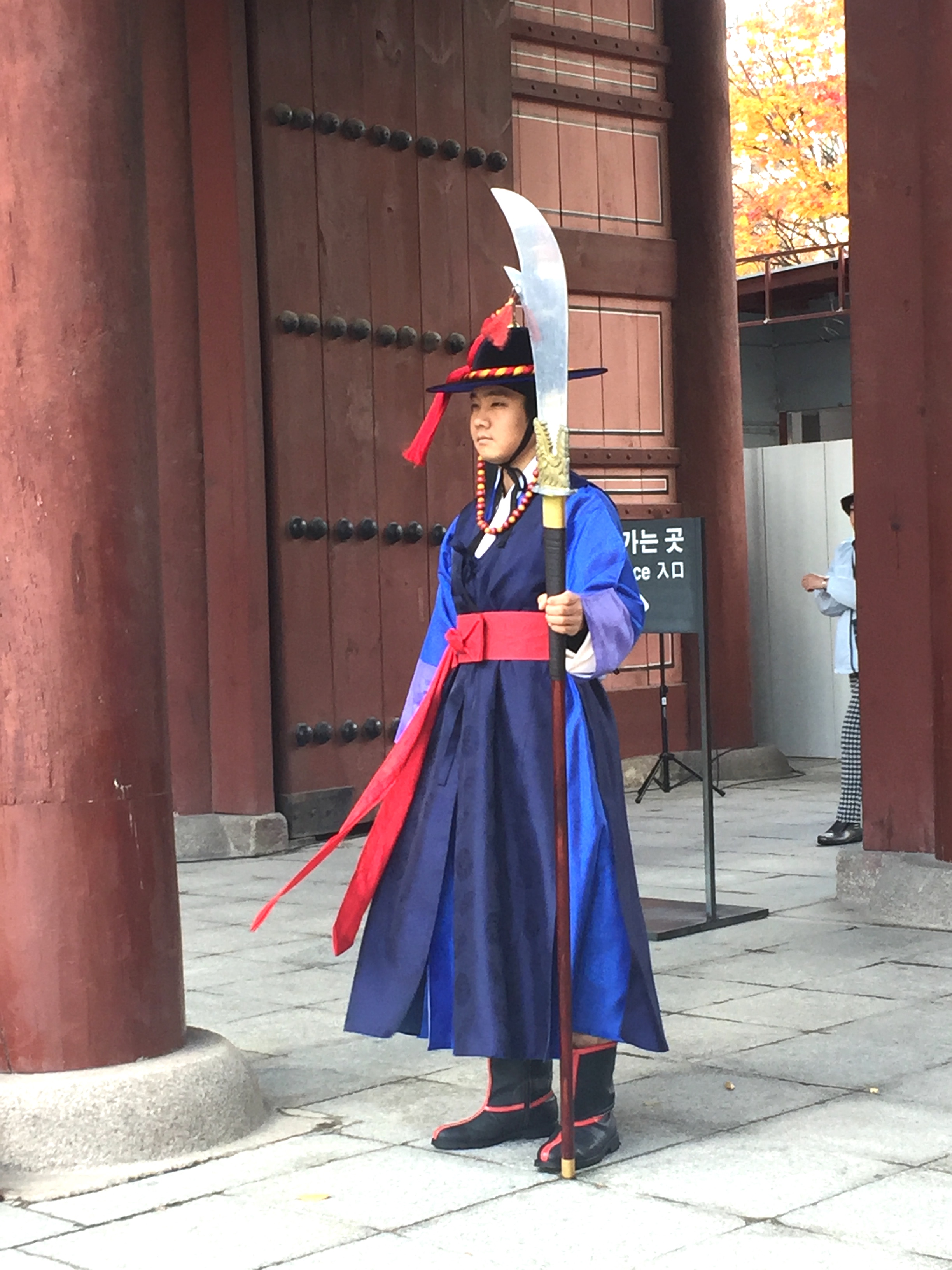
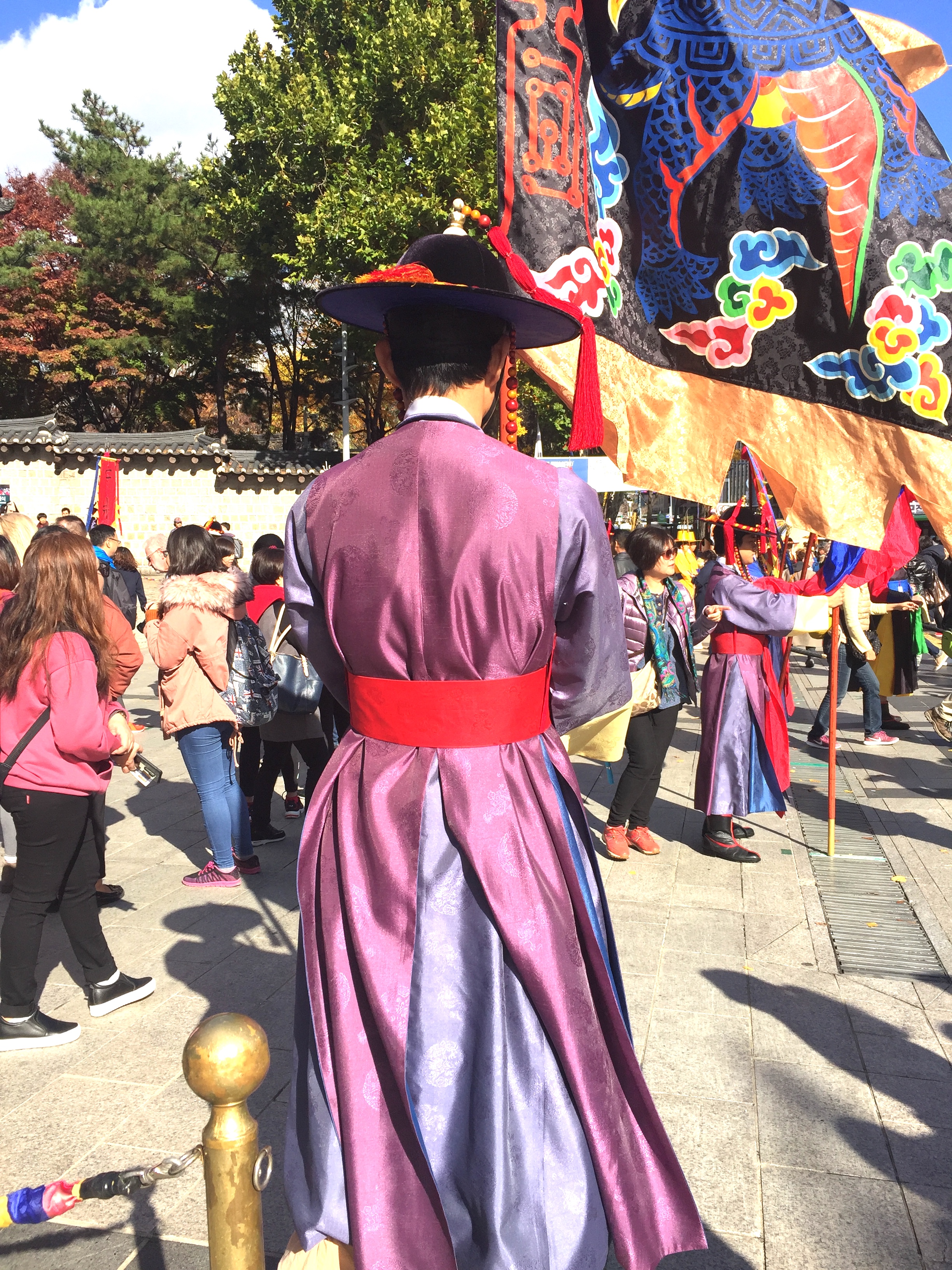
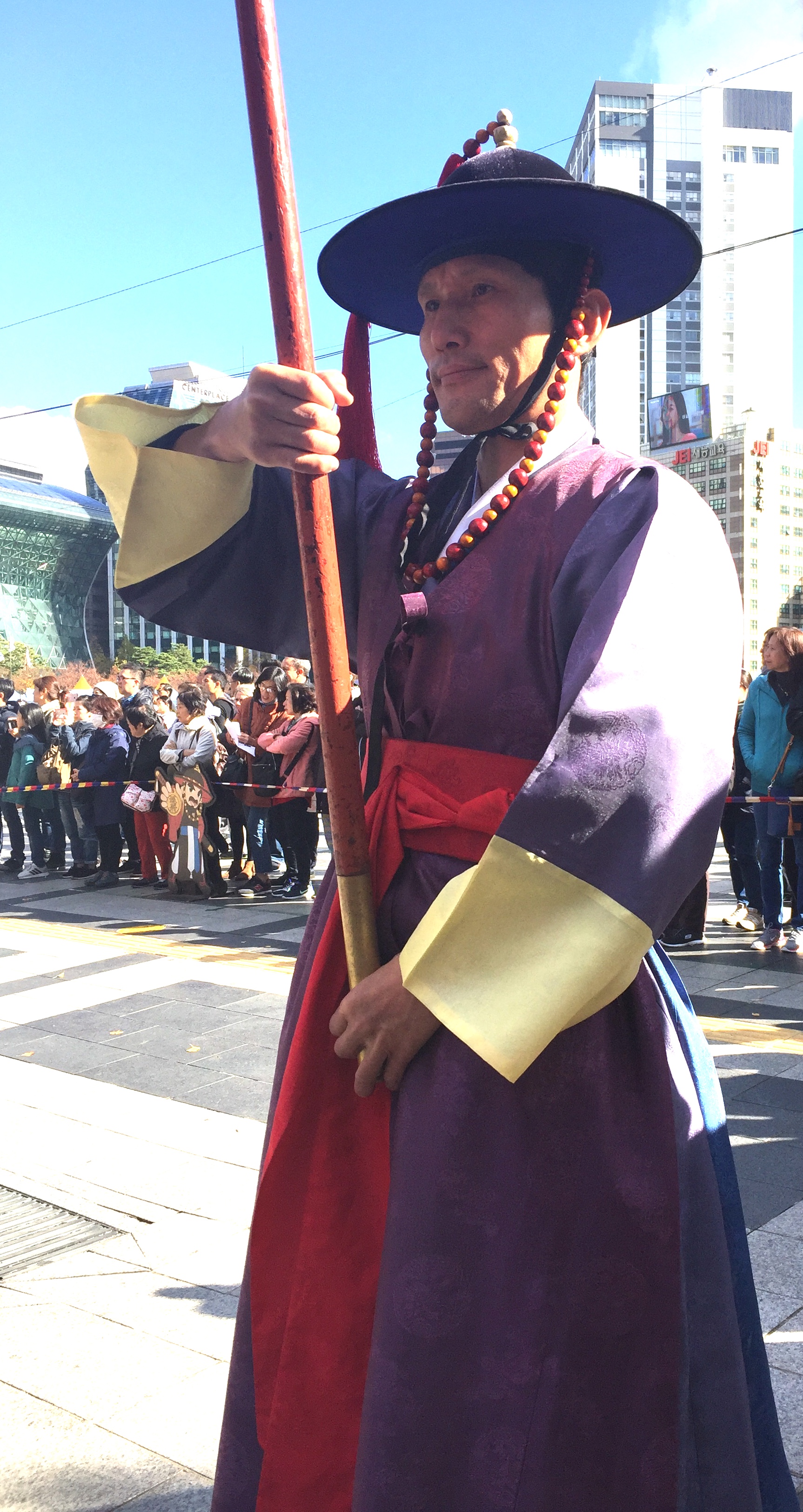
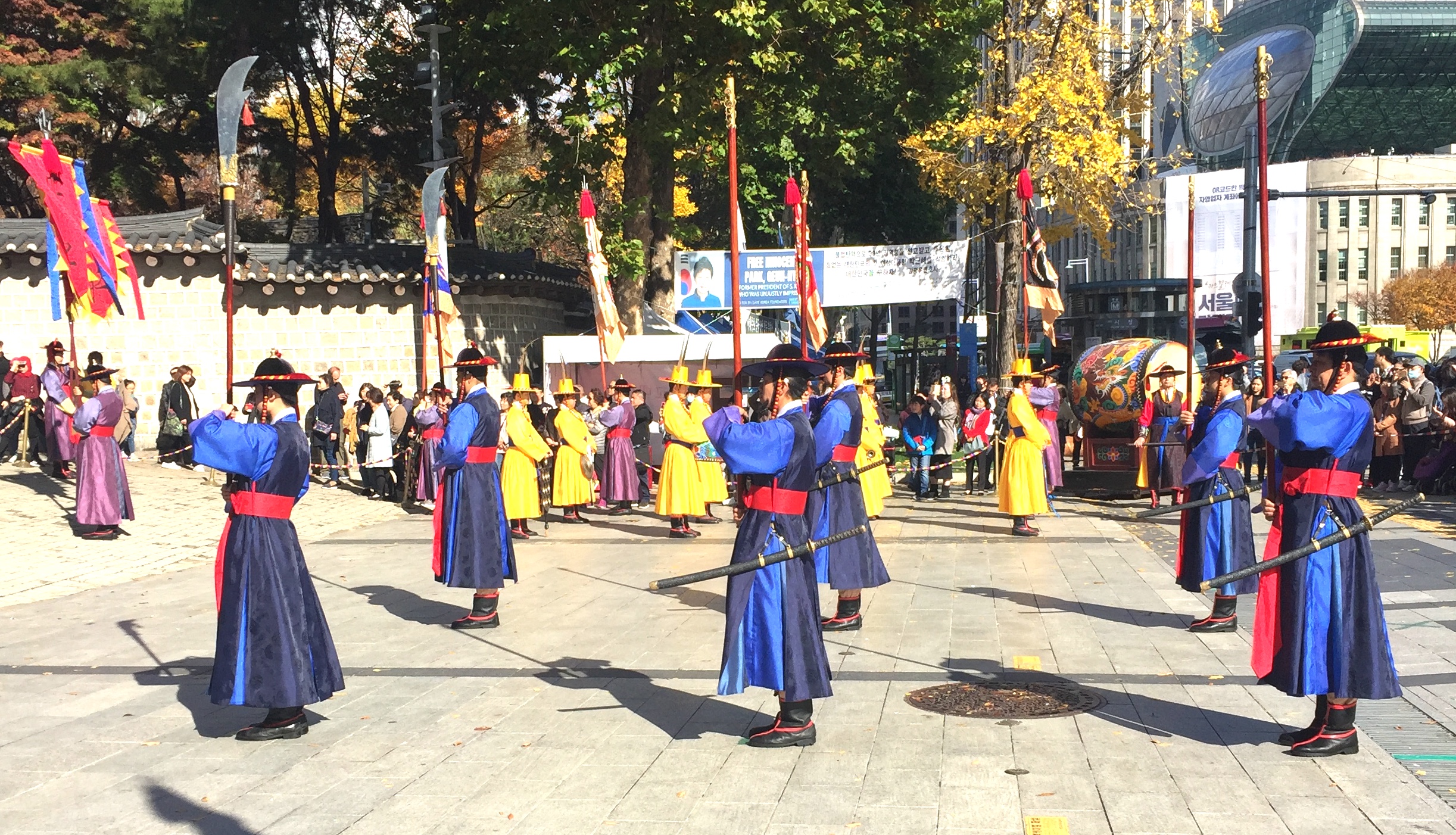
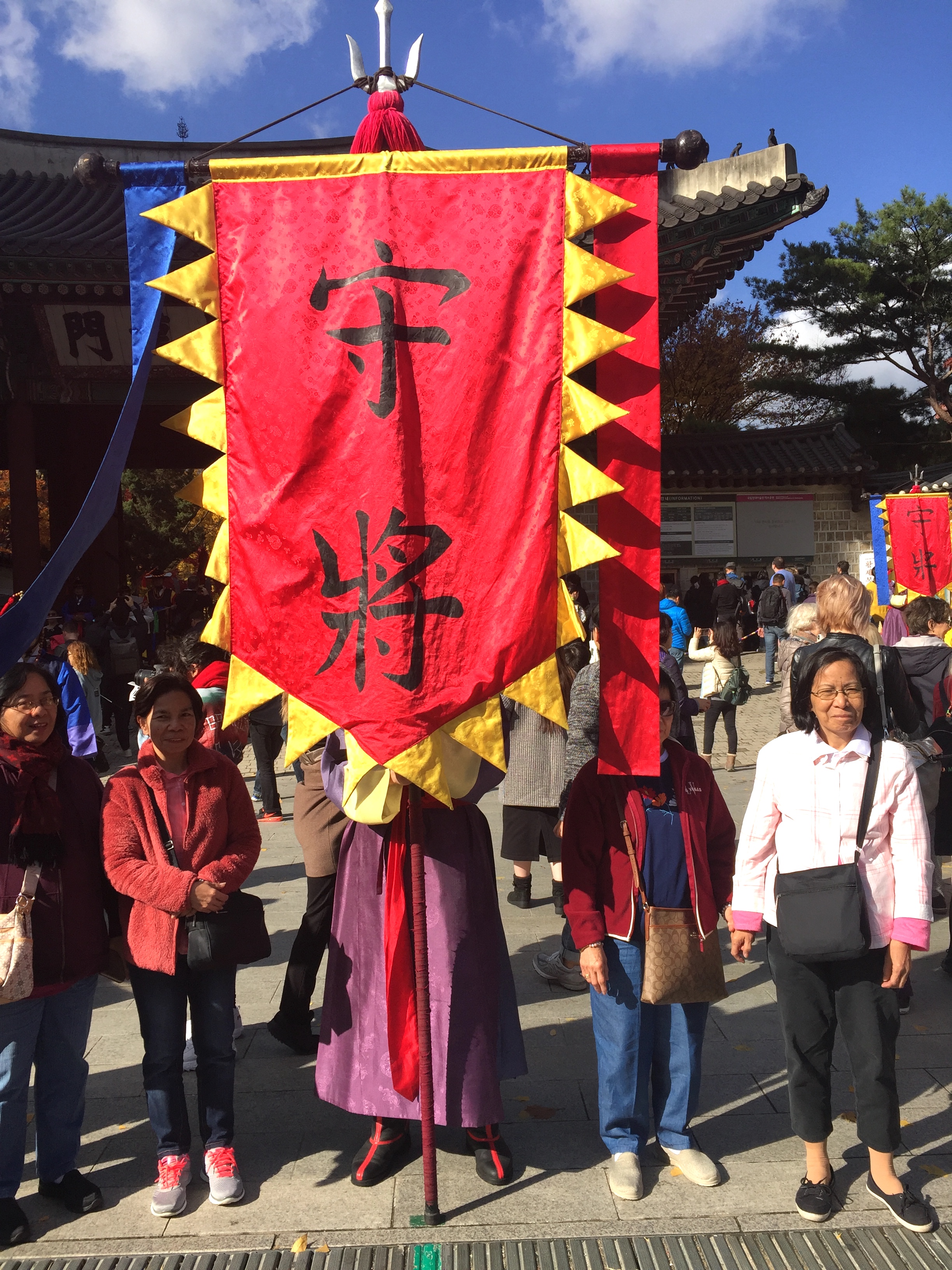
    Koreans love parades and dressing up in the dress of the nineteenth-century Joseon Dynasty Court or maybe they  – that is the Korean Tourist Bureau – has discovered that visiting tourists love to see parades and Koreans dressed up in the dress of the nineteenth-century Josean Dynasty. And the costumed exercises are a delight to watch with the colorful banners and performers in the brightly colored costumes, moving in their orderly pageantry.   The Changing of the Palace Guard is held in front of Deoksugung, a beautiful Korean Palace in the City Hall district of Seoul. The Changing of the Guard was a fairly lengthy exercise, crowded with onlookers.


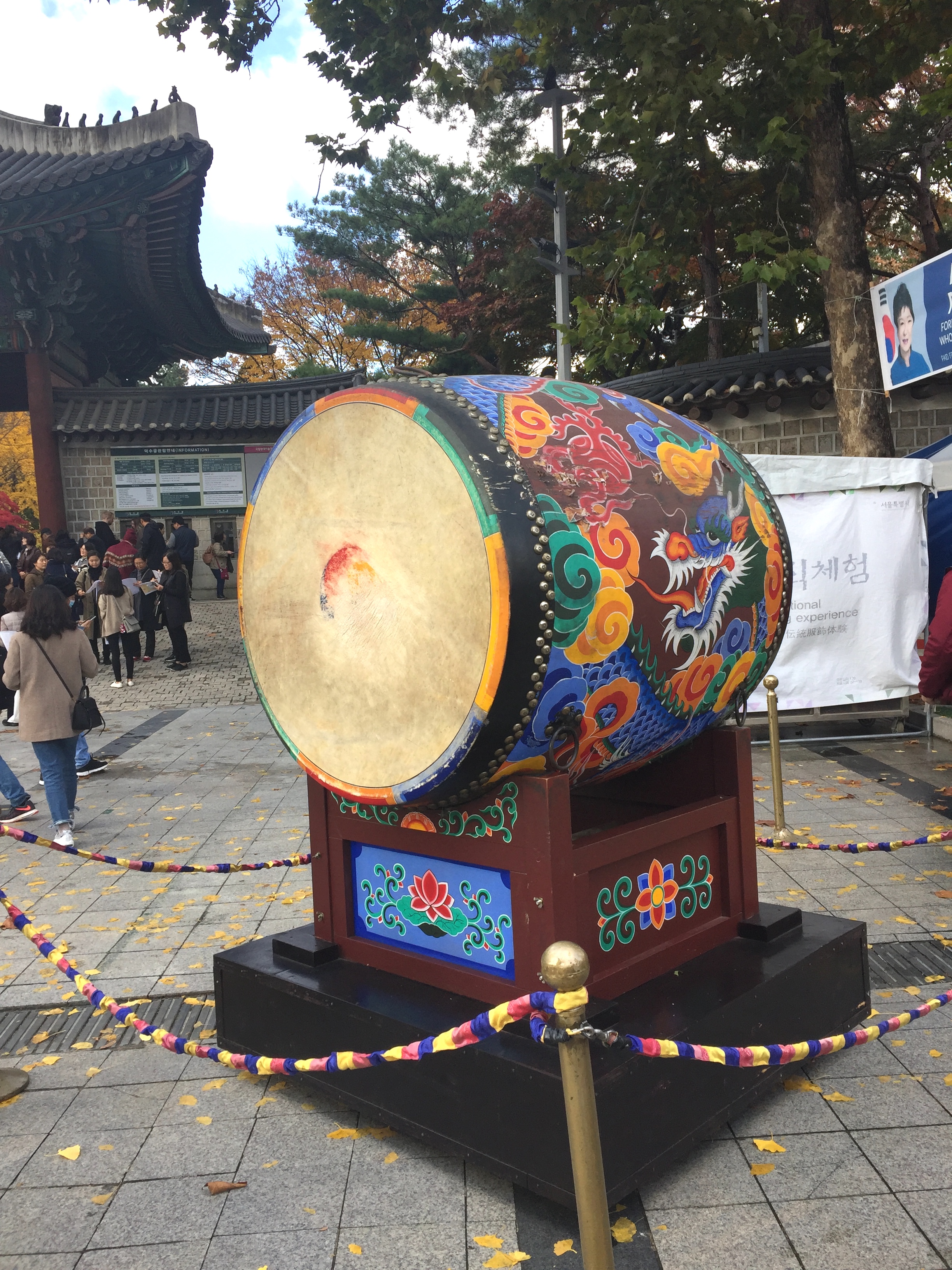
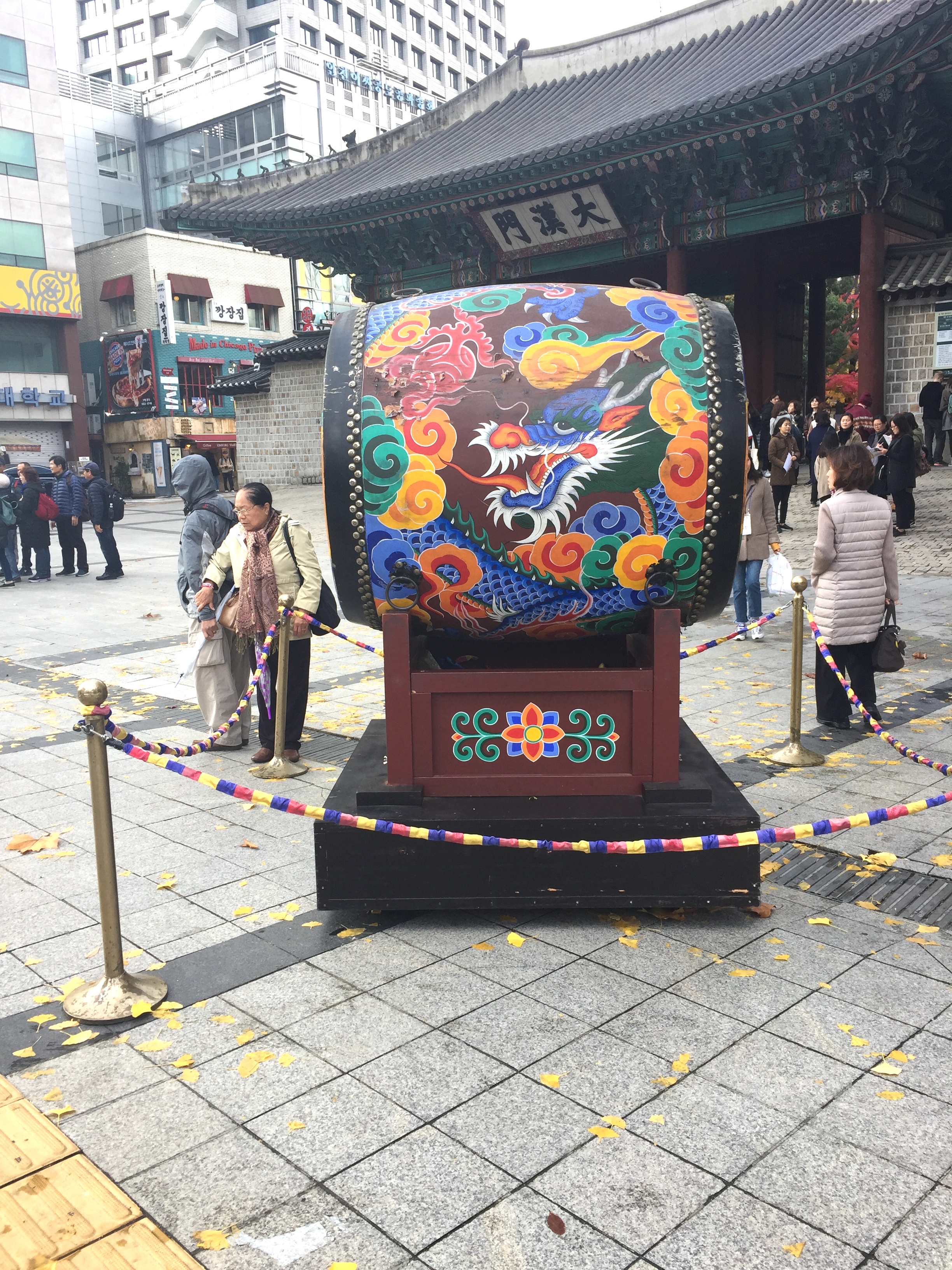
    The formations moved to the accompaniment of a strong regular drum beat – the drum a beautifully decorated affair – and the drum beat punctuating music that sounded to me rather like Scottish bagpipes. I need to research what instrument was being used.


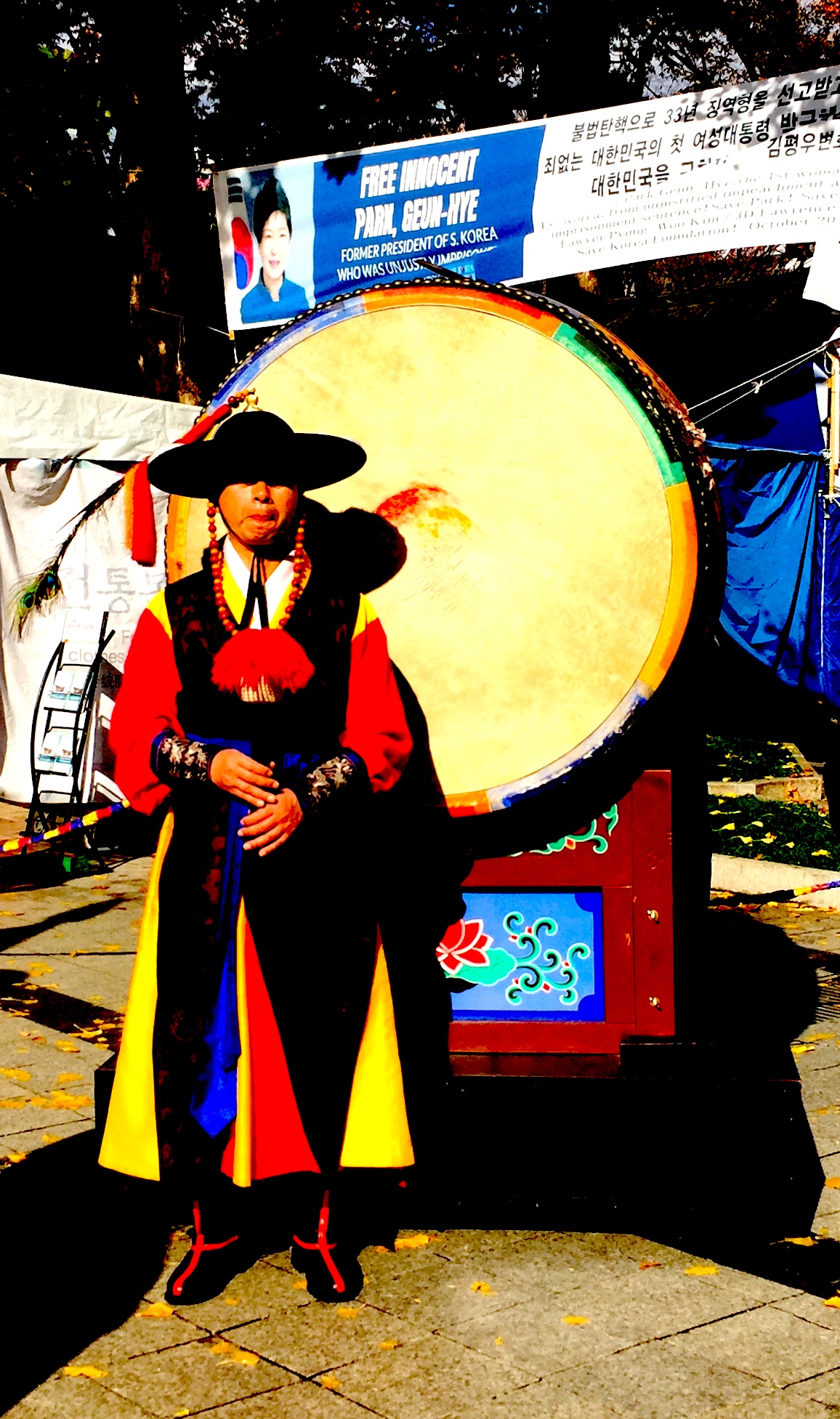
    At the end of this elaborate ritual, the announcer who had explained each of the moves of the troops, the guards, and the battalion commander, invited the audience to come and have their photo taken with the performers. Which everyone did (except me) with enthusiasm. I am not among those photographed with of a Korean Palace Guard. 


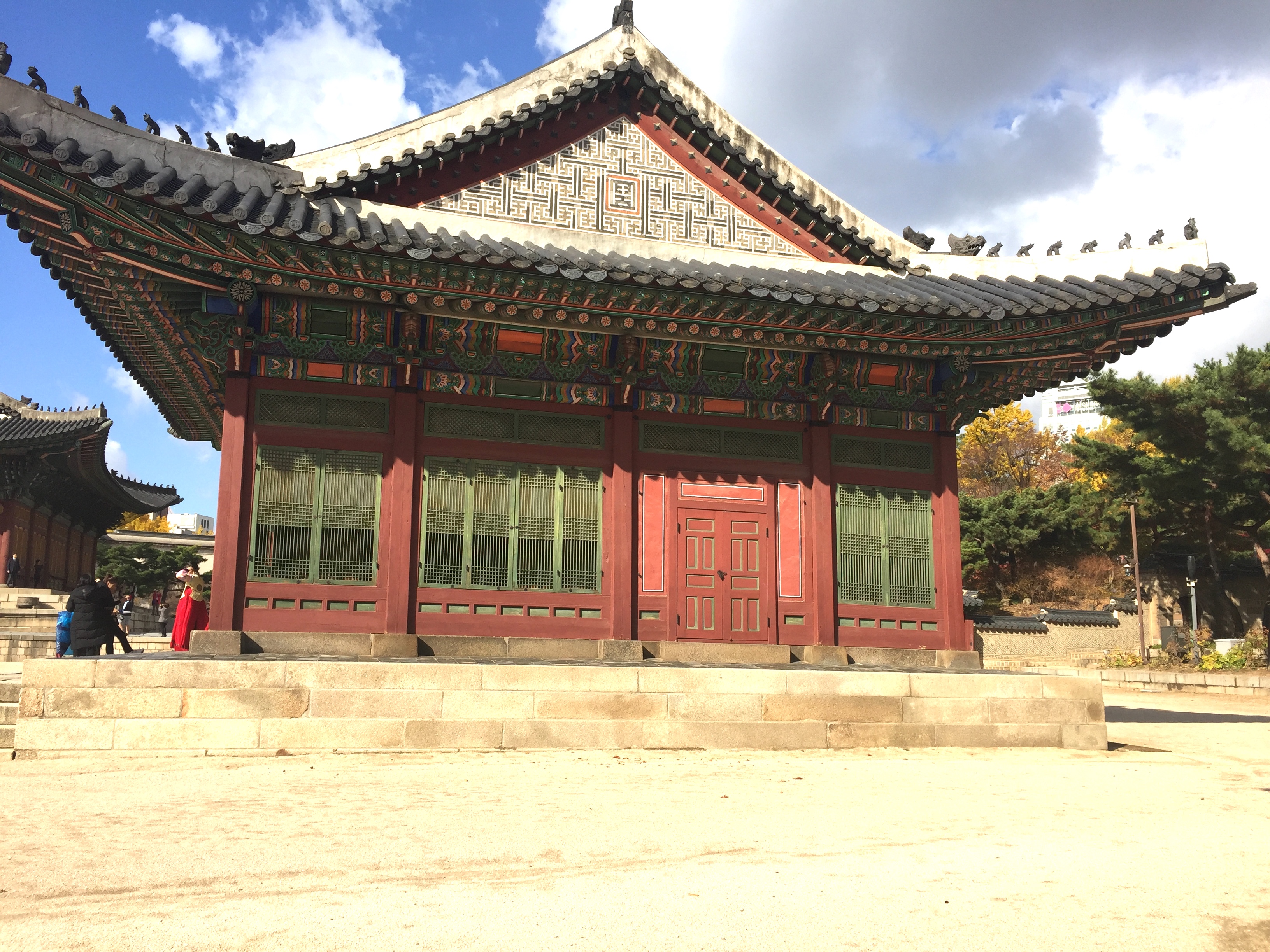
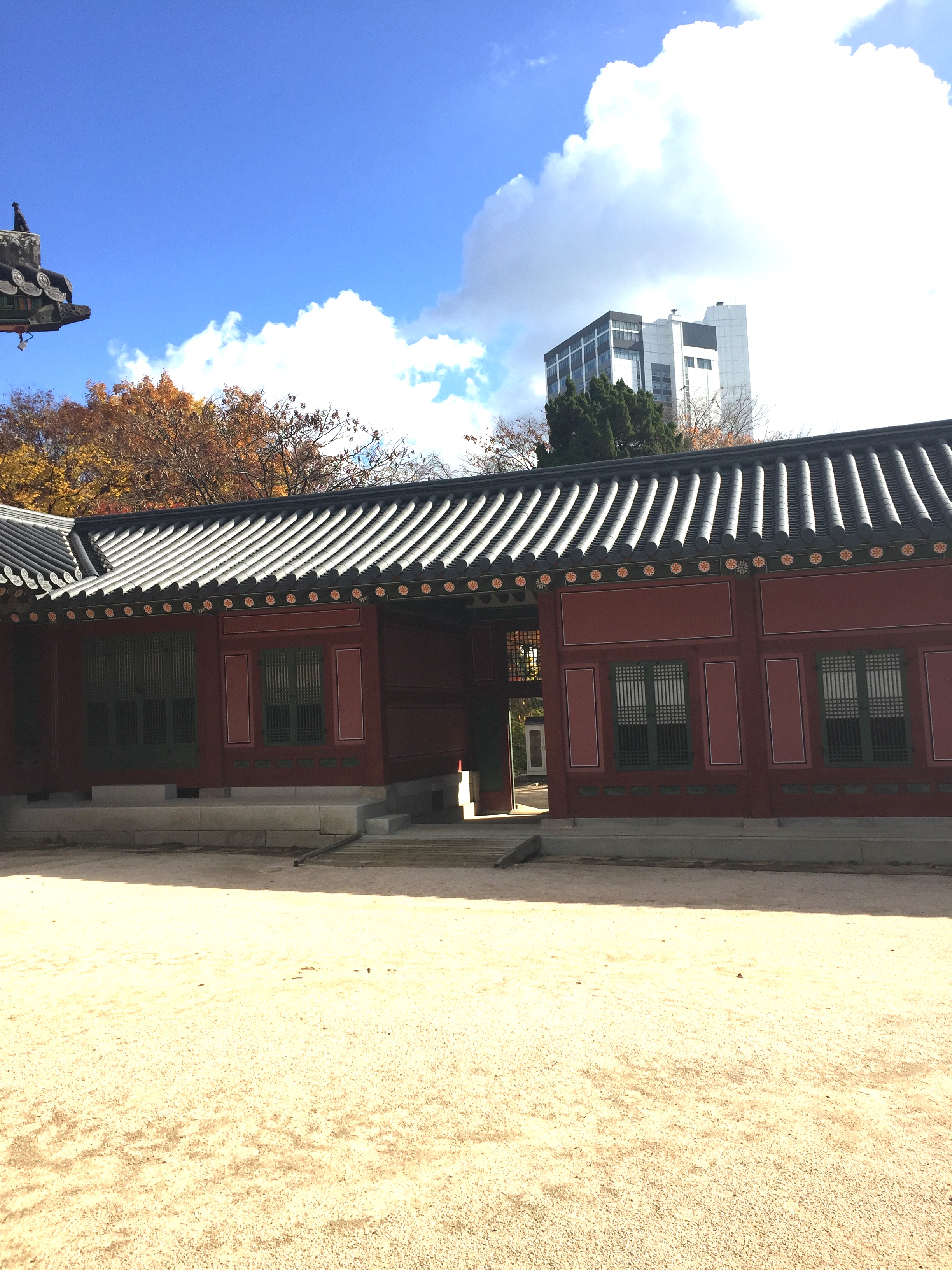
     Deoksugung, like all the Korean palaces, includes an impressive gate and a number of one- or two-story wooden buildings with ridged roofs with wide overhanging eves and many large bare-earth spaces, or courtyards between and surrounding the individual buildings..  


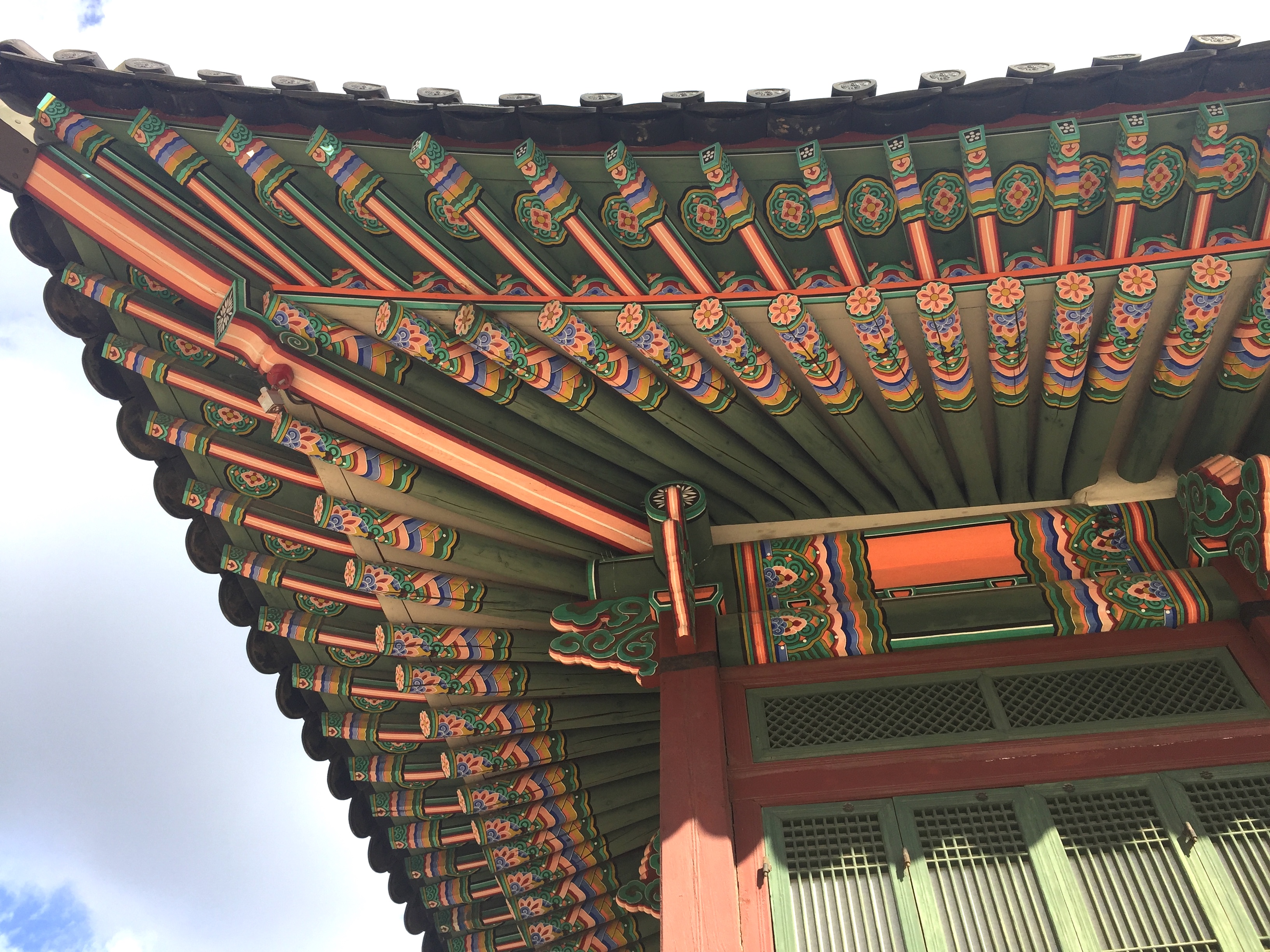
    Deoksugung was especially appealing because colorful and intricate designs were painted on the underside of eves, around windows, and on the corners of the buildings.


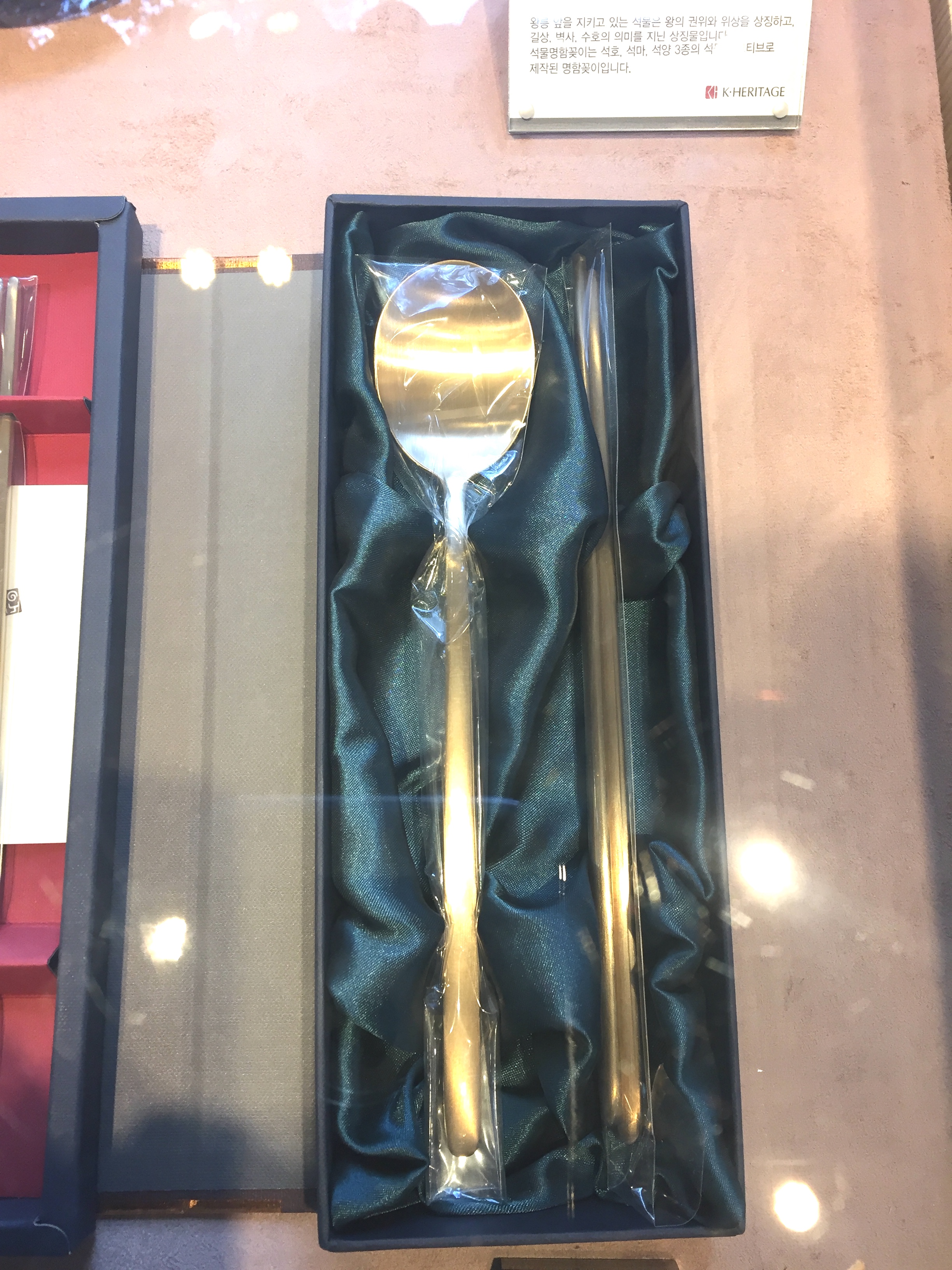
    The gift shop displayed silverware in the classic Korean deign and colorful children’s dresses.

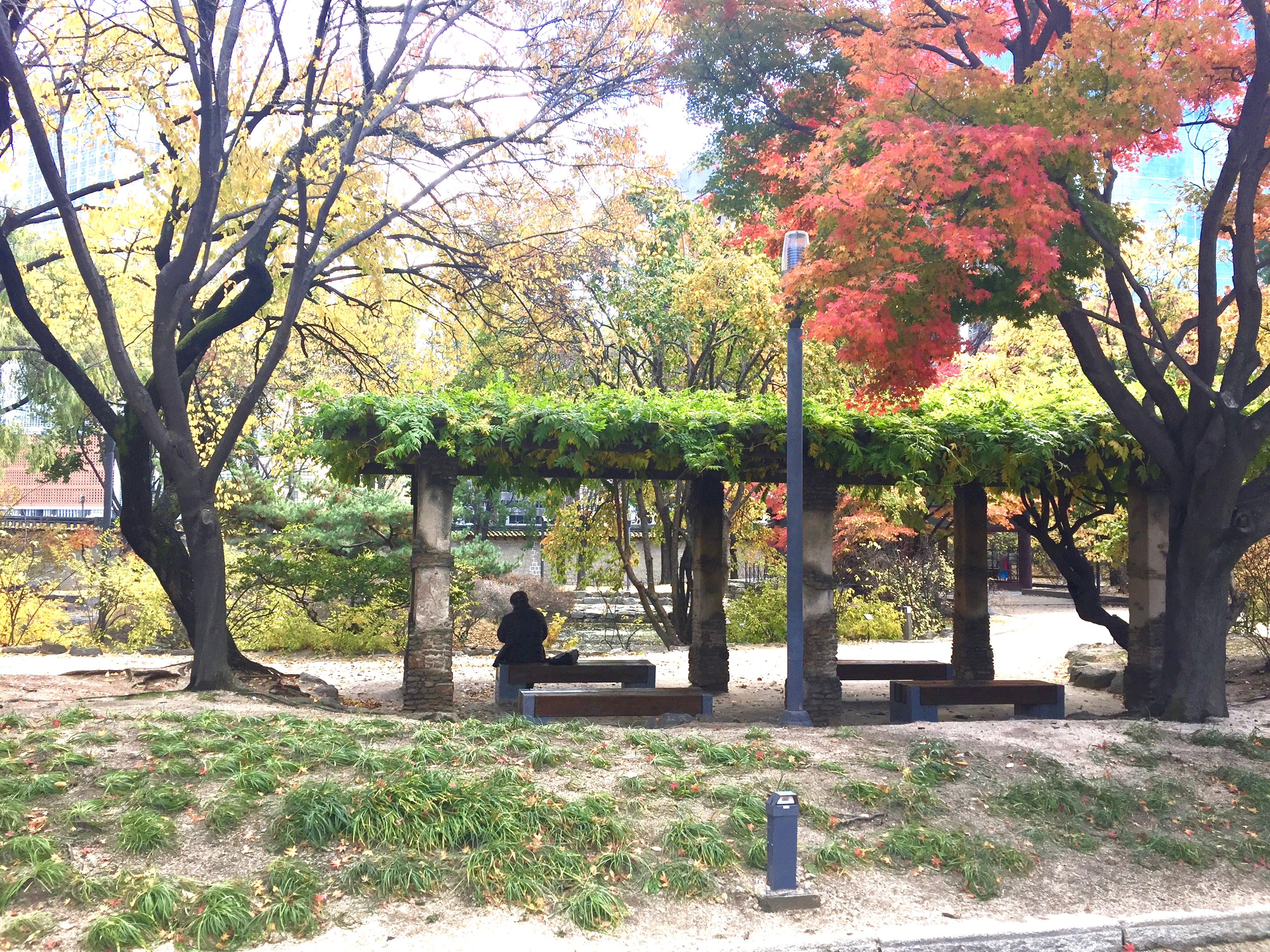
          Just outside the gift shop was a large pond surrounded by fall trees and plants. And next to the pond, a long vine-covered arbor extended over a pleasant sitting area.


    At the far edge of the grounds had been built in 1900 a Western-stye bungalow for casual entertaining, the Western architecture incongruous in its current setting. And near it, a beautiful wooded park with winding walkways.


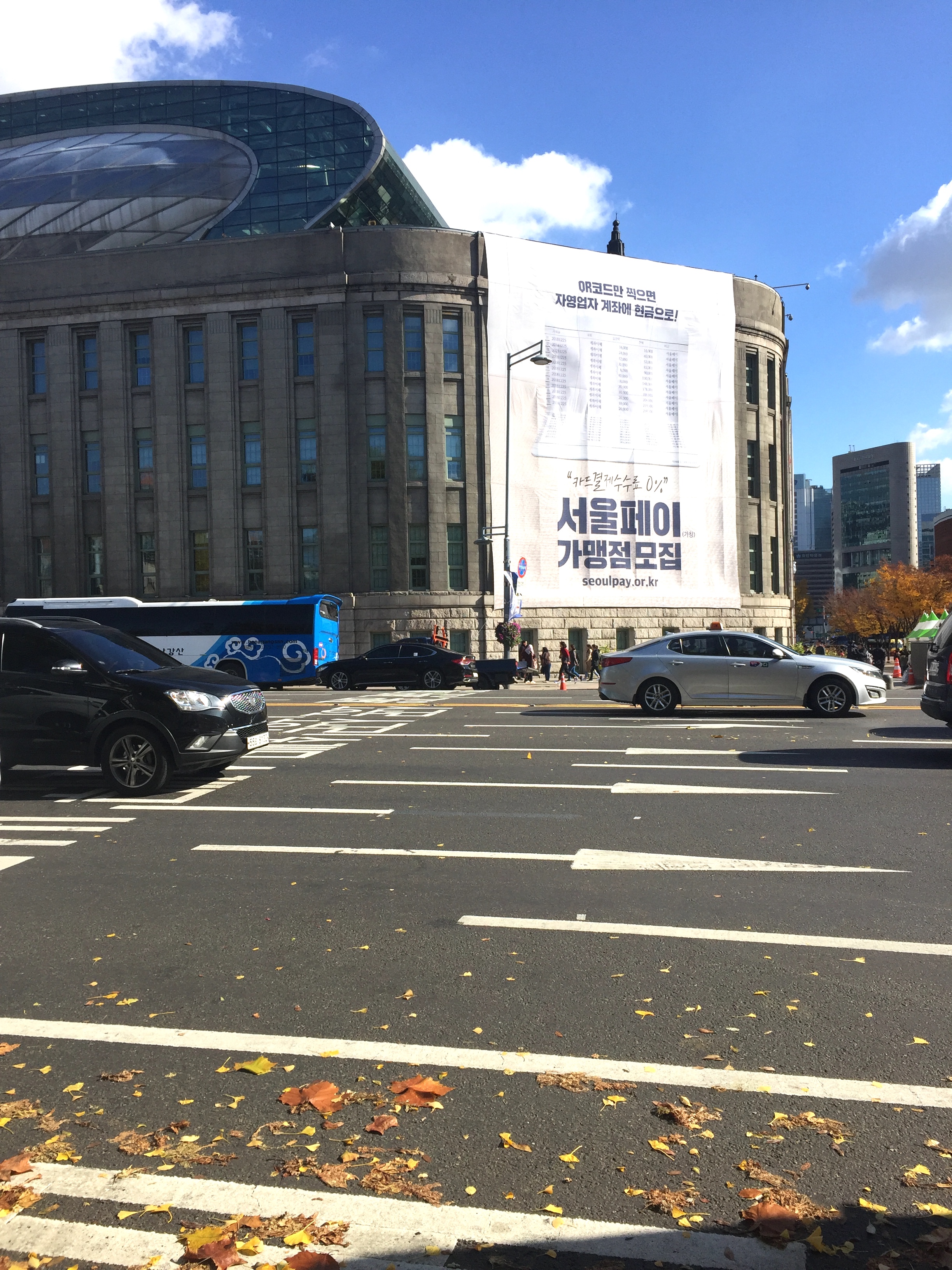
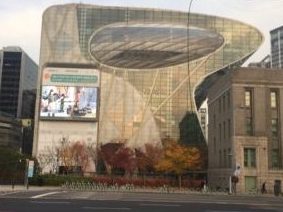
    Across the Street from Deoksugung is the Seoul City Hall and in front the City Hall Sky Plaza.

    .        

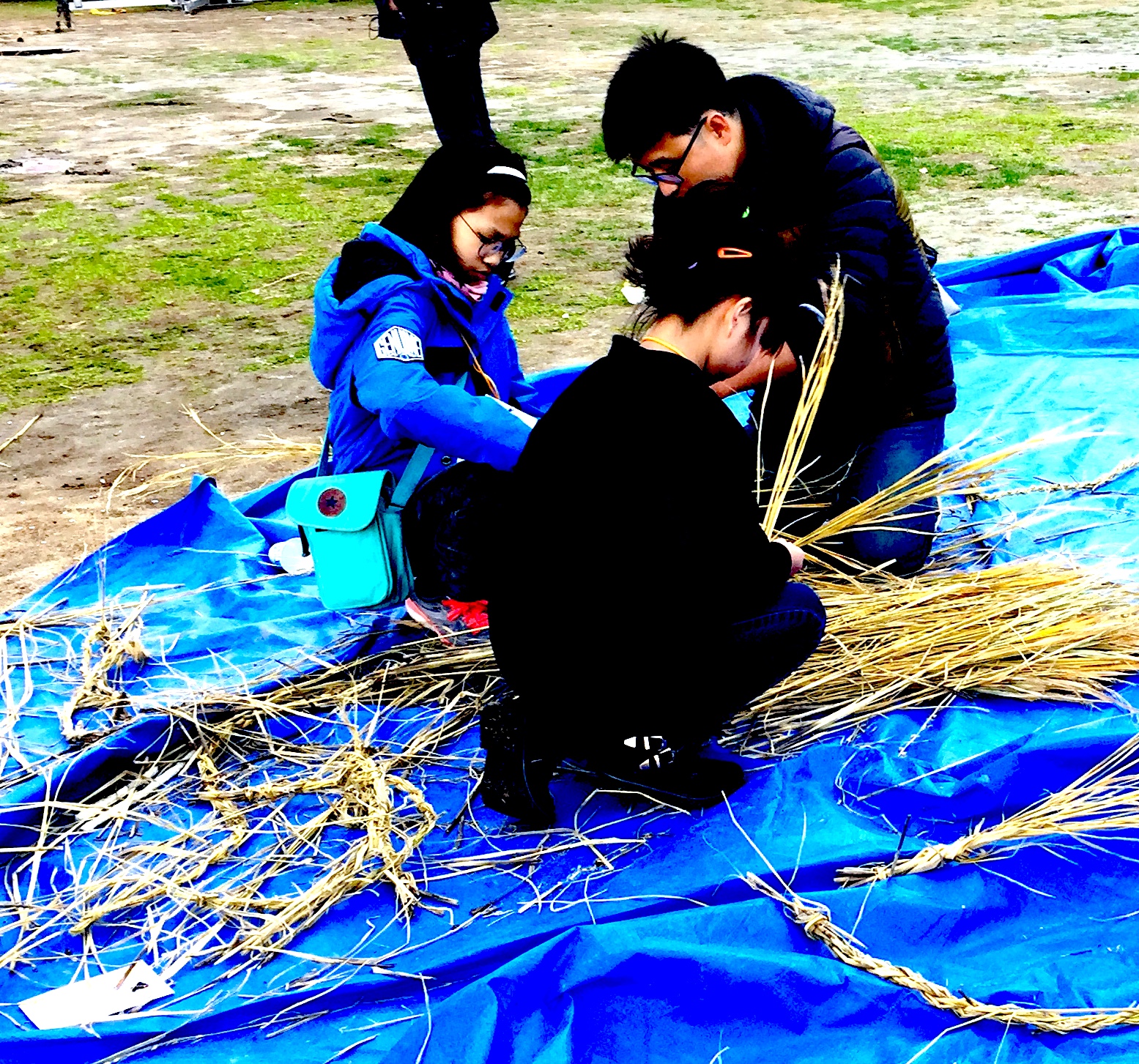
    In the Sky Plaza, a very large plaza, there was a children’s event being held. Lessons in craft that utilized rice straw and traditional games were being played, and the place was alive with children learning and eating the handouts of traditional Korean treats. I was most disappointed that I was not able to photograph some of these beautiful children;  but it was a fun event to witness.


    Leaving the City Hall and walking back to leave Seoul, I saw the roving red-vested Seoul information people, who will help with advice on how to get there or find it or whatever. Very helpful, for they also roam the subways, where things are evermore confusing.  A clown pasted a smiley face on my raincoat, which later fell off .  


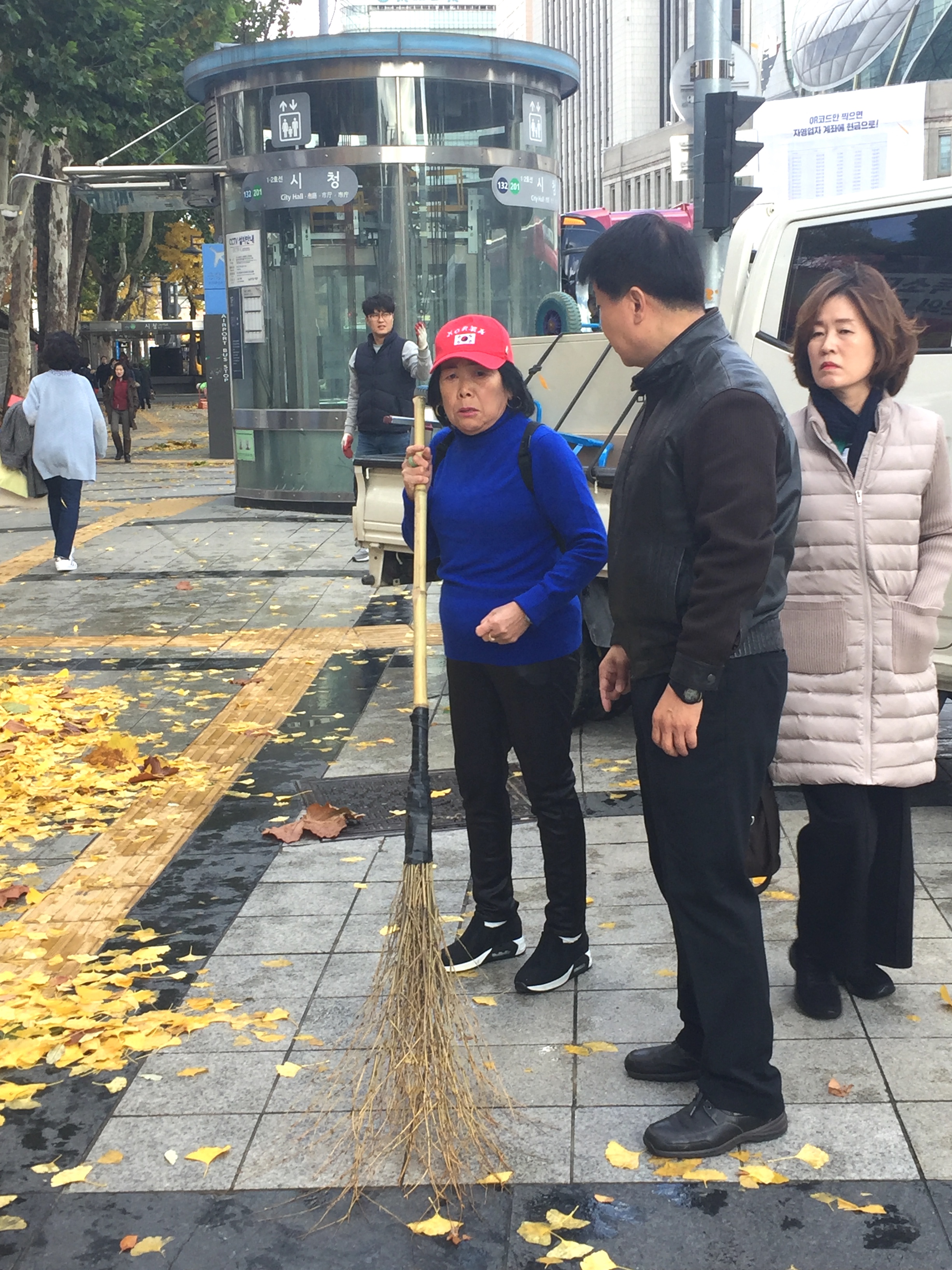
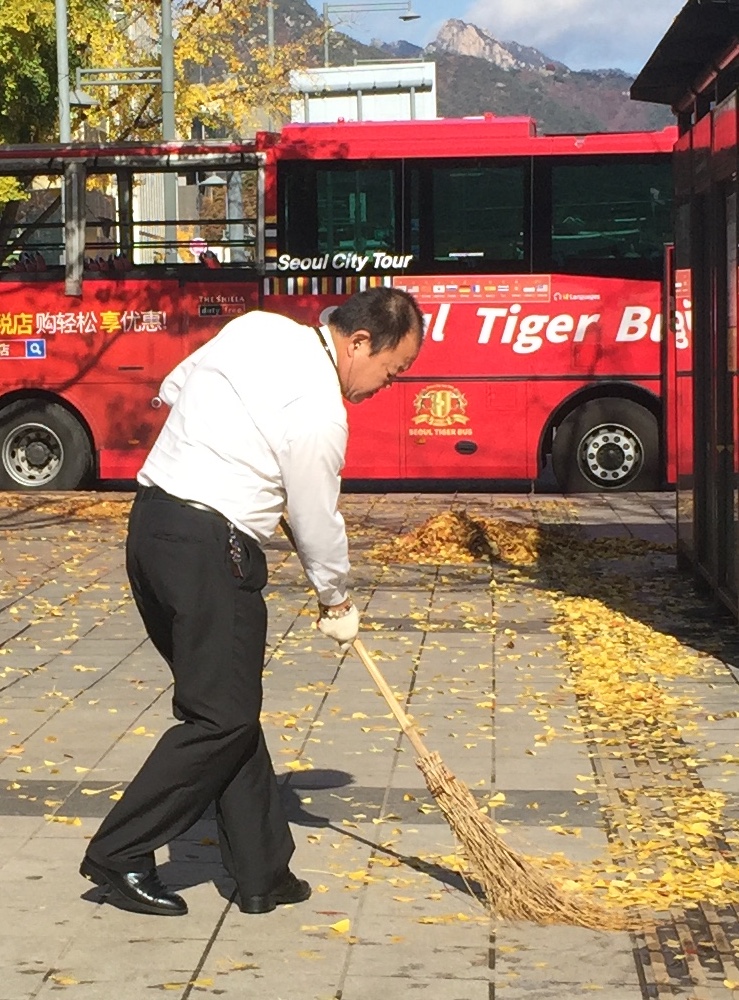
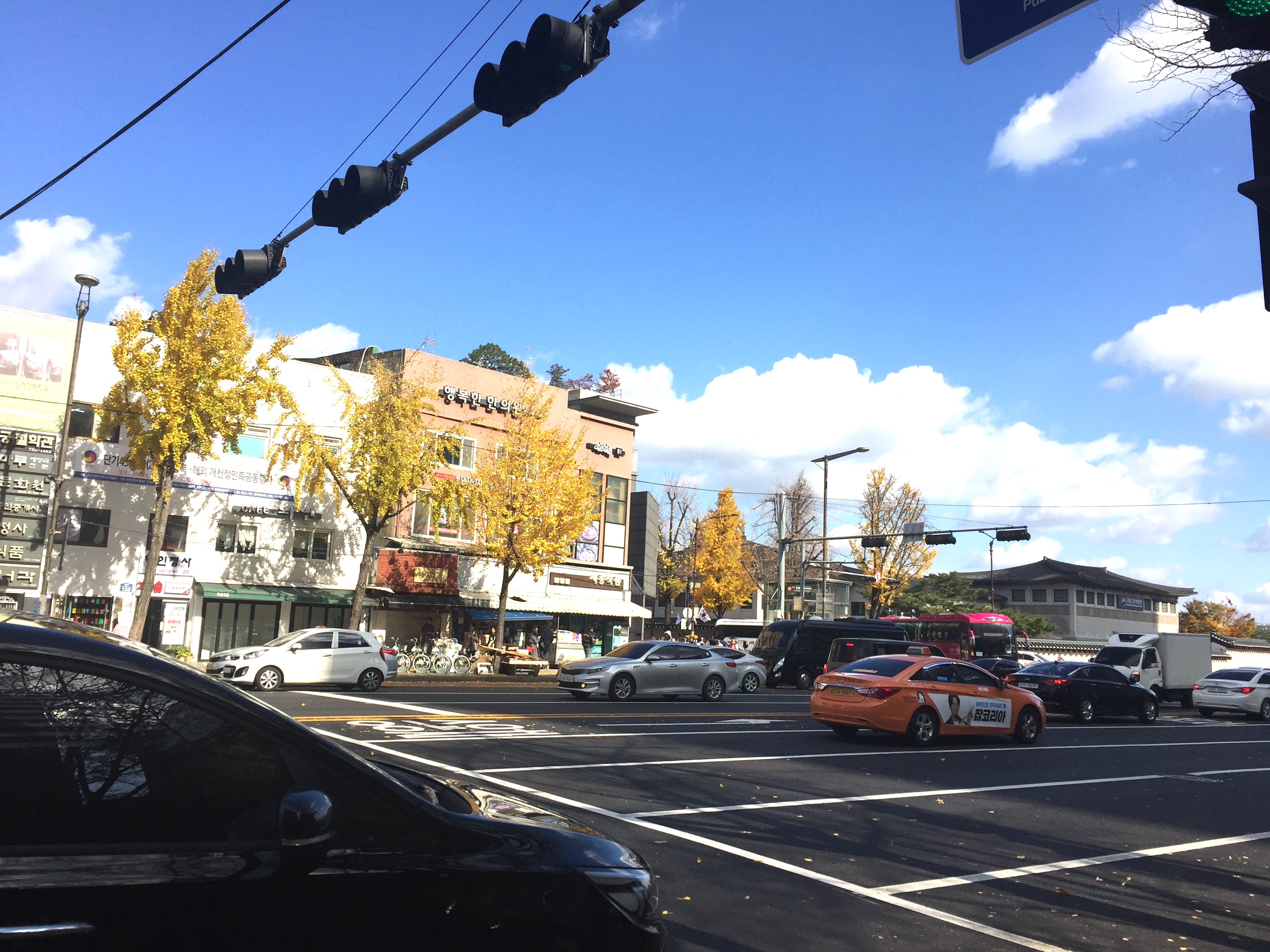
    And piles of yellow leaves here and there testified to the civilized manner in which Koreans rake their leaves. Never a blower to be heard.


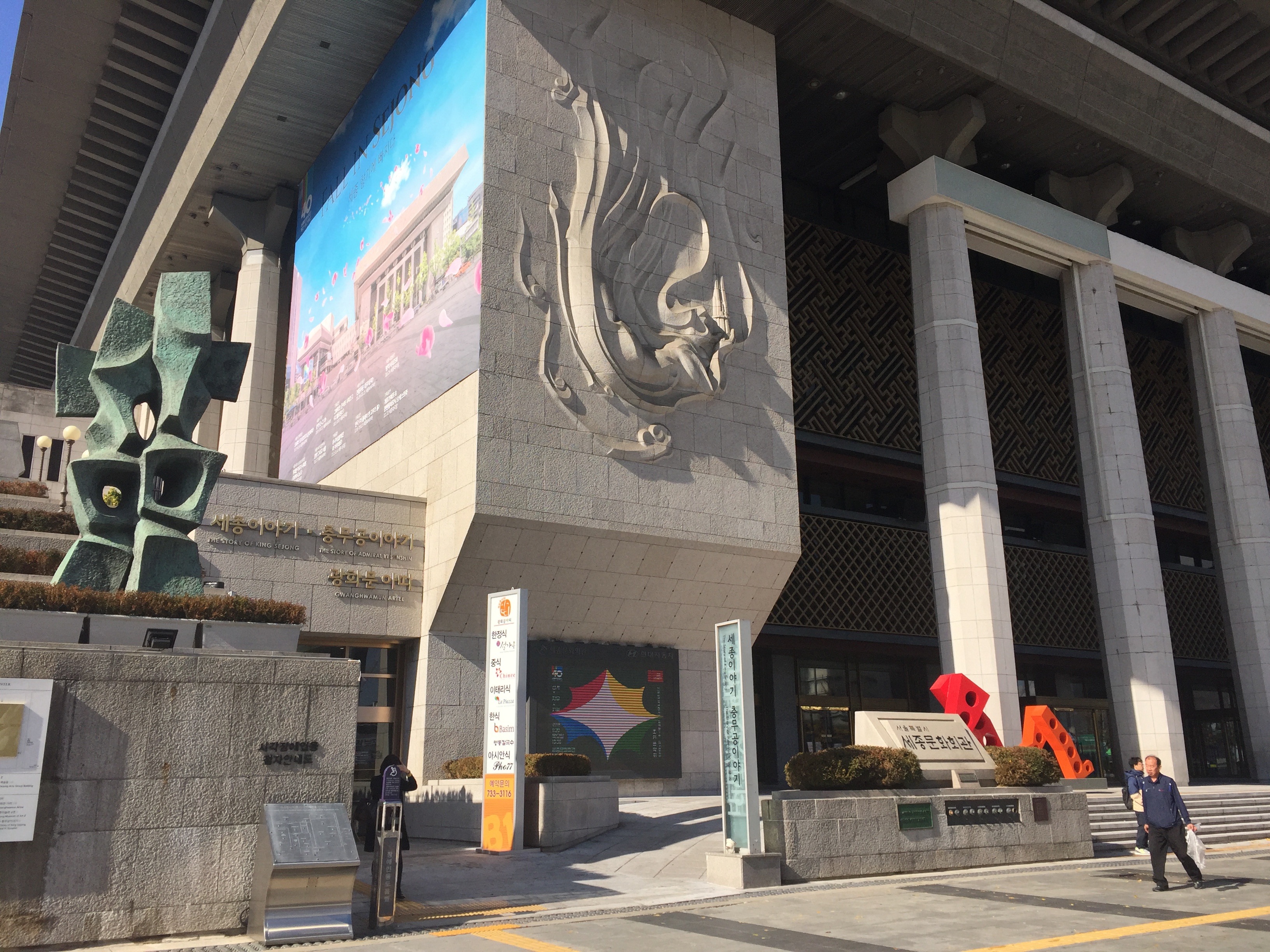
    The City and administrative buildings of Seoul are overwhelmingly impressive. Leaving Seoul on a beautiful day.  


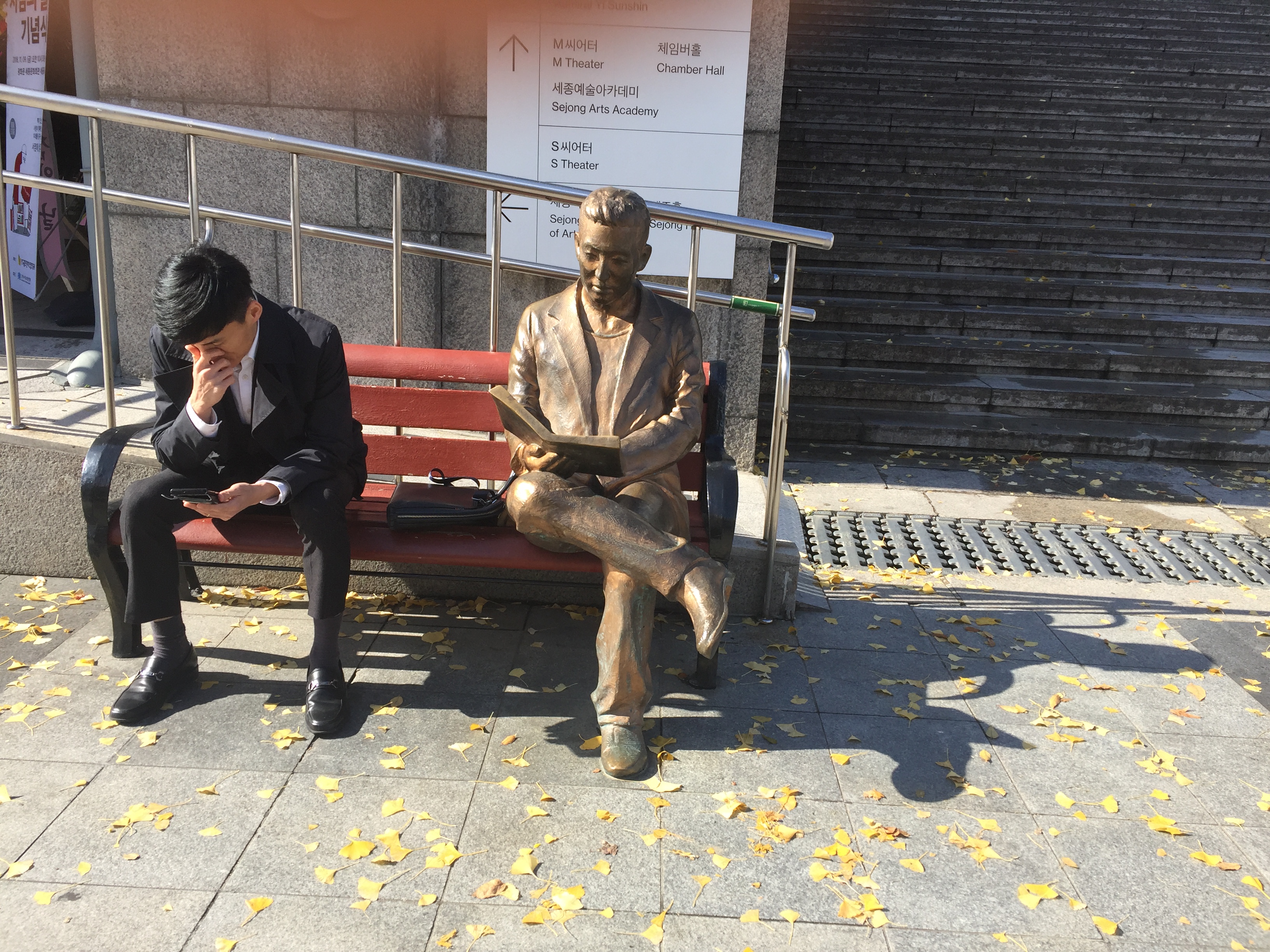
     English language on government buildings occasionally.  But Seoul does have live and not-so-live bench sitters.


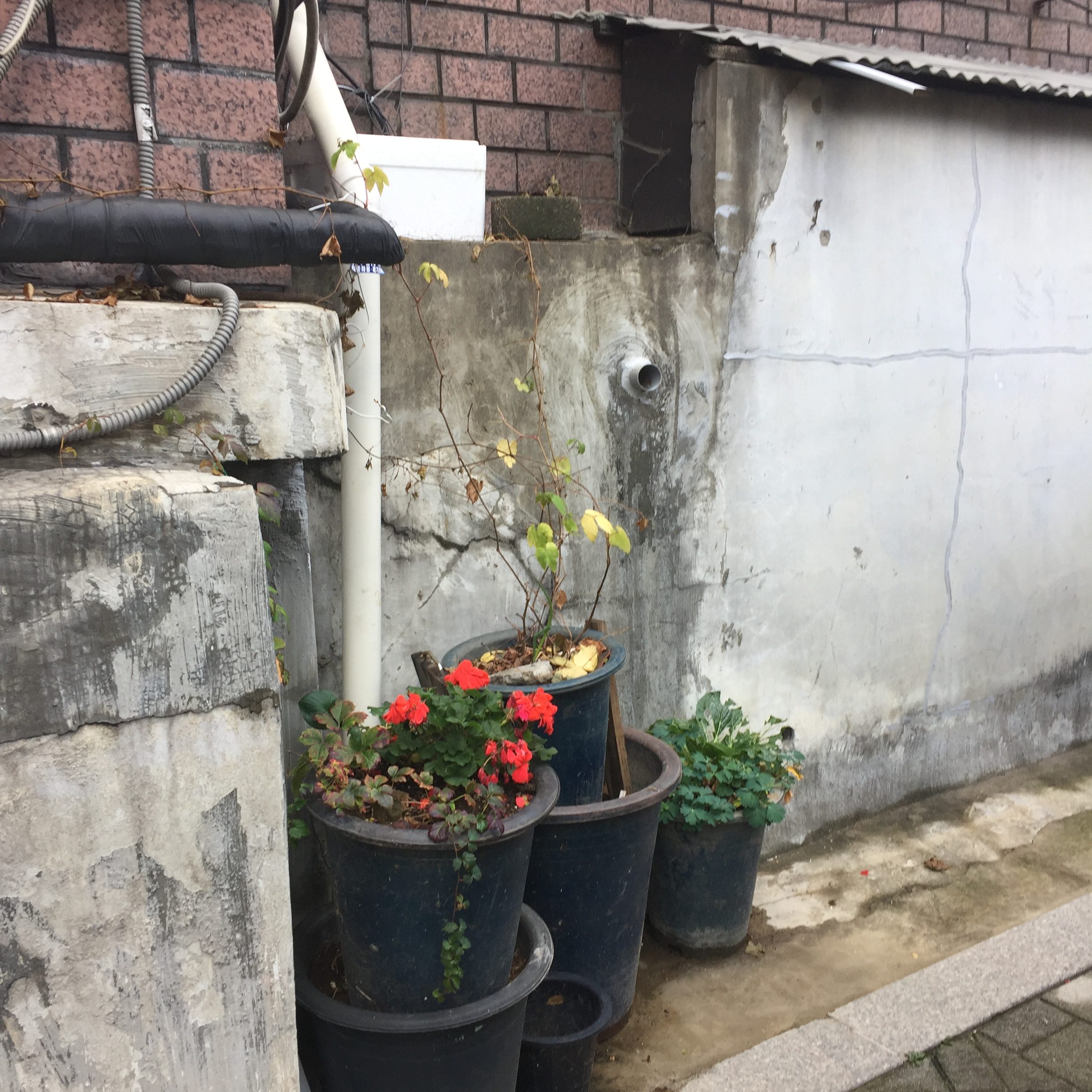
    A back alley in Seoul. Goodbye to wide streets and yellow leaves.


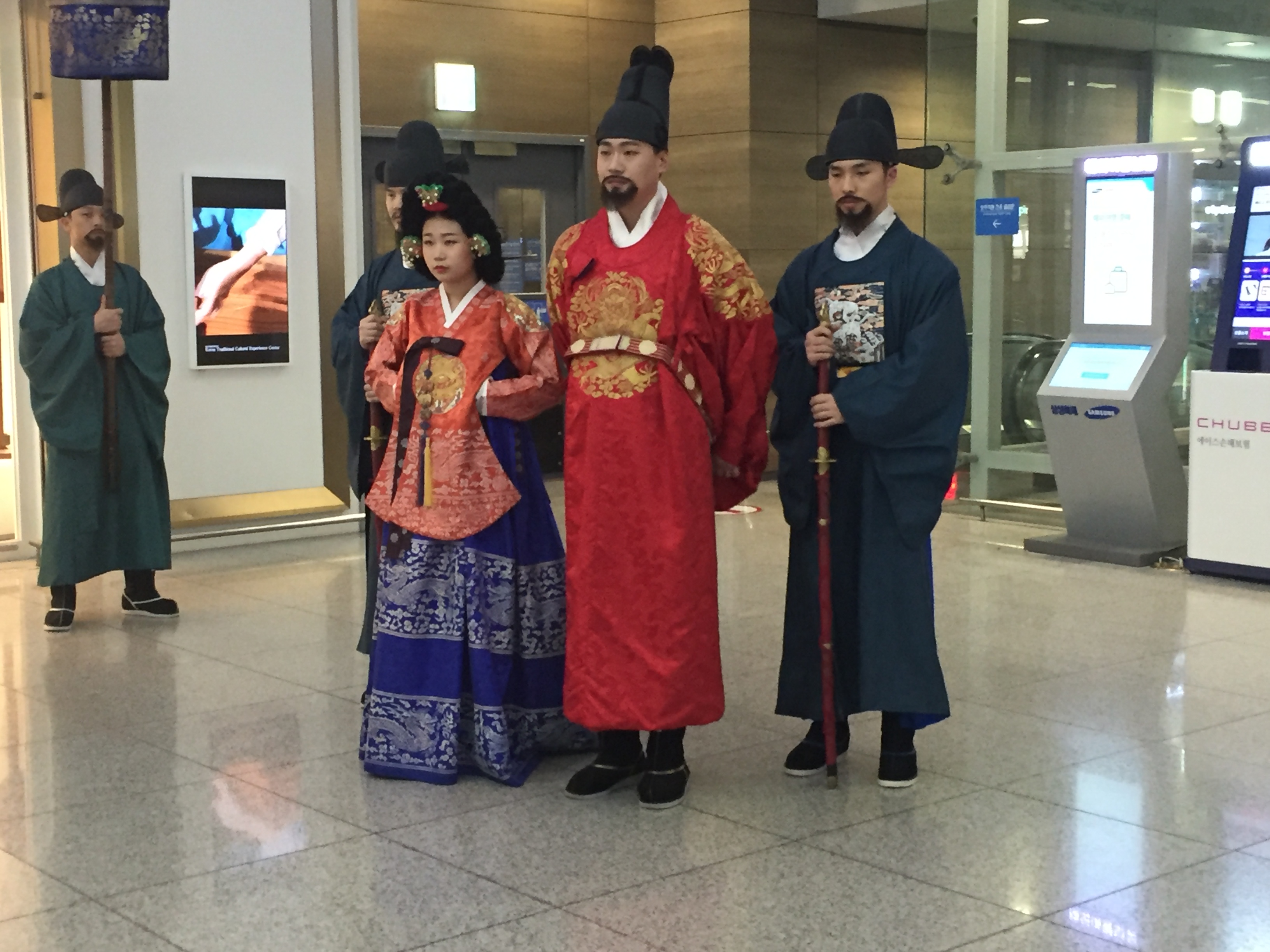
    When I reached Incheon Airport, another parade, this one featuring the King and his Queen and the retinue that usually followed the royal couple. Again, an announcer explained what was going on as the royal pair advanced, and the travelers loved it. Goodby Korea.


  • Monday 5 November 2018

    Monday, 5 November 2018

    As much as I would like to walk the city of Seoul to know it, it’s fairly clear that to walk the entire city would require walking the rest of my life. And so I took a City of Seoul Tour Bus. We rode and rode and rode. The autumn is a beautiful time to come to Seoul, and I have been blessed to enjoy these clear days, though today more than a few were wearing masks, and the air quality was not perfect. But yesterday, Sunday, it was quite good, and as we rode and rode I marveled at the cleanliness of the city. Everywhere the streets are clean. The wide boulevards are clean. The sidewalks are clean. The subways are clean, The buses are clean.The toilets in the subways are clean, very clean. The house fronts are clean. The cars are clean. Everyone is dressed respectably. I did not see any homeless or derelicts or weirdos or beggars. It is almost scary – this order and respectability and cleanliness that is everywhere.

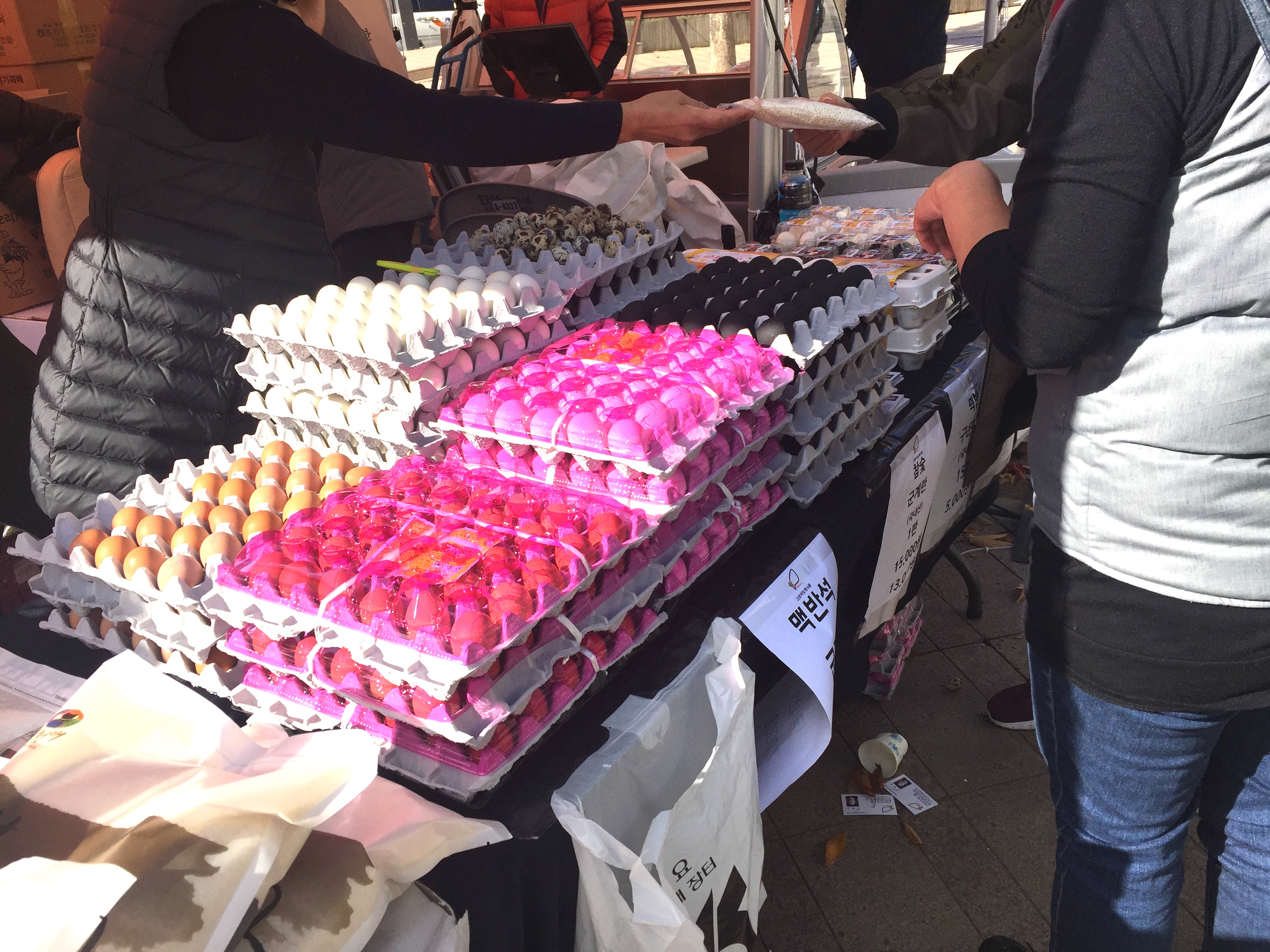
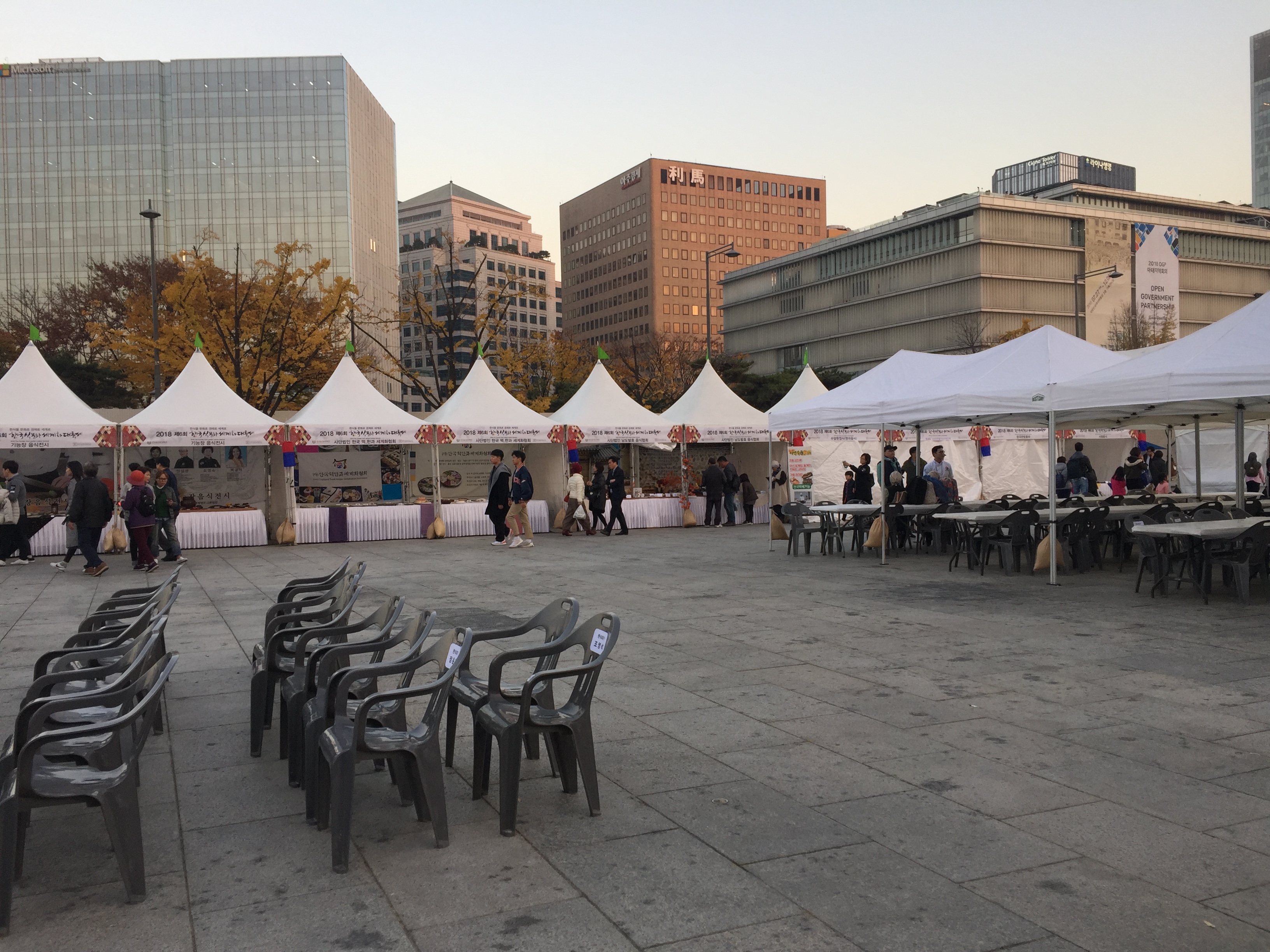
    I had been looking forward to exploring the foods sold by street vendors. All gone from the streets. Instead, neatly lined up in fields or along the edges of parks or in the middle of the parks are neat and tidy rows and rows of white peaked roof tents – reminiscent of the Klu Klux Klan – an unhappy association. For the merchants, they are surely a boon, for contents and merchants are protected from inclement weather and dust and wind and location is set – no worry about being asked to move on by the police. For the buyer searching for atmosphere, a bit disappointing. But these rows and rows of white antiseptic tents are entirely in keeping with this great order that envelops Seoul.
                                 

    Today I visited the Tourist Center for the joy of speaking English – which they do perfectly – and asked my Korean Tourist  person if any parts of Seoul are dirty or ill kept. Did she know of any? No, she did not. Is everywhere in Seoul so clean?  Well,yes, as far as she knew. 

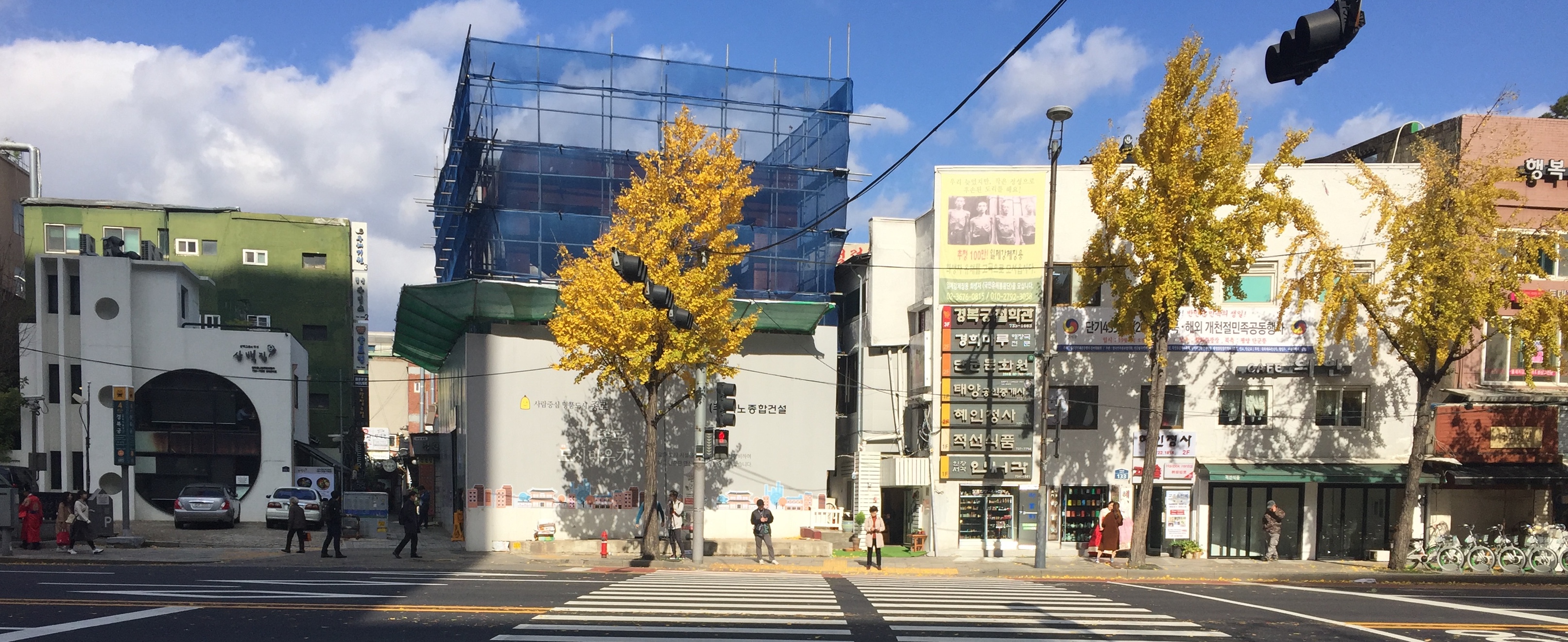
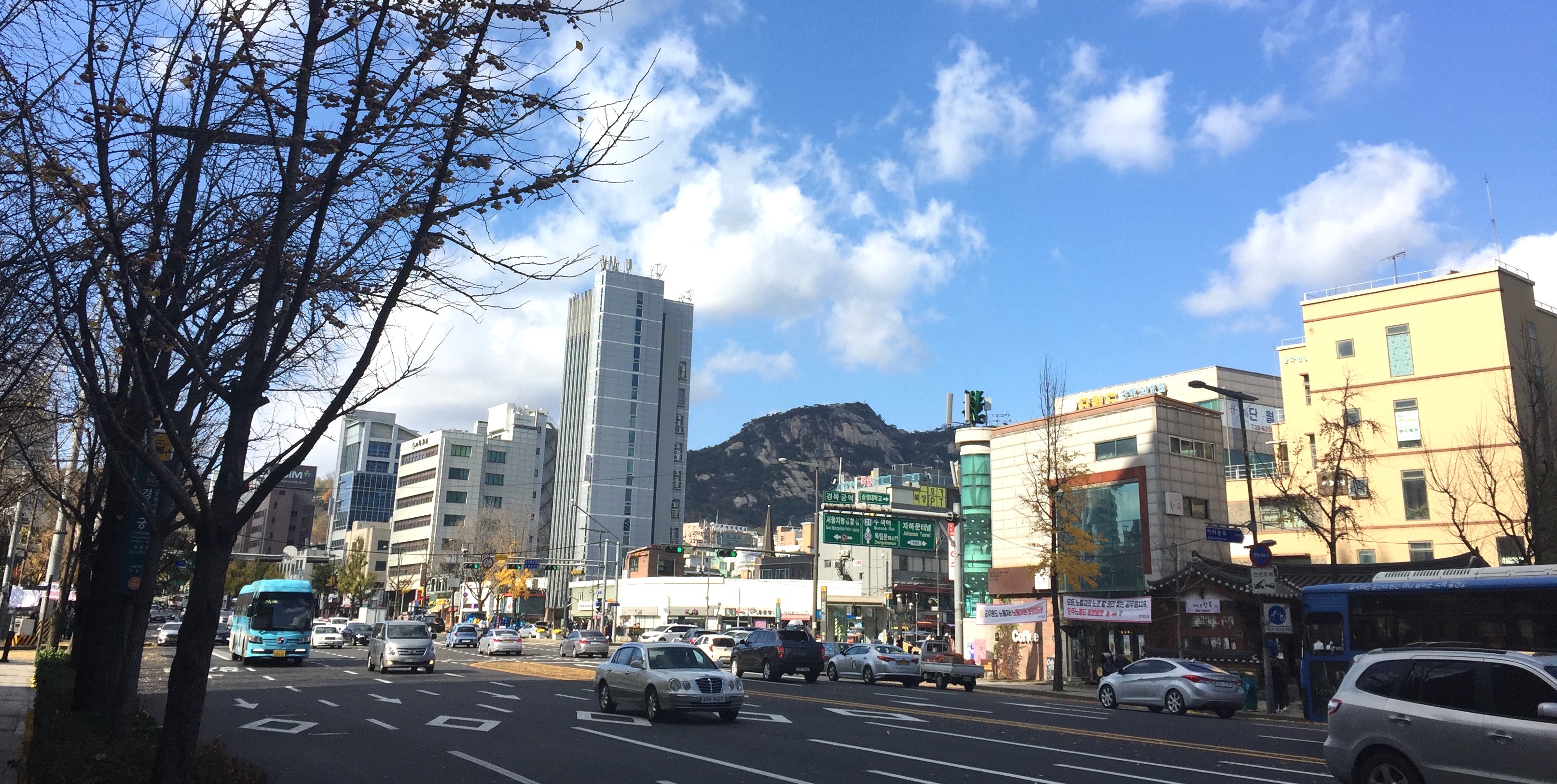
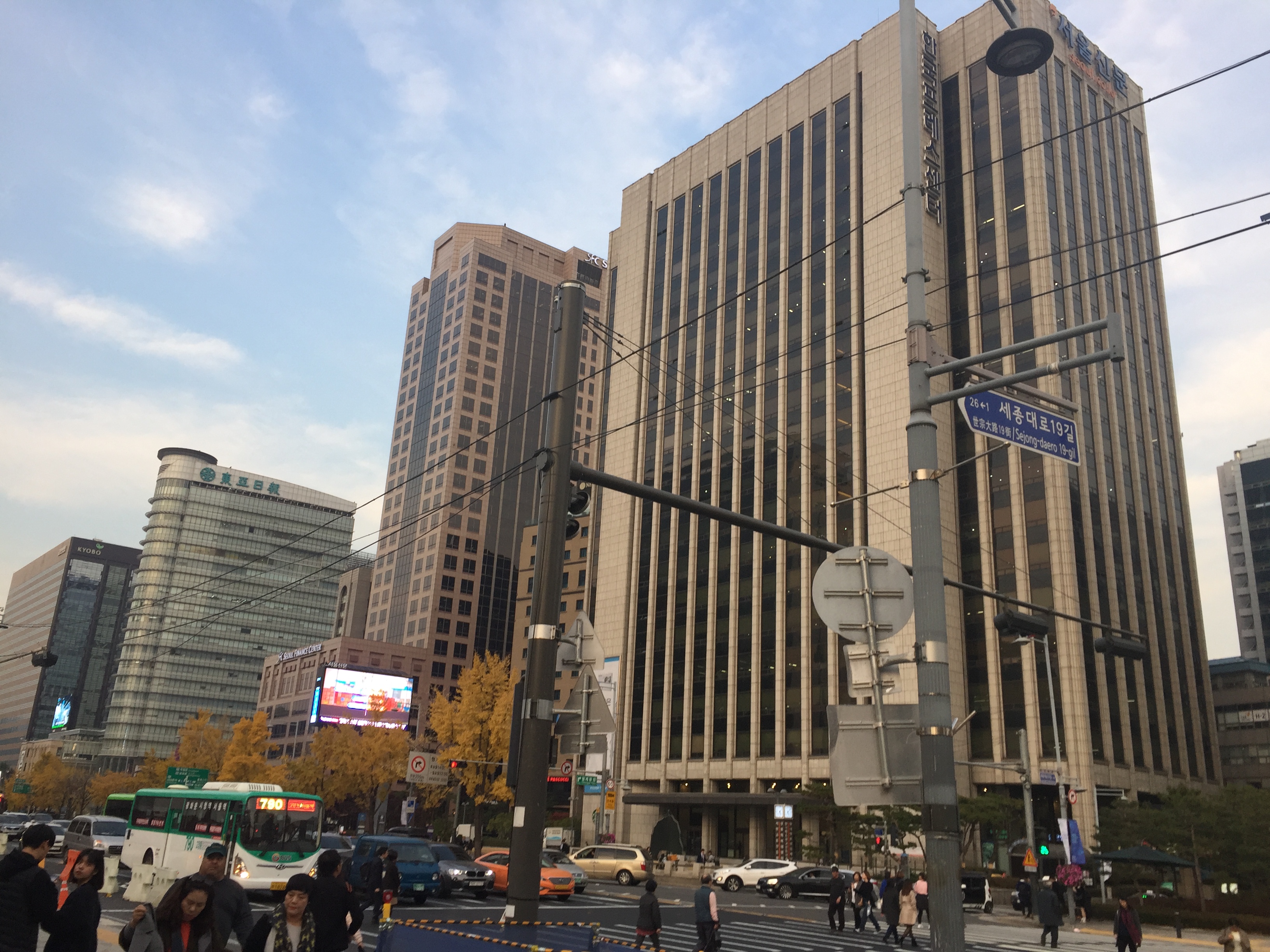
    And along with the cleanliness are the plantings. Most streets that I saw have trees planted on either side, which in this fall are bright in yellow or red in color. The city with its endless rows of skyscrapers and wide wide tree-lined streets is easy to walk in, and safe. You feel very safe in Seoul.

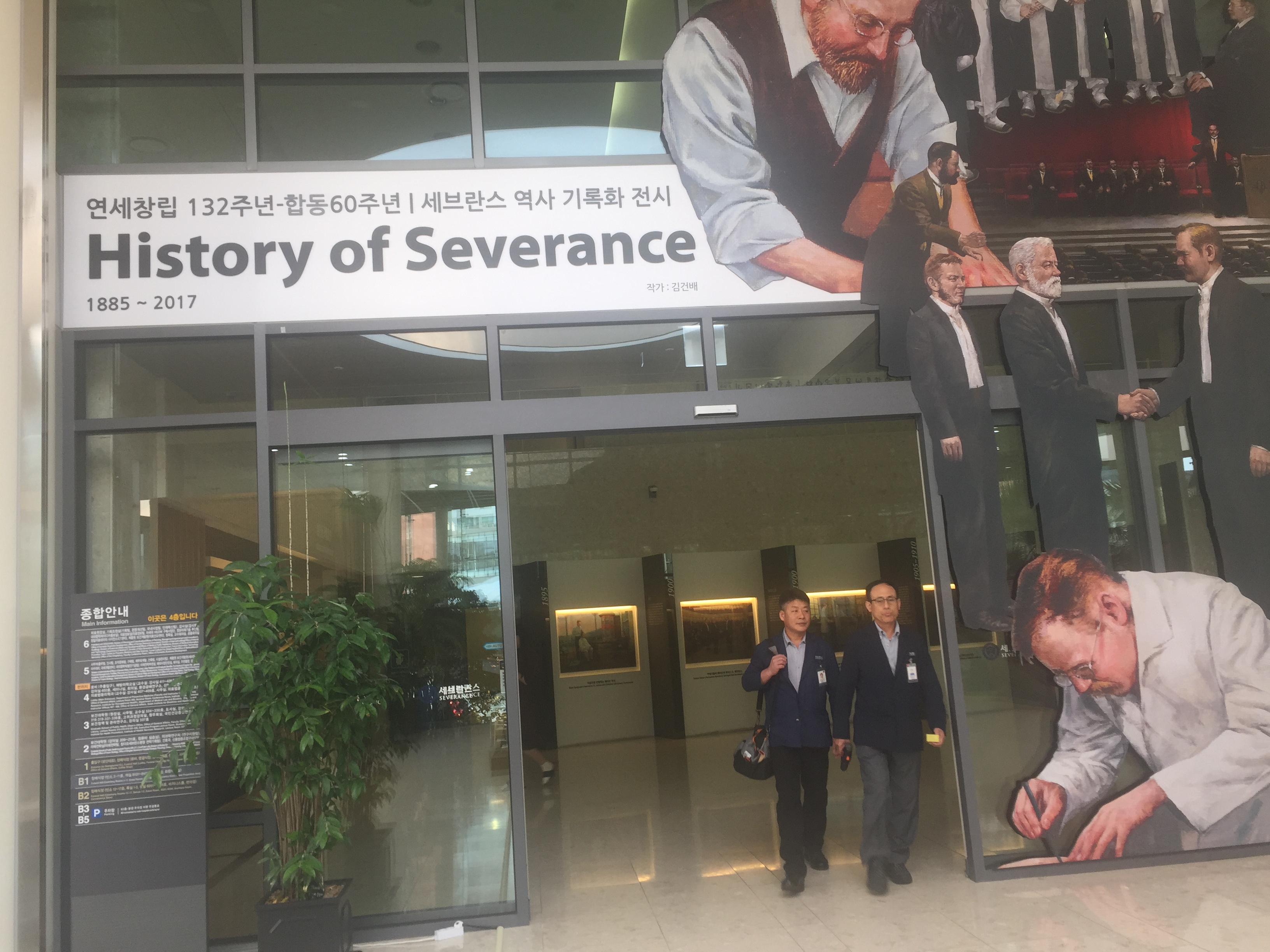
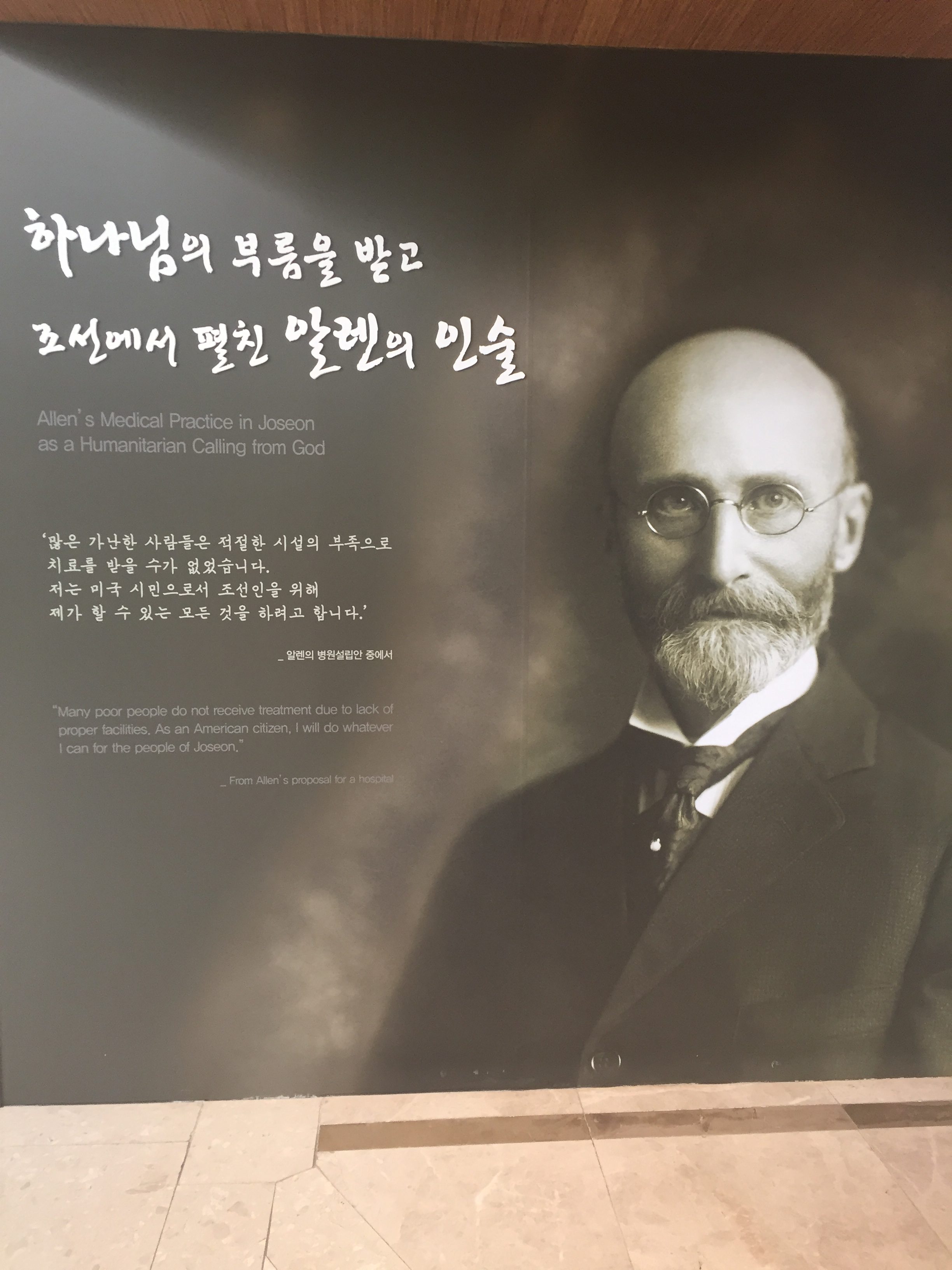
    I took the subway – the clean subway – to the world famous Severance Hospital to inspect their history of Severance exhibit, which I had heard referred to the contributions made by the Presbyterian missionaries who founded the hospital. Indeed, two large spaces are devoted to documenting the work of Dr. Allen, who founded the beginnings of a Western type hospital in Korea, and to Dr. Oliver R. Avison, who from his first days in Korea had the vision of a medical college that would train Koreans to be doctors. The result was the fine medical college at Honsei University and the vast medical complex that is now Severance Hospital, where Asians from all of Asia come for treatment.


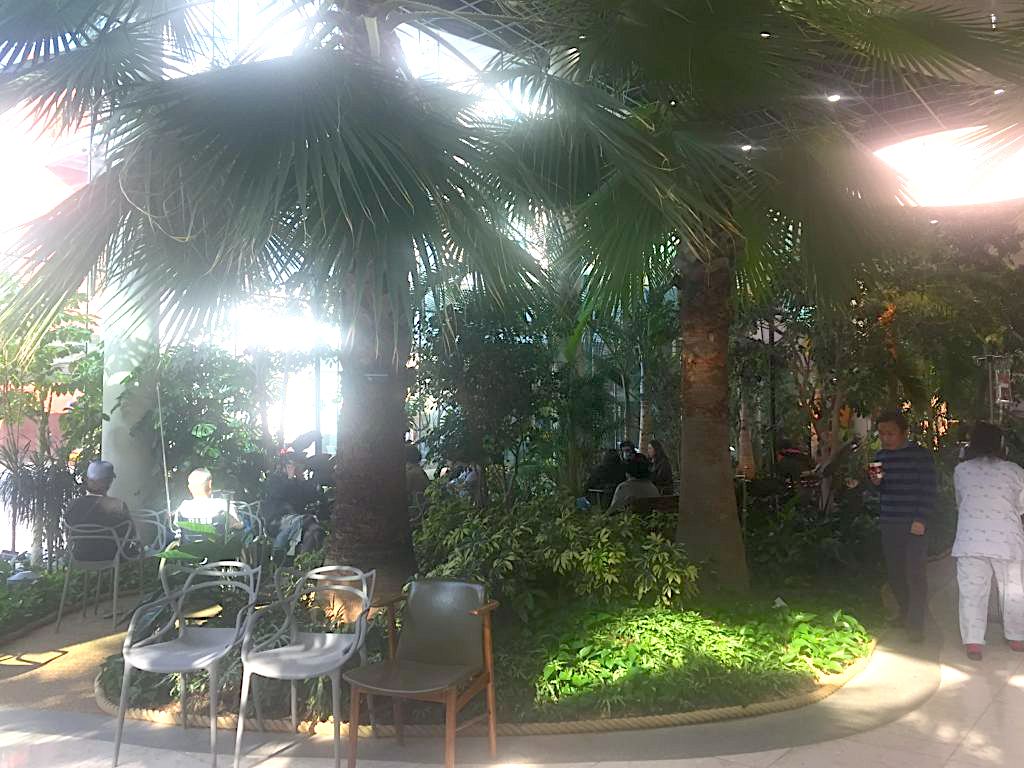
    The hospital building is almost beyond belief – so modern, so spacious and elegantly designed. A large solarium, the plants ten feet tall, a veritable forest in which relaxing patients and their visitors can sit amidst the greenery. Everything and the furnishings the couches and easy chairs, the artwork, all appear to be of the best in taste and finest in quality. Along with the Christmas trees already in place. Rather like the Joseon Dynasty tradition.


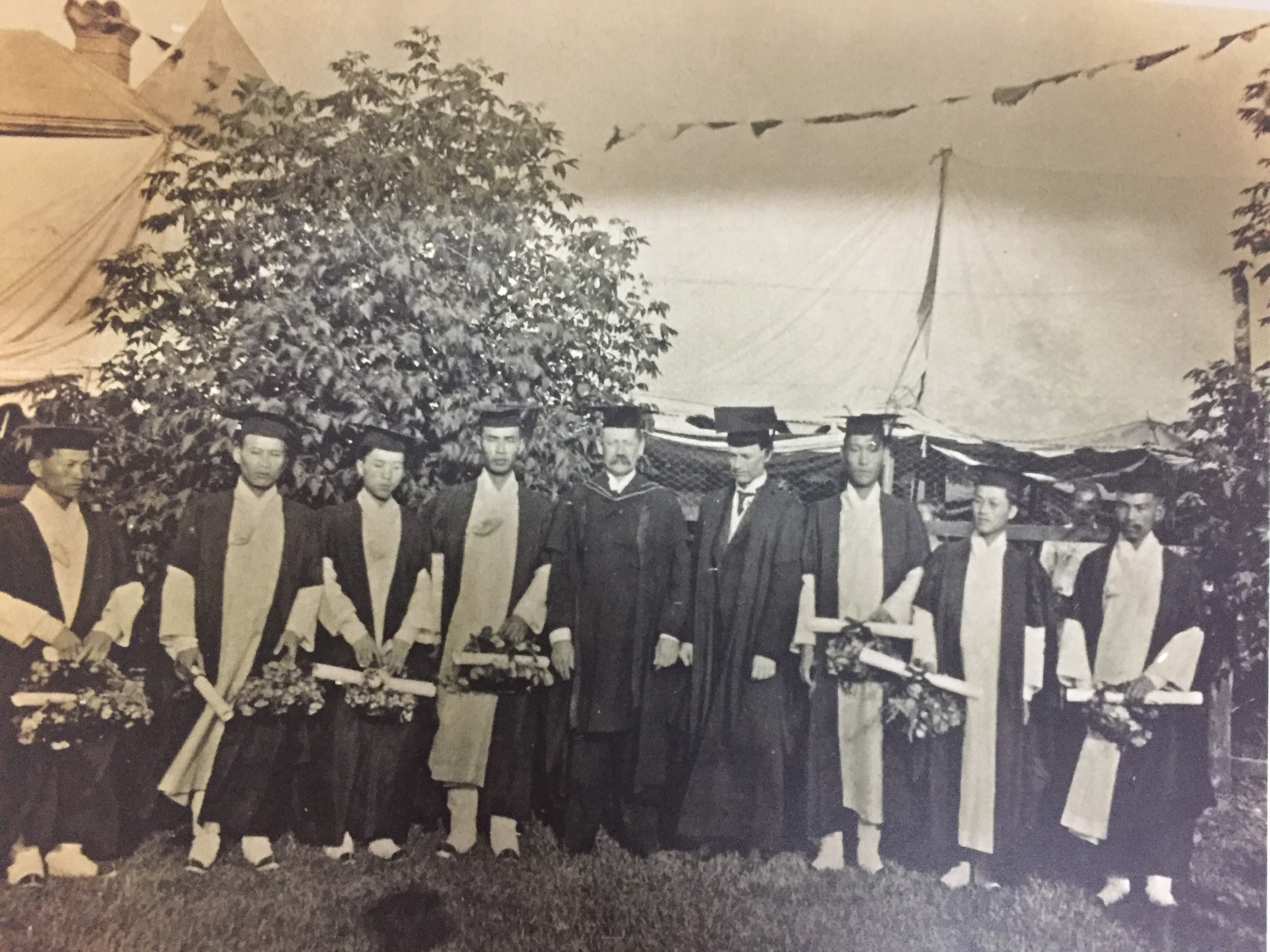
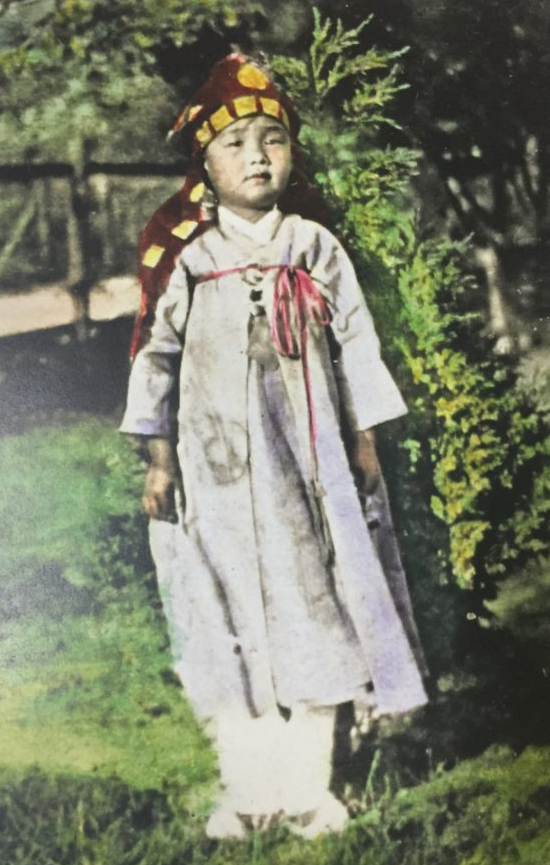
    I was able to meet with the curator of the historical exhibit and show him and his assistant and translator the two photos taken by Sidney and Clarence Gamble at the graduation ceremony in June 1908 of the first graduating class of seven of Severance Medical College, the first Korean-trained doctors, all of whom put their training into the service of Severance and into training more Koreans for the field. I also showed them the photo taken by Clarence of the son of one of the graduates, a photo that is not in the Severance archives.They were cordial and interested, as they should have been. And it is a satisfaction to know that the work of these Presbyterian medical missionaries continues to be recognized and honored.


    A walk from the subway in twilight with these great tall buildings in such a variety of styles on either side.