Author: Miriam Reed

  • THE WAR AGAINST WOMEN INTENSIFIES

    The determination of the patriarchy to pulverize women and the Feminine Spirit is nowhere better demonstrated than by the permitted entry of transgendered males into women’s competitive sports.

    This is the pattern of the ages. Women win the right to divorce, and upon decree, half of their earnings is given to the male. Women’s Studies programs disclose to women their silenced history, and Gender Studies is introduced.  Women set up their own competitive events, and a six-foot  transgendered male competes against a five-foot biological woman.

    We are told to deny what we can see with our own eyes by a simulacrum of a language that has as its basis political expediency.

    Whereas through the ages, women were denied the votes, divorce, the right to their dowries, their autonomy, they continued to be recognized as having existence. But now, the word “woman” has no meaning.  Anyone, any thing can be a “woman.”

    Now, we live in a newly man-made universe of words utterly disconnected from reality and meaningful connections. Women are denied their very existence by language far more ingenuous than anything George Orwell ever dreamed of.

    But then – and this will rile all sorts of people  – why do women continue to imitate the behaviors of men? Why must women COMPETE in games the way men do?  Games are played for fun.  Were played for fun. The commercialization and monetization of games is scarcely commensurate with the Feminine Spirit. When women imitate men’s customs and activities, they betray themselves.

    Women have access to the Feminine Spirit. Historically, women do not compete with each other. 

    By turning what can be joyous activity – playing games – into competitive monied activity – women have once again lost out to the men, in this case, to the transgendered men.

    In a world running amok, governed by a depraved patriarchal mindset, women have work to do, Our work begins with understanding who we are and where we came from, with know.ng the history of our foremothers, recognizing how the currently sick world has been constructed by arrogant male sen andibilities. In contradistinction, women’s work requires that we develop our full potential, respond to our individual calling, and display our gifts.  We have the work and wisdom of generations of foremothers to guide us. Women will have that wisdom only if we know our history.

  • Ashland, Oregon USA Saturday 23 November 2019 Correction

    Addendum and Correction to Final Korea Blog

    Below is the source for information on the fall of the Berlin Wall, which I neglected to include in the final post.  Thank you,  FMR

    www.godgossip.org/article/did-a-prayer-meeting-really-bring-down-the-berlin-wall

  • Ashland, Oregon, USA Thursday 21 November 2019

    Ashland, Oregon, USA
    Friday   22 November 2019

    Thank you, Blog Recipients, for allowing me to share my Korea experience with you. And thank you, Sue Graves for making it possible for me to do so.  Sue is remarkably adept at all things compter-wise (and mechanical).

    The forthcoming “Korea 1908” book is important, not just to me, personally. It is bigger than me, bigger than the personal story of the David B. Gamble family, for it is the story of the power of the compassionate individual to make a difference.

    When Horace J.Allen, the first Protestant missionary in Korea, arrived, the Hermit Kingdom had only recently opened itself to foreign trade and intercourse with the outside world. Korea in 1884 was an ignorant, superstitious, wretchedly poor, and suspicious society. Common medical cures sought to release demons from the body of the patient with large soon-to-be infected punctures. Education was limited to contemplation by a wealthy few of specific Chinese characters. Farming and plowing depended on a small metal shovel. Women were not given names, and wives were called “what you may call her” or “she.” Years of a life were lost to mourning the deaths of family members and the royalty and worshipping the deeds of long-deceased ancestors. At one time, Korea had been a world leader of progress, inventing the first magnetic compass, creating the first printing system (a century before Gutenberg), developing an alphabet so accessible that it can be learned and is learned in just a few hours. All these achievements were lost as Korea settled into a quagmire of Buddhist worship and Confucius observance.

    As is the way of the world, the government of Korea as well as the governments and political leaders of China, Japan, Russia, and the United States lived prosperously and used Korea and its people as a pawn in their war games. The brutal takeover of Korea by the Japanese militaristic regime in 1905 was made possible by the United States. But if the America government conducted a farce of democracy’s values, the missionaries of America, particularly those of the Methodist Episcopal and the Presbyterian Churches, redeemed the America that opened its doors to the “the poor, the tired, the huddled masses.” Afire with evangelistic zeal, the missionaries went to Korea, quickly to understand that the Love preached in the Gospels was best expressed by ministering to the basic needs of the people, by making available education, modern Western medical care, and practical sanitation. 

    They were a special group, these missionaries. Dr. Oliver R. Alison, M.D., left a thriving medical practice and well-paid posts at Toronto University to bring his pregnant wife and three children to Seoul, South Korea, where he built what is now Severance Hospital, today one of the largest and most modern  hospitals in all of Asia. Jesse Watson HIrst, M.D., who assisted Dr. Avison, decided while attending Princeton to become a medical missionary; to this end, he put himself through medical school, developed a private practice that paid off his school debts, and arrived in Korea at the age of forty. Similarly, Doctor Rosetta Sherwood Hall and Dr. Mary M. Cutler both decided as young girls to become missionaries, went to medical school and developed private practices so that they could enter Korea as medical missionaries with experience. These lives are typical of the compassionate individuals who became missionaries in  Korea because they wanted to make a difference. 

    And they did make a difference. Missionaries, predominantly American, but also from other nations, went to Korea, ate Korean food, learned the Korean language, and worked quietly and unknown to none other than the missionary societies that were supporting them in their home countries. Many were forced to quit the field and returned home sick and enfeebled. Many returned and worked on. South Korea itself survived the political maneuvers of the Korean War and dictatorships and is today a nation of forceful. bright, educated individuals. For not only did Korea receive help from American missionaries, but the Koreans accepted the help and learned to use the help for their own purposes. 

    This story of the Korean missionaries may seem irrelevant to comfortable Americans with jobs and two cars. We do not live in poverty and superstition. We do not appear to live in a police state nor in ignorance. We have television, The New York Times, and federal agencies full of scientists with multiple degrees. Yet as the American government asserts itself to its people and the world under the governance of Big Pharma and Monsanto look-alikes joined with the self-serving ultra-rich, to repeat the story of the power of the individual in the face of tyranny or ineptitude is increasingly necessary. Americans and much of the world live in a dazzle of glitter and gloss even as the natural resources to sustain the glitter and our very lives are fast disappearing.  As greed, not exclusively corporate, manipulates our minds, poisons our bodies, pollutes the air we breathe, trashes the environment and the food that sustains our lives; as unsafe technologies, which include cell phones, 5G, and wireless environments, protected by lies and propaganda, destroy our health and strength; as we annihilate the animals, deplete the soil, sicken the oceans, the waters, and all living beings that are giving us life and as this life-threatening devastation continues unabated, the power of the compassionate individual will become life-saving. 

    The Berlin Wall fell seven years after Pastor Christian Führer opened St. Nicholas Church in Leipzig to Monday prayer meetings for peace. The few who attended in 1982 grew to many, and in October 1989 over 70,000 gathered at St. Nicholas Church to walk with candles in the streets, peacefully protesting the Russian occupation. A bloodbath was expected; hospitals called in extra staff, but Erick Honecker inexplicably did not allow police action. One month later, the Berlin Wall fell without a single shot*. Thus came a world-changing event through the vision of one pastor, even as the nation of Korea was changed by the concern of individual American missionaries.  

    The story of the work of the American missionaries in Korea in the late nineteenth and early twentieth century—a story of  steadfast compassion—is why the forthcoming “Korean 1908” is important. It tells a story that has been told before and far better than I can tell it; nevertheless, it is a  story of  that deserves to be remembered, to be told and retold.

    *www.godgossip.org/article/did-a-prayer-meeting-really-bring-down-the-berlin-wall

  • Seoul, Korea Wednesday 20 November 2019

    Seoul, Korea
    Wednesday 20 November 2019

    Barely 27 degrees this morning, and it was cold. I trotted back to Gyeongbokjung to find the lovely English-speaking tour guide there, whose American name is Jennie. She not only made some identifications and taught me more, but she inveighed her expert contacts into identifying items and has taken on the job of contacting others to help her ( and help me) in more identifications. How lovely to have someone else — someone who knows —doing this research.

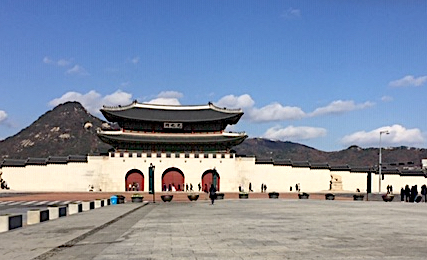
    Gyeongbokgung, the royal palace, has a long and royal history. It was built by and for the Joseon Dynasty, which held power from 1392 until 1912, an impressive stretch, and I believe the longest reign ever held by any one royal family. The word “Gyeongbok” in translation means “The new dynasty will be greatly blessed and prosperous” and “gung” means palace—an efficient use of words, I daresay. But then, Geunjeongjeon  the name of the main throne room of Gyeongbokgung, means “All affairs will be properly managed if your Majesty demonstrates diligence.”

    Gyeonbokgung was founded n 1395, expanded in 1492, and burned to the ground by the Japanese in 1592. It was reconstructed in 1867 and removed by the Japanese in 1915.  Reconstruction began once again in 1990 on its native and present site, and the reconstruction seen today completed in 1910. 

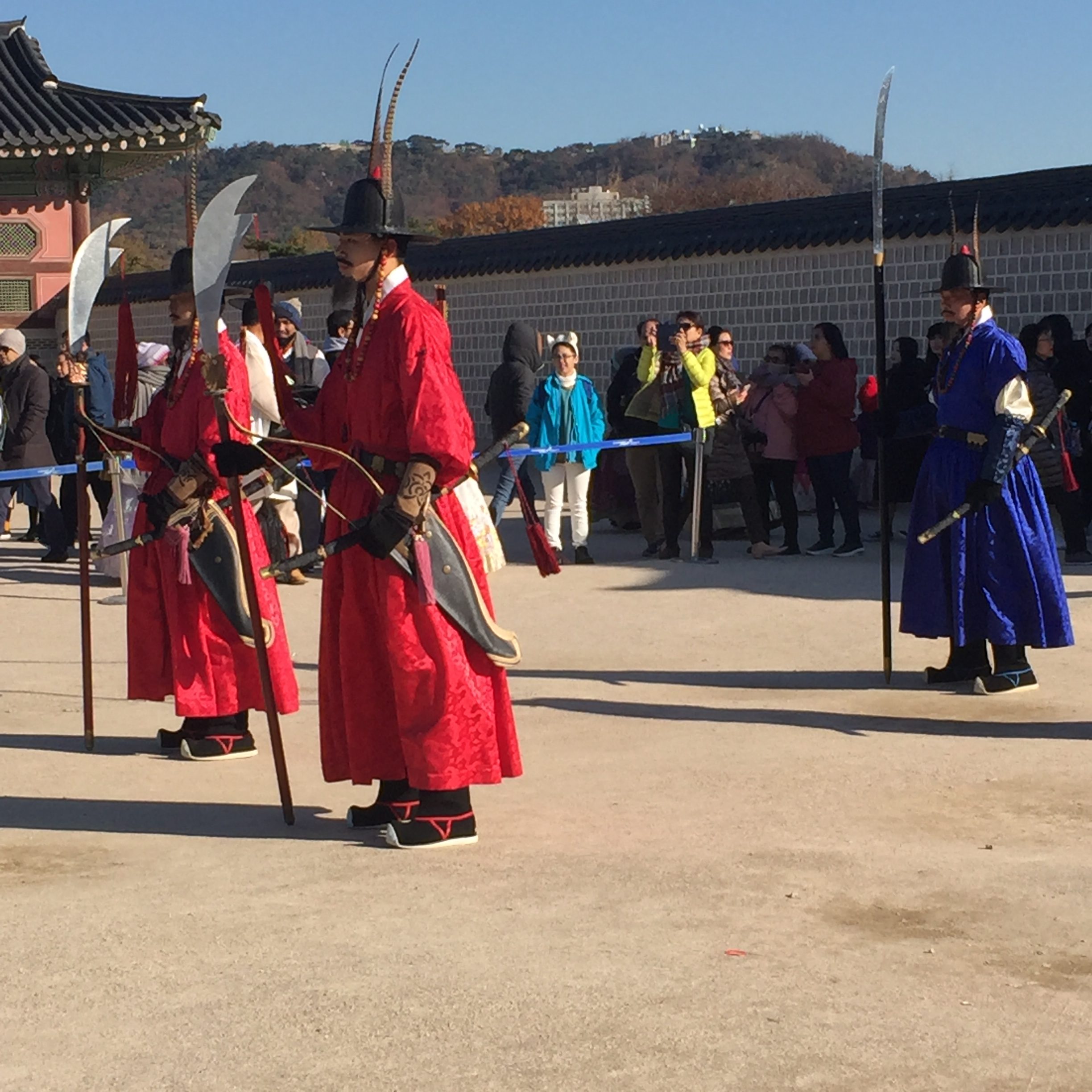
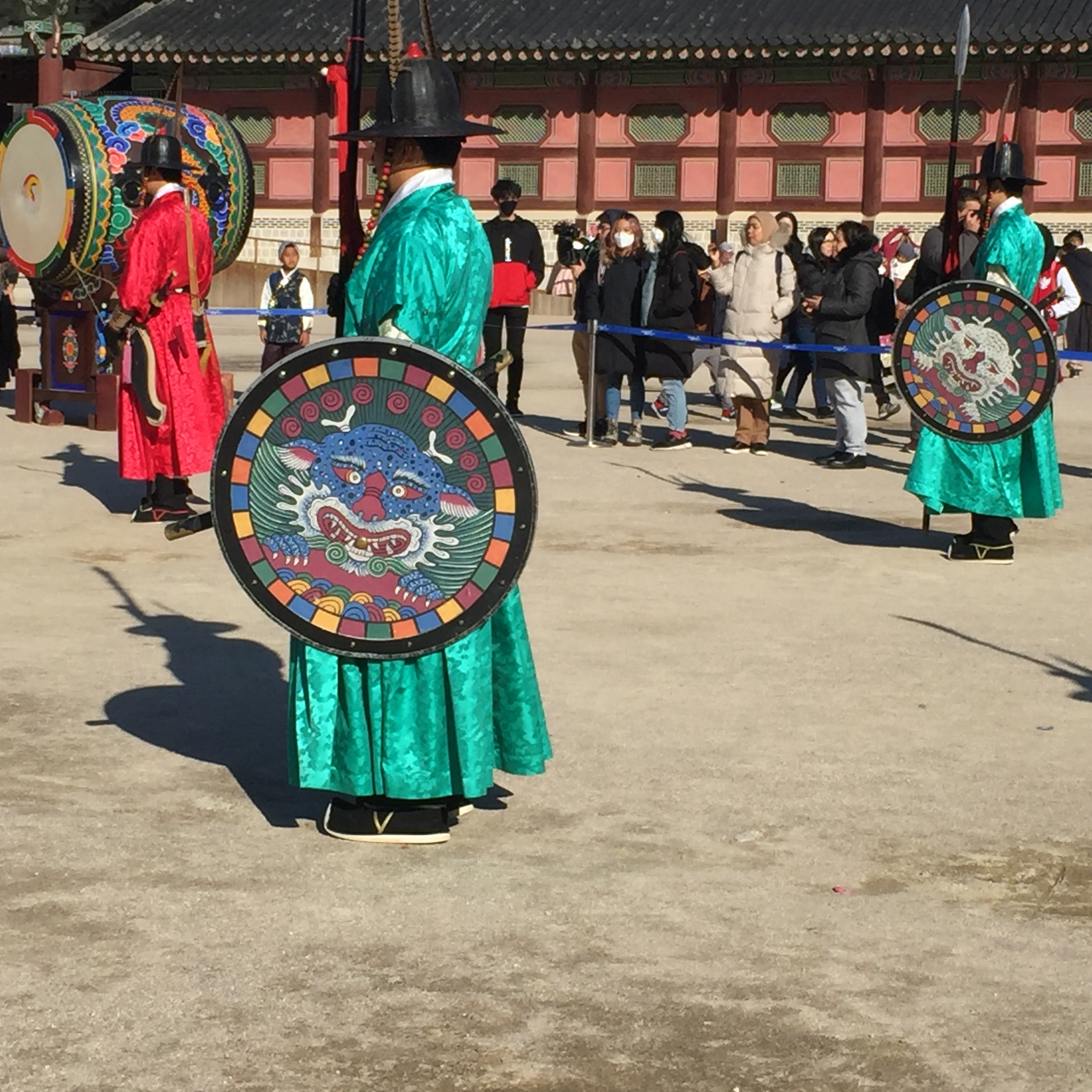
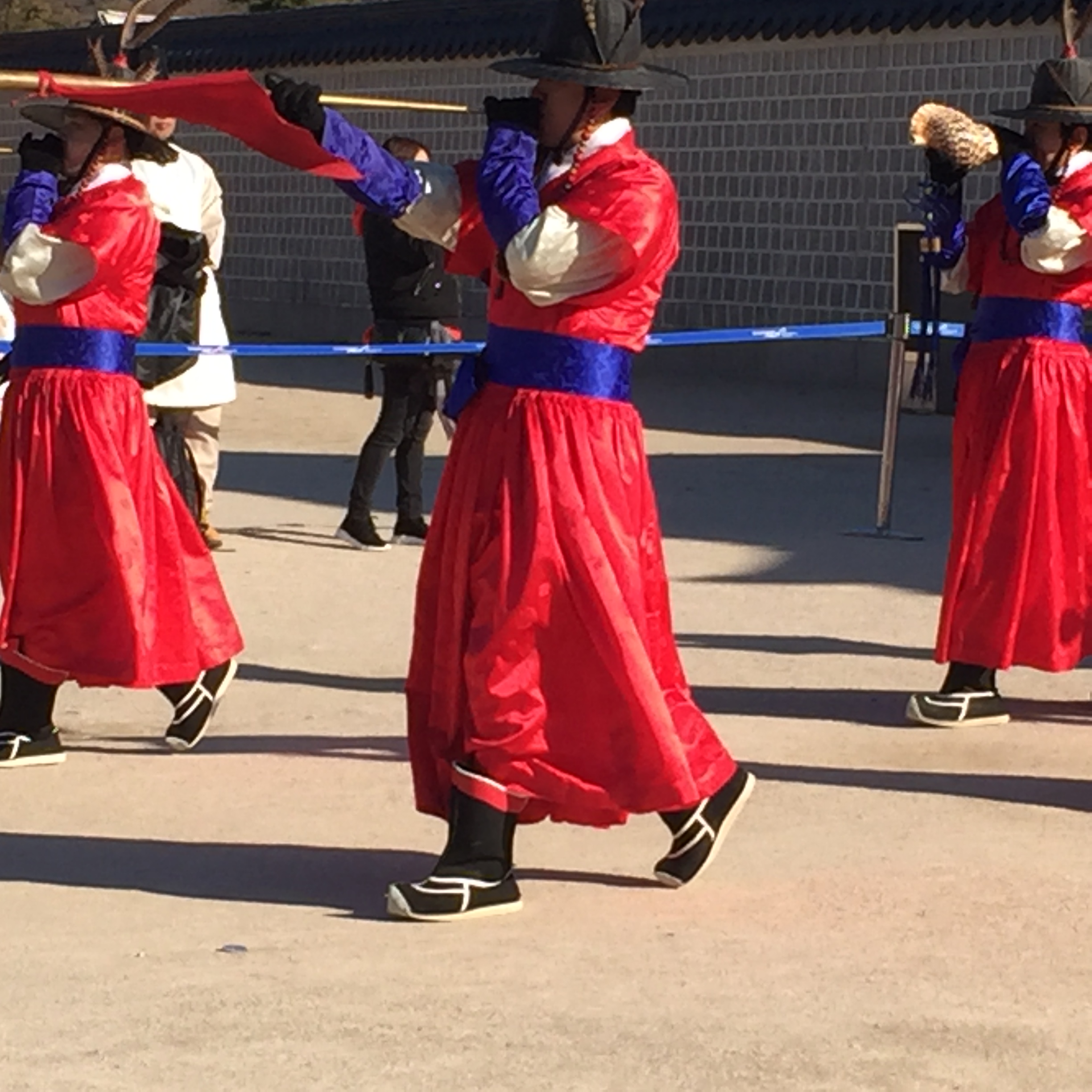
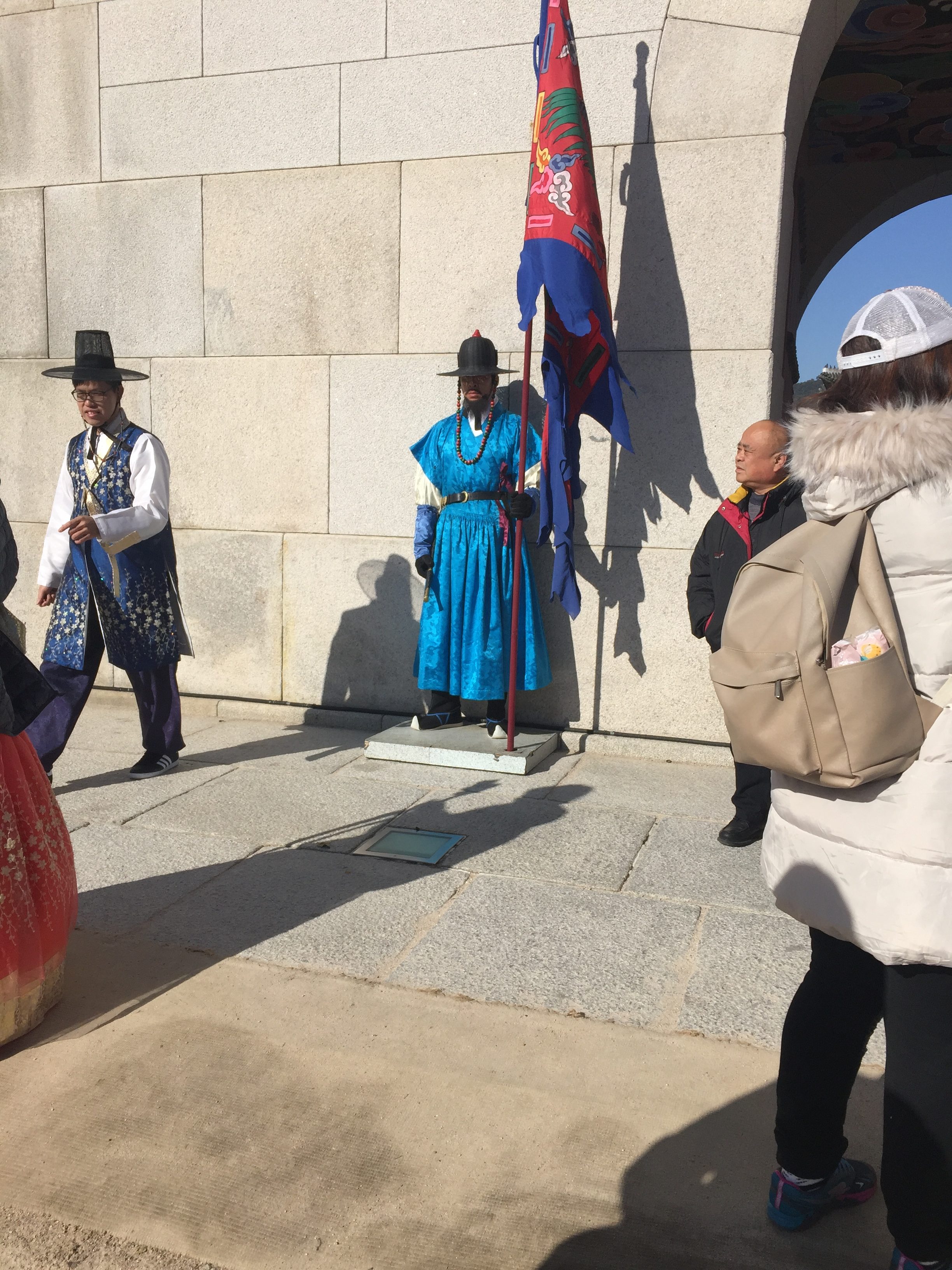
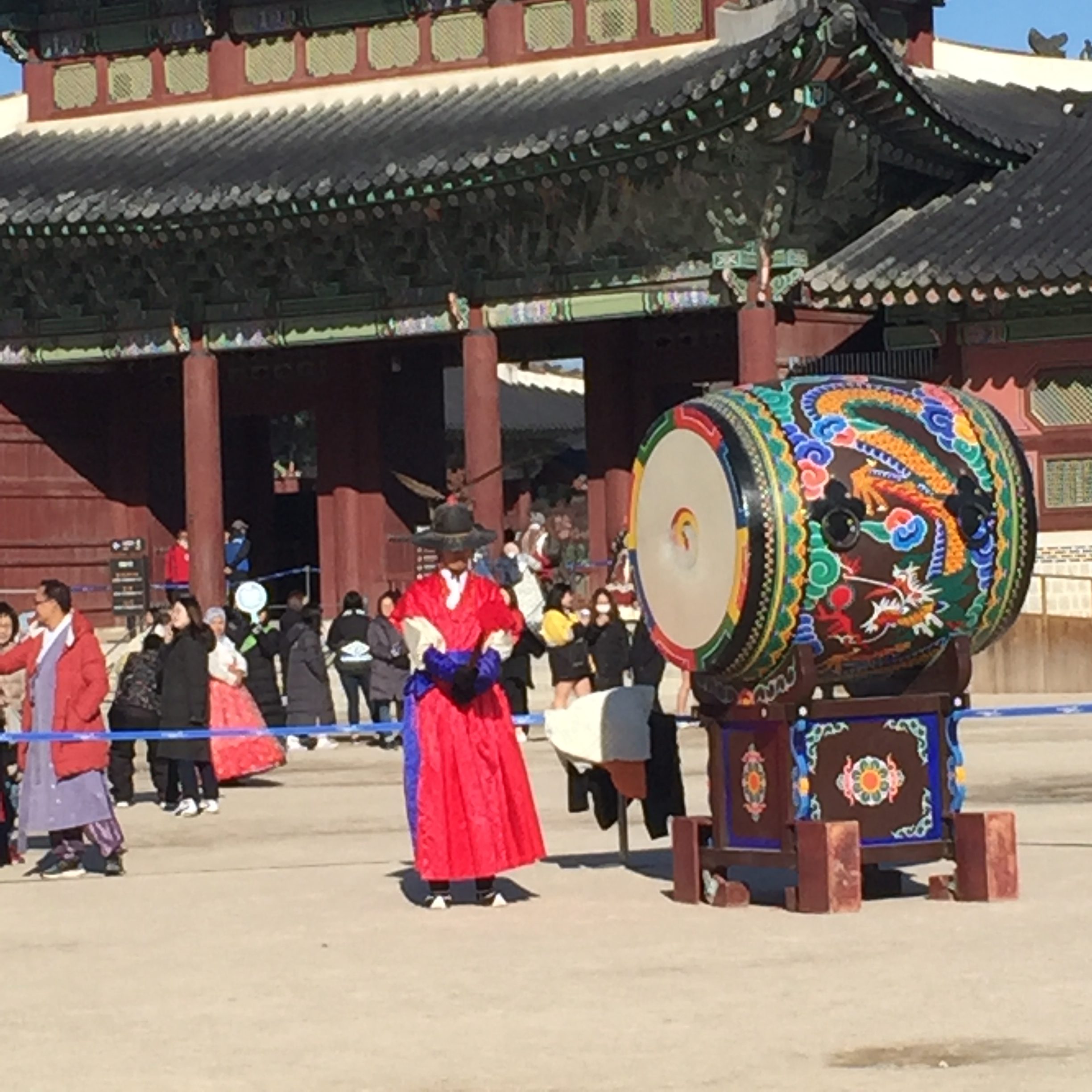
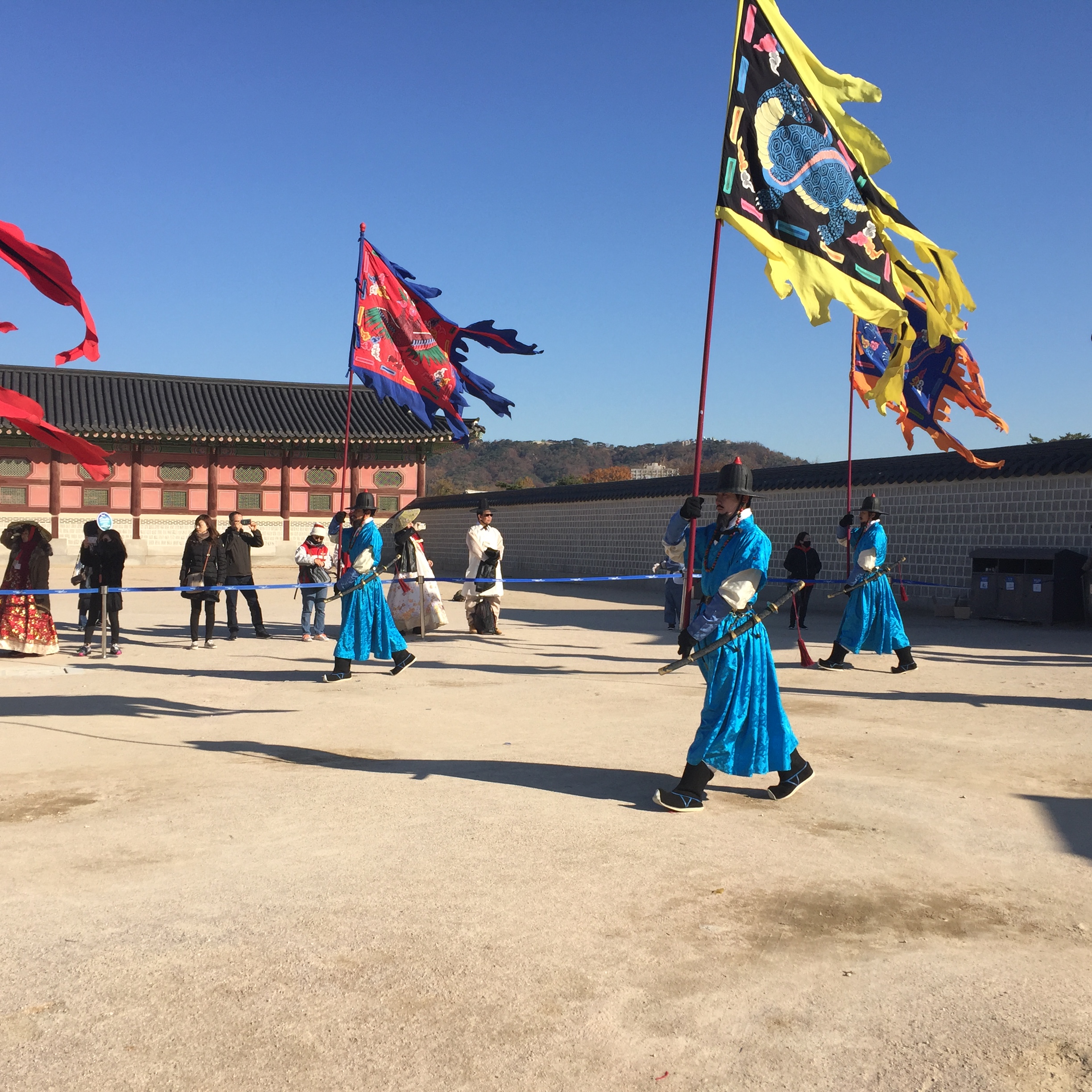
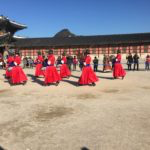
    The Korean populace apparently love the palace as much as the tourist, and everyone loves the recreation of the Changing of the Guards ceremony, usually held twice a day at Gyeongbokgung and the other palaces. As you can see from these photographs below, the uniforms are bright; the banners colorful and waving; and the music, which you cannot hear, is very loud and very brassy and  punctuated by regular loud thumps on the highly decorated drum, the thumps requiring a full-body workout by a full bodied Korean man.

    Sorry ladies, but no females involved in these exercises; this is strictly an all-boys show. “You go home now and attend to your work, the loom and the spindle, and tell the waiting-women to get on with theirs,” says Hector to his wife, Andromache, in the Iliad. “War is men’s business.”  FMR: It should not be anybody’s business.

  • Seoul, Korea Tuesday 19 November 2019

    Seoul, Korea
    Tuesday. 19 November 2019

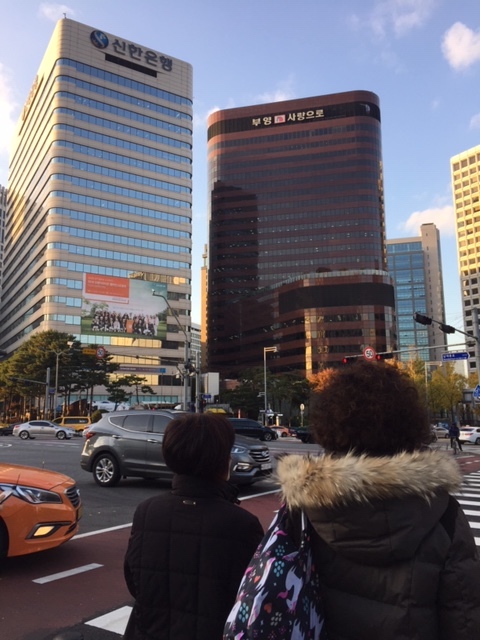
    Off to the National Museum of Contemporary History. On my way past the government skyscrapers and the mountains behind Gyeongbokgung (a word that spills easily from my tongue, quite proud of that) sharp and beautiful. But first to the Tourist Bureau to ask how to get there. And wasn’t that my lucky day. The woman at the Bureau asked about my work and, of course, I was too happy to show her. She had a degree In Japanese Studies and was well acquainted with my discipline. She found all kinds of interesting things in the photos and made many suggestions. Nobody else was in the office, and no tourists came by, so she and I talked on. It was a constructive morning for “Korea 1908.”  I did go to the Museum as well, finished up, and found  had a couple of hours in which to be a tourist myself.


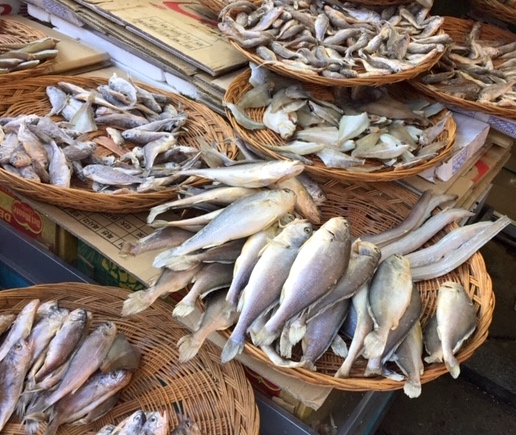
    It was clear but cold: 29 degrees when I woke up and not much higher the rest of the day. I wore all my clothes, and I do mean all. My friend Wayne says the best way to learn a city is to walk it. Seoul is the perfect city for walking. You can always navigate by peering through the skyscrapers and finding the mountains behind and to the right of  Gyeongbokgung Palace. Now I could navigate and had time to visit Namdaemun Market, which is where all the tourists and natives as well go at least for really fresh fish.


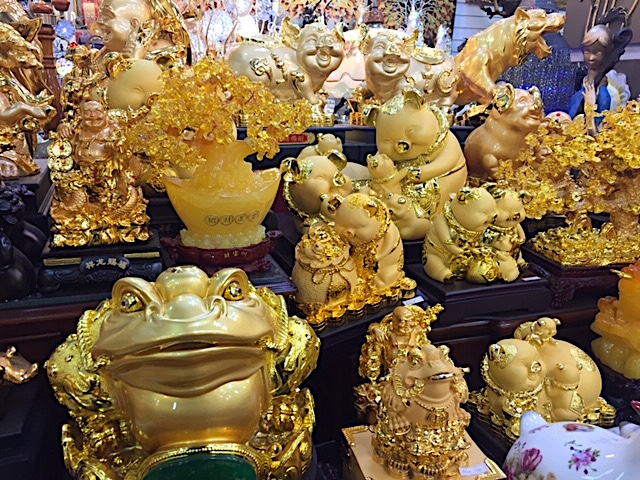
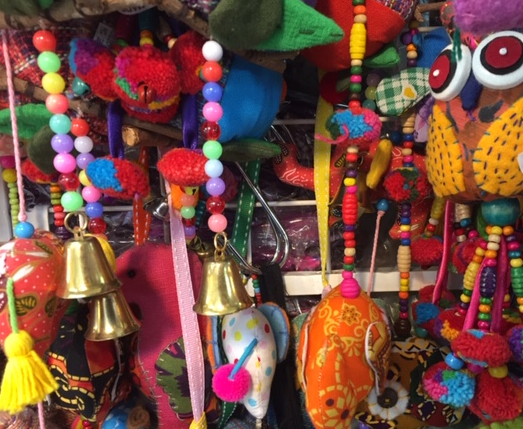
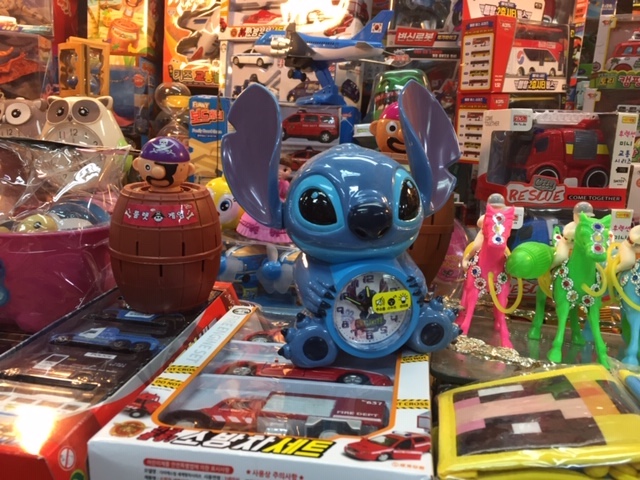
    Namdaemun Market is next to Namdaemun Gate, one of the original gates of old Seoul. In the Market were the usual array of clothes and shoes and kitchen things, but I wanted to see the food and the Korean Crafts. Ah! the food. An amazing array of fish. Plenty of persimmons, but only one kind of apple, crisp enough, but only one variety in the Namdaemun as well as any of the smaller markets. Many things which I did not know the name of: dried fish, different nuts, Chinese dates. Many deep fry stands selling deep fried fish and varieties of dumplings and doughnuts. (There is a big Dunkin’ Donuts in Seoul.)  I was there late, but it did seem as though there was not much fresh produce. Then to the Korean Folk Crafts. They were on a second floor. 


    I do not know what kind of “folk” make the crafts that I saw displayed. Most appeared to be a knock-off of Disney. Others boggled the brain. You can blow up the photos and judge for yourself.

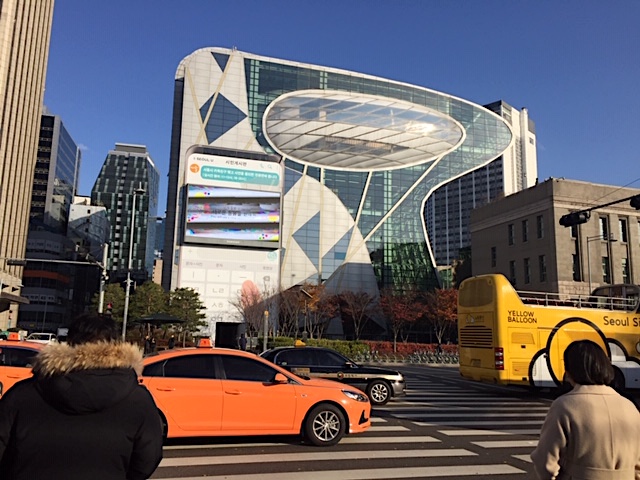
    Walked home feeling like a county rube, for I can never get over the marvel of these buildings that tower over the walker. Such a feat of engineering and so many of them and they are so tall. But to live so far away from the ground itself?