Author: Miriam Reed

  • Seoul, Korea Monday 18 November 2019

    Seoul, Korea
    Monday 18 November 2019

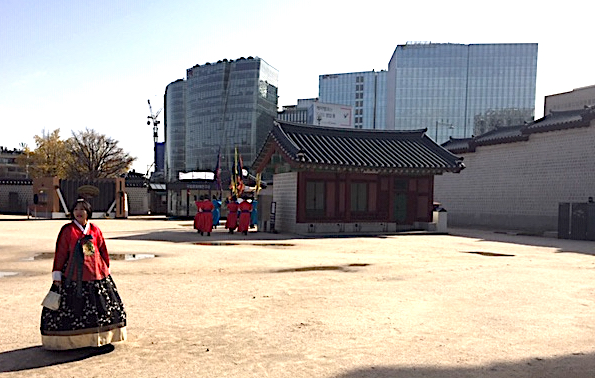
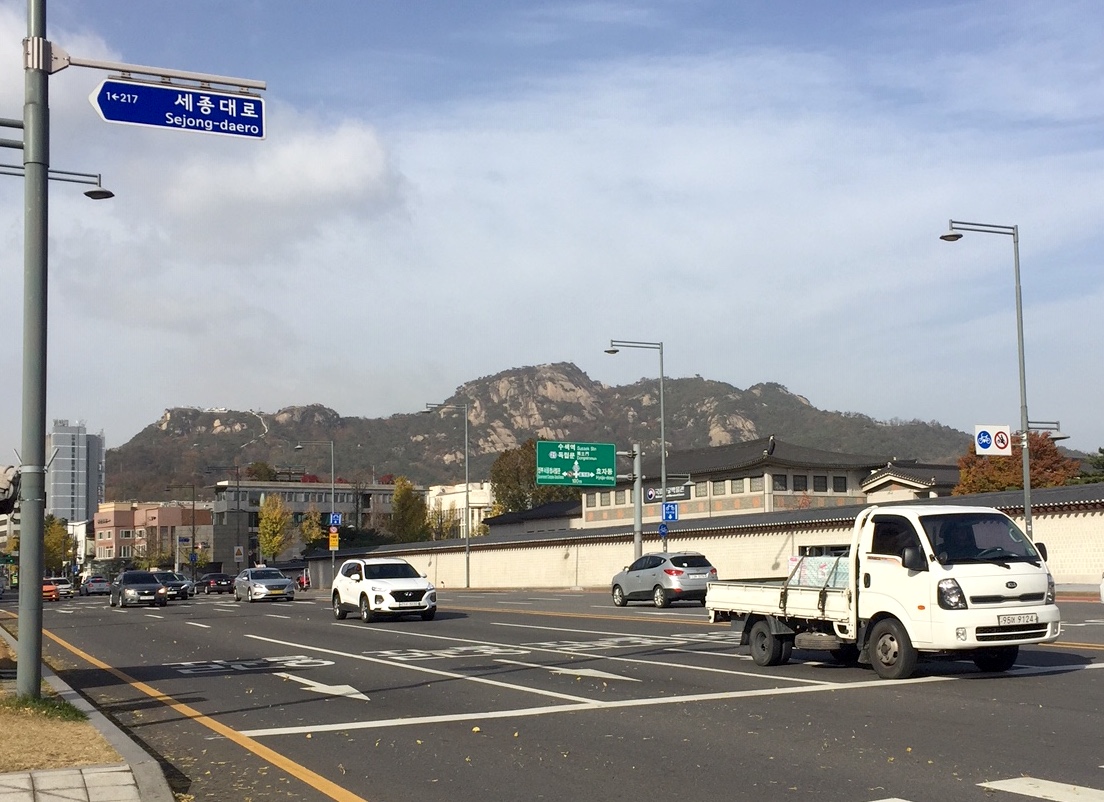
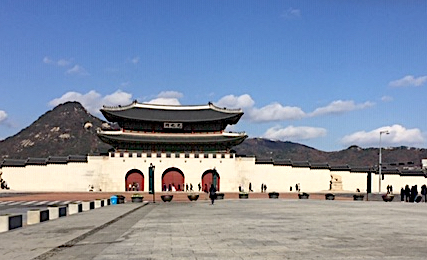
    A very cold, clear day, a day to see the mountains clearly. They stand out impressively on a day such as this and can be seen on the way to Gyeongbokgung Palace, where Koreans families and flirting couples flock dressed in hanbok, the costume of the Joseon court of the nineteenth century. Wearing this attire, families enter the palace grounds for free, to the delight of tourists and all camera-carrying persons. I was not interested in taking photos today, for I was intent on identification of a photo, and I promptly found a very bright young woman who had been trained to answer such queries as mine, which she did, and so it was a successful morning. 
            

    The afternoon was equally successful, spent with Forty-dollar chocolate professor, for he answered more questions and helped with more identifications, the results to be seen on the forthcoming “Korea 1908” once published. 

    Since I was at Severance Hospital, I checked their permanent history exhibit again. Without question, the missionaries radically changed Korean culture and society. O.R. Avison, the founder and driving force behind the development of Severance Hospital and its medical college, was a Canadian but placed in Korea (along with his wife and five children) by the North Presbyterians, so I think America can claim him for their own.
    Avison challenged the established class distinctions. He educated a butcher’s son, who eventually became a medical doctor and a teacher at Severance Medical School, then built his own hospital. Two of his sons became medical doctors and a daughter a kindergarten teacher. This was a monumental change in Korean society, for butchers were considered so low in the hierarchy that they were not even permitted to wear the topknot, which was adopted when a boy was considered a man and was therefore the sign of real manhood In Korea. In 1895, the King decreed that all men should have their hair cut, and topknots were no longer permitted. Our butcher asked Avison to cut off his topknot, for he wanted a friend to do it. He took his cut topknot to give to his mother and cried all the way home.

    .


  • Panyeon, Korea Sunday 17 November 2019

    Panyeon, Korea
    Sunday 17 November 2019

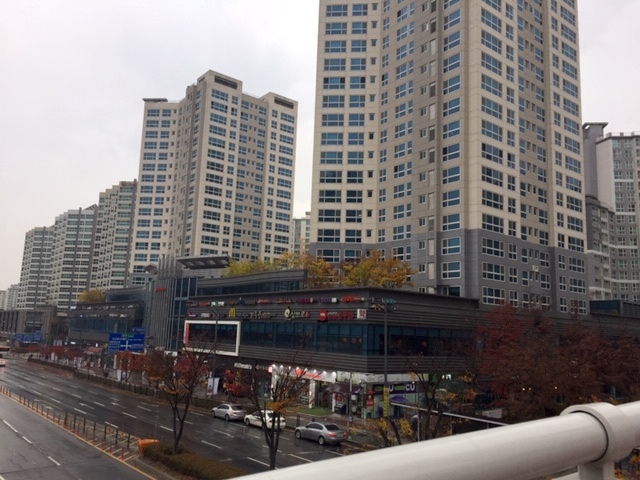
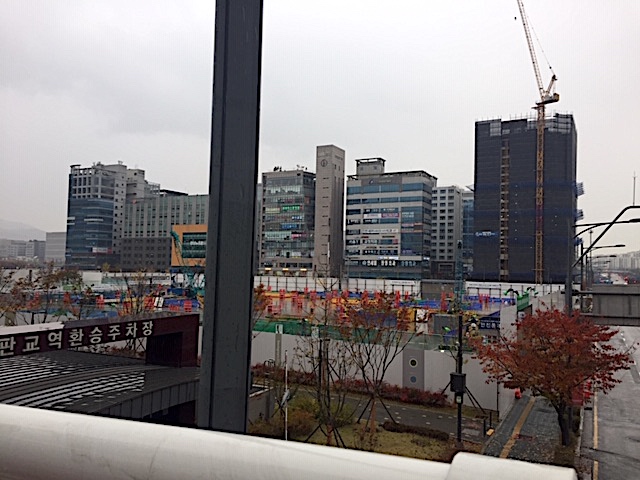
    Panyeon is a suburb of Seoul about forty minutes away on the subway, the Silicon Valley of Korea, a brand new city, a forest of high-rise condos and office buildings clustered in discrete groups, the smallest condo costing about one million dollars, the buildings themselves certainly more attractive than the similar clusters of high-rise condos I saw in China. But then what else do you do with all the people? You have to stack them up.  And up.  And up. I wish I had asked how many stories In each of these tall, tall buildings and how many units in each.  On the ground floor is a community area for exercise and ping pong and weights (I did not see a swimming pool) and a garden and park with real trees and bushes and such things as are scarcely possible forty or more stories in the air. Every speck of the infrastructure of Panyeon, including the subway, is spanking new and shiny and stainless steel and glass and spacious and organized.


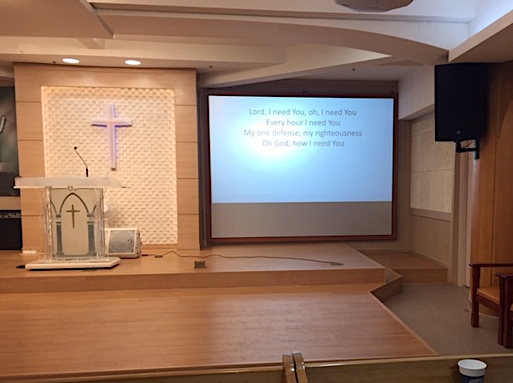
    I was in Panyeon to visit an English-speaking service of their Presbyterian Church. A small group meets in the beautiful basement room of the Presbyterian Church of Panyeon. The pastor is Iranian (unusual) but speaks good English. The music is both guitar and electric piano, and hymnals are not needed because the words of the hymns, along with the group prayers, are projected on a large video screen. 

    After the service, we had lunch at the church, then what is usually a Bible Study hour, only because I was there, I was asked about my work, which, of course, I can talk about at length, espousing all my philosophy on Margaret Sanger, which I wedged in after talking about what I love equally, the Presbyterian missionary activity of the nineteenth-century in Korea.

    Then we went to a Thanksgiving Dinner at a member’s home. Sunday was the Day of Thanksgiving in Korea. You may be sure there was no turkey and no vegetables, but lots of rice and, oh yes, one dish of onion, celery, and tomatoes dressed with lemon, olive oil and garlic salt. This diet of rice, rice, rice, seaweed, kimchi and well-cooked meat (I do not recommend Korea as a destination for Vegans) seems to work for the Koreans, for they all look healthy, the young look beautiful, and as I have a mentioned before, everyone is well dressed. Very well dressed. Everyone has new shoes. Apparently, they wear them once and then throw them away, for how else could you keep white tennis shoes always sparkling white? Jasmine says there is a second-hand clothes store in Seoul, but my gut feeling is that somewhere just outside of Seoul is a mountain of jackets, dresses, skinny leg pants, and shoes all worn only once. 

    Since we were in Panyeon, everyone there, except the pastor and his wife, was a techie and developing AI and so smart and doing such amazing things that I was glad I could not speak Korean, for I would have understood nothing under the best of circumstances. Watch out for Korea. They are very very smart.

    The pastor, who is part Kurd, mentioned something quite curious. According to him, the US is building the LARGEST US Embassy in the world in Kurdistan. Really?  


  • Seoul, Korea Saturday 16 November 2019

    Seoul, Korea
    Saturday 16 November 2019

    Three hours on the phone with Verizon and Apple takes up too much of the day. Wireless networks on two devices can be challenging to maintain.

    But finally, an interesting day in Seoul. Sunny as the day wore on and pleasantly brisk.  I am here near City Hall and the government buildings, so clearly this is the area for demonstrations. And my, do the Koreans know how to demonstrate.

    A very vocal group of Koreans do not like the current president. Most of the day has been filled with non-stop raucous racket, rants and anger spewed in lieu of coherent speech, marching bands that make more nose than music, chants and non-stop shouts that can be heard blocks away. An equal number of non-demonstrating Koreans are enjoying their day, drinking coffee (two or three coffee shops on every block), grazing on Western junk food, laughing and totally indifferent to the disturbing pervasive energy of the demonstrators. I have heard other demonstrations in Seoul where the speaker was rousing the followers with a Hitler-like formula, but what goes on all day here is quite different; a united crowd are not enthusiastically following a leader. Instead, everyone is apparently a leader and everyone has something to say and they asserted until well past dark.

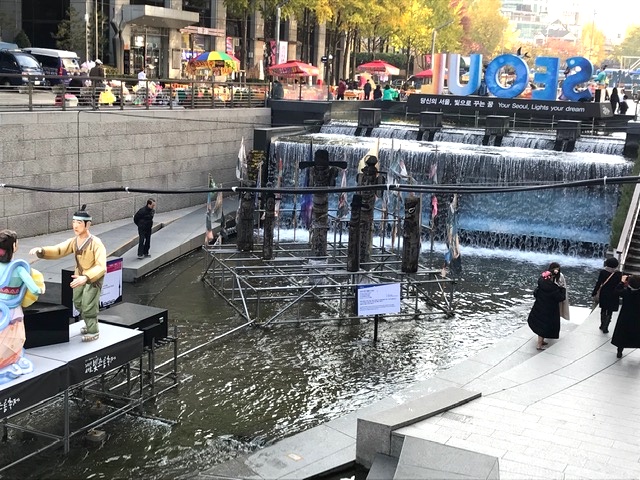
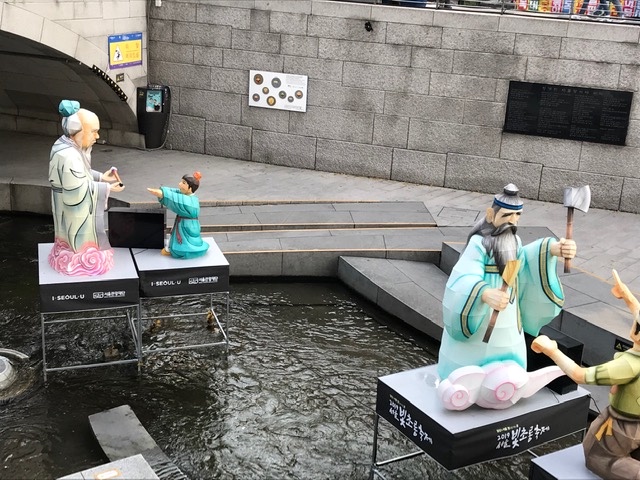
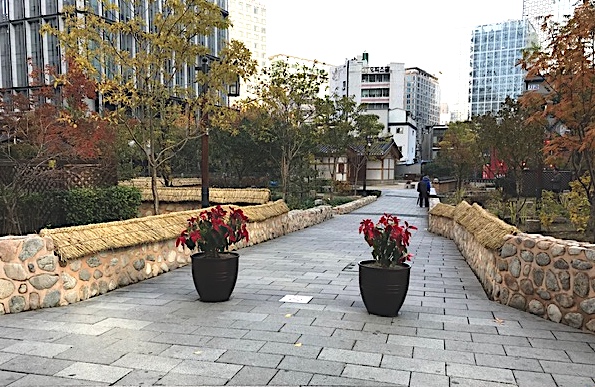
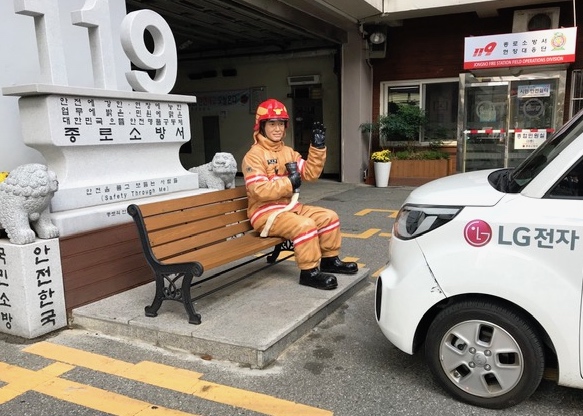
    Now that Sue is uploading the photos, you can see what the non-demonstrators are enjoying in Seoul: this curious water park, a gem of a garden, trees still with autumn colors, a bench to share with a ready-to-go firefighter.


  • Seoul, Korea Friday 15 November 2019

    Seoul, Korea
    Friday 15 November 2019

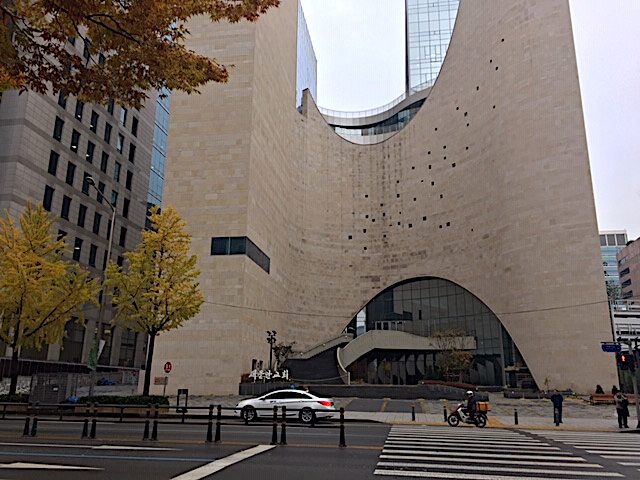
    For whatever reason, I found myself walking across the street from the Seamoonan Church, where a much better view was to be had. The photo gives an idea of this splendid architecture, but just as no printed photograph can capture the power of Van Gogh’s “Sunflowers,” no photograph can convey the beauty of this building. 

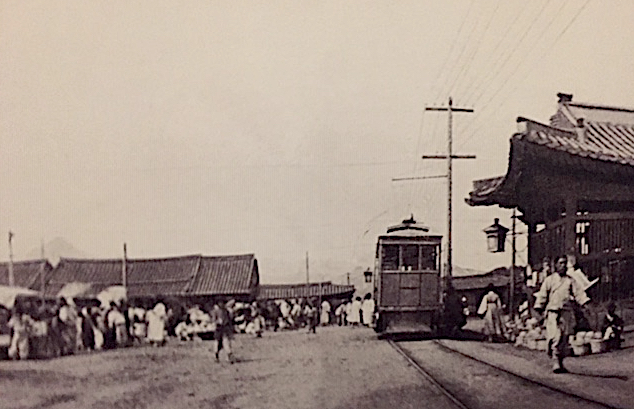
    The time was spent at the Seoul Museum of History studying their impressive permanent photograph and video exhibit of the history of the city. The photos and history of the years between 1882 and 1905-1910 are of especial interest to my research and are fun and charming: photos of receptions at the foreign legations, elegantly dressed ladies in nineteenth-century finery and bearded gentlemen with tie and vest; Western diplomats and various officials, bearded and unsmiling; the interior of American homes and foreign legations with turn-of-the century palms and period furnishings—and scarcely a Korean in sight. But also photos of newly installed streetcars and Western-style buildings alongside single-story Korean shops in wide, dirt roads. And finally Koreans wearing round black eyeglasses, which were the rage at the time.

    With the first arrival of the foreigners, particularly the Americans, who brought in the telegraph and the streetcar, electricity and newspapers, and the missionaries who were building schools and medical facilities, the time is good. But after 1905 and the signing with the Japanese of the Protectorate, it all becomes ugly. And uglier. After 1910, the Korean culture is steadily dismantled and the Korean people are peons in their own land, while the Japanese live the life of the conquering elite. Christians and nationalists, (the two regularly join forces) are targets for torture, imprisonment, and the most painful execution.

    So I happily resume study of nineteenth-century Korea, which is what “Korea 1908” is about anyway.

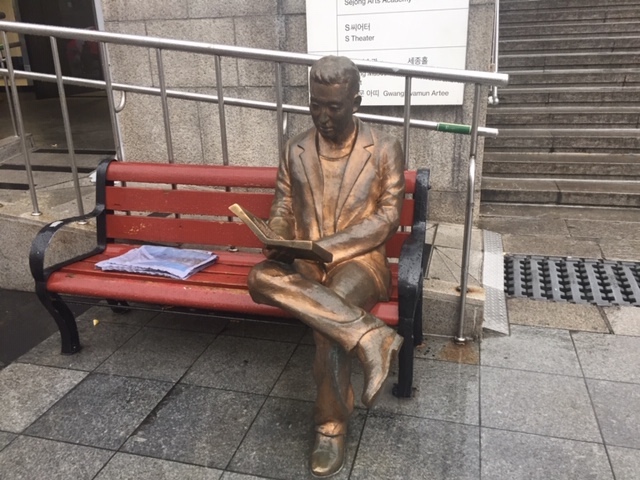
    Raining again. It does not disturb this Korean, who continues his reading. Note that I use the pronoun “he” because it is a man who is reading. Sorry, ladies.


  • Seoul, Korea Thursday 14 November 2019

    Seoul, Korea 
    Thursday, 14 November 2019

    The best things in life ARE free. The best things in life are the unexpected happy surprises.

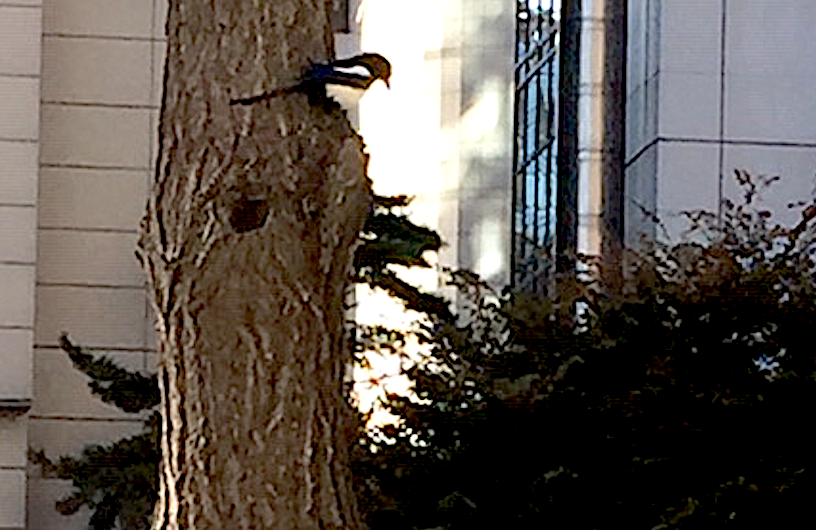
    The first surprise of today was a strange clattering sound that I heard while walking down a quiet street (another surprise—most streets are not quiet) in Seoul. At first, I thought it was some kind of strange machine. I stopped and listened and then wondered if it was possibly a bird, and then I saw a beautiful black and white bird, a bird between a crow and a blue jay (if blue jays were black and white instead of blue and white) in size and bawdy vocalization. I took a photo, but bird was not particularly cooperative and kept flying behind a tree.  From the racket, I thought it was a flock, but the flock seemed limited to maybe four members, all engrossed in some flight and chatter one-upmanship that marks any sort of a community and so noisy.

    Tonight I learn from my Korean friend Lia that these are magpies and to hear them brings good luck!        

    The second surprise came walking on a less quiet street in Jung-no on my way to the Seoul Museum of History. Suddenly appeared before my eyes the most marvelous sweep of brown sculpture that swooped from side to side in a great concave wave, even while soaring with either end point upward and skyward. Words cannot do it justice, nor even were I able to upload the photo would its splendor be apparent. It has to be seen. The building was completed in March, designed by Choi Dong-kyo and Lee Eun-seok of Seoinn Design Group, and received the Architecture Master Prize of 2019.       

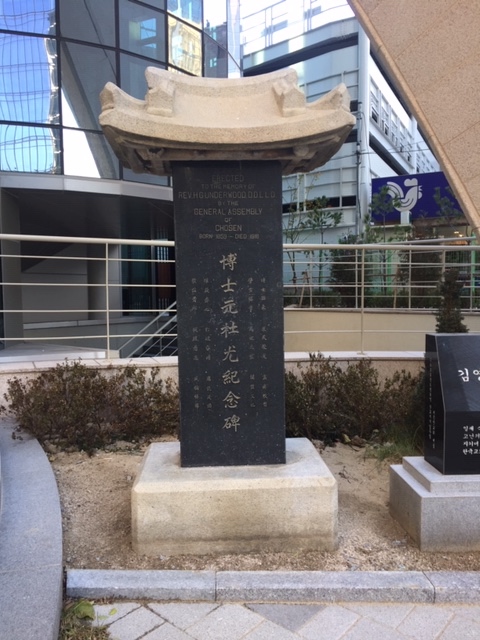
    Underwood Memorial

    Surprises continued. Saemoonan Presbyterian  Church of Korea, was founded in 1887 by Horace Underwood, the Presbyterian missionary who arrived in Korea in 1885 and not incidentally one of the missionaries of my research. Underwood was one of the first missionaries to arrive in Korea, organized its first Christian church (Saemoonan Church), established its first orphanage, compiled an English-Korean dictionary, a leader in church organization until his death in 1916. Saemoonan Church joined religion with patriotism, and Rev. Cha Jaaemyeong was removed from his office by the Japanese because he refused to bow in worship of the Emperor. Daemoonsan Church is the Mother Church of Presbyterianism in Korea; the image of mother inspired the architects in their design of the church building.