Category: Travel

  • Saturday 3 November 2018

    Saturday, 3 November 2018

    My friend Wayne says that the best way to know a city is to walk it. That works for me, but this morning I thought perhaps I might have to take a bus at one point and I should put Google maps on my new iPad. It seemed a good idea and simple enough, but somehow the iPad wanted to install Google maps on Numbers, which I don’t think was right. There were advantages to MS DOS: Fewer choices and you could type exactly what you wanted.

    Unaccompanied by Google maps, I set out on foot in another bright autumn day, though somewhat less bright and a bit hazy. Some perhaps more wiser Koreans were walking around with masks ala Ashland this past summer. But just a few. The rest of us – and so very many of us in the streets of the Palaces District of Juneau-gu were without masks. On a Saturday afternoon, the sidewalks were packed, and God forbid you dwaddled when the throng was charging or desired to charge when the crowd was slowing down.
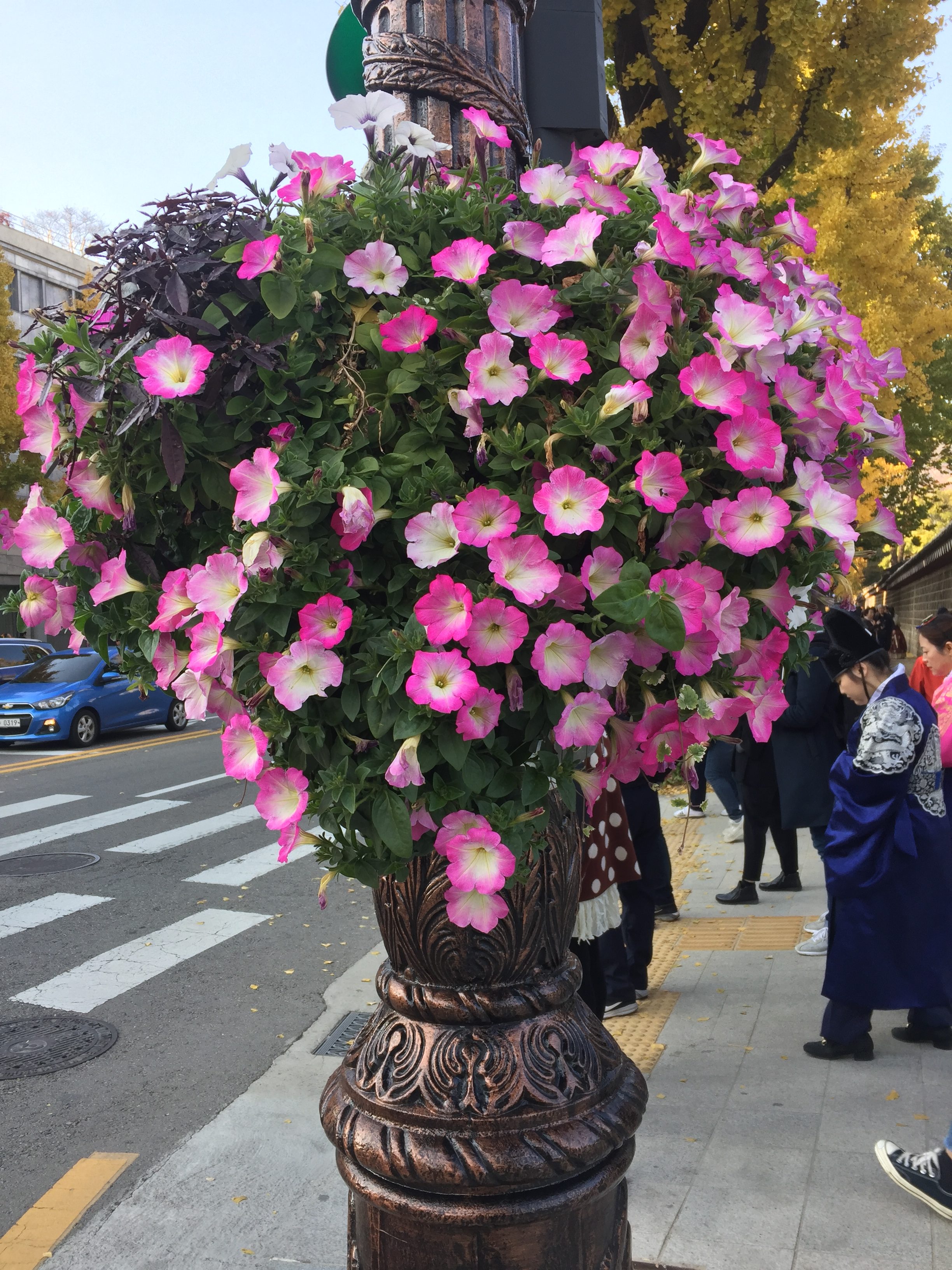
                    

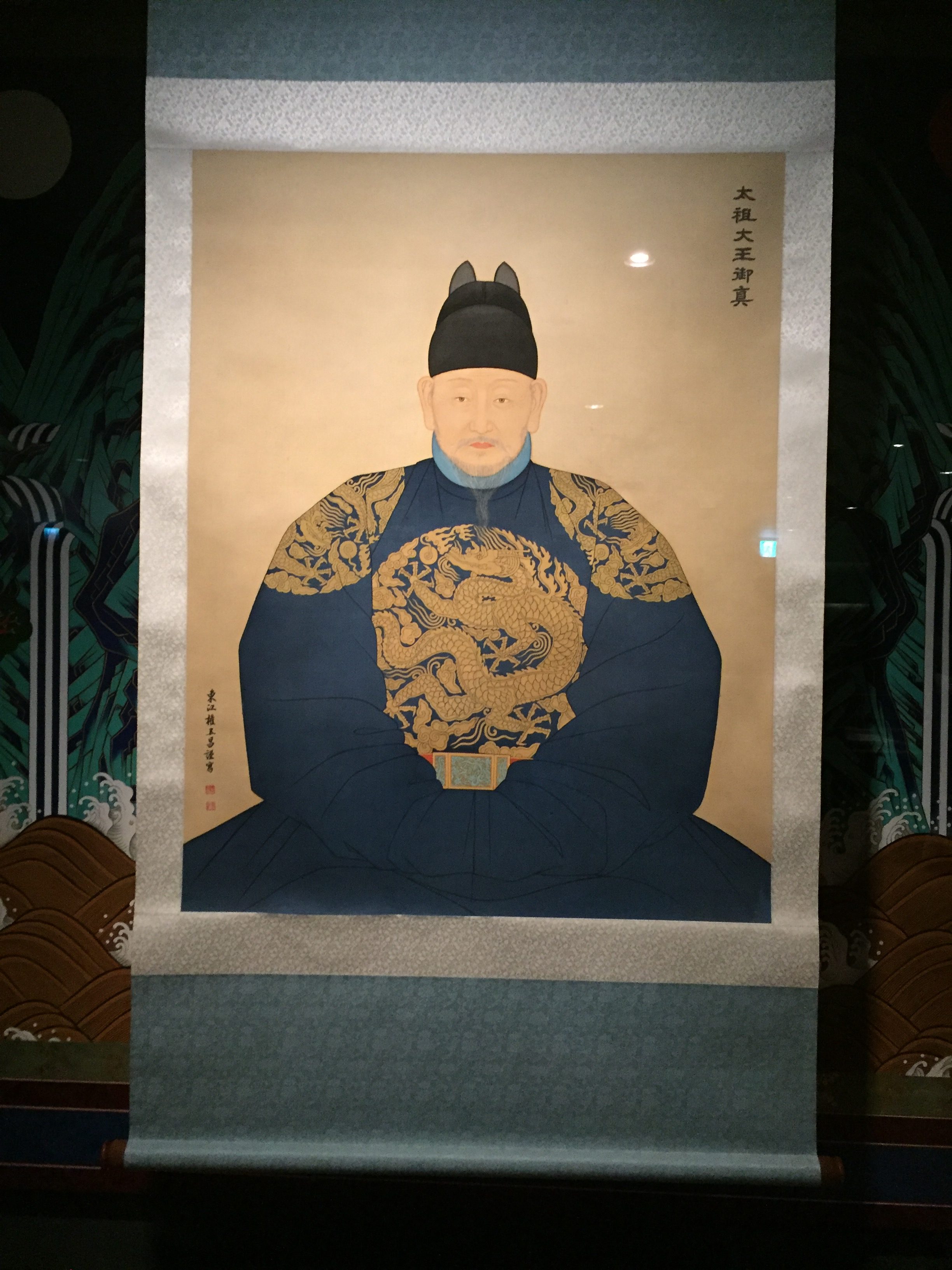
    Bad air or not, the petunias are still happy in this fall weather, and my wanderings – such as they were in accord with the movement of the mass – brought me to the National Palaces Museum, a pleasantly designed new building with walls and form in line with Joseon traditional architecture. Once inside the museum, the exhibit rooms were spacious and well lit, and here were many viewers but not suffocating crowds.The exhibit featured portraits of the kings of the Joseon Dynasty, which held sway in Korea from 1392 to 1910, with a very slight hiccup along the way.
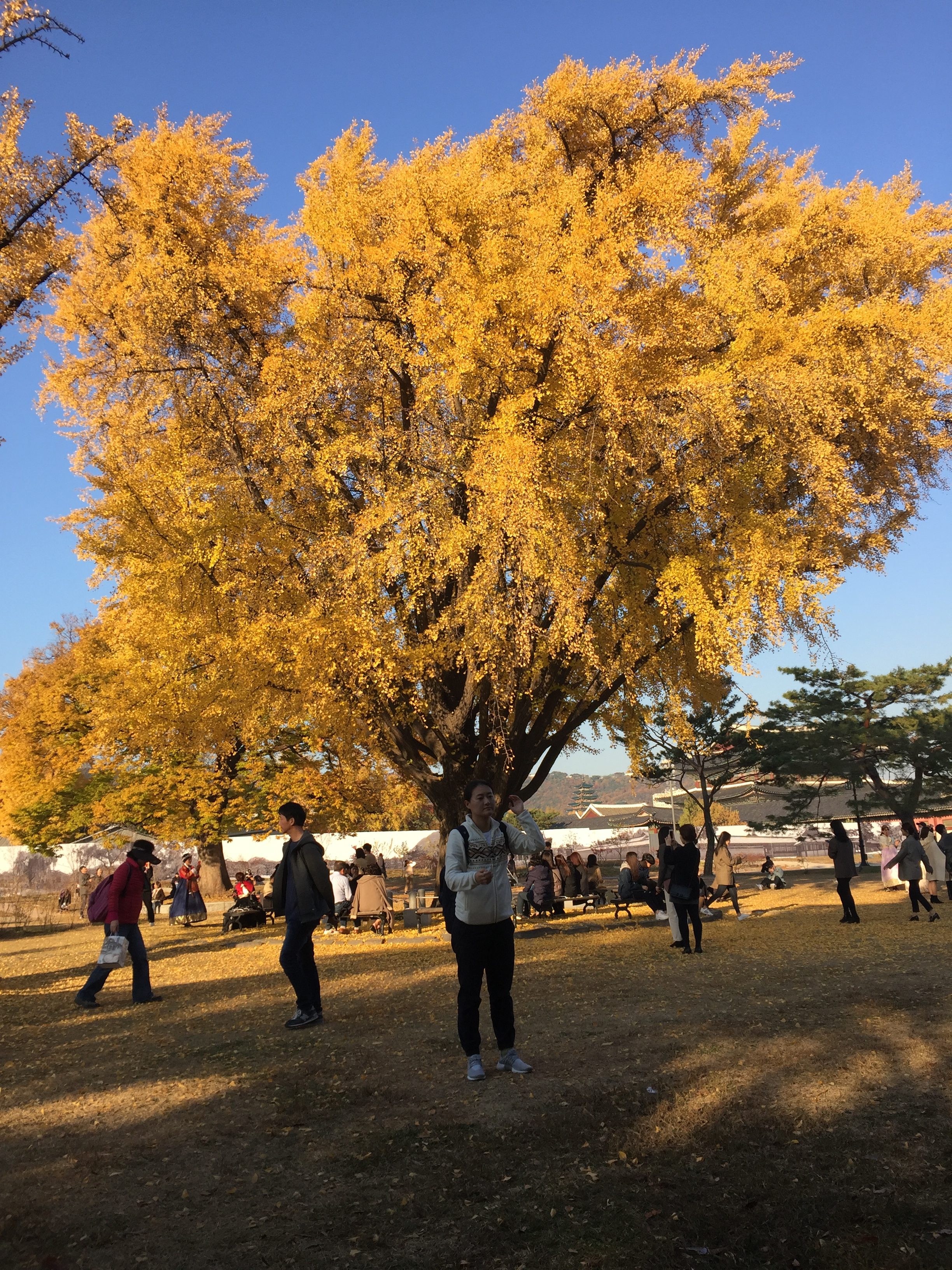
                  
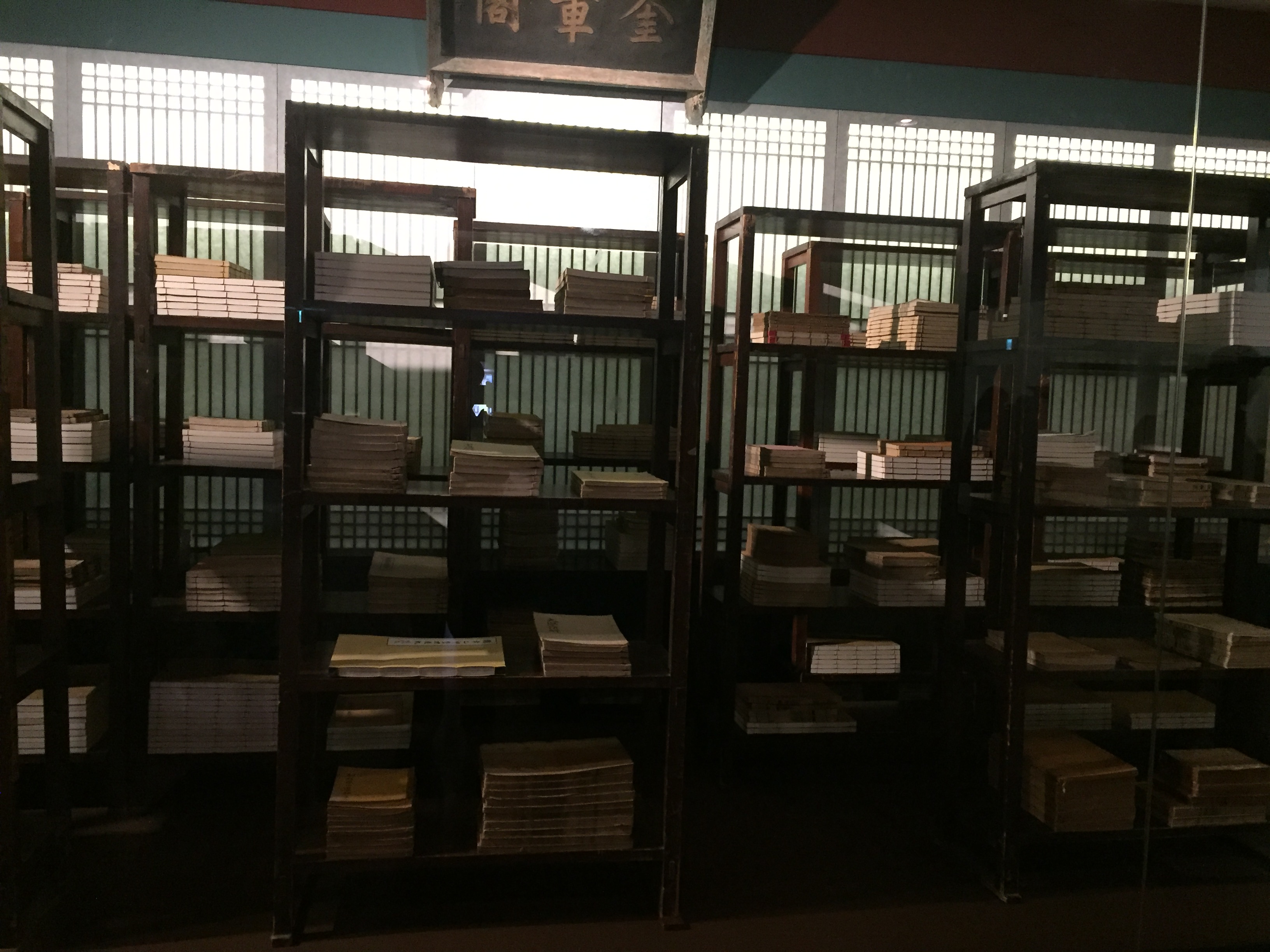
    The long dynastic reign was meticulously documented over the centuries in records entitled EXEMPLARY ACCOUNTS OF THE MONARCH. (And there were the records. On display behind the glass,) I wonder how exemplary were the acts of the monarchs, but since the writers of the accounts were subject to regular scrutiny from their subject, it is possible that the accounts could have been just slightly slanted.
                  
    But never mind. The Joseon managed to stay in power for some five hundred years – an impressive record. The king – and the queen – although she had almost equal power and responsibilities in her management of the internal and housekeeping affairs of the palace and its female contingent – I have not found any mention of exemplary accounts of the Monarchess. Nevertheless, the king (and by extension the queen) was supposed to embody the wisdom of the Universal Creator, of which he was considered a direct descendant, to be thereby infinitely wise and upright, and he was expected to be frugal.  Ostentatious the Korean royals were not. And in this way possibly they were frugal.

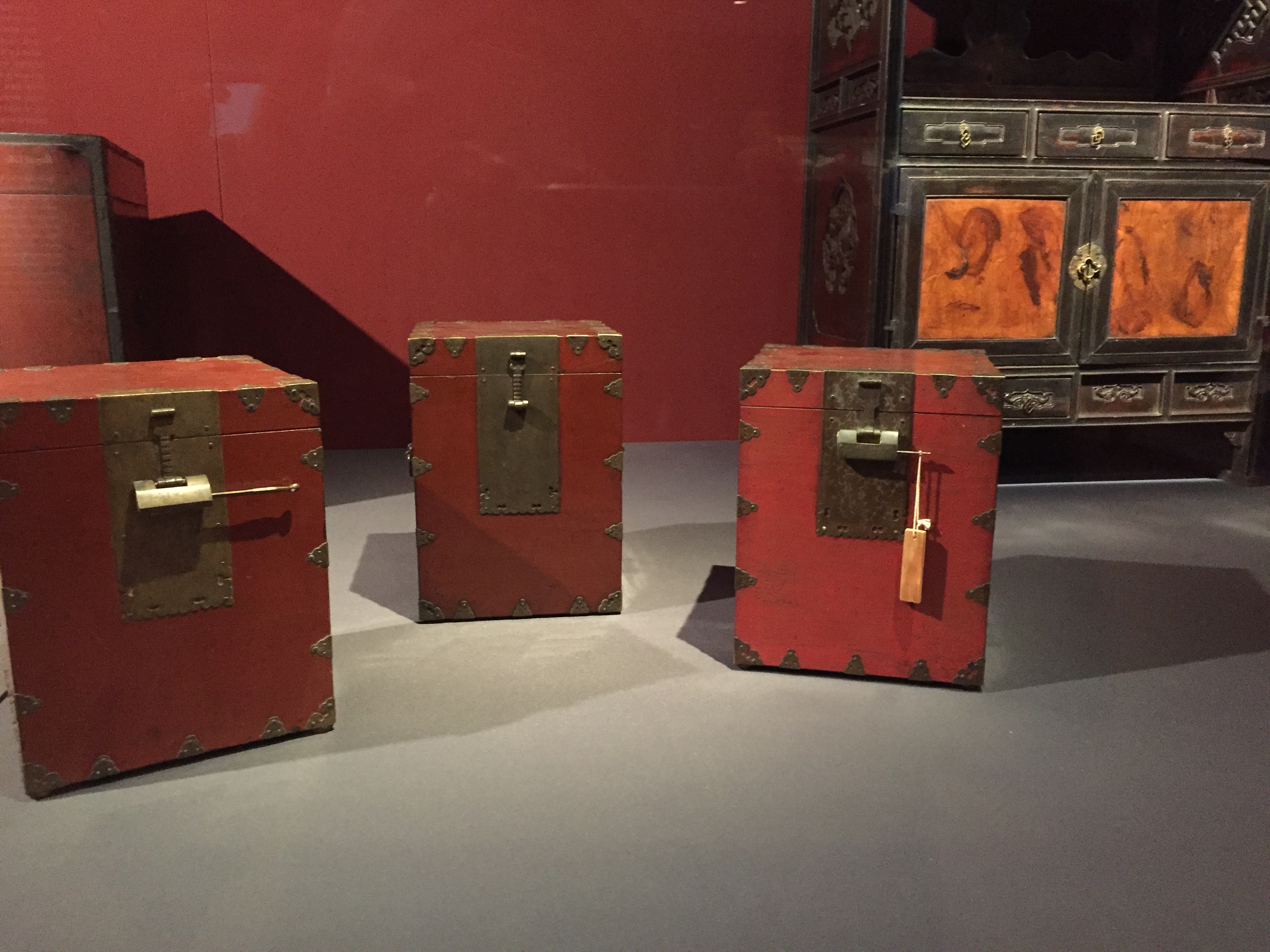
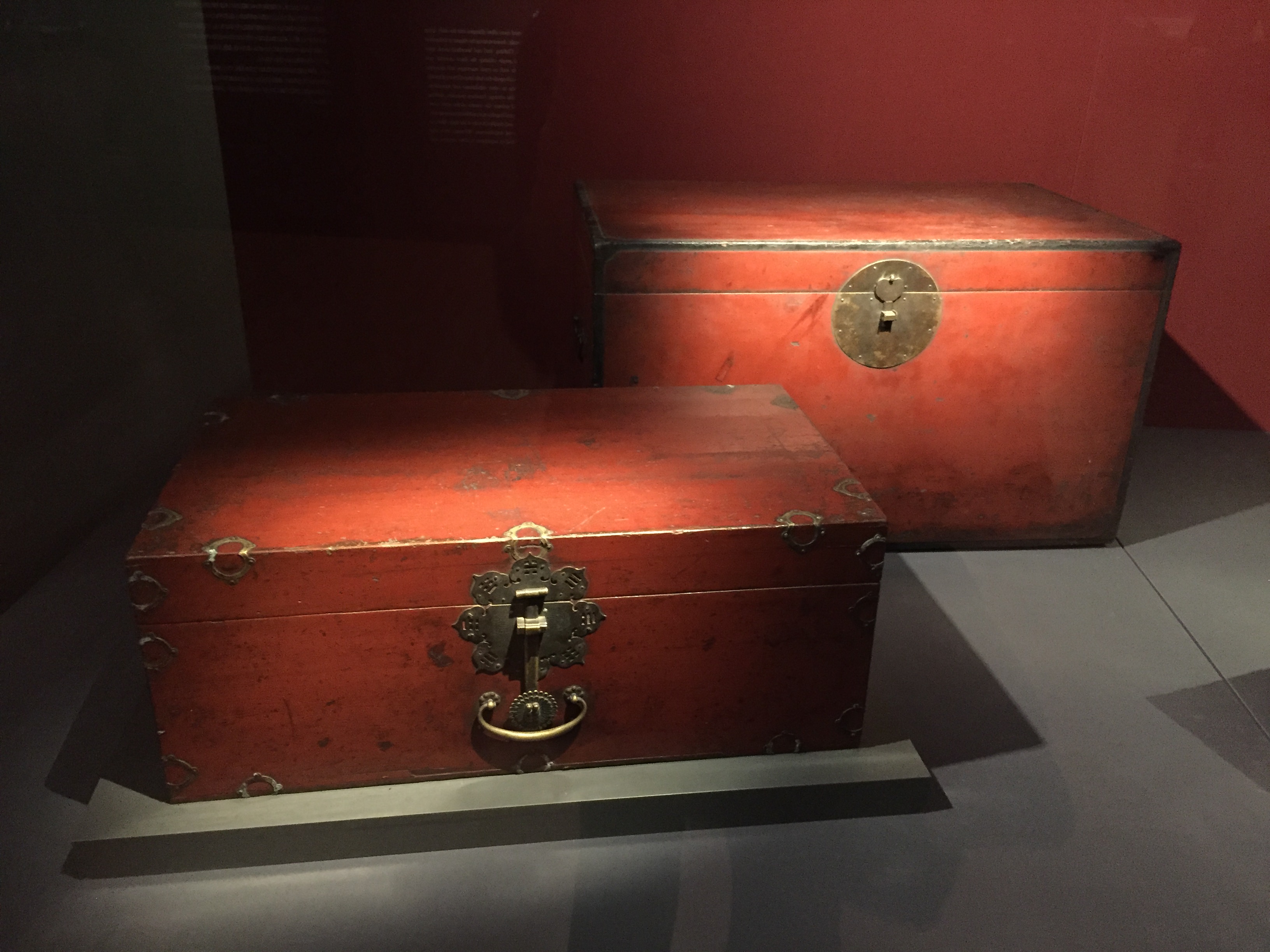
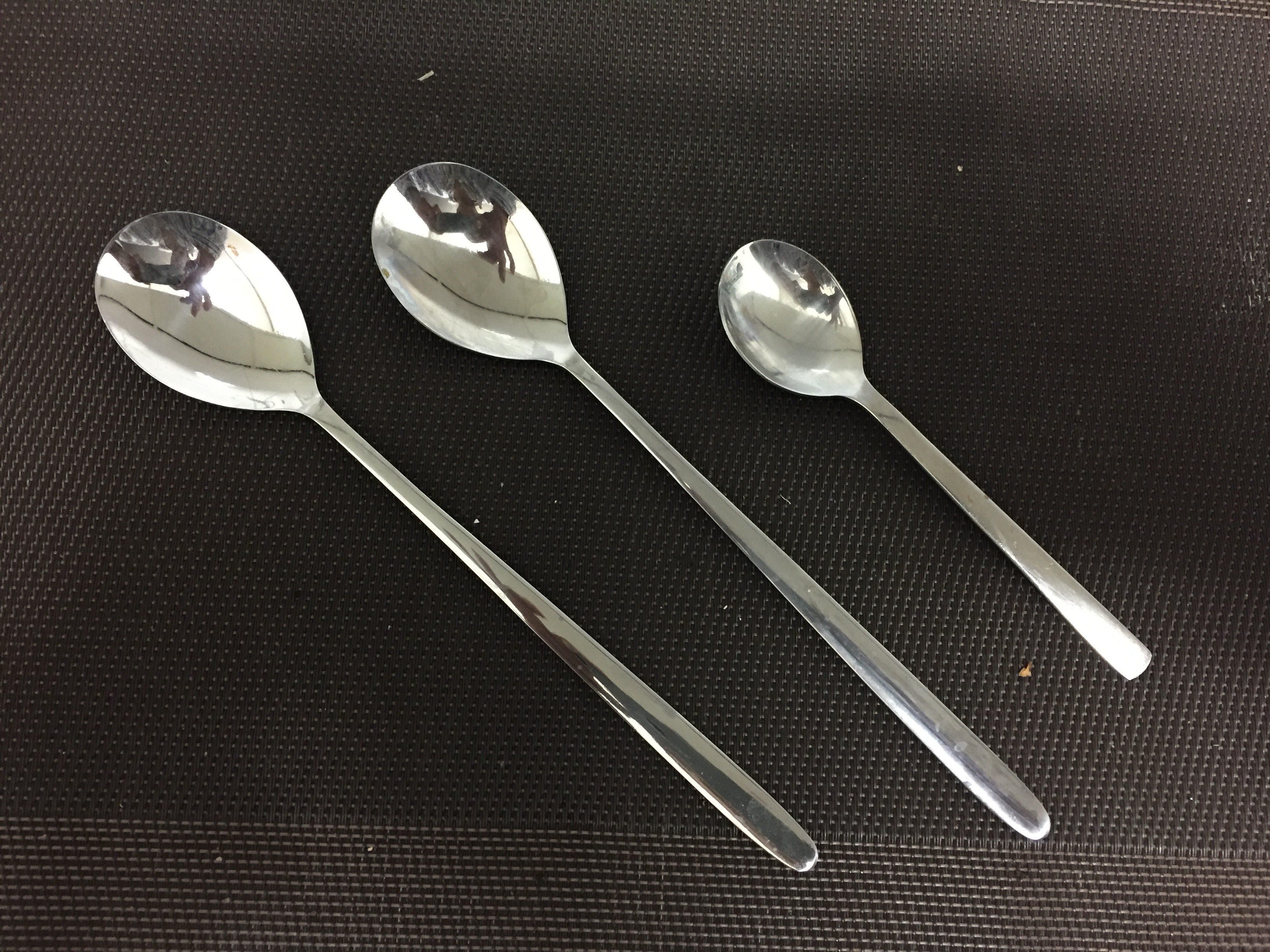
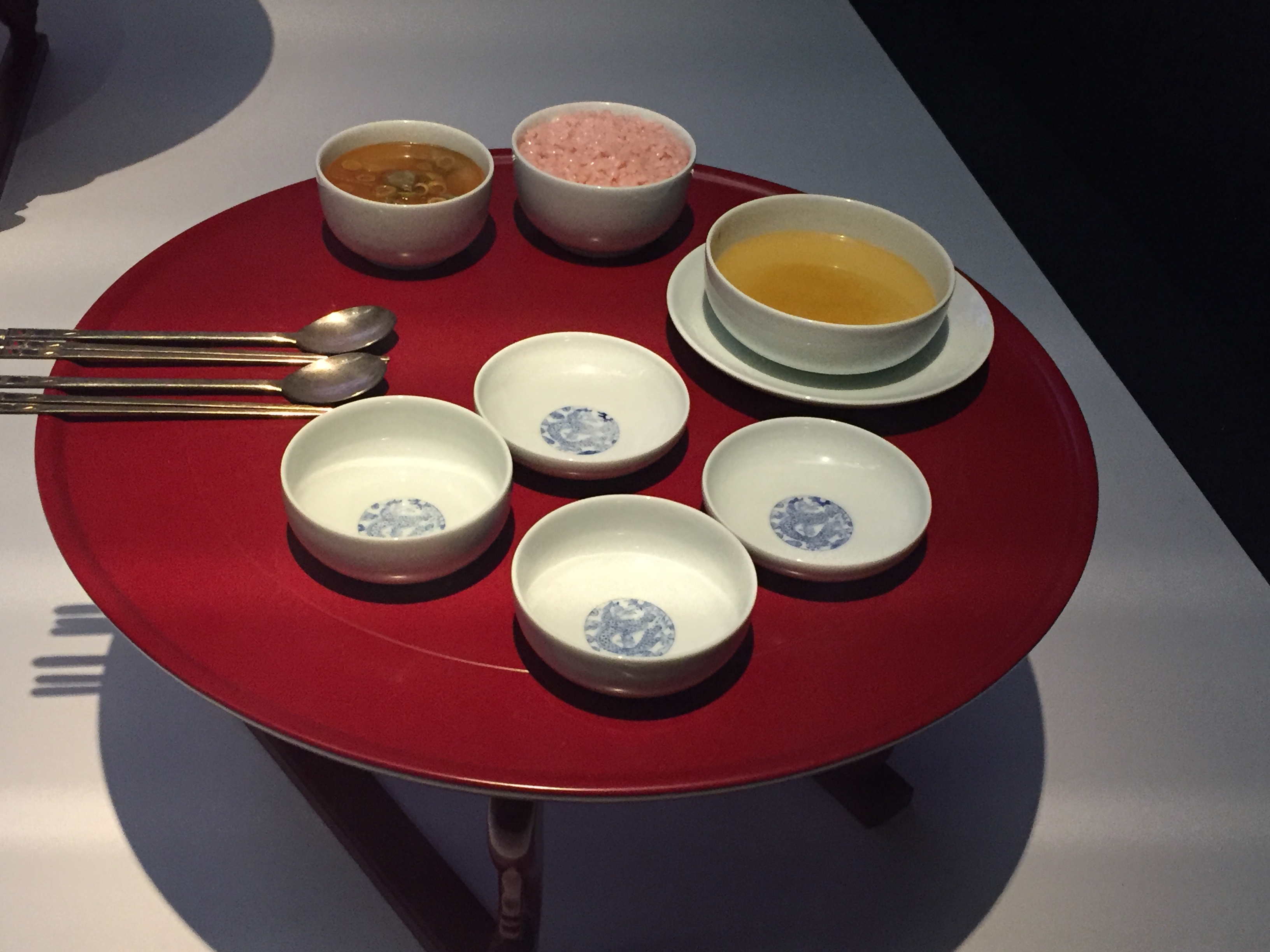
    Consider this simple wooden bench, the throne on which sat his Highness, a “bench” of the finest wood crafted by the best craftsmen. Occupants of the royal household enjoyed clothes and linens and housewares made of the finest and most expensive materials fashioned and created by the most highly skilled artisans. Much of such is beautifully exhibited in the Museum of the Palaces. The wooden chests, dishes, and silverware are distinctly Korean. The royal silverware is elegantly simple and this style of silverware is in use today and was included in my flight on Asiana when dinner was served.The array and type of small bowls used by the royal family are also part today’s typical Korean meal.
          

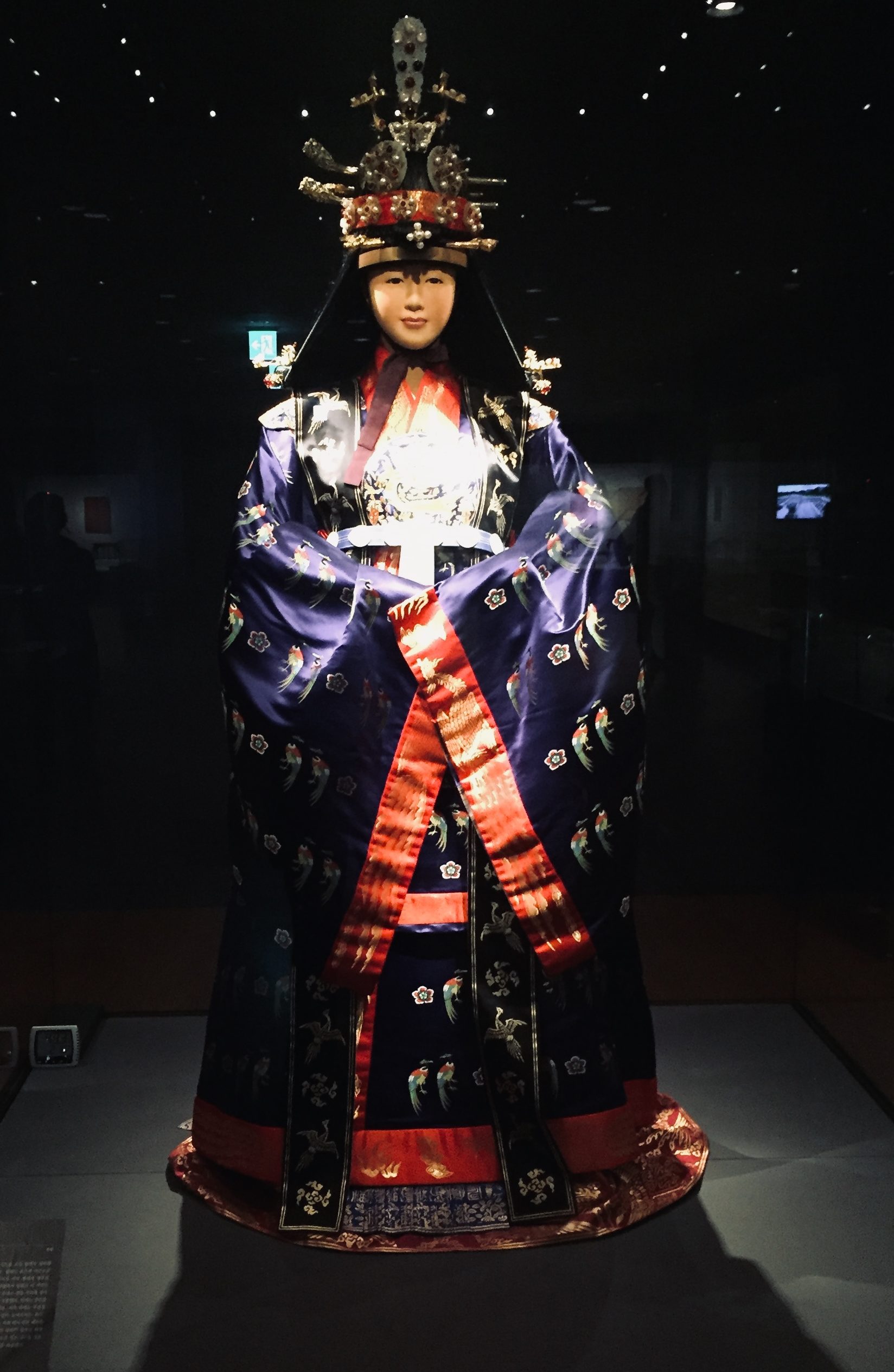
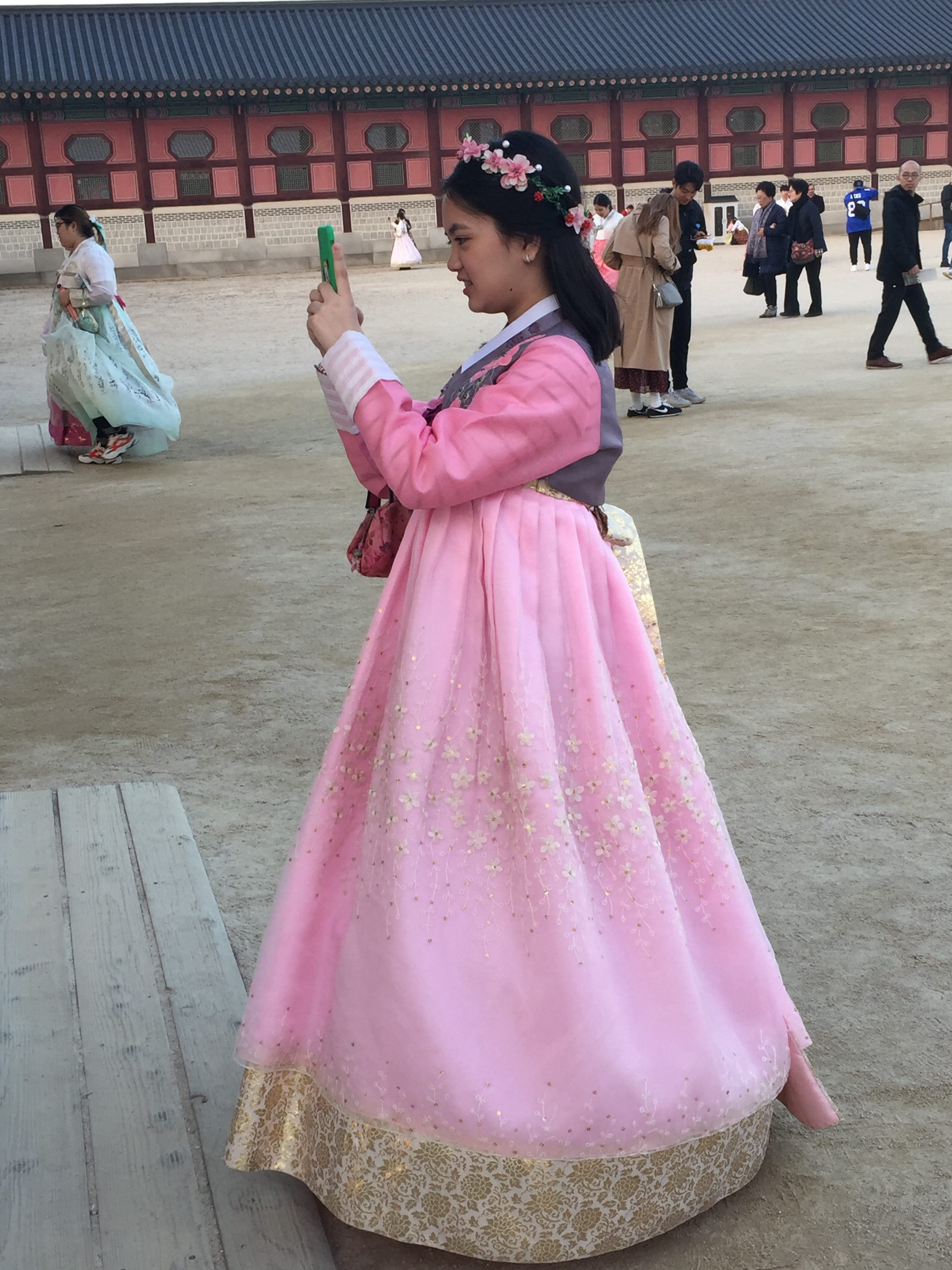
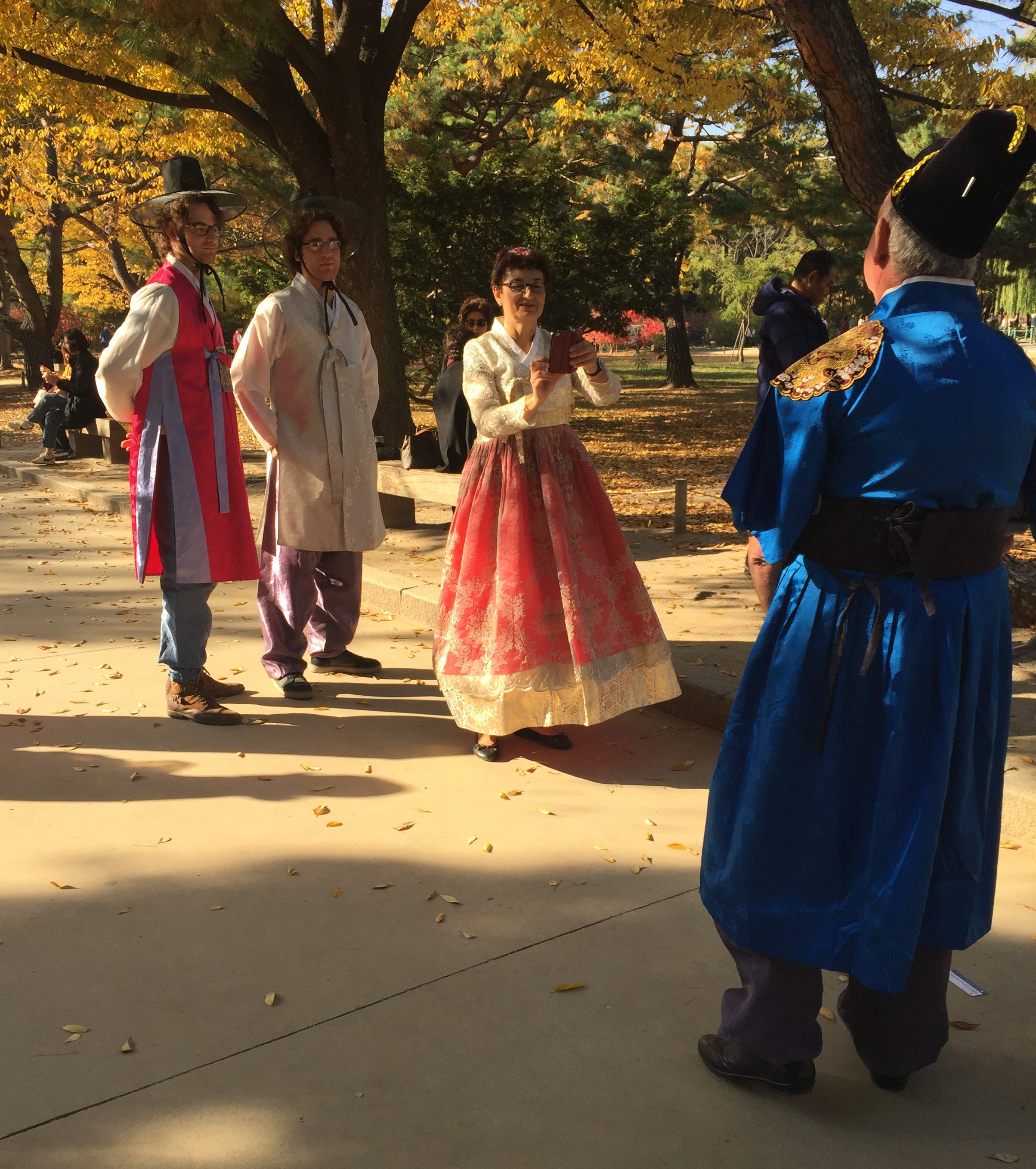
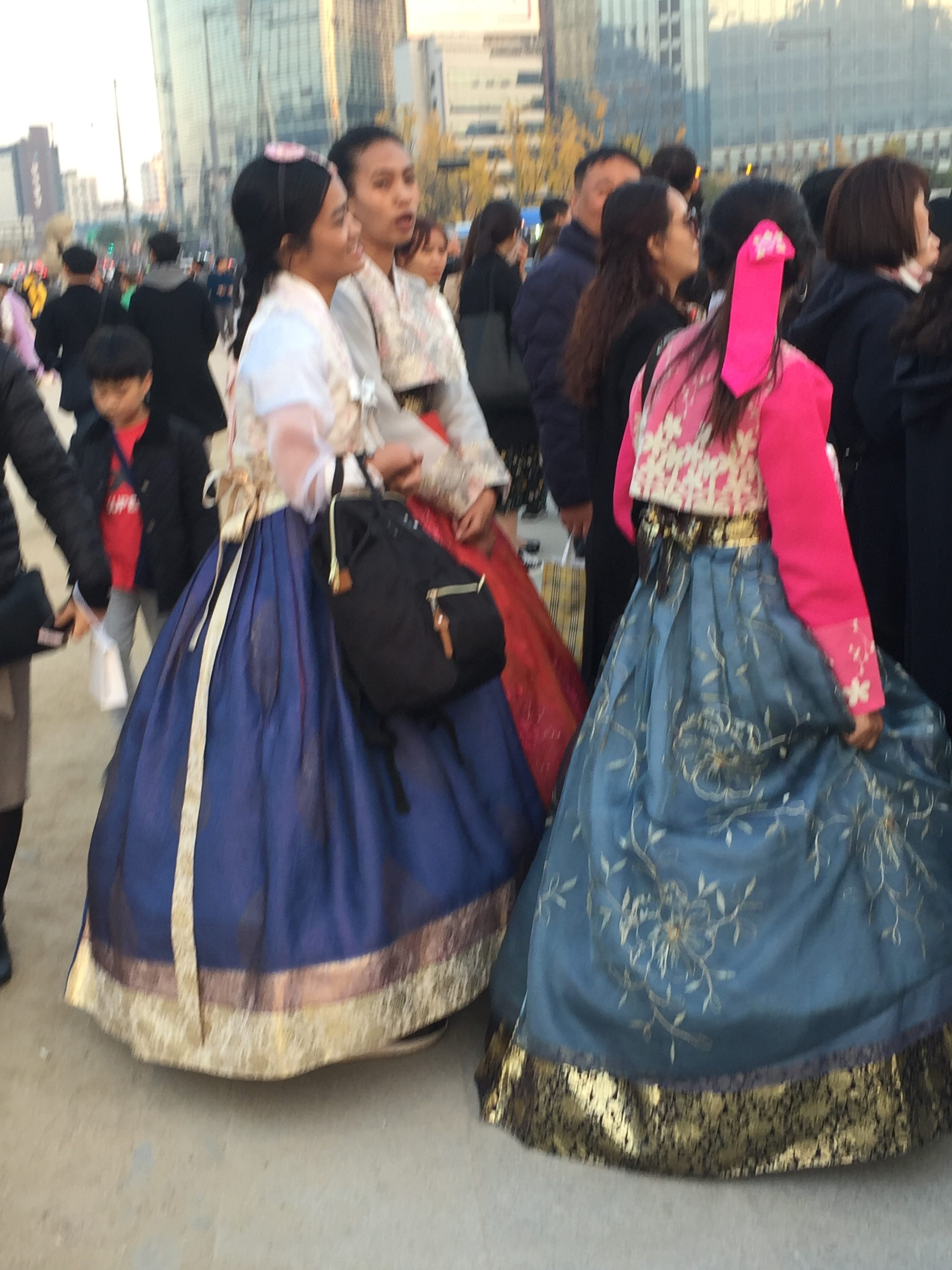
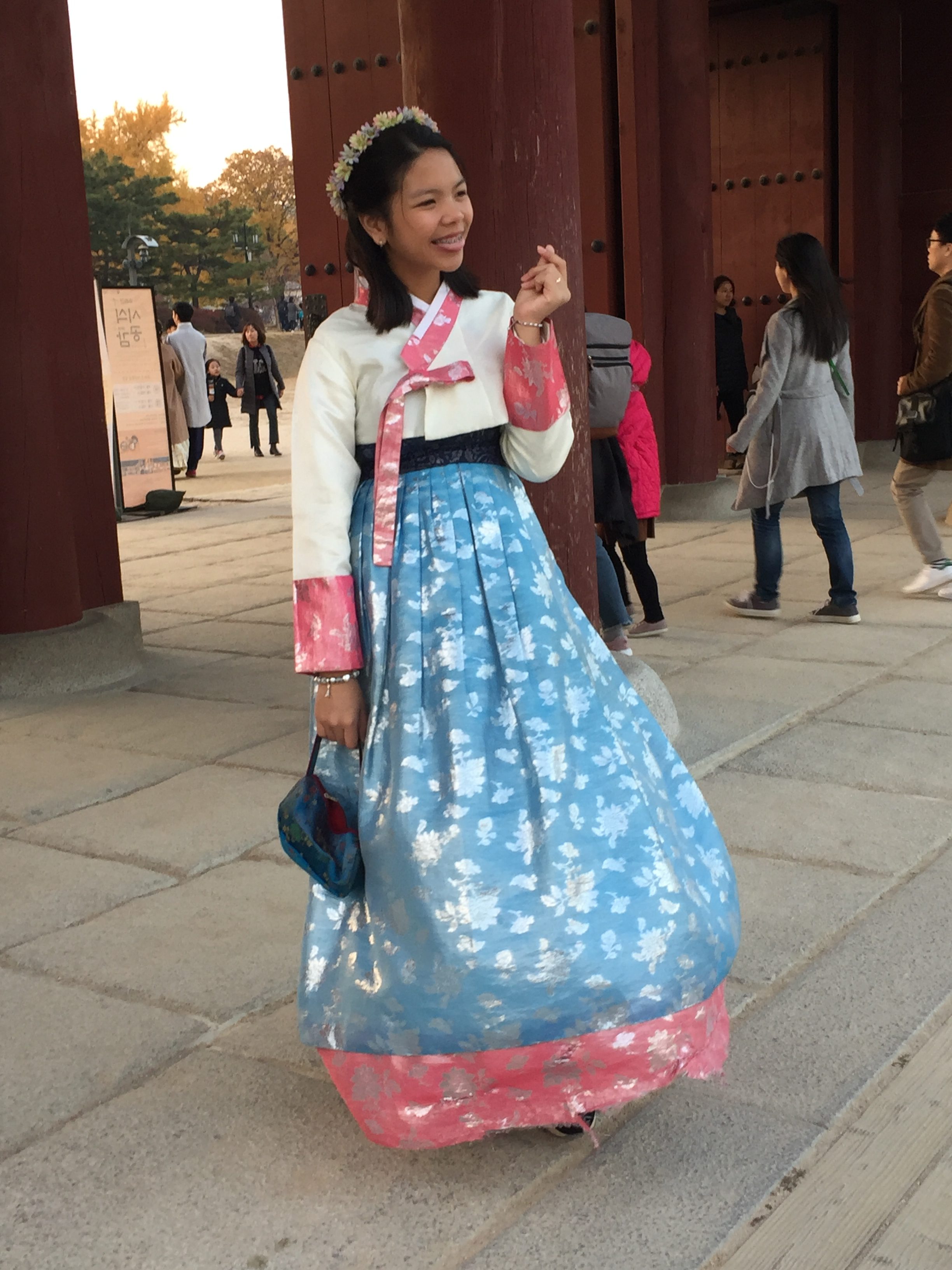
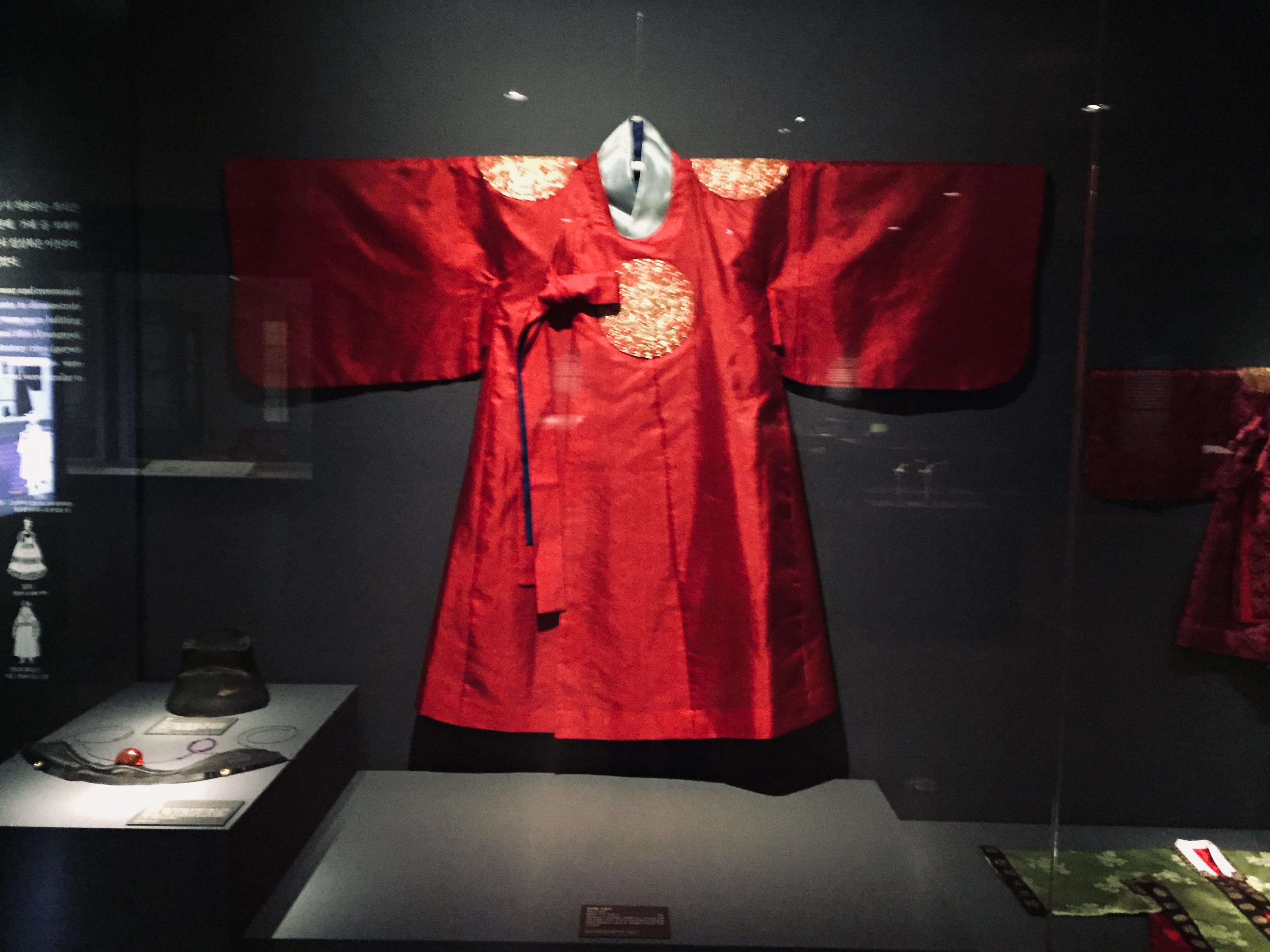
    The clothes were colorful and full – fine silks, carefully placed embroideries, in bright and rich colors. And these. Clothes, or rather simulations of these clothes but not of fine silk, are worn by many Korean nationals, particularly the young men and women, when they visit the palaces and historic Korean sites. Their dress allows them free entry, and it is delightful to see so many colorfully dressed people in the natural setting of the period to which the costumes belong. But these decorated costumes of today do not speak of Korean royal frugality.
           

  • Friday 2 November 2018

    Friday. 2 November 2018

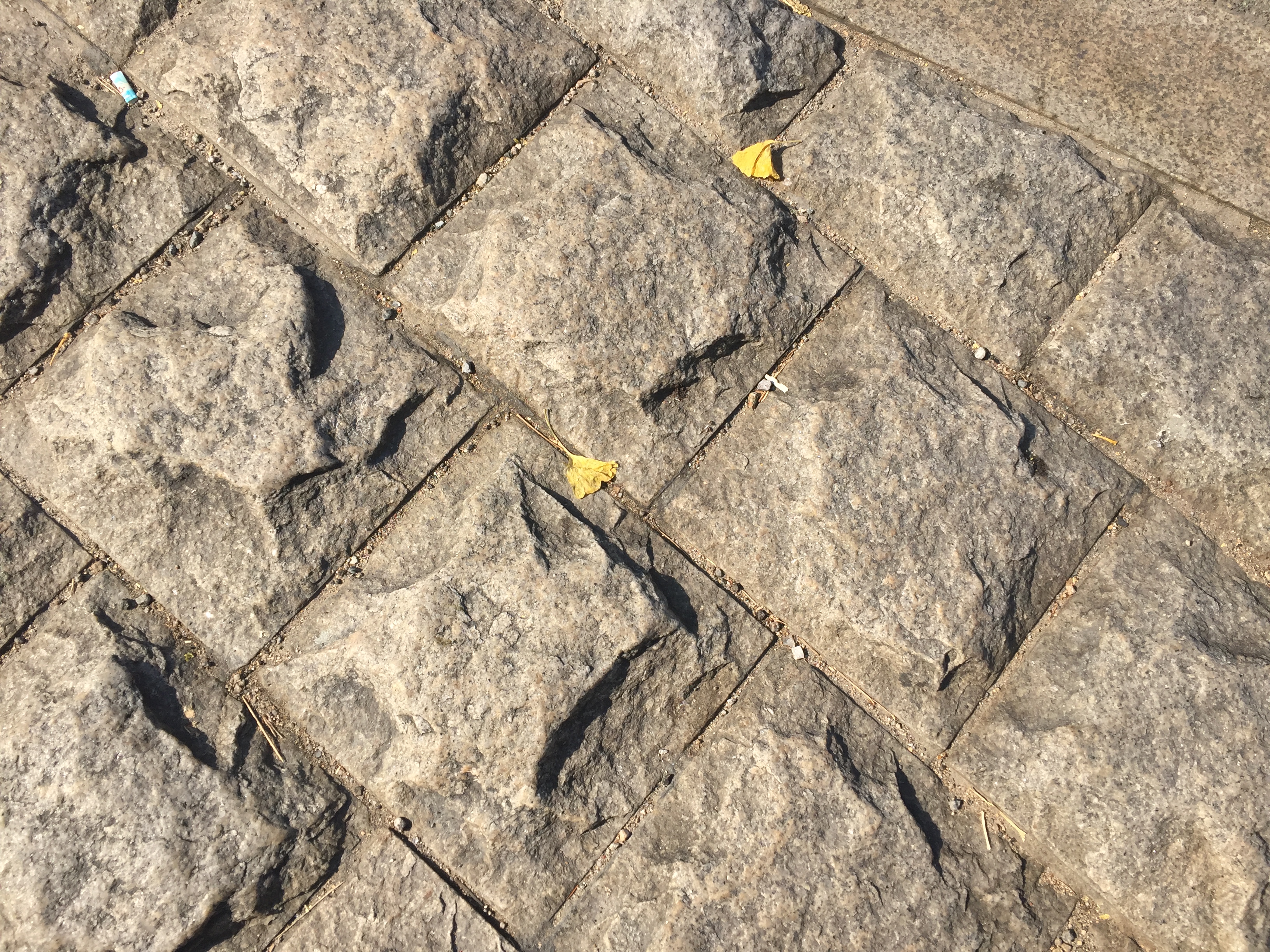
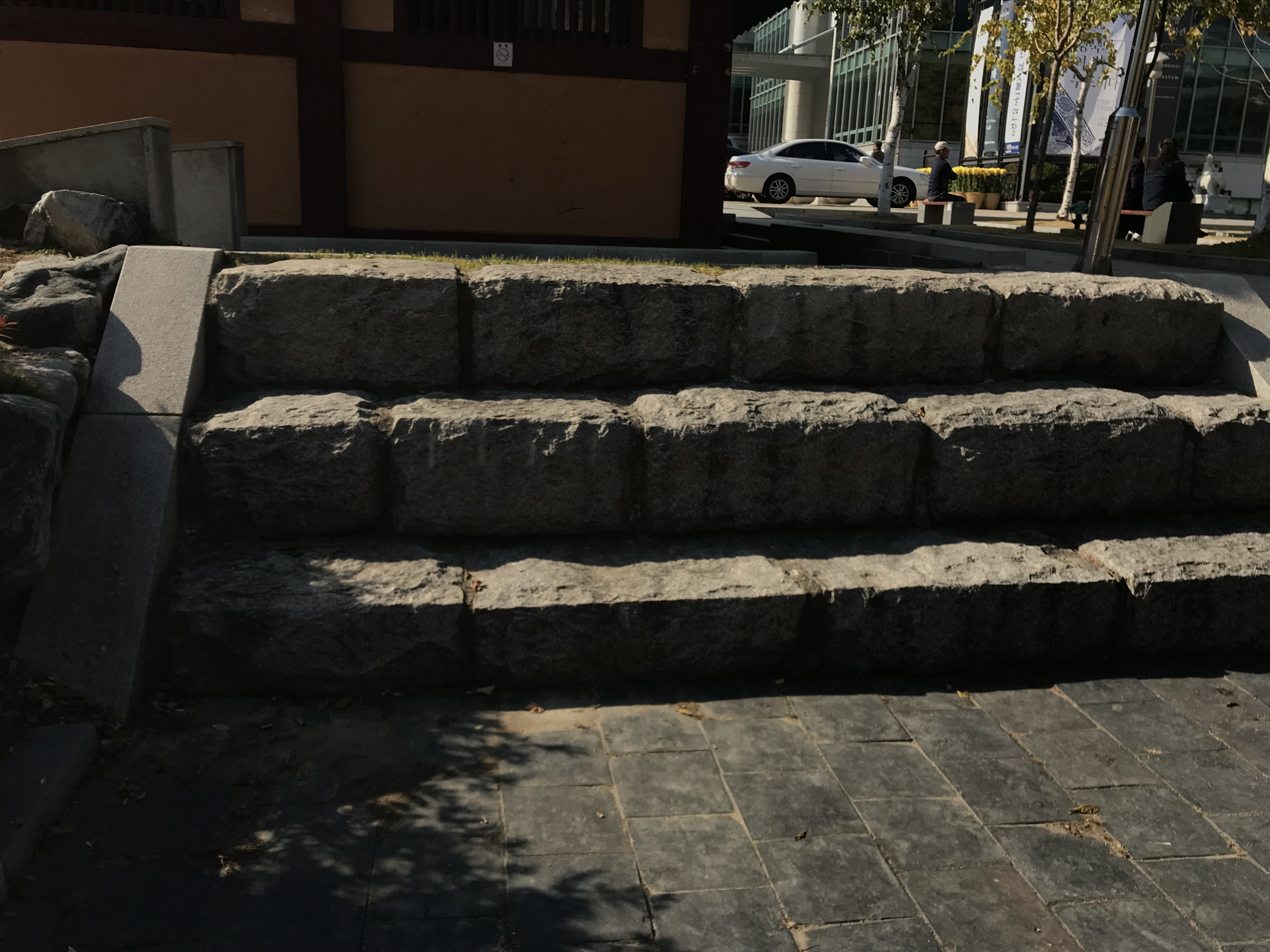
    Rooming in Jongno-gu of Seoul, the area where the Korean Royal Palaces are located, allows me to walk to many of these historic sites.  Here and there remains a patch of road constructed of very old and difficult-to-walk-on stones, as well as serious stone steps.


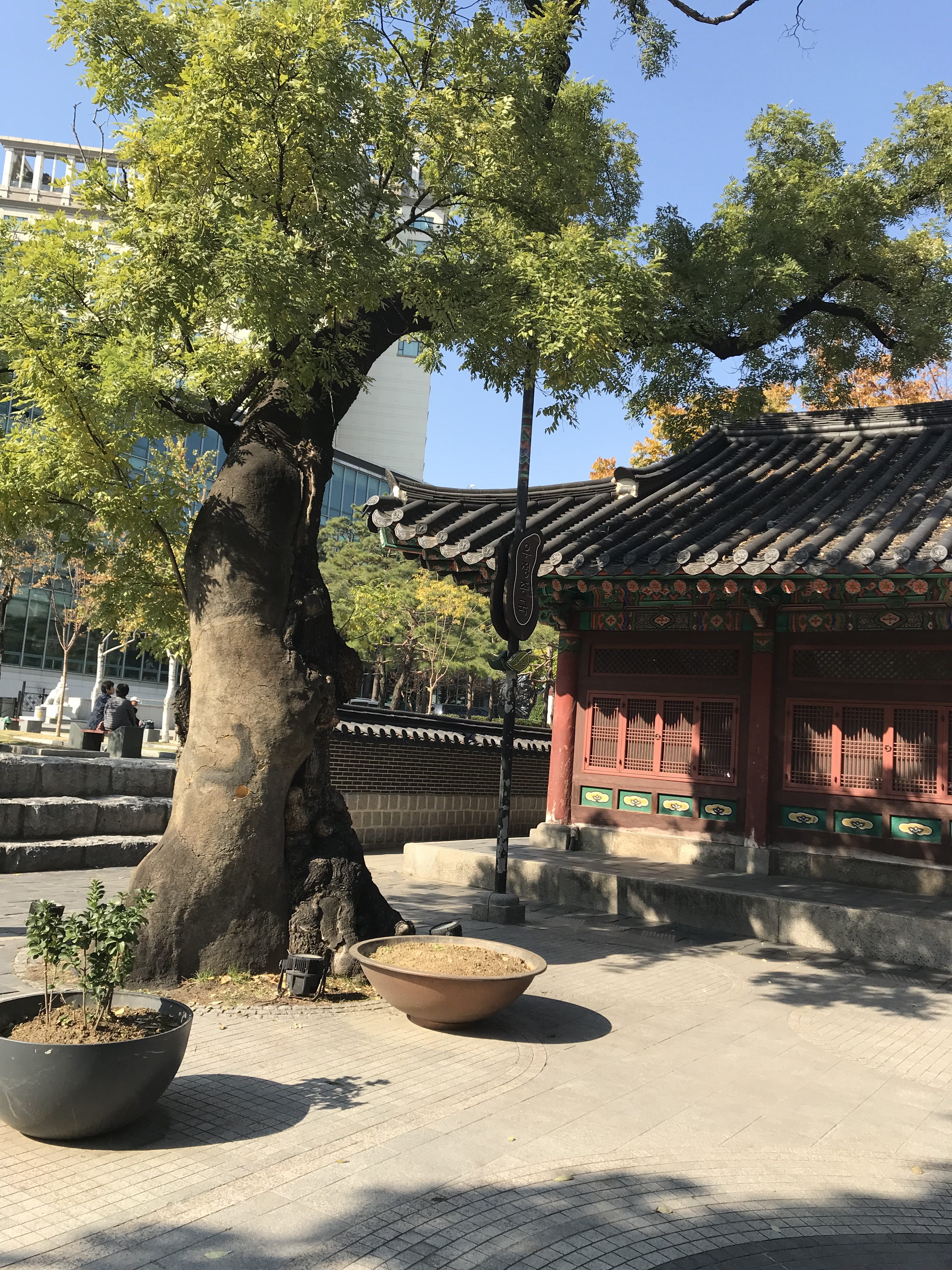
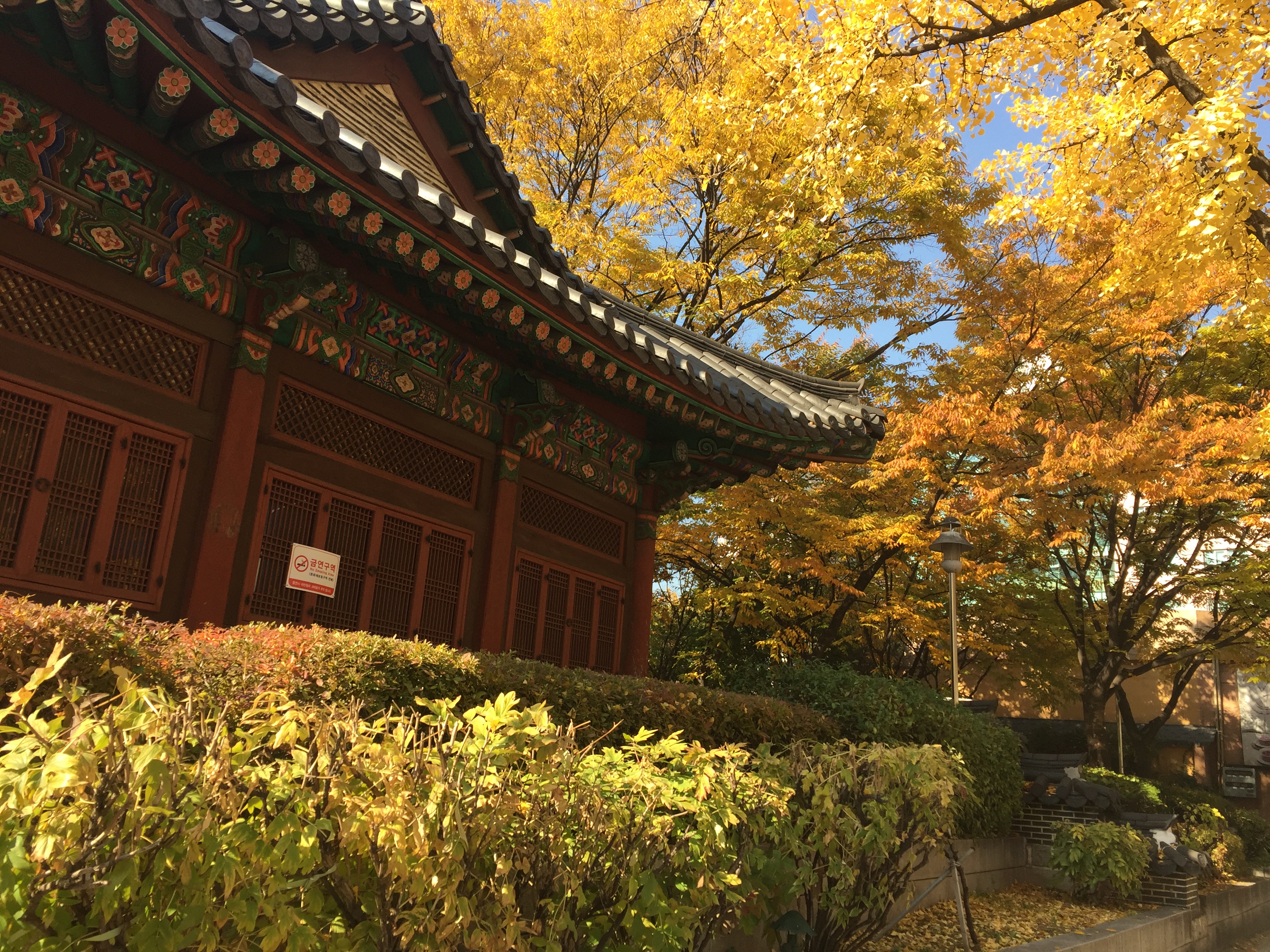
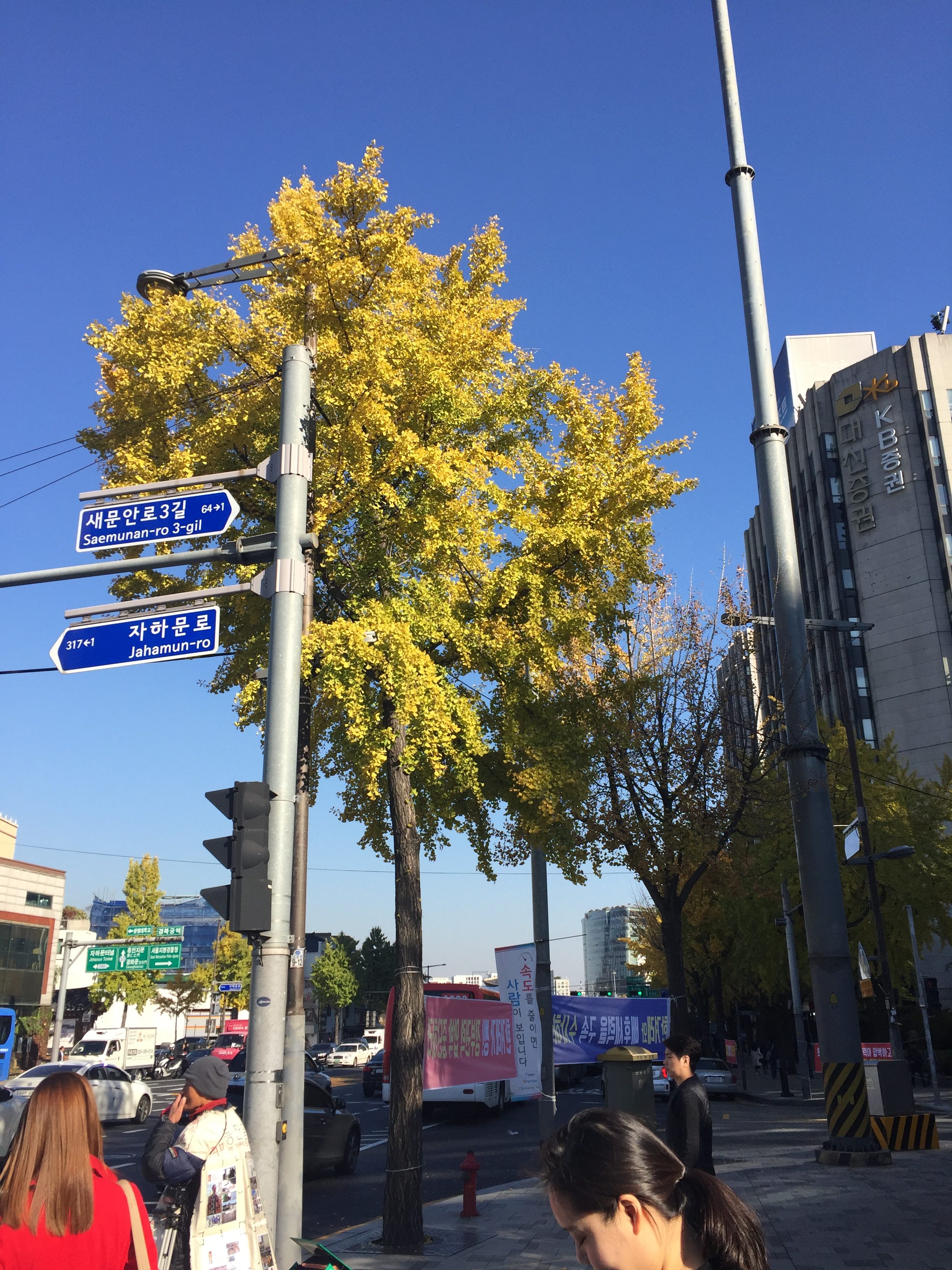
    This magnificent tree stands in front of what used to be the main post office – I think. My guide said as much, and now I can read Korean – I have learned the alphabet – but of course I have no idea what the words that I am reading are all about – anyway – next to the what was apparently the post office is an impressive Buddhist temple dedicated to scholarship. There, anxious parents and aspiring students hoping to ace the university entrance exams come and pray.


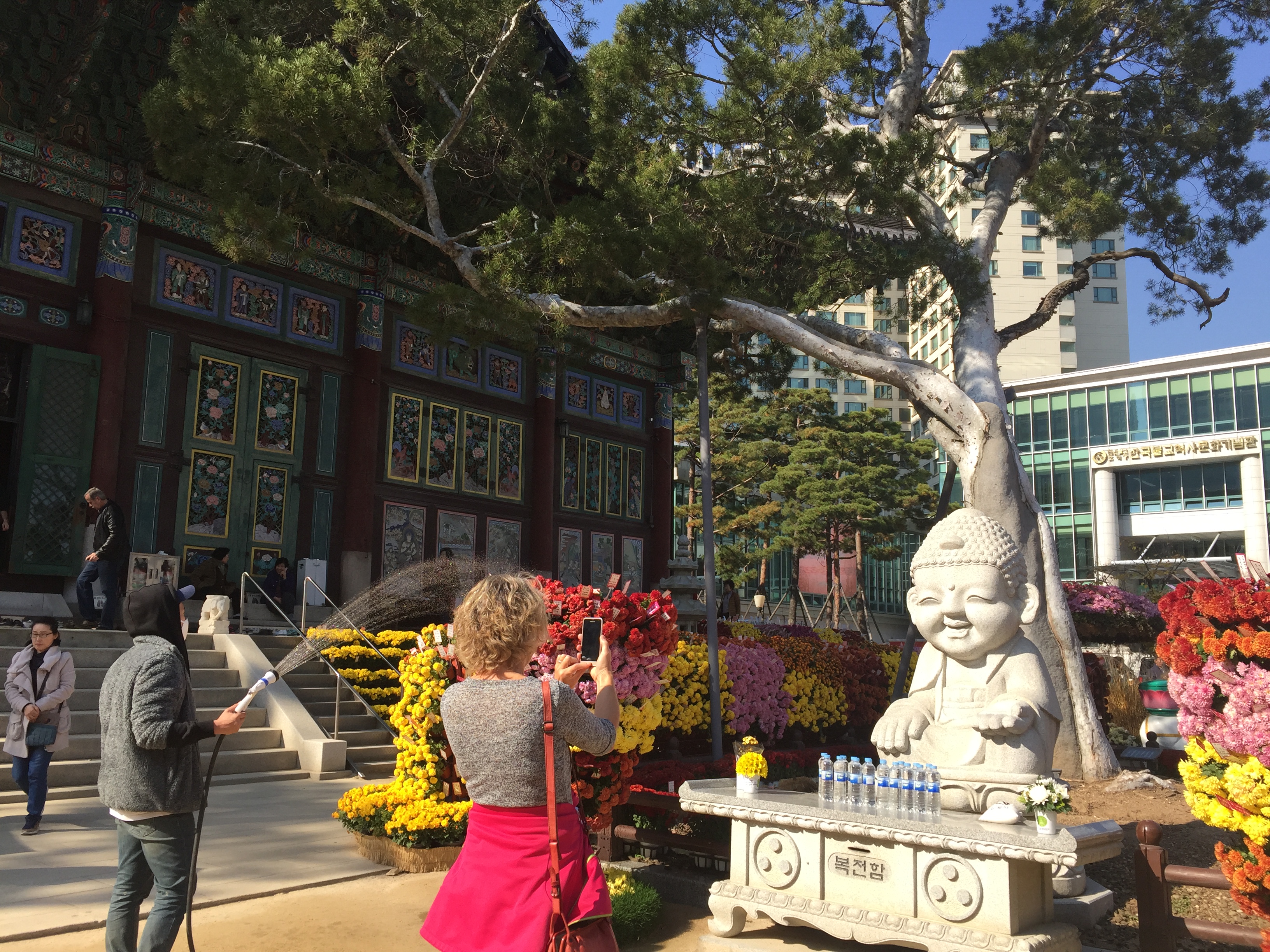
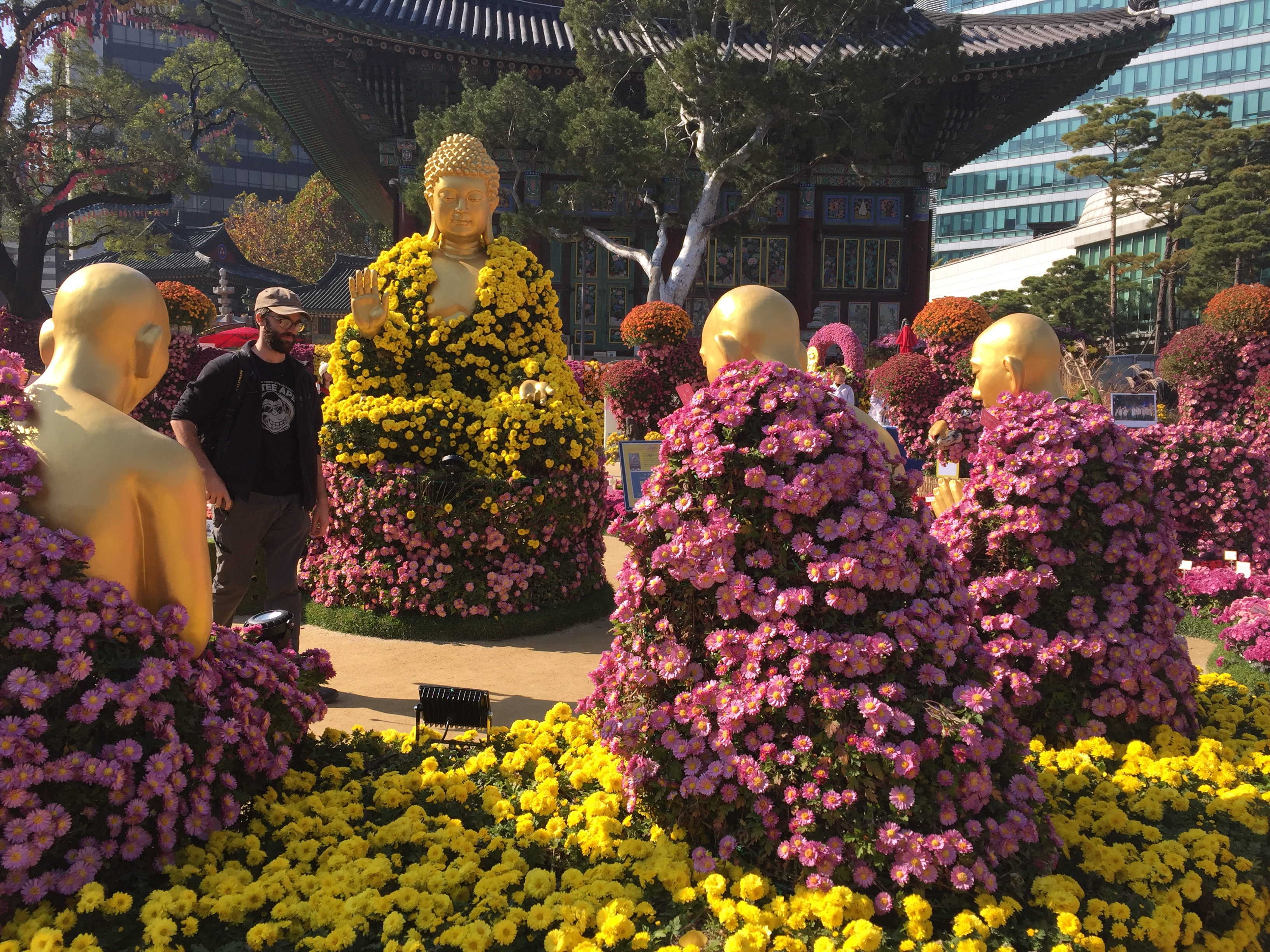
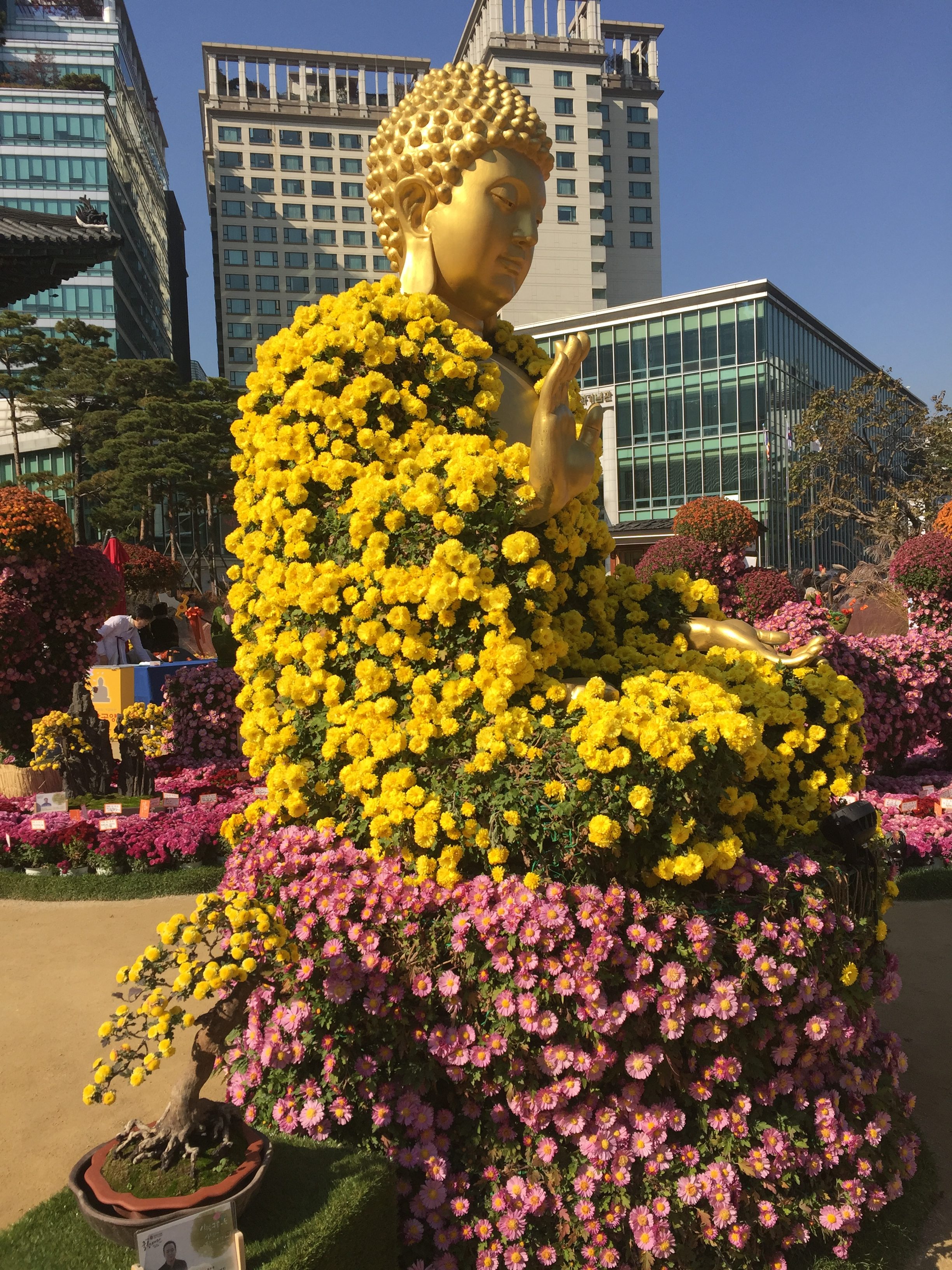
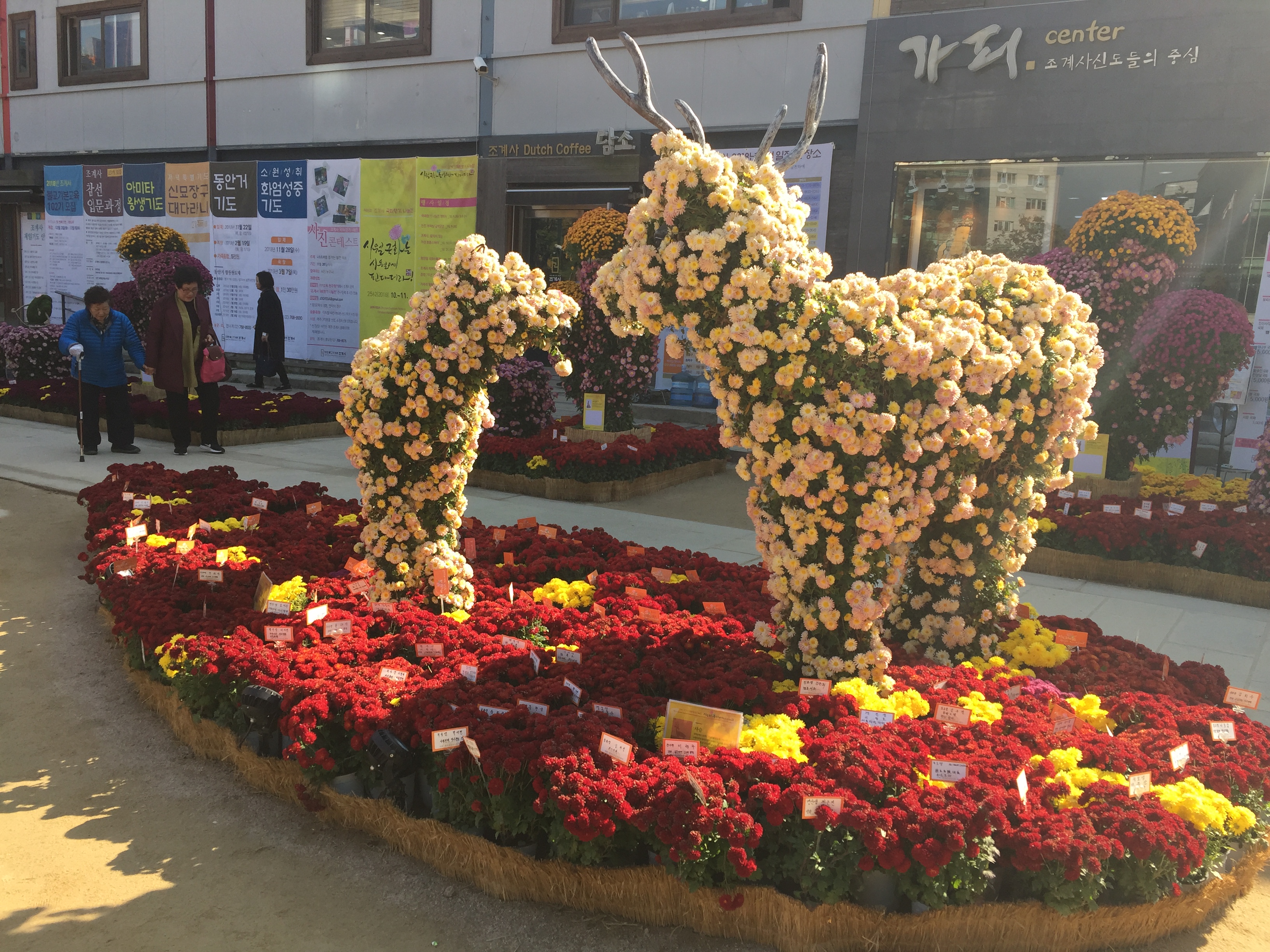
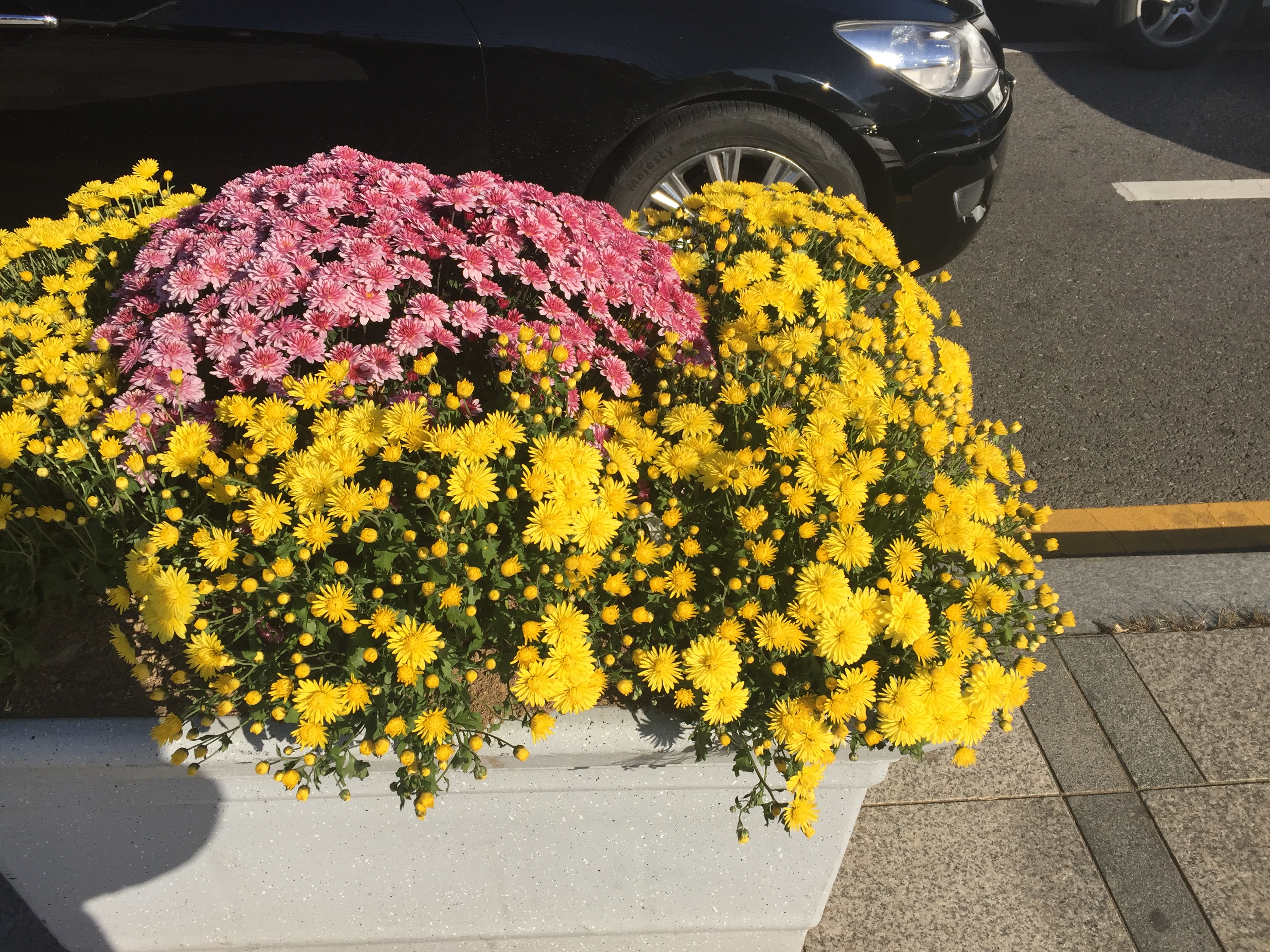
    The garden in front of the temple was celebrating the fall with chrysanthemums. Banks and banks of chrysanthemums of every color were on every side. The golden statue of the most important Buddha was encased with massed chrysanthemums over one shoulder as were his golden all male, of course – followers. Acolytes? Here are sacred animals built entirely of chrysanthemums.


    It was all quite overdone and ornate and rich ad impressive in the Buddhist-style and amazing to see. And I marveled at how many hours of painstaking work must have been required to insert and put together all those many many many chrysanthemums.

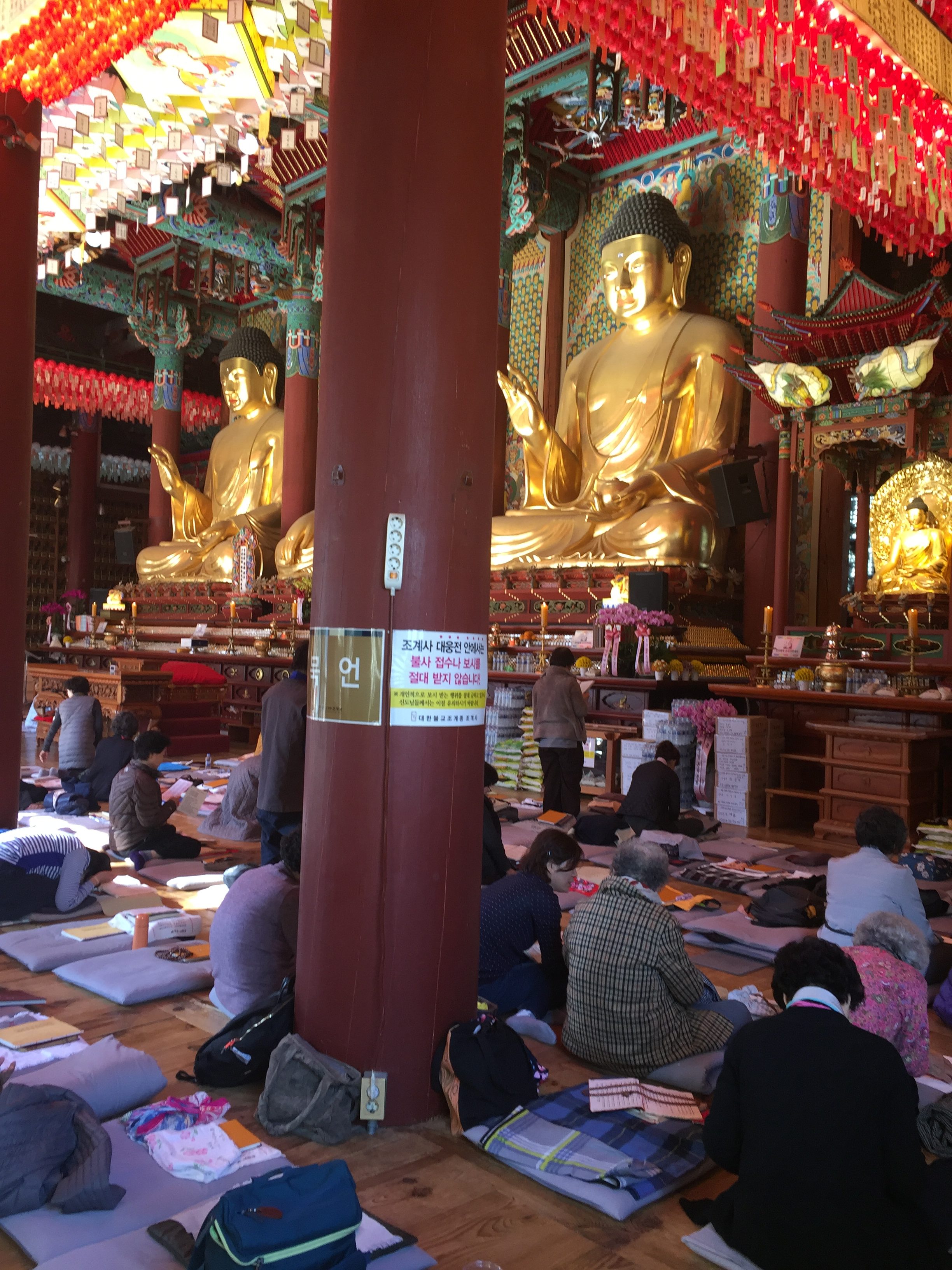
    Next was seen, standing between the chrysanthemum grounds and in front of the temple itself, another magnificent tree, thankfully unadorned with chrysanthemums. A line of people were entering the main entrance door of the temple,and I did not want to miss anything, so I followed along. Inside, the temple was close to crowded, quite full of devotees.

    I felt annoyed with myself for intruding, but took a fast photo of more Buddha’s and scurried outside. Apparently, I need not have been concerned, Many more of the curious were tromping in and out, and the curious and the devout seemed accepting. It would seen to me to be a great impediment to devout devotions to have to deal with all that commotion, but where so many people are crowded together in a costume – off what is it these days – twenty million – no doubt Koreans have a different regard for activity of this sort.

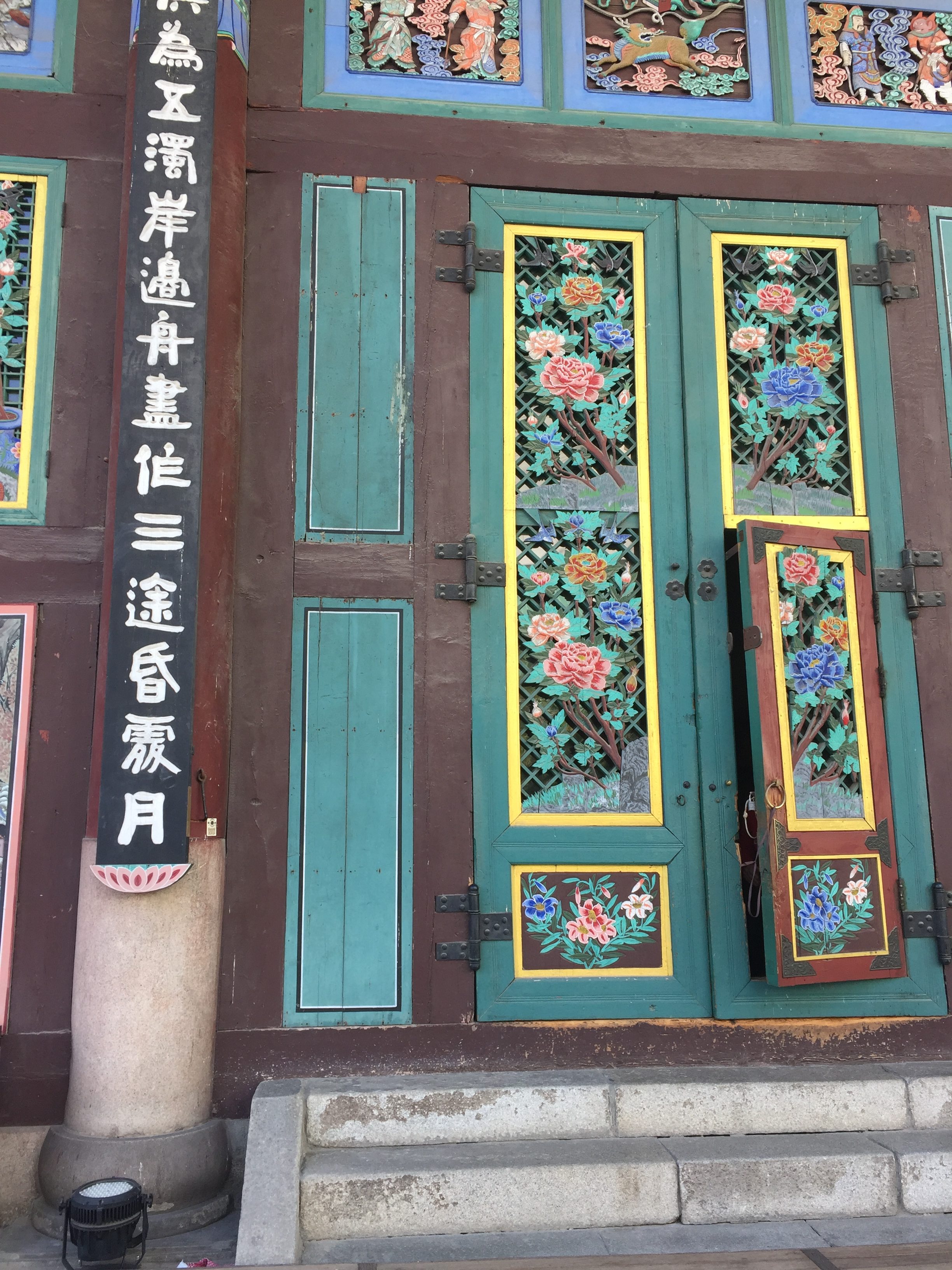
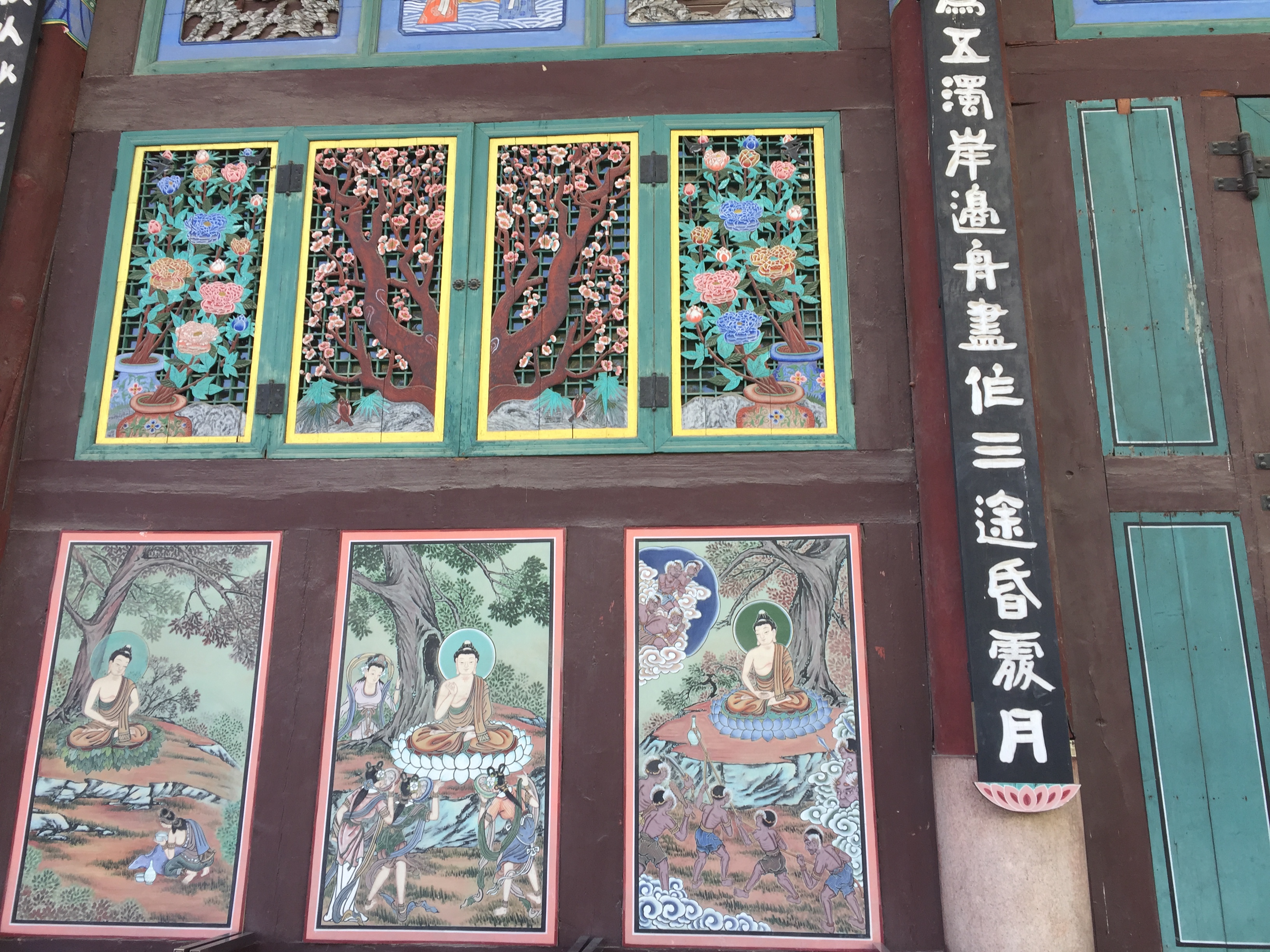
    The exterior of the temple, which was wood, was decorated with these lovely paintings. The  colors are pure and yet earthy. The differences between the Korean aesthetic and that of the Chinese and Japanese is interesting. The Korean choice of soft but bright color and decoration just short of excess is its own. And so on into the fall day.


  • 1 November 2018 Korea

    Thursday, 1 November 2018

    Perhaps the shame of Teddy’s Roosevelt’s handover of Korea to Japan in 1905, for which ironically he received the Nobel Peace Prize, can be somewhat expiated by the great contribution of the American Christian missionaries, who were active in Korea during the same period.

    Christian missionaries are often given a bad rap for their imposition of Western values on the “native people.” The Christian work of such as Oliver R. Avison, who laid the basis for what is now the world famous Severance Hospital in Seoul, and the founding of Ewha College, the largest educational institution for women in the world, by Mary Scranton, American Methodist missionary, certainly imposed Western values, values that encouraged the Koreans to demand for themselves the values of freedom, dignity, and gender equality. The search for the best in health care continues today at Severance Hospital, and the ongoing demand for gender equality is sustained and inspired by the work of earlier generations of Korean Christian women, who devoted their lives to developing an emerging women’s consciousness in the late nineteenth- and early twentieth-century, who sacrificed for Korean independence even while the Korean men scoffed at their participation.
    While American women knew friendship and interaction with other women and men within their communities, Korean women were historically forbidden contact with persons outside the home of their father, husband, or son. When Christian missionaries offered the message of equality, accompanied by a basic education, Korean women, living much as slaves, eagerly embraced it, and early on after the arrival of Christianity in Korea, women outnumbered the men in the churches.

    Aside from these deep matters now occupying my mind, it was another beautiful day in Seoul. Again, clear blue skies and crisp autumn weather.


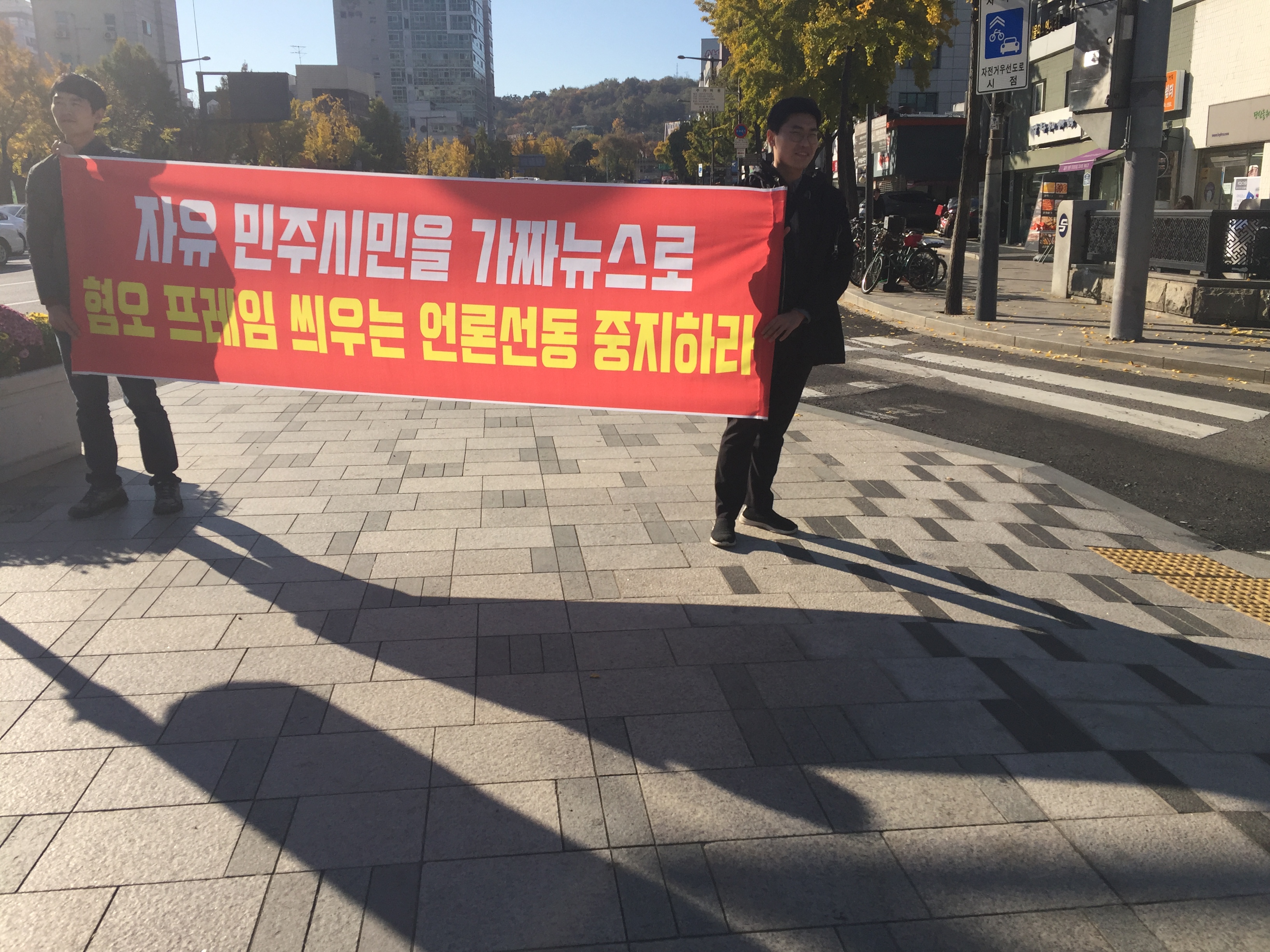
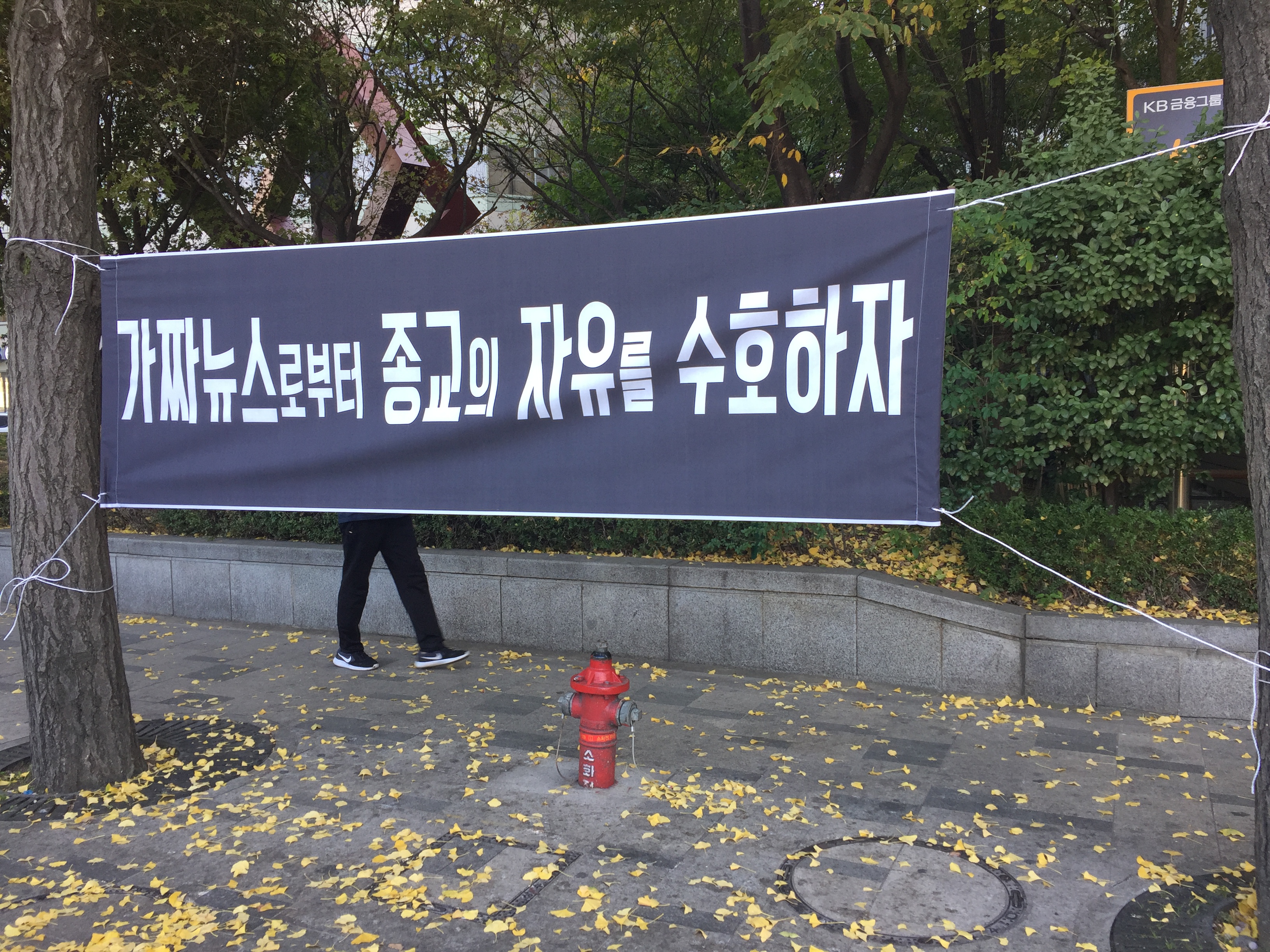
    But something else was going on today. I noticed, on the corner, silent serious men holding a banner.

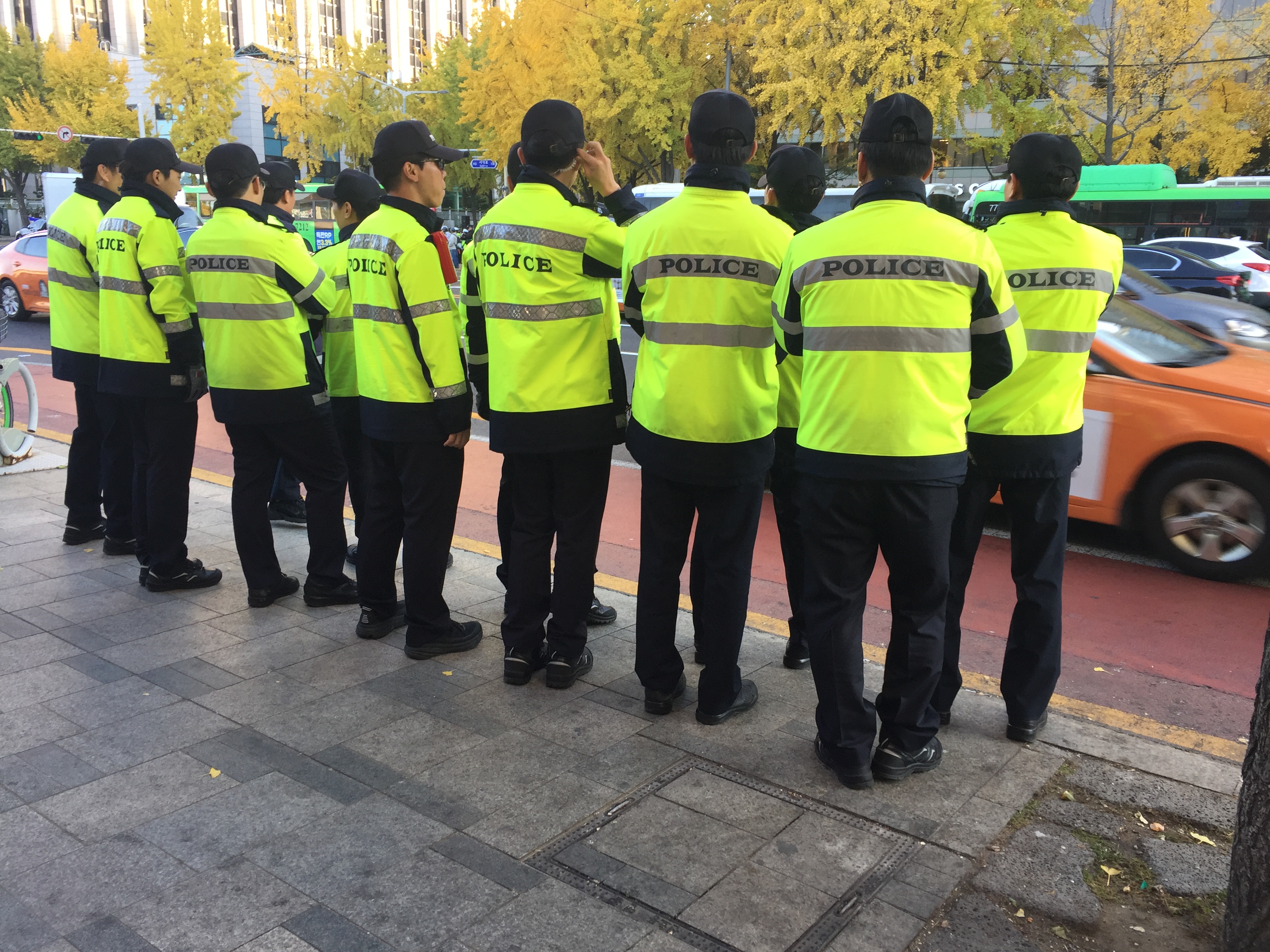
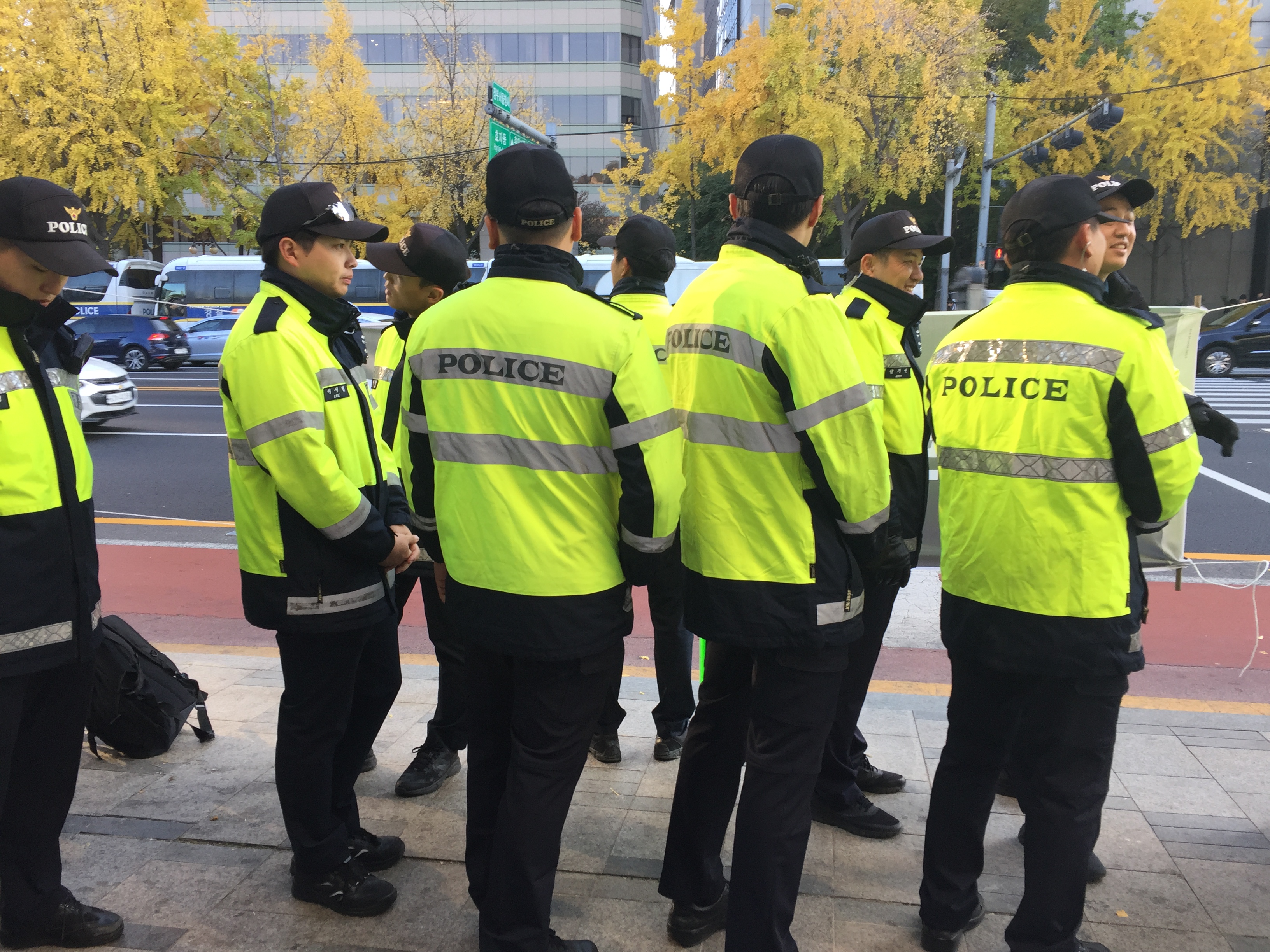
    Apparently, conservative Christians are militant in Korea. Cordons of police were gathered on the sidewalk.

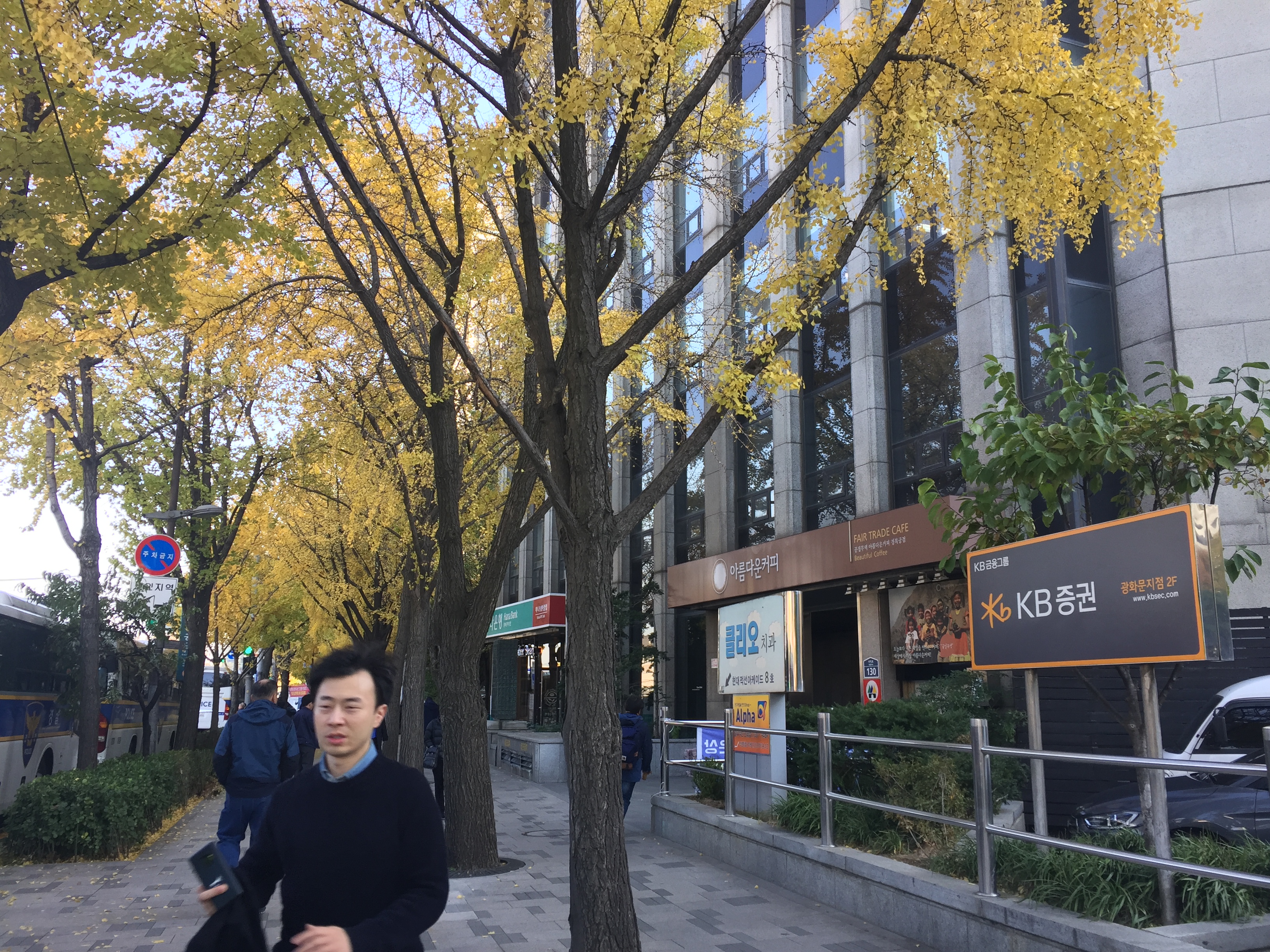
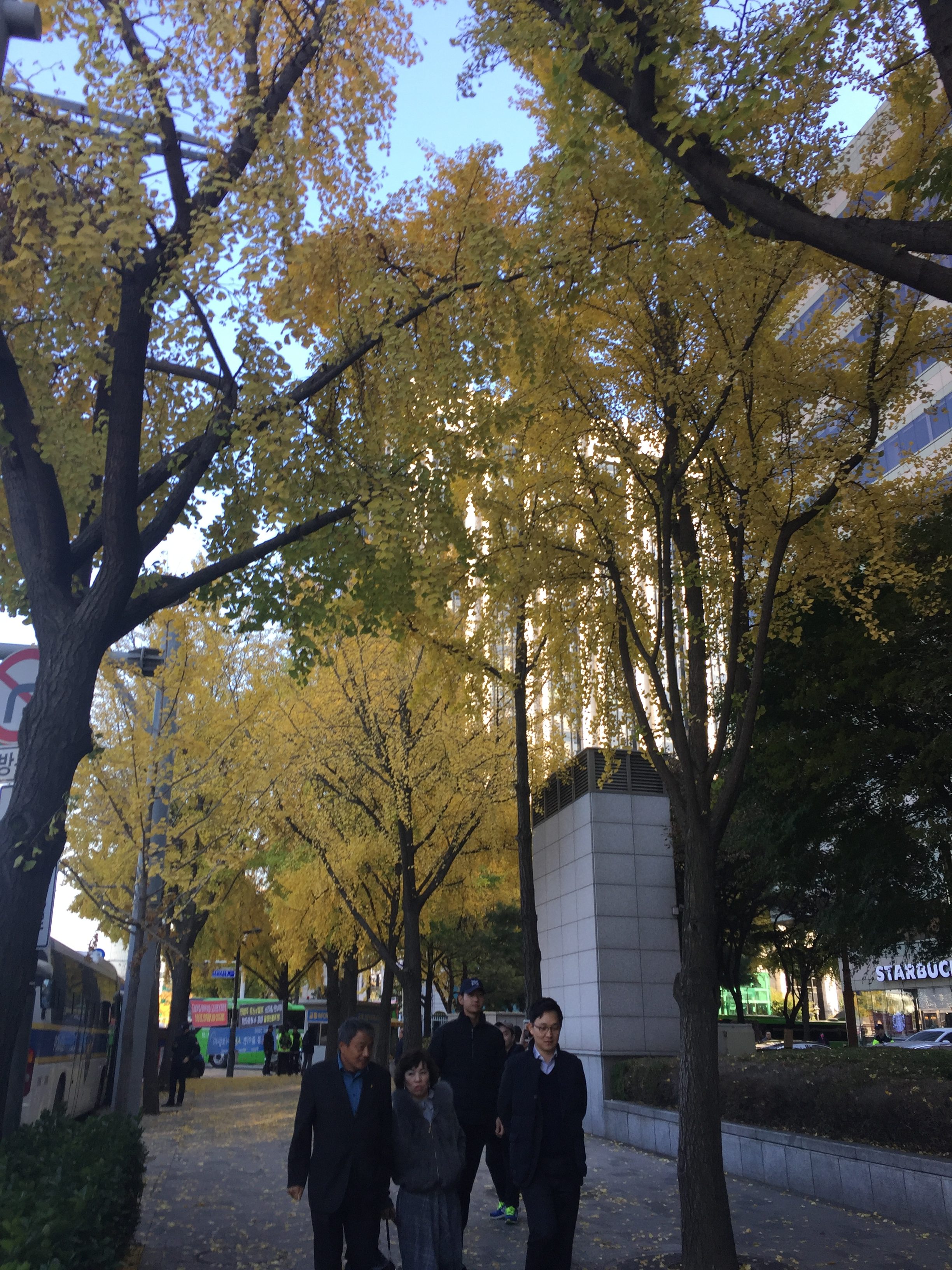
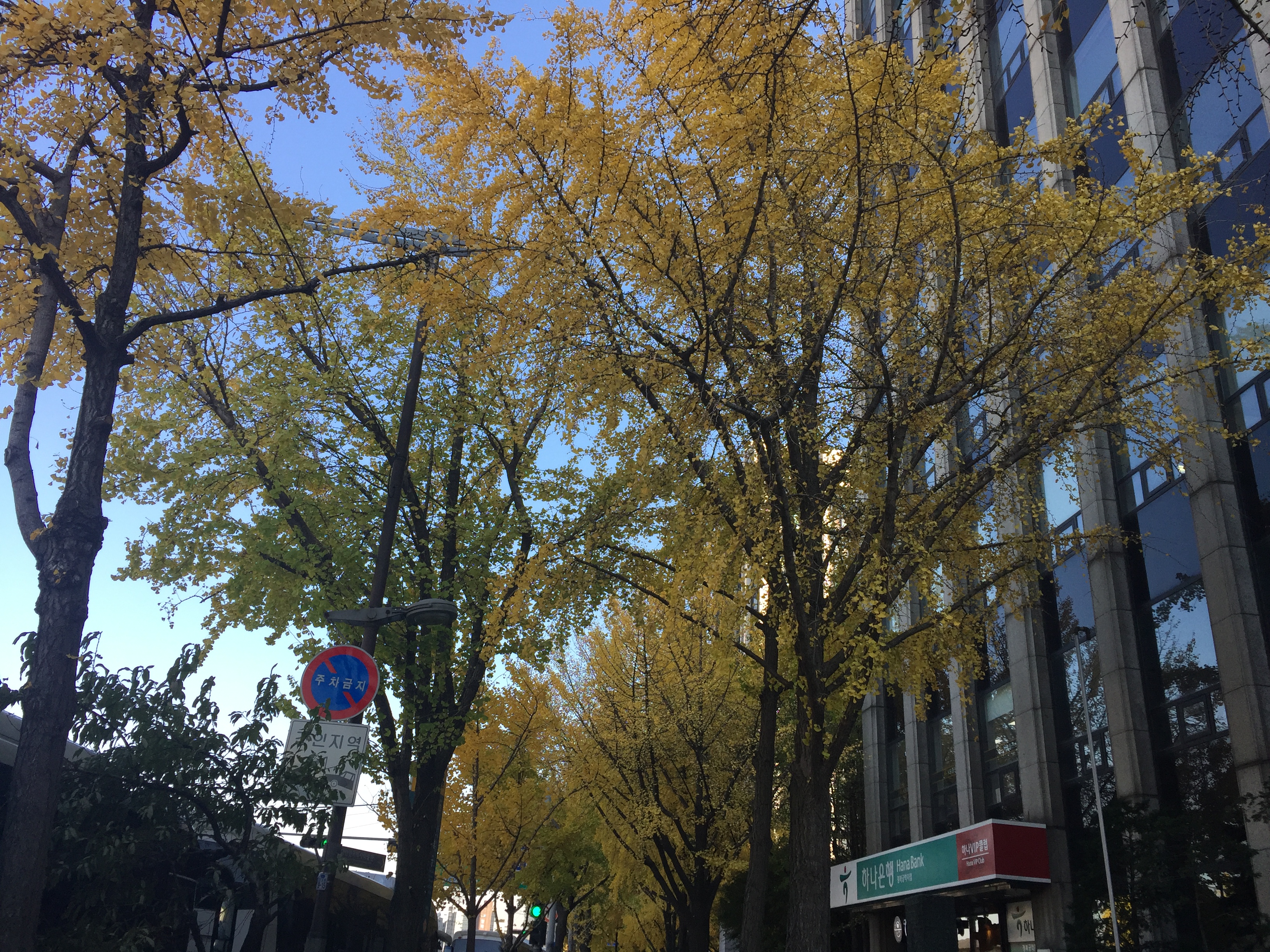
    I walked under this golden canopy of entwined branches, just across the street from the watching policemen.

    Another banner.  

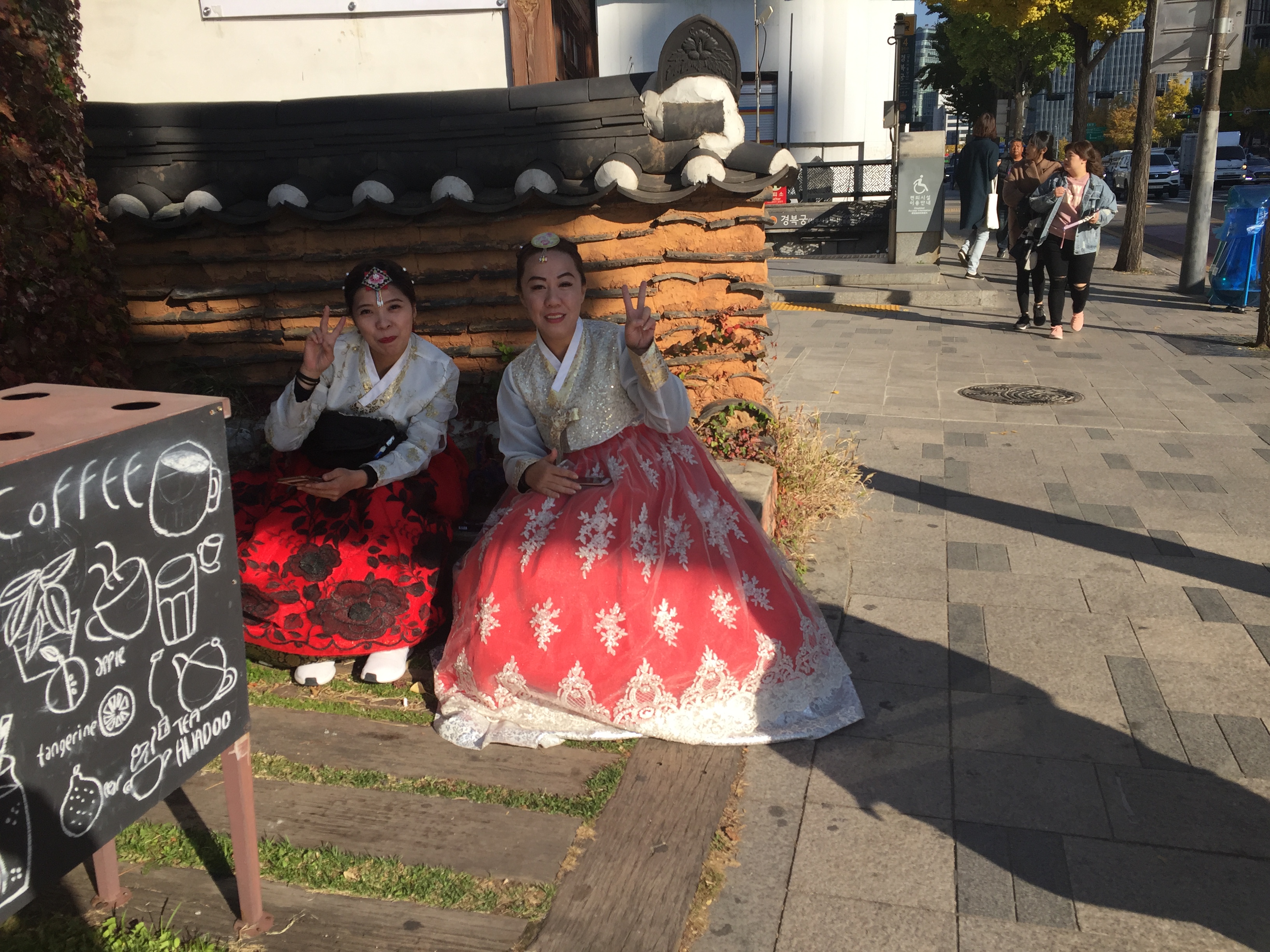
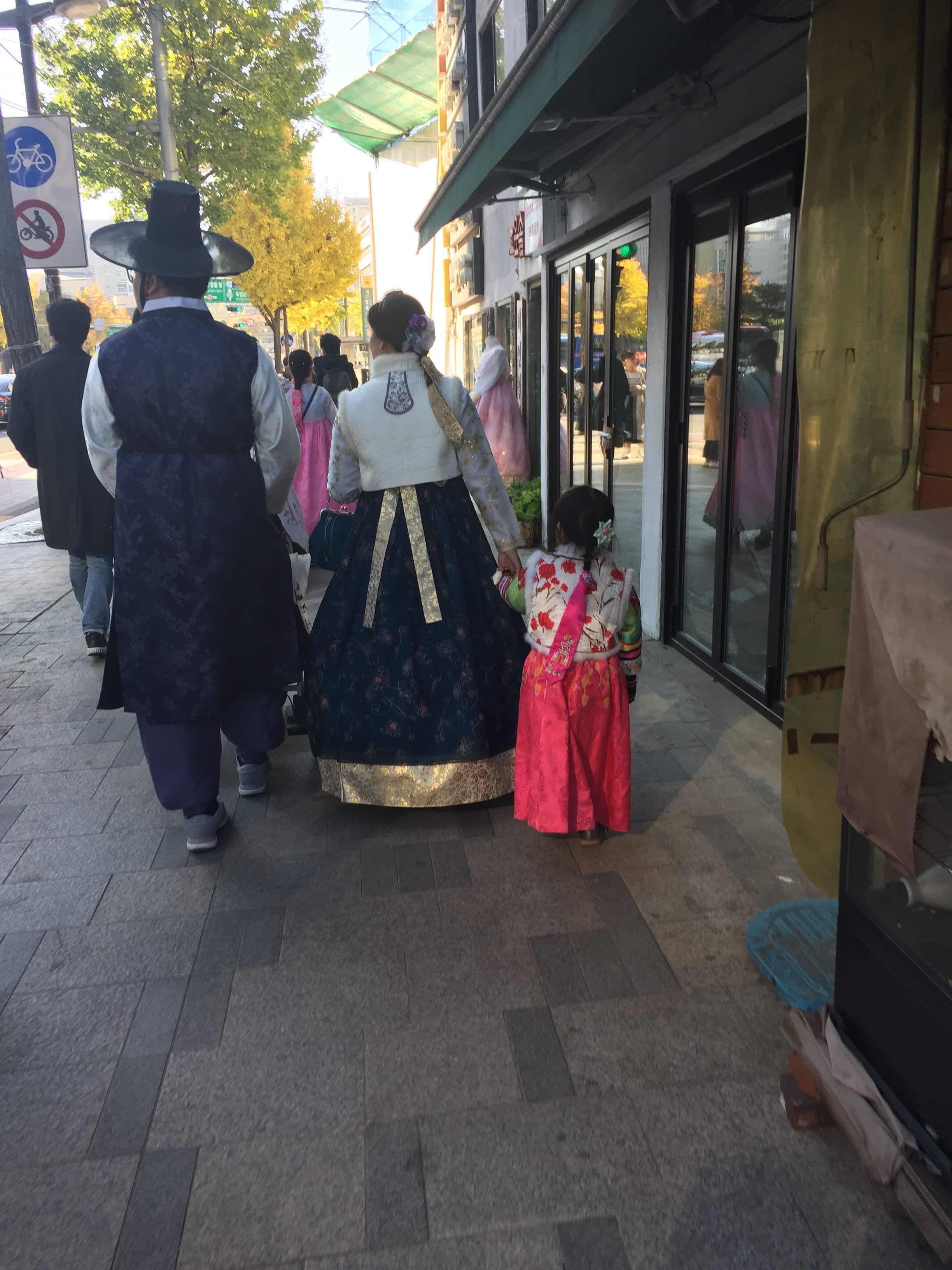
    In the courtyard between these two impressive high rise buildings. what must have been a political rally was being held: a Hitler-type harangue, shrill in its fervor, punctuated with programmed roars.of approval, spilled out over the orderly well-policed streets. Whatever the movement, it was not being supported by the strolling consumers. Girls and families were again in costume.


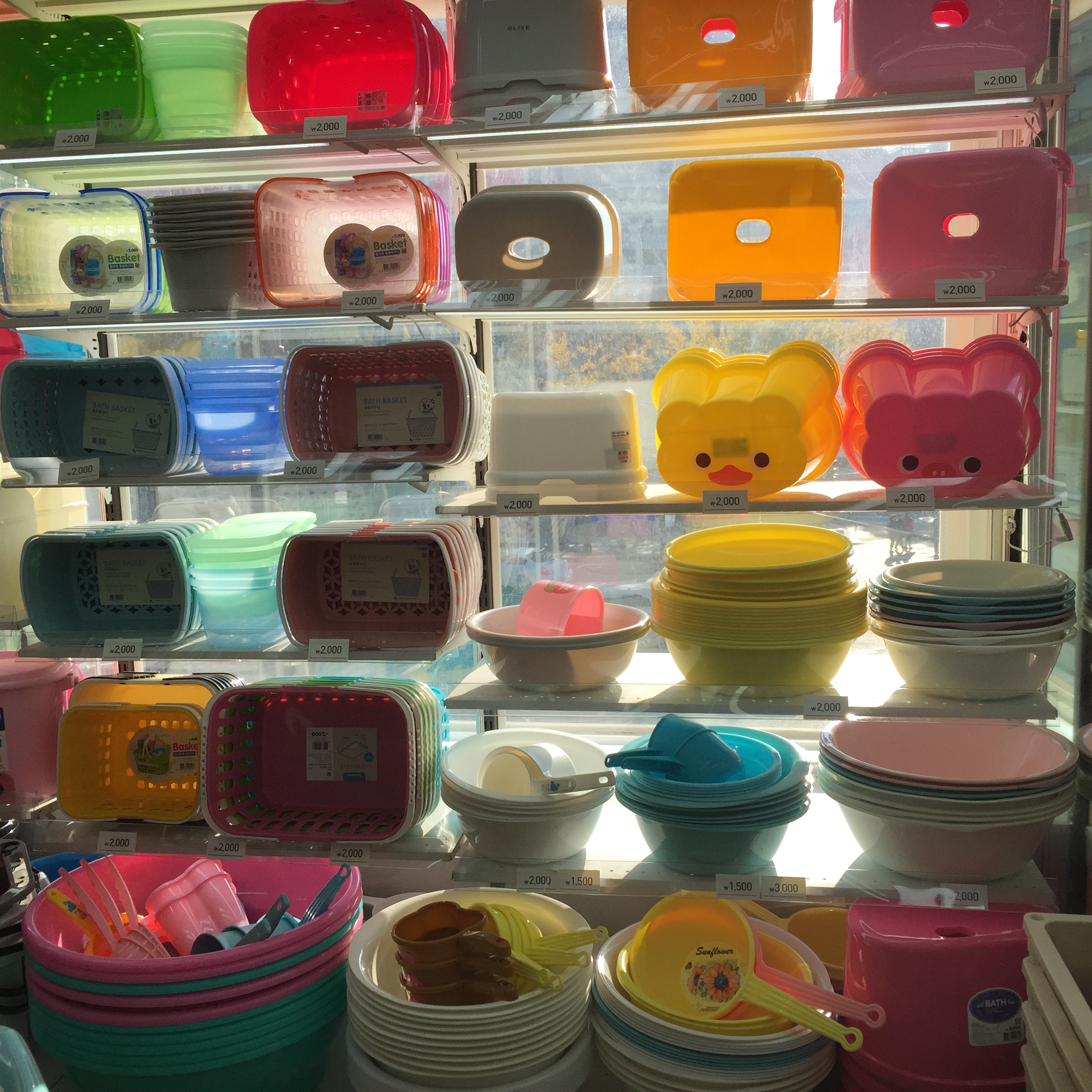
    In one busy store, rows of plastic bowls rioted with their colors in the sunlit window. Maybe there is a good use for plastic.

    \

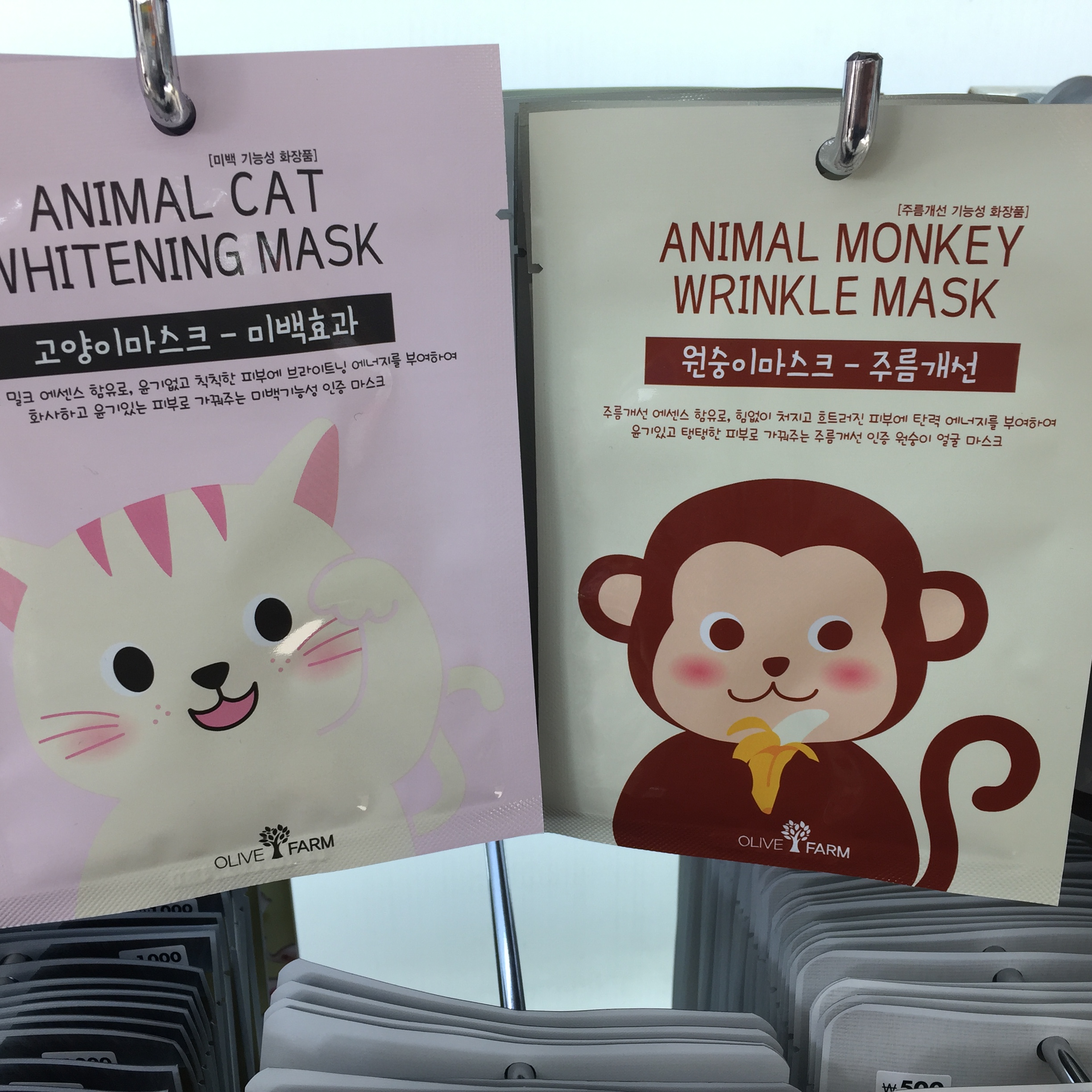
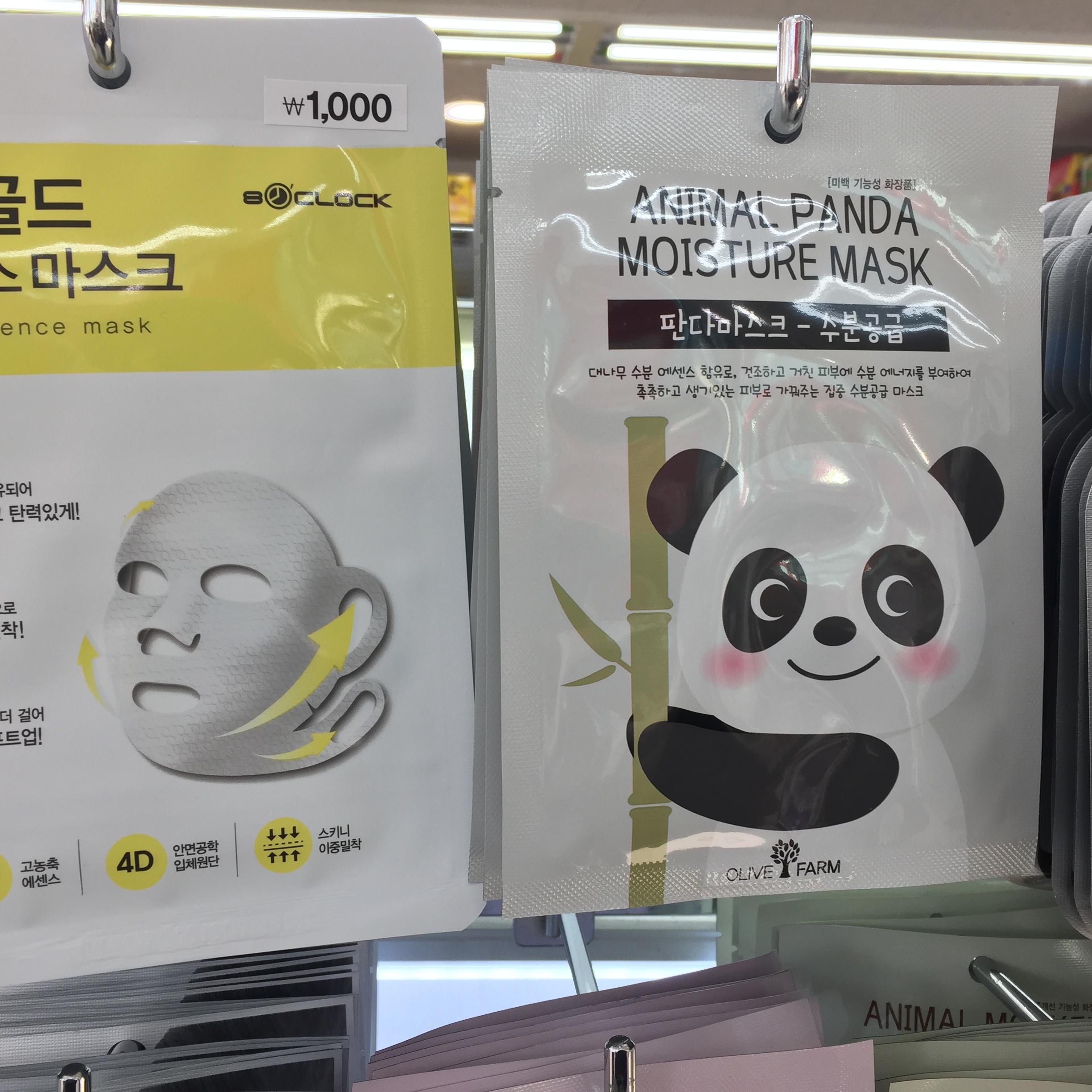
    Women were buying facial masques for brightening and lightening.


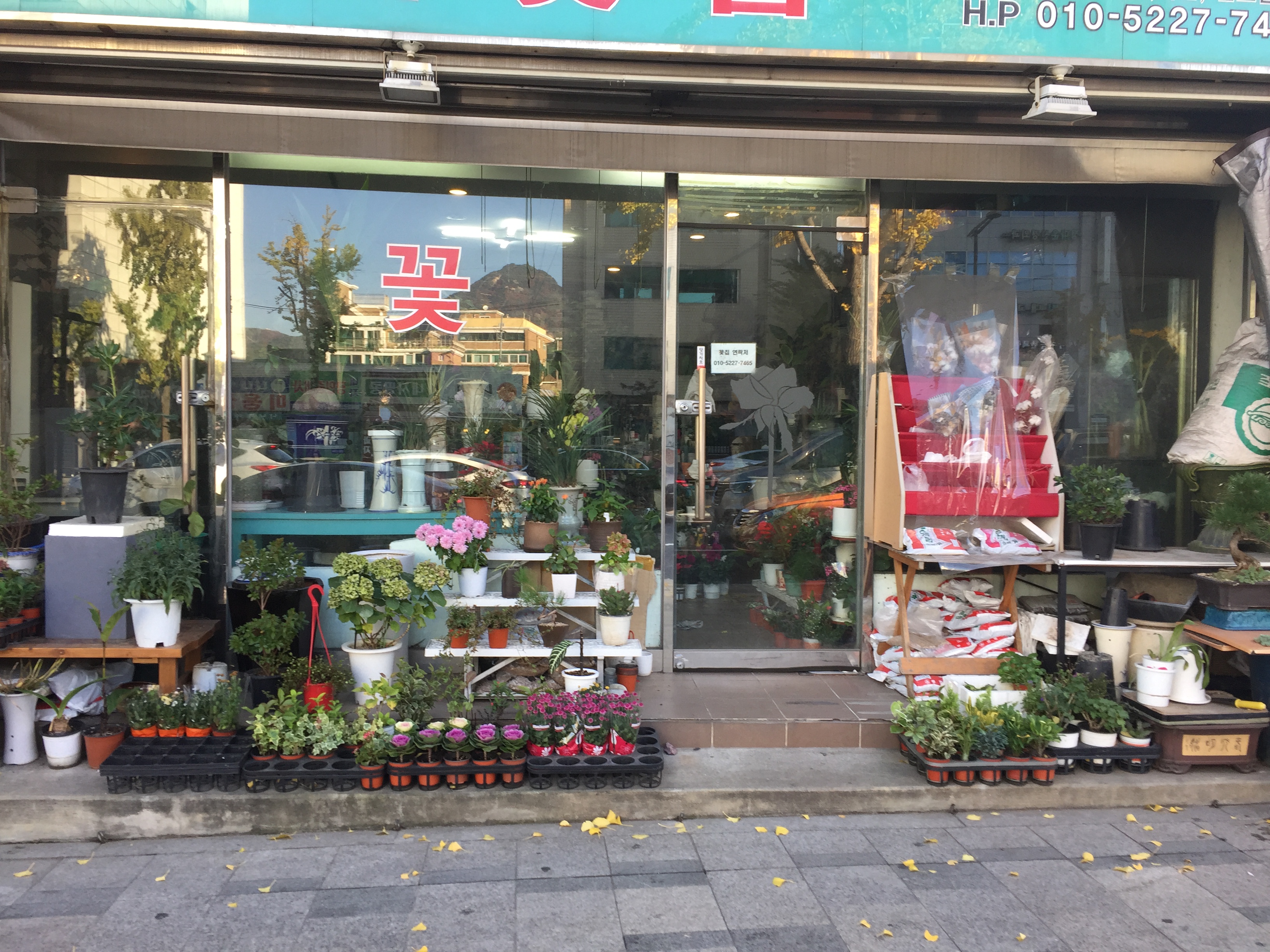
    And flowers in their flower pots were for sale on the sidewalk.

  • 31 October 2018 Korea

    Wednesday 31 October 2018
    Wandering in Seoul

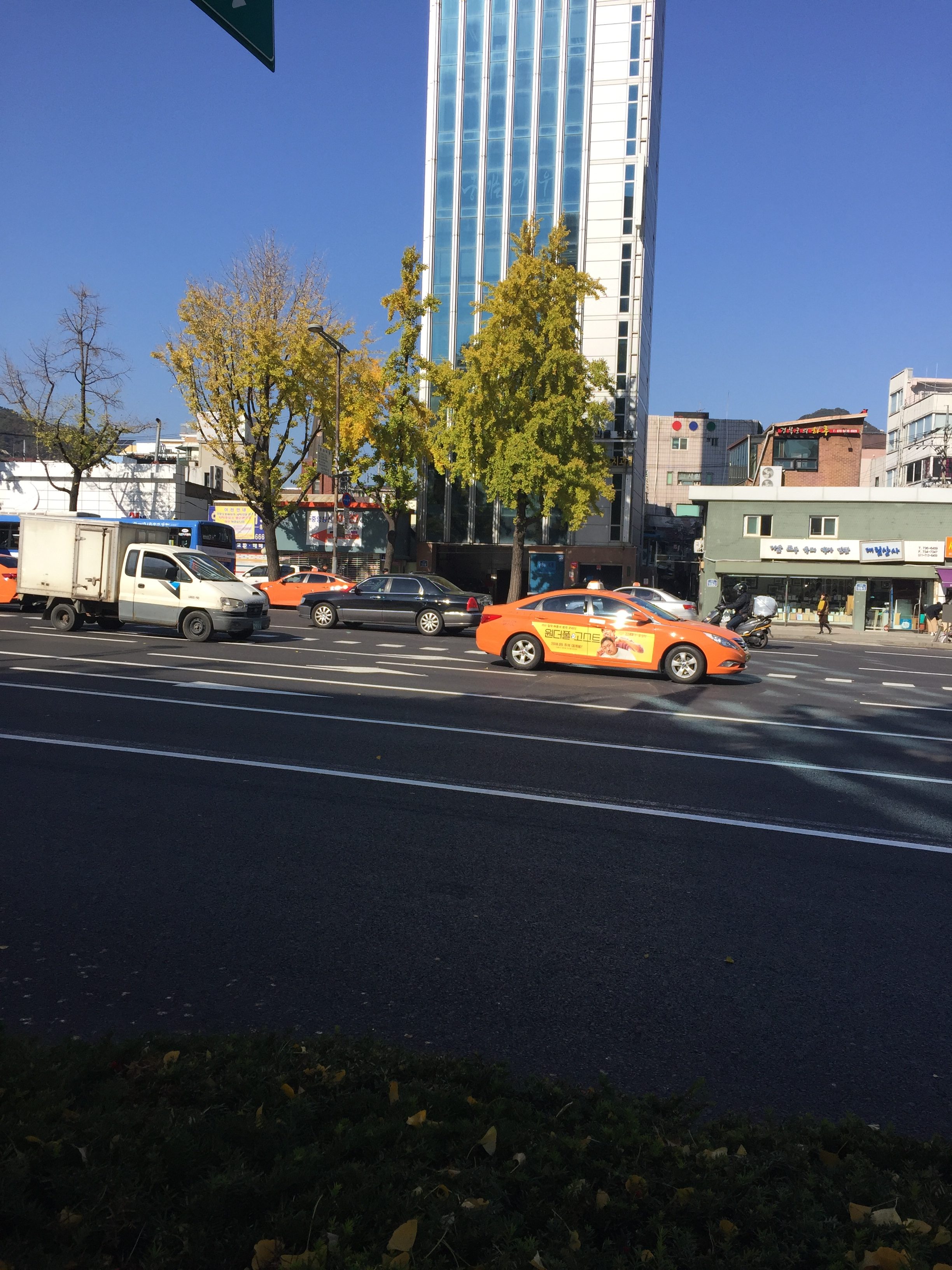
    It is a great day to wander around Seoul, cool but not cold, an autumn day with bright blue skies. This area is of Gyeongbokgung is the heart of commercial Seoul, government and corporate centers located here in their highly spectacular glass and steel, coldly chilling, monolithic structures. Everywhere you look, it is much the same, vast crosswalks among shiny light-gray blocks that make their statement of overwhelming indifference to the human soul.


    But if you got into the small alleys that feed off of the freeway streets, variety abounds and Seoul becomes interesting. Custom prevails in some of these older shops. Meat was being grilled outside of a small older looking restaurant, but when I tried to eat there, the owner told me that he did not serve single customers; there had to be two at the table. I had heard that that was a custom here, but it worked well for me. A block away was a new smart looking sushi restaurant. I am still having troubles converting currencies, so it is just as well that I do not know how much I spent on that delicious lunch.

                
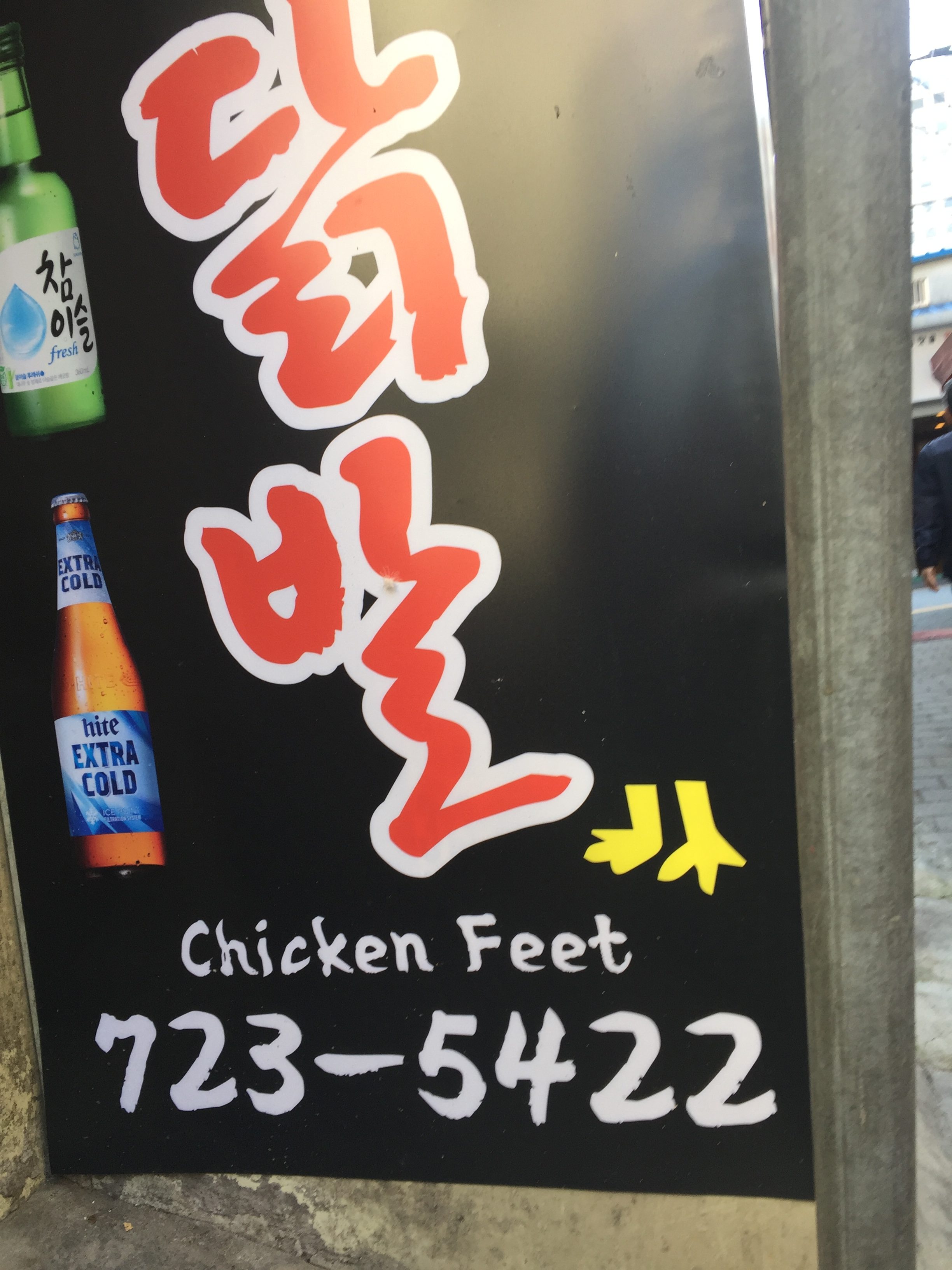
    Chicken feet are available as are French pastries at a typical Paris-type bakery.

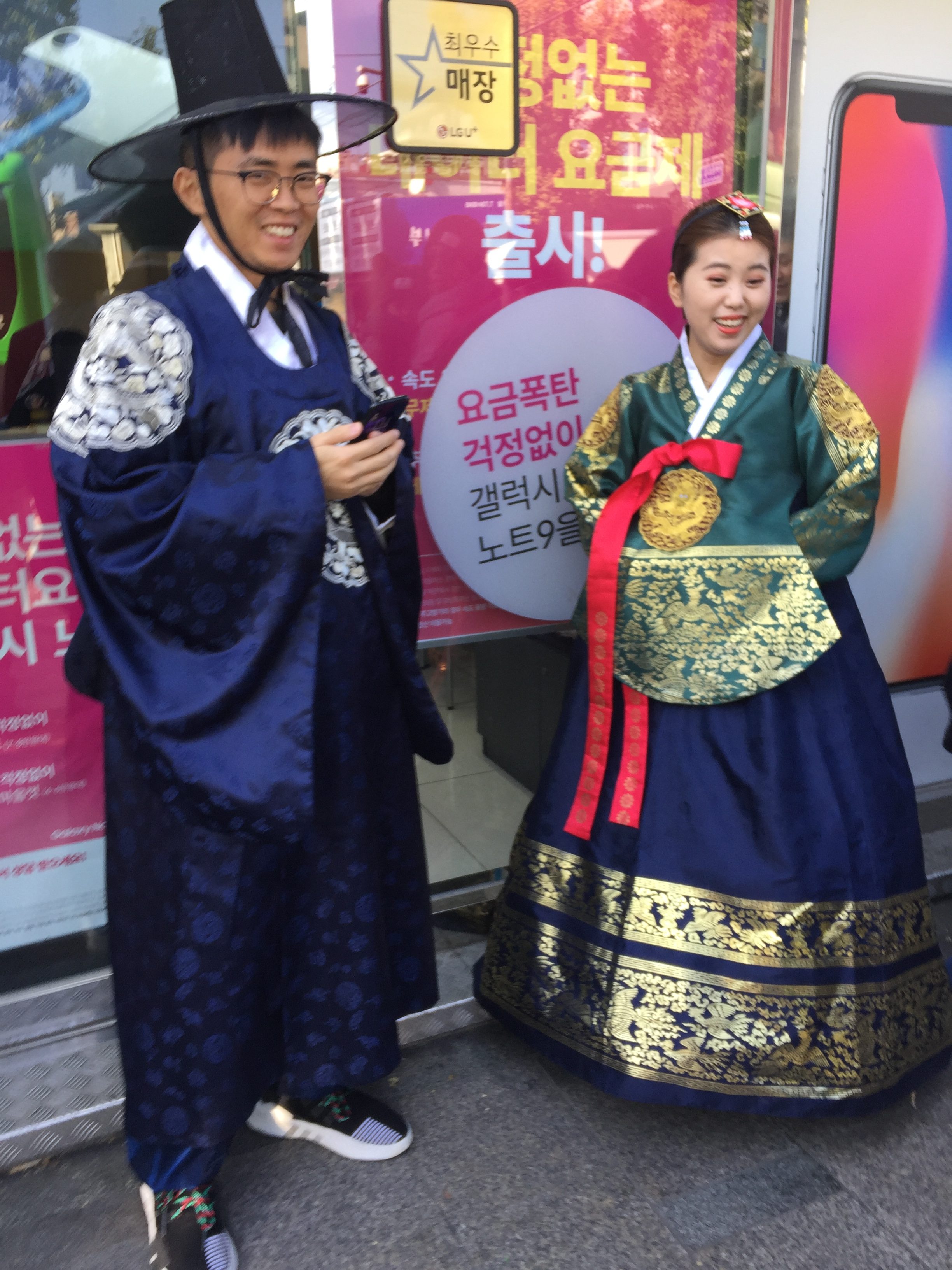
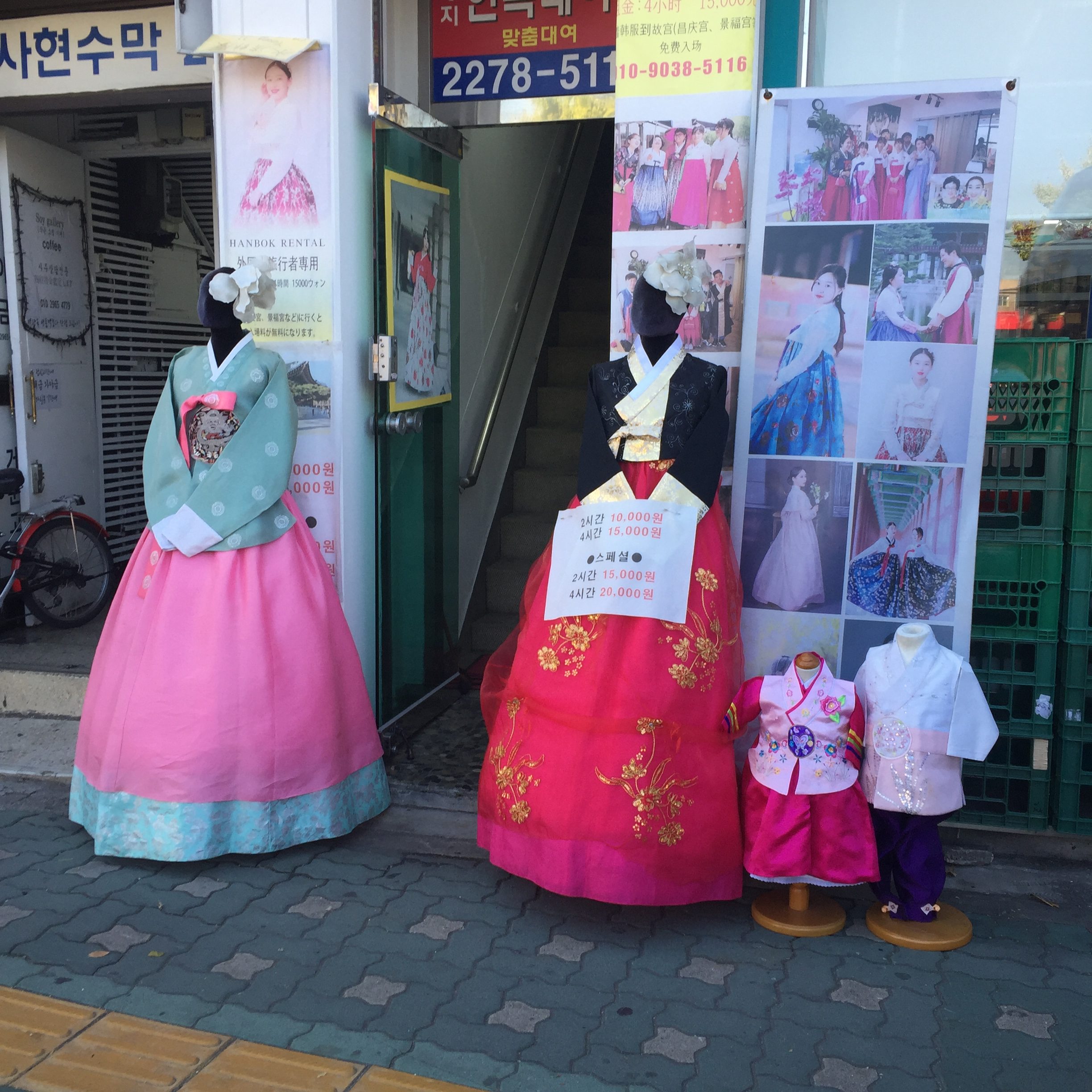
    It must have been some kind of festival day because many young women were in the street wearing the traditional Korean court costume, and many shops featured the costumes for both adults and children. I had the good luck to see a young man dressed up, for usually one sees only the girls in costume.  People were friendly.


  • 29 October 2018 Korea

    Monday  29 October 2018
    Monday or maybe Tuesday

    Have we crossed the date line? I do not recommend taking a 5am flight to Korea or a 5am flight to anywhere. It means waking up at 2am to be at the airport at 3am, the required two hours before departure time. Fortunately, the Medford, Oregon, airport is small, and one can arrive at 3:30 or maybe even 4am and make it through Security and still be on time. Regardless, on the night before travel I am up at 2am, unable to go to sleep for fear of failing to wake up on time and/or dealing with the Surprise.

    An unwritten law assures that no matter how long preparations for a long trip have been made, just prior to the last hours or the last day of leaving, there will be a Surprise. Surprises can be good, but good or bad, they assuredly obliterate the time required for planned preparations and ensure that one will not have the luxury of sleep prior to the hour of departure.

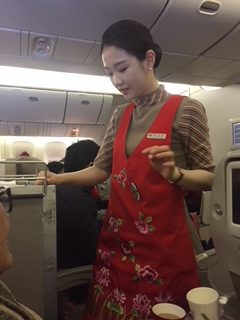
    I also do not recommend sleeping or trying to sleep on the floor of the Seattle Airport during the very long six-hour layover between arriving at Seattle and departing for Seoul. But once loaded up and on board, I certainly can recommend Asiana Airlines. What an experience it is to fly in a beautiful airplane, with wide seats that really recline, the soft cushions a lovely tan, accented with soft rust colored pillows and darker tan blankets, a lovely palette of color, and this in economy class! No full figured stewardess here, but perfectly coiffed black haired young women dressed in elegant form-fitting suits, just a splash of color with the small scarf at the neck. When the women added the soft red aprons sprinkled with a flower splash design on the front – there were two types of aprons, one red and the others tan – I presume this didn’t indicate status but merely variation for the sake of elegant variety.
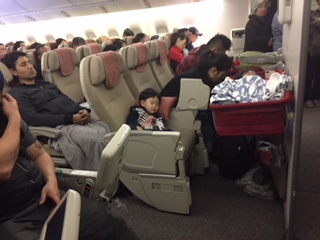
                        

    Lots of children on board, and against a bulkhead just in front of the parents were two bassinets for sleeping babies.

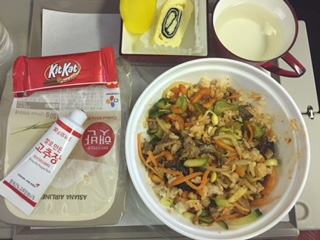
    And then we had dinner, a choice of beef steak and mashed potatoes or Korean Bibimbap. My Japanese seat-mate asked for chopsticks with which to eat her beefsteak, but she was told chop sticks were not offered with beefsteak. In fact, chopsticks were not offered with Bibimbap either, but directions were. I was too excited to realize I should should take a photo of the vegetables before I mixed them with the rice and hot sauce. The steward recommended that I add only half the tube of the hot sauce. I added a soupçon, and that was more than enough. You can see how the mixed rice and vegetable look, and it was quite good. The pickles were daikon pickles similar to those my Japanese friend Tsutae San makes with rice vinegar, and they were delicious. The seaweed soup was so good, but just looks like clear water in life and also in the photo. Dessert was a universal KitKat bar, a bow no doubt to American taste – though the Koreans apparently love sweet things and put sugar on a grilled cheese sandwich.


    Breakfast this morning was a chicken sandwich with a bit of onion and more fat roll than chicken, so good enough, and the lights have not been turned on, perhaps we are coming close to Incheon.

    And so off to Korea, rather unprepared. The Surprise comes, Living things must be taken care of always. The plants must be watered and the dog must be fed. This means shopping and then there is sleeping and paying taxes and the Other that knocks out the rest of the time to be devoted to preparations for a trip to Korea. At least I know how to say “thank you” and “excuse me”. During the next ten days, surely I will learn more, maybe even catch up with all I had planned to do earlier. Somehow, it all works out.

    Best wishes,
    Miriam